
Instant, efficient heat for Perry County winters.
From the river boroughs along the Susquehanna to the farm townships tucked against Blue Mountain, gas fireplaces give Perry County homes reliable heat without hauling wood. Find the right unit and connect with a trusted local dealer.
Every Project Starts From One of These Five Situations
Warmth without the wood pile, from Duncannon to Landisburg.
Perry County sits in Pennsylvania's Ridge and Valley country, squeezed between Blue Mountain and the Susquehanna River, with a scattering of small boroughs—New Bloomfield, Duncannon, Newport, Marysville—surrounded by farmland and forested ridges. In climate zone 5A, with a winter heating load comparable to many Mid-Atlantic mountain counties and average winter lows around 22°F, the county sees a full six-month heating season that's real but a step milder than places like Buffalo, NY. Wood heat has deep roots here given the oak, hickory, maple, and cherry that cover the ridgelines, but gas fireplaces have become the go-to choice for homeowners who want dependable, no-fuss heat in a main living space.
Natural gas service in Perry County is limited mostly to the boroughs closer to the Susquehanna corridor—Duncannon, Marysville, and parts of Newport typically have access to piped gas, while most of the county's farm townships and mountain communities like Landisburg, Elliottsburg, and Blain run on propane. Either fuel works fine in a modern direct-vent fireplace or insert. For the many older stone and log farmhouses scattered across the county, a propane insert dropped into an existing masonry fireplace is often the easiest upgrade—instant heat, no ash, and no need to run a new gas main down a rural road.
Three steps. No salesperson until you're ready.
Tell us about your project
Your zip code, your situation, and the fuel you're leaning toward—or let the answers point you to one.
See what's actually available
The brands dealers within 100 miles genuinely carry—real options, never a catalog mirage.
Get your dealer & Project Guide
A trusted local dealer, plus the free Project Guide & Parts List that names every component of the job.
Frequently Asked Questions
How much does a gas fireplace installation cost in Perry County?
Most gas fireplace and insert installations in Perry County run roughly $4,000 to $10,000, with the low end covering a direct-vent insert into an existing fireplace where propane or gas service is already in place. Costs climb toward the higher end for new construction or remodel installs that need fresh venting, a new gas line, or a propane tank set. Homes out in the townships without existing propane service will usually need a tank installed by a local propane supplier before the fireplace work even starts—your local dealer can coordinate both.
Can I convert my existing wood fireplace to gas?
Yes, and it's a common project in Perry County's older farmhouses, many of which still have the original stone or brick fireplace. A gas insert with a stainless liner run through the existing chimney typically handles the conversion, usually landing in the $4,000 to $8,500 range depending on whether you're on natural gas or propane and whether new gas piping is needed. The chimney gets sealed and lined rather than removed, so the fireplace keeps its look while the heat output and control improve substantially.
Do I need natural gas, or can I use propane?
Either works, and which one applies to you mostly comes down to where in Perry County you live. Homes in and near Duncannon, Marysville, and parts of Newport may have access to piped natural gas. Out in the farm townships—Landisburg, Blain, Elliottsburg, and the rural stretches around New Bloomfield—propane is the standard, delivered and stored in a tank on the property. Nearly every gas fireplace model on the market can be set up for either fuel; your installer just configures the correct orifice and regulator for whichever you have.
Will my gas fireplace work if the power goes out?
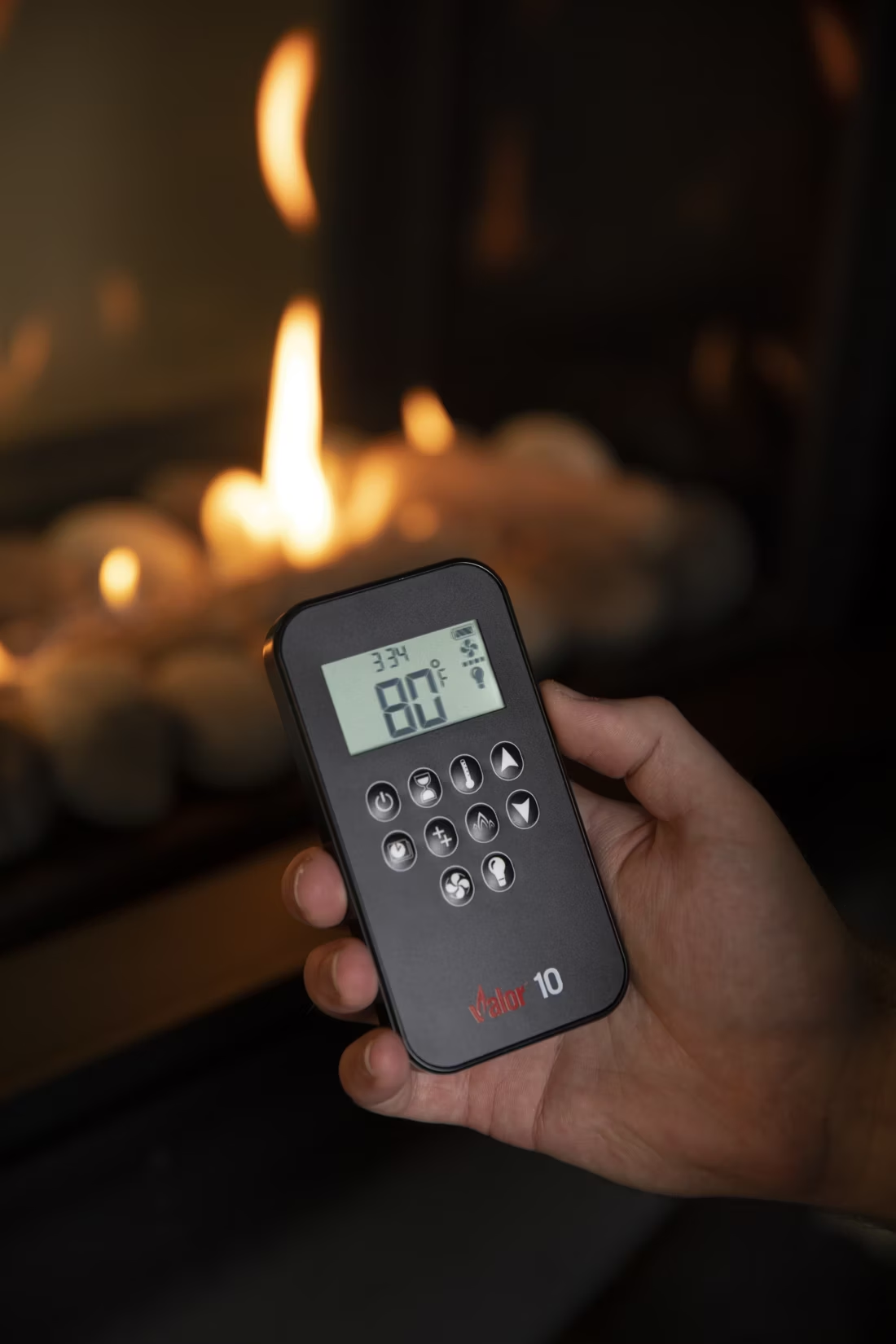
Most will, with the right ignition system. Units with IPI (intermittent pilot ignition) run on battery backup and light on demand even with the power out—worth having in a county where ice storms on Blue Mountain and downed lines along the rural routes can knock out power for a day or more. Valor fireplaces take a different approach: their pilot generates its own electricity through a thermocouple, so there's no battery to remember at all. Ask your local dealer which ignition system is on any model you're considering, especially if you're out in one of the more exposed mountain townships.
What's the difference between a gas fireplace, gas insert, and gas stove?
A gas fireplace is a fully built-in unit framed into a wall, typically used in new construction or a remodel. A gas insert slides into an existing masonry fireplace opening and vents through the existing chimney with a liner—the common choice for Perry County's older farmhouses with a fireplace already in place. A gas stove is a freestanding unit that sits on the floor and vents through a wall or ceiling, useful in a room that never had a fireplace to begin with. Most homeowners here with an existing hearth go with an insert; new builds or additions usually call for a built-in fireplace or a freestanding stove.
Do I need a permit to install a gas fireplace in Perry County?
Yes. Pennsylvania's Uniform Construction Code (UCC) applies statewide, but Perry County doesn't run a single centralized building department—permits and inspections go through your specific borough or township's UCC code official, whether that's New Bloomfield, Duncannon, Newport, or one of the rural townships. Gas line work also requires a licensed gas-fitter. Most established local hearth dealers handle the permitting and coordinate the gas-fitter and inspection as part of the install, which saves you from juggling separate trades.
What's the difference between vented and vent-free gas fireplaces?
Vented (direct-vent) fireplaces pull combustion air from outside and exhaust the byproducts back outside through sealed venting—they're the cleanest and most universally code-compliant option. Vent-free units burn fuel directly into the room without external venting; they're legal in Pennsylvania but come with strict room-size and ventilation requirements, and they release some moisture and combustion byproducts indoors. For Perry County homes—especially older farmhouses that already deal with drafts and humidity swings—direct-vent units are the more common and more strongly recommended choice. A local dealer can walk you through both if you're weighing the tradeoffs.
How often should my gas fireplace be serviced?
Plan on an annual inspection, ideally before the heating season starts. A technician checks the burner, pilot or ignition system, venting, and gas connections, and cleans the glass and interior. It's a much quicker job than a wood chimney sweep, but skipping it is how small issues—a cracked gasket, a fouled pilot—turn into bigger repairs mid-winter. Expect to pay somewhere in the $150 to $250 range for a standard annual service call from a local gas hearth technician.
Gas vs. wood—which is right for my Perry County home?
Wood has a real head start here—Perry County's ridges are full of oak, hickory, maple, and cherry, and with no local air quality restrictions, burning is unrestricted year-round. For homeowners who already cut or buy firewood, a wood stove or insert makes sense and keeps working when the power's out. Gas wins on convenience: no splitting, stacking, or ash cleanup, instant on-off operation, and—with the right ignition system—heat during an outage too, without needing a generator or a woodpile. A lot of Perry County households end up with both: gas for daily use in the main living area, and a wood stove or fireplace for backup heat and the ambiance of a real fire on the coldest nights.
Why is my open fireplace making my house colder?
Open fireplaces suck—literally. As the fire burns, it consumes air your furnace already paid to heat and pulls it out through the chimney, so the house is actually colder after the fire goes out than before you lit it. An insert fixes this: it seals the chimney, puts fixed glass across the front, and turns that hole in your house into a real heat source.
What's the difference between an insert and a zero-clearance fireplace?
An insert is a fireplace that slides into a pre-existing wood-burning fireplace—if you don't have one, there's nothing to insert it into. A zero-clearance fireplace is built into a framed wall, which makes it the answer for remodels and new construction. Simple test: existing masonry fireplace means insert; blank or framed wall means zero-clearance.
Can a fireplace actually lower my heating bill?
Yes—by creating a comfort zone. A furnace heats every square foot of the house just to warm the one room you're in; a gas fireplace on low burns roughly a sixth of the gas a typical furnace does. Set the furnace around 55–60 degrees as a baseline, then heat the rooms your family actually uses. Families who heat this way commonly save $20–$60 a month.
What is an in-home preview and do I need one?
It's a visit where a hearth professional measures your space, confirms the model you picked actually works in your home, and walks the specs—framing, gas line, venting, finish work—before anything is ordered. Some details you just can't know until you see the house. Never make a down payment without one; it's the single most-skipped step that burns buyers.
Stove and Fireplace Dealers in Perry County
Listings include WhyFire partner dealers, dealers we have verified as authorized for the brands we recommend, and established local businesses that carry hearth products. Every listing shows which one it is. The ones marked Preferred run on WhyFire's software, so they can show you real pricing and book your appointment right here. No manufacturer pays for placement. How we verify dealers →
Aes Hearth & Patio - Camp Hill
Aes Hearthplace, Inc.
Todays Home And Leisure
Hoffman's Outdoor Power & Repair
North Forge Home Heating
Find your gas fireplace in Perry County.
Tell us a bit about your home and whether you're on natural gas or propane, and we'll match you with a trusted local dealer and a free Project Guide & Parts List for your Perry County gas fireplace project.
Find Your Fireplace →