
Instant zone heat for every farmhouse, addition, and rental in Perry County.
No chimney, no gas line, no wood splitting—just plug in or wire up and go. Find the right electric fireplace or insert for your home, and connect with a trusted local dealer.
Every Project Starts From One of These Five Situations
Zone heat without the venting, permits, or wood splitting.
Perry County sits in the Ridge-and-Valley country along the Susquehanna, with the county seat in New Bloomfield and small communities like Newport, Duncannon, and Marysville spread across a landscape still thick with oak, hickory, maple, and cherry. Wood heat runs deep here—winters average lows around 22°F and rack up roughly 5,614 heating degree days, cold enough to matter but nowhere near the brutal stretch of a place like Madison, WI. That's part of why electric fireplaces have found a real niche in the county: they don't replace the woodstove in the farmhouse living room, but they solve problems wood and gas can't.
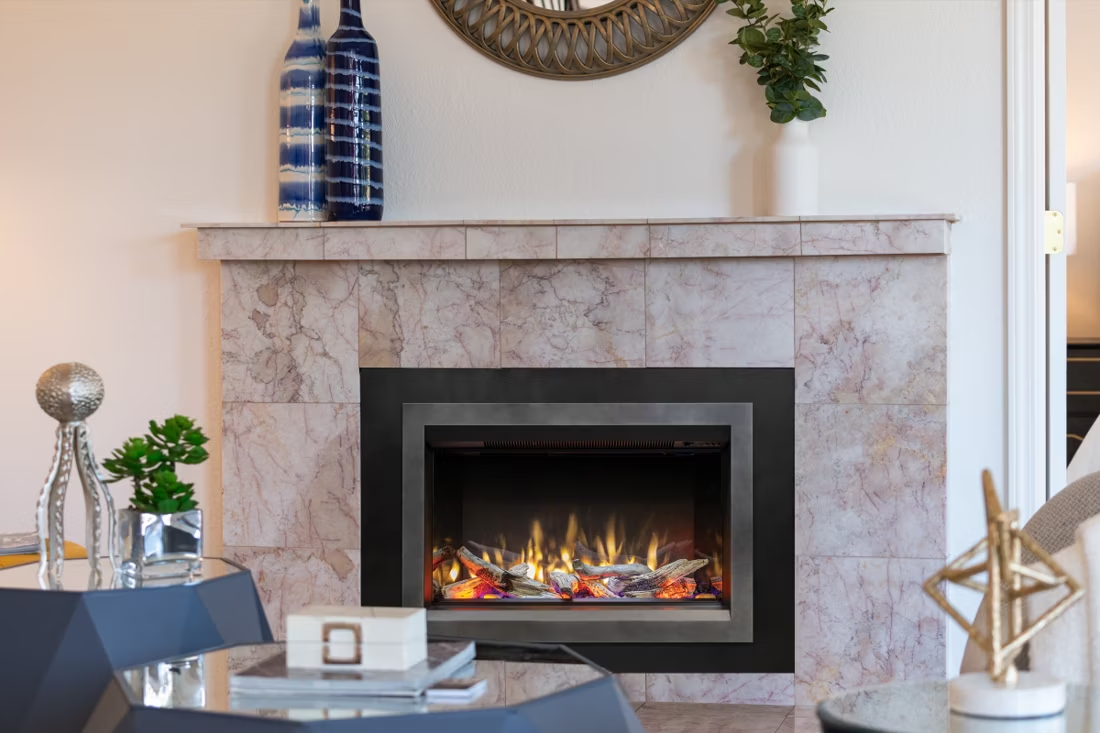
An electric insert dropped into a drafty, rarely-used masonry fireplace in an older farmhouse near Duncannon turns a cold, decorative opening into usable heat for that room—no chimney sweep, no liner, no annual inspection. A wall-mounted unit in a finished basement or a bedroom addition without duct access gives instant supplemental warmth with a flip of a switch. Power in the county runs through PPL Electric Utilities and Met-Ed depending on where you sit, and because most units plug into a standard outlet or a simple dedicated circuit, there's rarely a building permit fight—a real contrast to the wood and gas installs the county's many townships each handle differently.
Three steps. No salesperson until you're ready.
Tell us about your project
Your zip code, your situation, and the fuel you're leaning toward—or let the answers point you to one.
See what's actually available
The brands dealers within 100 miles genuinely carry—real options, never a catalog mirage.
Get your dealer & Project Guide
A trusted local dealer, plus the free Project Guide & Parts List that names every component of the job.
Frequently Asked Questions
How much does an electric fireplace installation cost in Perry County?
Small plug-in freestanding or tabletop units run $150 to $600 and need nothing more than a standard outlet. Wall-mounted or built-in electric fireplaces typically run $1,500 to $4,000 installed, and often call for a dedicated 20-amp circuit if the unit draws close to 1,500 watts—that's where an electrician's time adds to the bill. Electric inserts sized to fit an existing masonry fireplace opening usually land between $800 and $2,500 depending on the surround and trim kit. None of these approach the cost of a wood or gas install in the county, which is a big part of the appeal for a supplemental-heat project.
Do I need a permit to install an electric fireplace in Perry County?
For a plug-in unit, no—it's treated like any other appliance. For a hardwired built-in that needs a new dedicated circuit, an electrical permit is usually required, but Perry County doesn't run a single unified building department for this kind of work—permitting runs through each township, whether that's Watts, Carroll, Wheatfield, or wherever the property sits. A licensed electrician who's done work in your township will typically know exactly what's required and pull the permit as part of the job.
Will an electric fireplace actually heat my room in a Perry County winter?
It depends on what you're asking it to do. Most electric fireplaces top out around 5,000 BTUs (roughly 1,500 watts), which is enough to noticeably warm a single room—a bedroom, a den, a finished basement corner—but it won't carry a whole farmhouse through a 22°F night the way a wood stove or a gas insert will. In Perry County, electric units work best as zone heat: warming the room you're actually in so you can turn the thermostat down elsewhere, not as the sole heat source for the house.
What's the difference between an electric insert, a built-in, and a freestanding electric fireplace?
An electric insert is built to slide into an existing masonry fireplace opening, which makes it a popular choice for the older farmhouses scattered around Newport and Duncannon that have a fireplace nobody uses anymore. A built-in electric fireplace is meant to be framed into a wall during a remodel or addition, giving a cleaner, more permanent look. A freestanding electric stove or mantel-style unit just needs floor space and an outlet, making it the easiest option for a rental or a room where you don't want to touch the wall. All three heat about the same—the choice comes down to what opening or space you're working with.
Will my electric fireplace work during a power outage?
No—electric fireplaces require power to run the heater fan and flame effect, so an outage takes it offline along with everything else. That matters in Perry County's forested valleys, where ice storms and downed lines through PPL and MeterEd territory can knock power out for a stretch. If backup heat during outages is a real concern for your household, an electric fireplace should be a supplement to a wood stove or vented gas unit, not your only line of defense against the cold.
What's a good electric fireplace for a Perry County home?
Because electric fireplaces don't need to be sized for climate the way wood stoves do, the bigger question is fit and control. Brands like Dimplex and Napoleon offer realistic flame technology and built-in thermostats that cycle the heater on and off to hold a set room temperature, which works well for a supplemental-heat room like a converted farmhouse parlor or a finished basement. For a straight insert replacement in an existing fireplace opening, measure the firebox carefully—insert sizing is exact, and a local dealer can confirm fit before you buy.
Does an electric fireplace need special wiring?
Small plug-in units (under 1,500 watts) run fine on a standard 15-amp household circuit alongside normal outlet use. Larger built-in units that draw close to their full 1,500-watt rating are often better served by a dedicated 20-amp circuit, especially if they'll be running for hours at a time—this avoids tripped breakers and reduces fire risk from an overloaded shared circuit. A local electrician or hearth dealer can tell you in a few minutes whether your planned unit needs its own circuit.
Electric vs. wood—which makes more sense for my Perry County home?
Wood still has the edge for anyone heating a full farmhouse through a real winter here—the oak, hickory, and cherry that grow throughout the county burn hot and long, and a wood stove keeps working even when the power's out. Electric wins on convenience and cost of entry: no chimney, no ash, no permit fight, and it's the only realistic option for a rental, an apartment, or a room where running a flue simply isn't possible. Plenty of homes in the county end up with both—wood for primary heat and cold-night reliability, electric for the guest room or basement where running gas or venting a chimney doesn't make sense.
Can I put an electric insert into my old fireplace that I never use?
Yes, and it's one of the more common projects local dealers see in Perry County's older housing stock—a masonry fireplace that's been closed off or barely used for years gets a new life as usable heat. The insert sits inside the existing opening, plugs in or gets wired to a nearby circuit, and requires no chimney sweep, no liner work, and no annual inspection the way a wood-burning setup would. It's a straightforward way to reclaim a fireplace that's currently just decorative.
Can I put a TV above my fireplace?
Yes—with an asterisk. Fireplaces are hot and TVs don't like heat. Either put a mantel between them to deflect rising warmth, or choose a fireplace with heat-management technology that creates a cool zone on the wall above—the wall stays around 125 degrees, barely warm, while the room still gets full heat. If you like clean lines and don't want a mantel, heat management is the answer.
Does an electric fireplace need a vent or chimney?
No—that's its superpower. An electric fireplace needs a wall and an outlet, period. No vent pipe, no gas line, no clearances to design around, which is why it works in bedrooms, offices, apartments, and walls where venting a gas or wood unit would be impractical or impossible. Installation is typically the simplest and least expensive of any fireplace type.
Does a fireplace add value to my home?
On average, a fireplace adds back to the home about the same amount you spent installing it. Add the monthly savings from heating the rooms you actually use instead of the whole house—often hundreds of dollars a year—and the value case is strong before you even count what a fire does for how your family uses the room.
What is an in-home preview and do I need one?
It's a visit where a hearth professional measures your space, confirms the model you picked actually works in your home, and walks the specs—framing, gas line, venting, finish work—before anything is ordered. Some details you just can't know until you see the house. Never make a down payment without one; it's the single most-skipped step that burns buyers.
Stove and Fireplace Dealers in Perry County
Listings include WhyFire partner dealers, dealers we have verified as authorized for the brands we recommend, and established local businesses that carry hearth products. Every listing shows which one it is. The ones marked Preferred run on WhyFire's software, so they can show you real pricing and book your appointment right here. No manufacturer pays for placement. How we verify dealers →
Aes Hearth & Patio - Camp Hill
Aes Hearthplace, Inc.
Todays Home And Leisure
Hoffman's Outdoor Power & Repair
North Forge Home Heating
Find your electric fireplace in Perry County.
Tell us a bit about your home and we'll put together a free Project Guide & Parts List—the right electric fireplace or insert for your space, plus a match with a trusted local dealer to get it installed.
Find Your Fireplace →