
Instant heat for Norwood's rowhome lots and colonial floor plans.
Norwood sees about 4,510 heating degree days a year and winter lows averaging 26°F—a real six-month heating season on some of the tightest residential lots in Delaware County. I'll match you with a trusted local dealer who knows what actually fits in a Norwood twin, colonial, or rowhome.
Every Project Starts From One of These Five Situations
Wood doesn't fit these lots. Gas does.
Norwood is barely a square mile, built out mostly with early-to-mid-20th-century twins, colonials, and rowhomes packed close along narrow streets a few miles southwest of Philadelphia. At 77 feet of elevation and climate zone 4A, the winters here aren't extreme—4,510 heating degree days and a 26°F average winter low put Norwood well behind places like Burlington, VT or Duluth, MN in raw cold—but the borough still runs a genuine multi-month heating season, and most homes need a real secondary heat source alongside the furnace. What Norwood doesn't have room for is a woodpile: shared walls, small yards, and close-set neighbors make wood stoves and pellet units impractical rather than illegal, which is why so few households here run either one.
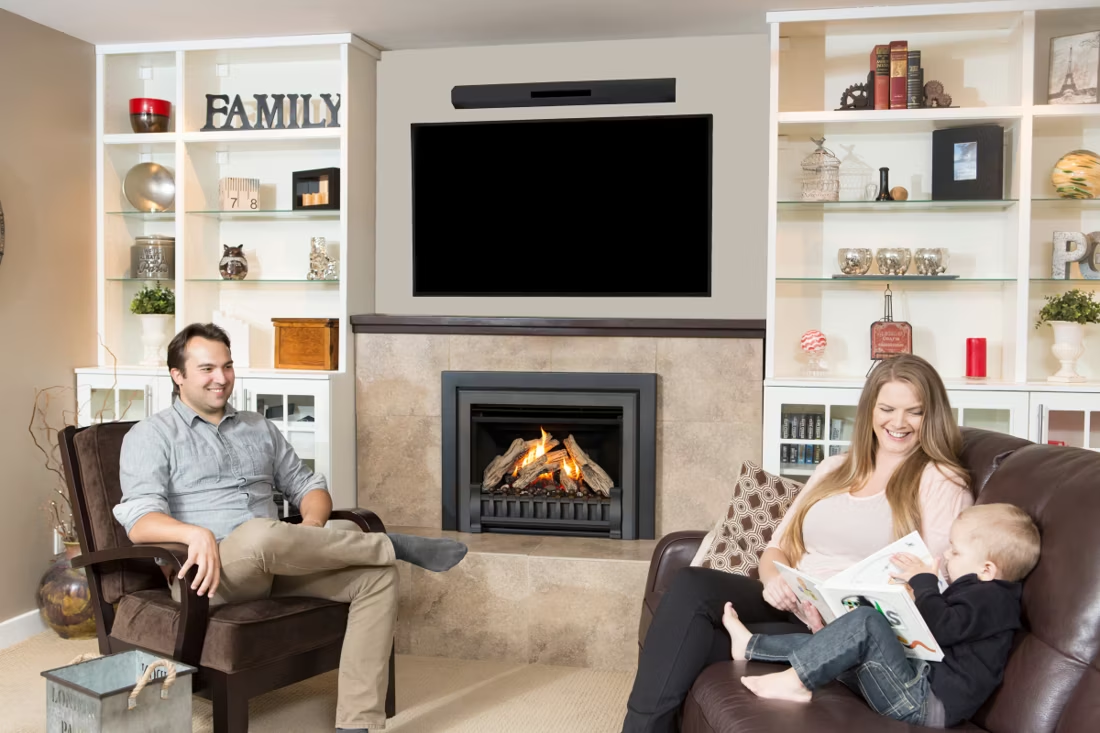
PECO Energy, the same utility that meters electric service across Delaware County, also supplies natural gas to most of Norwood, which makes a direct-vent gas fireplace or insert the default upgrade for both older colonials with an existing masonry firebox and newer builds without one. Sealed combustion venting through a wall or existing chimney chase means no wood storage, no ash, and no smoke drifting toward a neighbor's siding ten feet away—a real consideration on Norwood's tighter lots. Regional hardwoods like oak, hickory, maple, and cherry are still sold at stands across the county for the occasional fire pit or a fireplace at a vacation property, but new wood or pellet stove installs inside the borough itself are the exception, not the rule.
Three steps. No salesperson until you're ready.
Tell us about your project
Your zip code, your situation, and the fuel you're leaning toward—or let the answers point you to one.
See what's actually available
The brands dealers within 100 miles genuinely carry—real options, never a catalog mirage.
Get your dealer & Project Guide
A trusted local dealer, plus the free Project Guide & Parts List that names every component of the job.
Frequently Asked Questions
How much does a gas fireplace installation cost in Norwood?
Most Norwood installs land between roughly $4,000 and $10,000. A direct-vent insert dropping into an existing masonry firebox—common in the borough's older colonials and twins built before central air was standard—sits toward the lower end, especially where a gas line already runs to the kitchen or a water heater nearby. A new built-in unit in a home without an existing chimney, or one that needs a longer gas line run from the street, pushes toward the top of that range. Given how close houses sit to each other here, most installers also factor in tighter working clearances than they'd see on a larger suburban lot.
Can I convert my old masonry fireplace to gas?
Yes, and it's a common upgrade in Norwood's older housing stock, where plenty of colonials and twins built in the 1920s through 1950s came with a working masonry fireplace that's rarely used because nobody wants to manage cordwood on a small lot. A gas insert with a stainless liner run through the existing chimney is typically the simplest path, and because PECO already runs gas to most of the borough, tying into an existing line is often straightforward rather than a major trenching job.
Is my Norwood home on natural gas, or would I need propane?
Most of Norwood sits within PECO's natural gas footprint, and if your furnace, water heater, or range already runs on gas, adding a fireplace is usually a simple tie-in for a licensed gas fitter. A small number of properties near the edges of the borough or on older service lines may find a gas fireplace addition costs more to extend, in which case a propane tank setup is the fallback—most direct-vent models a local dealer carries can be configured for either fuel.
Will a gas fireplace still run if the power goes out?
It depends on the ignition system, which matters in a PECO service area that sees occasional outages during nor'easters and summer storms. Units with intermittent pilot ignition (IPI) run their electronics off a AA battery backup that kicks in automatically when the power drops. A handful of manufacturers, including Valor, use a millivolt pilot system that generates its own current and needs no batteries at all. If backup heat during an outage matters to you, ask your dealer which ignition system is on any model you're considering before you buy.
What's the difference between a gas fireplace, insert, and stove for a home like mine?
A gas fireplace is a built-in unit framed into a wall, which fits well in a Norwood addition or a full remodel where there's no existing masonry to work around. A gas insert fits inside an existing masonry firebox, which is the more common route in the borough's older twins and colonials that already have a chimney chase. A gas stove is freestanding on a hearth pad and vents out a wall or existing flue—a good option in a smaller rowhome living room where a full built-in isn't practical. For most existing Norwood houses, an insert is the least disruptive and least expensive of the three.
Do I need a permit to install a gas fireplace in Norwood?
Yes. You'll need a building permit through Norwood Borough's code enforcement office, plus a separate gas line permit tied to licensed gas-fitter work under Pennsylvania's Uniform Construction Code. Most hearth dealers who work in Delaware County boroughs like Norwood handle both the permit filing and the final inspection as part of the installation, which is worth confirming up front since it saves you from coordinating the borough office and the gas contractor separately.
Should I get a vented or vent-free gas fireplace given how close the houses are here?
Direct-vent units pull combustion air from outside and exhaust it back outside through sealed pipe, which is the code-compliant standard and the safer choice in a borough where houses sit close together with shared or near-shared walls. Vent-free units burn into the living space and are legal in Pennsylvania under specific room-size and ventilation rules, but most local dealers steer Norwood homeowners toward direct-vent simply because it keeps combustion byproducts out of a tightly built house rather than relying on room volume calculations to stay safe.
How often does a gas fireplace need servicing?
Plan on an annual check, ideally in late summer or early fall before the first real cold snap rather than in December when technicians serving Delaware County are booked solid. A standard visit—checking the burner, pilot assembly, gas connections, and venting, plus cleaning the glass—typically runs $150 to $250. Skipping it on a unit that runs daily through Norwood's roughly five-month heating season is the usual way an ignition problem turns up on the coldest night of the year instead of during a routine appointment.
Why don't more homes in Norwood use wood or pellet stoves instead of gas?
It's mostly a matter of space and logistics rather than any local ban or air quality restriction—Norwood doesn't have the non-attainment or inversion issues that push some regions toward stricter wood-burning rules. But on a lot with a twin or rowhome ten feet from the neighbor's siding, there's nowhere to season and stack cordwood, and a masonry chimney rebuild for a new wood stove is a much bigger project than a gas insert into an existing flue. Regional pellet brands like Energex, Hamer Pellet Fuel, and Greene Team Pellet Fuel are sold around the wider Philadelphia market, but pellet stoves see the same space and venting hurdles here, which is why gas and electric fireplaces dominate new installs inside the borough.
What's the difference between an insert and a zero-clearance fireplace?
An insert is a fireplace that slides into a pre-existing wood-burning fireplace—if you don't have one, there's nothing to insert it into. A zero-clearance fireplace is built into a framed wall, which makes it the answer for remodels and new construction. Simple test: existing masonry fireplace means insert; blank or framed wall means zero-clearance.
Is my gas fireplace wasting gas?
If it was installed more than 15 years ago, probably. Older gas fireplaces keep a standing pilot light burning all the time, and that little flame can cost a couple hundred dollars a year. Newer models use pilot-on-demand ignition—the pilot lights only when you use the fireplace and goes out when you turn it off.
How much should I budget for a fireplace?
For an average home—covering the fireplace, the vent pipe, and basic installation—a budget between $3,900 and $5,500 gives you a lot of options across wood, gas, and pellet. By the time you add finish work, gas line, and electrical, the average complete installation lands between $5,000 and $12,000 all-in. In a remodel or new build, a good rule is to put about 2.5% of the total project cost toward the fireplace.
What is an in-home preview and do I need one?
It's a visit where a hearth professional measures your space, confirms the model you picked actually works in your home, and walks the specs—framing, gas line, venting, finish work—before anything is ordered. Some details you just can't know until you see the house. Never make a down payment without one; it's the single most-skipped step that burns buyers.
Nearby Dealers
Hearth shops serving Norwood and the surrounding area. Every listing shows whether it is a WhyFire partner, a dealer we have verified as authorized for the brands we recommend, or a local business carrying hearth products. No manufacturer pays for placement. How we verify dealers →
Rettinger Fireplace Systems Inc
Comfort Home & Hearth
McCloskey's Garden & Hearth
Halco Grills And Fireplaces
Halligan's Hearth And Home
Norristown Chimney
Athenia Mason Supply Wilmington LLC
Ah Angersterin Inc
Wertz & Co,Inc
Ambler Fireplace And Patio
South Jersey Hearthside LLC Dba Modern Gas Products
Get your free Project Guide & Parts List for a Norwood gas fireplace.
Tell me about your home, whether you're already on PECO gas service or would need propane, and I'll match you with a trusted local dealer and send a free Project Guide & Parts List with the exact vent kit and parts your Norwood project needs.
Find Your Fireplace →