
Instant warmth without the woodpile in Northern Cambria.
No chimney, no gas line, no venting—just a plug and a switch. Find the right electric fireplace or insert for your home, and connect with a trusted local dealer.
Every Project Starts From One of These Five Situations
A supplemental heat source that keeps up with the cold.
Northern Cambria sits on the Allegheny Plateau at just under 1,600 feet, a borough formed from the old coal towns of Barnesboro and Spangler. Winters here are legitimately cold—average lows around 16°F and a heating season about as demanding as a place like Burlington, Vermont. Plenty of homes in the area still burn oak, hickory, maple, and cherry for primary or backup heat, but electric fireplaces have carved out a real role too, especially in older Barnesboro and Spangler row homes where adding a chimney or gas line isn't practical.
Homes here are split between Pennsylvania Electric Company (Penelec, a FirstEnergy utility) and REA Energy Cooperative depending on which side of the borough you're on, with residential rates running around 14.5 cents per kWh. That matters for electric heat: a standard 1,500-watt insert on high draws about 22 cents an hour to run, or roughly $50 a month if it's on for eight hours a day. That's real money, but it comes with zero chimney maintenance, no cutting or hauling wood, and heat you can turn on from a wall switch the moment you walk in the door.
Three steps. No salesperson until you're ready.
Tell us about your project
Your zip code, your situation, and the fuel you're leaning toward—or let the answers point you to one.
See what's actually available
The brands dealers within 100 miles genuinely carry—real options, never a catalog mirage.
Get your dealer & Project Guide
A trusted local dealer, plus the free Project Guide & Parts List that names every component of the job.
Frequently Asked Questions
How much does an electric fireplace installation cost in Northern Cambria?
It depends heavily on the type. A freestanding or wall-mount plug-in unit can often be self-installed for $300 to $1,500 with no electrician needed—you're plugging into an existing outlet. A built-in electric fireplace or an insert converting an old masonry firebox typically runs $1,500 to $4,000 once you factor in a licensed electrician running a dedicated 20-amp circuit, which is common in Barnesboro and Spangler's older housing stock where panels and wiring may need updating anyway. A local dealer can tell you which category your project falls into after seeing your fireplace or wall.
Do I need a permit to install an electric fireplace in Northern Cambria?
Usually not for the fireplace itself—there's no combustion, no venting, and no gas line, so it doesn't trigger the same building code review a wood or gas unit would. If your installer is running a new dedicated circuit or upgrading your electrical panel to support it, that electrical work typically does need a permit through your local code enforcement office, and it should be pulled by a licensed electrician regardless of the paperwork. Cambria County's older coal-town housing often has undersized panels, so it's worth asking your electrician to check capacity before you commit to a larger built-in unit.
Will an electric fireplace actually heat my home, or is it just for looks?
Both, depending on the model and how you use it. Most electric inserts and stoves put out around 5,000 BTUs on their heat setting—enough to comfortably warm a single room (400-500 sq ft) as supplemental heat, which is realistic for a den, bedroom, or finished basement in Northern Cambria's older homes. They won't replace a furnace or a wood stove as your only heat source through a Cambria County winter with lows in the teens, but they're very effective at letting you turn down the thermostat and heat only the room you're using. Flame-only mode with the heater off works year-round for ambiance without running up your Penelec or REA Energy bill.
What's the difference between an electric fireplace, insert, and stove?
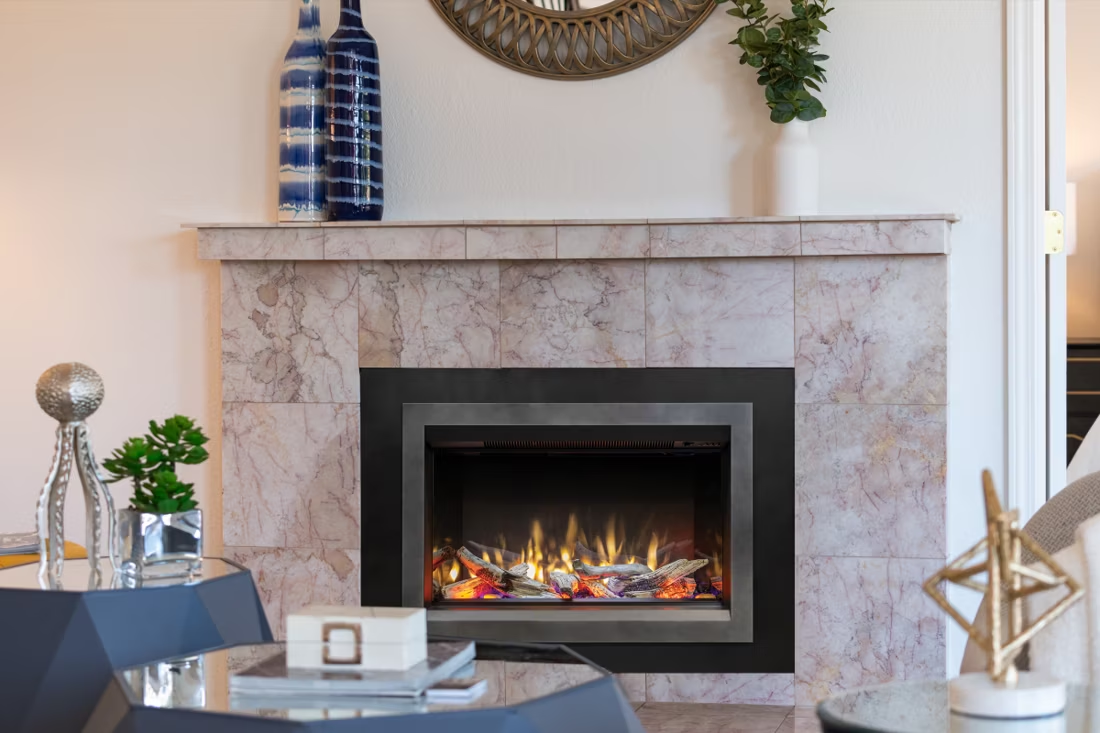
An electric fireplace is usually a built-in unit set into a wall or mantel surround, an electric insert is sized to slide into an existing masonry firebox (a common upgrade for the older brick fireplaces found in Barnesboro and Spangler homes), and an electric stove is a freestanding cabinet-style unit that mimics a wood stove's look. All three work the same way electrically—plug-in or hardwired, with a heating element and a fan—so the choice mostly comes down to whether you have an existing fireplace to fill, a wall to build into, or just want a stove-style look without any of the wood-burning maintenance.
How much does it cost to run an electric fireplace here compared to other heat?
At the roughly 14.5 cents per kWh charged by both Pennsylvania Electric Co and REA Energy Cooperative in this area, a 1,500-watt electric fireplace costs about 22 cents an hour to run on its heat setting, or around $5 for a full day of continuous use. That's more expensive per hour than a wood stove burning free or low-cost split hickory or oak, but far less hassle than hauling and stacking cordwood, and there's no cutting permit or seasoning time involved—you just plug it in.
Will my electric fireplace work during a power outage?
No—and this is worth being honest about. Electric fireplaces need power to run, so during a winter storm outage on the Allegheny Plateau, an all-electric unit goes cold along with everything else. If backup heat during outages matters to you, a lot of Northern Cambria households pair an electric fireplace in the main living space with a wood stove or insert elsewhere in the house for genuine off-grid heat. If you're relying on electric as your only supplemental source, a small generator or battery backup is worth budgeting for given how common ice storms are in this part of Cambria County.
Can I convert my old masonry fireplace to electric?
Yes, and it's a popular project in the older Barnesboro and Spangler sections of town, where many homes have a working chimney but the owner doesn't want to deal with wood or the expense of a gas line run. An electric insert slides into the existing firebox opening, plugs into a nearby outlet or a new dedicated circuit, and gives you real supplemental heat and a flame effect without touching the chimney at all—in fact the chimney can just stay capped and unused. It's typically the least expensive fireplace conversion option available, running well under what a gas or wood insert conversion would cost.
What size electric fireplace do I need for my room?
Most manufacturers rate their units by square footage assuming average ceiling height and insulation. As a rough guide for Northern Cambria's older, less-insulated housing stock: a 750-1,000 sq ft rating on the box often performs closer to 500-700 sq ft in practice once you account for drafty windows and higher ceilings common in the borough's early-1900s homes. When in doubt, size up slightly or plan to use the electric fireplace as zone heat for one room rather than expecting it to carry a whole floor.
Electric vs. wood or pellet—which makes sense for my house?
Wood remains a strong option here given the abundance of local oak, hickory, maple, and cherry and the fact that it keeps working when the power doesn't. Pellet stoves, using regional brands like Energex or Hamer Pellet Fuel, offer cleaner, more automated burning but still need electricity for the auger and blower, so they share electric's outage vulnerability. A plug-in electric fireplace makes the most sense as a no-maintenance, no-venting option for a room where you want supplemental warmth and ambiance without committing to fuel storage or chimney upkeep—many Northern Cambria homes end up running electric in a bedroom or den and wood or pellet as the primary heat source elsewhere in the house.
Can I put a TV above my fireplace?
Yes—with an asterisk. Fireplaces are hot and TVs don't like heat. Either put a mantel between them to deflect rising warmth, or choose a fireplace with heat-management technology that creates a cool zone on the wall above—the wall stays around 125 degrees, barely warm, while the room still gets full heat. If you like clean lines and don't want a mantel, heat management is the answer.
Does an electric fireplace need a vent or chimney?
No—that's its superpower. An electric fireplace needs a wall and an outlet, period. No vent pipe, no gas line, no clearances to design around, which is why it works in bedrooms, offices, apartments, and walls where venting a gas or wood unit would be impractical or impossible. Installation is typically the simplest and least expensive of any fireplace type.
Can a fireplace actually lower my heating bill?
Yes—by creating a comfort zone. A furnace heats every square foot of the house just to warm the one room you're in; a gas fireplace on low burns roughly a sixth of the gas a typical furnace does. Set the furnace around 55–60 degrees as a baseline, then heat the rooms your family actually uses. Families who heat this way commonly save $20–$60 a month.
What is an in-home preview and do I need one?
It's a visit where a hearth professional measures your space, confirms the model you picked actually works in your home, and walks the specs—framing, gas line, venting, finish work—before anything is ordered. Some details you just can't know until you see the house. Never make a down payment without one; it's the single most-skipped step that burns buyers.
Nearby Dealers
Hearth shops serving Northern Cambria and the surrounding area. Every listing shows whether it is a WhyFire partner, a dealer we have verified as authorized for the brands we recommend, or a local business carrying hearth products. No manufacturer pays for placement. How we verify dealers →
Heating World
Fireside Shop
C.t.r. Supply
Fireplace Creations Inc
Bantly Hardware
Electric Service in Northern Cambria
An electric fireplace's heater draws about 1,500 watts—pennies per hour at local rates.
Pennsylvania Electric Co
Rea Energy Coop Inc
Find your electric fireplace in Northern Cambria.
Tell us a bit about your home and we'll match you with the right electric fireplace, insert, or stove—and connect you with a trusted local dealer who can size the circuit and the unit correctly.
Find Your Fireplace →