
Electric warmth for every room in Cambria County.
No chimney, no gas line, no venting—just plug-in or hardwired warmth for the rooms your furnace can't quite reach, from Johnstown's valley neighborhoods up to the Allegheny Plateau. Find the right unit and connect with a trusted local dealer.
Every Project Starts From One of These Five Situations
Supplemental heat that needs no chimney.
Cambria County sits on the Allegheny Plateau, and the terrain shows up in the climate. Johnstown, down in its river valley, sees milder pockets than Ebensburg, the county seat, which at roughly 2,100 feet is one of the highest-elevation county seats east of the Mississippi. Countywide, winters average lows near 19°F with a winter heating load in the same range as Buffalo, NY, and homes up on the plateau (Nanty Glo, Carrolltown, Patton) typically run several degrees colder than the valley floor on any given night. Most homes here heat primarily with propane, oil, or electric heat pumps, since natural gas service is limited mostly to Johnstown proper and a handful of surrounding boroughs.
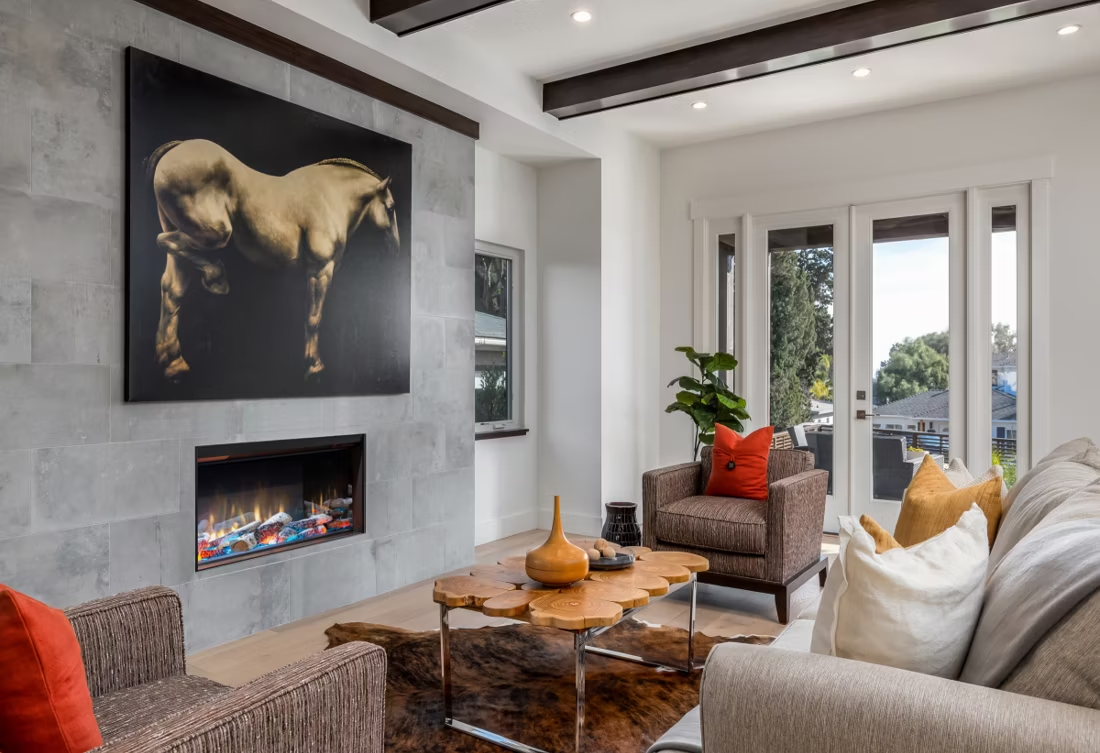
That patchwork of primary heat sources is exactly where electric fireplaces earn their keep. A finished basement in a Johnstown rowhouse rebuilt after the flood years, a sunroom addition on a plateau farmhouse, or a bedroom over an unheated garage—these are spots the main system struggles to keep comfortable, and a 120-volt electric fireplace or insert solves it without opening a wall for venting or running a gas line. It won't replace your furnace on a 10-degree January night, but as zone heat and everyday ambiance, it's the fastest, least invasive upgrade a Cambria County homeowner can make.
Three steps. No salesperson until you're ready.
Tell us about your project
Your zip code, your situation, and the fuel you're leaning toward—or let the answers point you to one.
See what's actually available
The brands dealers within 100 miles genuinely carry—real options, never a catalog mirage.
Get your dealer & Project Guide
A trusted local dealer, plus the free Project Guide & Parts List that names every component of the job.
Frequently Asked Questions
How much does an electric fireplace installation cost in Cambria County?
Plug-in electric fireplace inserts and freestanding units generally run $300 to $900 installed, since most just need an existing 120-volt outlet and no electrical work at all. Built-in wall units or larger inserts that require a dedicated circuit, in-wall wiring, or a licensed electrician typically land between $1,200 and $2,500, depending on whether the wall is finished drywall or open framing. Homes on the plateau (Ebensburg, Carrolltown, Patton) sometimes see a small travel charge added by installers covering the wider county footprint. Local dealers will quote a firm number after seeing the wall and your panel capacity.
Can an electric fireplace actually heat a room in a Cambria County winter?
Within limits, yes. Most electric fireplaces put out around 4,600 to 5,200 BTUs (roughly 1,500 watts) and are rated to comfortably heat 400 to 500 square feet in a reasonably insulated room. That's enough to noticeably warm a finished basement, den, or bedroom on most Cambria County nights. But with average lows around 19°F and colder stretches common up on the plateau around Nanty Glo and Northern Cambria, an electric unit is best treated as zone heat layered on top of your propane, oil, or heat pump system—not a replacement for it on the coldest nights of the year.
Do I need a permit to install an electric fireplace in Cambria County?
A plug-in unit that uses an existing standard outlet typically doesn't require a permit. If you're adding a dedicated 20-amp circuit, running new wiring for a built-in wall unit, or having an electrician modify your panel, that electrical work generally does require a permit—through the Cambria County Building & Codes Office for unincorporated areas, or the City of Johnstown's permitting office if you're within city limits. Most licensed electricians pull this permit as part of the job, so it's rarely something you have to handle yourself.
What electrical setup does an electric fireplace need?
Smaller freestanding and insert models draw about 1,500 watts and run fine on a standard 15- or 20-amp household outlet—no rewiring needed. Larger built-in wall units, especially wider linear models, often call for a dedicated 20-amp circuit to avoid tripping breakers when other appliances are running on the same line. Older Johnstown rowhouses and farmhouses on the plateau with original knob-and-tube or undersized panels sometimes need a panel upgrade before a larger unit can go in—a local electrician or hearth dealer can check your panel capacity before you buy.
What's the difference between an electric insert, a built-in fireplace, and a freestanding electric stove?
An electric insert slides into an existing masonry fireplace opening, which is common in older Johnstown homes with a fireplace that's no longer used for wood or was never vented properly after remodeling. A built-in electric fireplace is framed into a wall like a TV niche, popular in new construction and additions on the plateau. A freestanding electric stove sits on the floor like a wood stove but plugs into an outlet, which works well in a basement or room without any existing fireplace opening. All three heat the same way and mostly come down to what look fits your space.
How much does it cost to run an electric fireplace compared to propane or oil heat?
A typical 1,500-watt electric fireplace costs somewhere in the neighborhood of 15 to 20 cents per hour to run at current Pennsylvania Electric Company (Penelec) residential rates, depending on your plan and time of use. That's competitive with running a propane space heater for supplemental warmth and is generally cheaper than heating an entire zone with oil just to warm one room. The math favors electric for occasional, room-by-room use—but if you're trying to offset whole-home heat, propane or a heat pump upgrade will usually be more efficient than multiple electric units running for hours at a time.
Is an electric fireplace a good option for a finished basement in Cambria County?
It's one of the most common uses local dealers see, especially in Johnstown-area homes where basements were finished or refinished after flood-related renovations. Basements tend to run cooler than the rest of the house and are often the last room on the ductwork loop, so a 120-volt electric insert or freestanding stove is an easy way to make the space usable in winter without extending gas lines or venting through a below-grade wall. No permit is typically needed if you're using an existing outlet.
Electric vs. gas fireplace—which makes more sense for my Cambria County home?
Gas fireplaces put out real heat (20,000 to 40,000+ BTUs) and can genuinely offset your heating bill in a well-used room, but they require venting or a vent-free-rated space, plus a gas line—natural gas service is limited mostly to Johnstown proper, so most rural and plateau homes would need propane instead. Electric fireplaces install in an afternoon, need no venting or fuel tank, and cost far less upfront, but they're realistically a supplemental or ambiance heat source rather than a serious BTU contributor on a 15-degree night. For a converted basement, an addition, or a room you mainly want to look good and take the chill off, electric is usually the simpler and more affordable answer.
Are electric fireplaces hard to maintain?
Not really—that's one of their advantages over wood or gas units. There's no chimney to sweep, no gas line to inspect, and no combustion byproducts to vent. Maintenance is limited to occasionally dusting the heating element and cleaning the flame-effect lens or LED panel, and most units are rated for 10,000+ hours of use before the heating element needs replacing. That low-maintenance profile is part of why they're a popular add-on in older Cambria County housing stock where owners would rather not take on another chimney or venting system to maintain.
Can I put a TV above my fireplace?
Yes—with an asterisk. Fireplaces are hot and TVs don't like heat. Either put a mantel between them to deflect rising warmth, or choose a fireplace with heat-management technology that creates a cool zone on the wall above—the wall stays around 125 degrees, barely warm, while the room still gets full heat. If you like clean lines and don't want a mantel, heat management is the answer.
Do electric fireplaces actually produce heat?
Yes—most put out around 4,800–5,000 BTUs from a standard outlet, which comfortably warms a bedroom, office, or den as a comfort-zone heater. What they won't do is carry a whole house the way wood, gas, or pellet can. Think of electric as ambiance-first with honest supplemental heat: flames on with no heat in July, flames plus warmth in January.
Does a fireplace add value to my home?
On average, a fireplace adds back to the home about the same amount you spent installing it. Add the monthly savings from heating the rooms you actually use instead of the whole house—often hundreds of dollars a year—and the value case is strong before you even count what a fire does for how your family uses the room.
Can a fireplace actually lower my heating bill?
Yes—by creating a comfort zone. A furnace heats every square foot of the house just to warm the one room you're in; a gas fireplace on low burns roughly a sixth of the gas a typical furnace does. Set the furnace around 55–60 degrees as a baseline, then heat the rooms your family actually uses. Families who heat this way commonly save $20–$60 a month.
Stove and Fireplace Dealers in Cambria County
Listings include WhyFire partner dealers, dealers we have verified as authorized for the brands we recommend, and established local businesses that carry hearth products. Every listing shows which one it is. The ones marked Preferred run on WhyFire's software, so they can show you real pricing and book your appointment right here. No manufacturer pays for placement. How we verify dealers →
Bantly Hardware
Heating World
C.t.r. Supply
Terrascape Supply
Fireplace Creations Inc
Fireside Shop
Find your electric fireplace in Cambria County.
Tell us a bit about your home and we'll put together a free Project Guide & Parts List for your electric fireplace project—sized right for your room, with the parts you need and a trusted local Cambria County dealer to install it.
Find Your Fireplace →