
Pellet Stoves Are Rare in Norristown, But Not Unheard Of.
With natural gas and electric heat standard across Montgomery County, pellet stoves fill a smaller supplemental-heat niche here—but for the right home, they still make sense. We'll match you with a local dealer who actually carries them.
Every Project Starts From One of These Five Situations
Natural gas access, not scarcity of interest, keeps pellet stoves niche here.
Norristown sits along the Schuylkill River at about 136 feet elevation in a Climate Zone 4A market with roughly 4,869 heating degree days and average winter lows near 23°F—a moderate cold, nothing like the extended sub-zero stretches that push rural Pennsylvania households toward solid-fuel primary heat. Most homes in this part of Montgomery County were built with, or later converted to, gas or oil furnaces, and the borough's older, denser housing stock doesn't lend itself to the pellet hopper, exterior venting, and fuel storage setups that pellet stoves need. That's the main reason pellet appliances show up far less often here than they do in more rural stretches of the state.
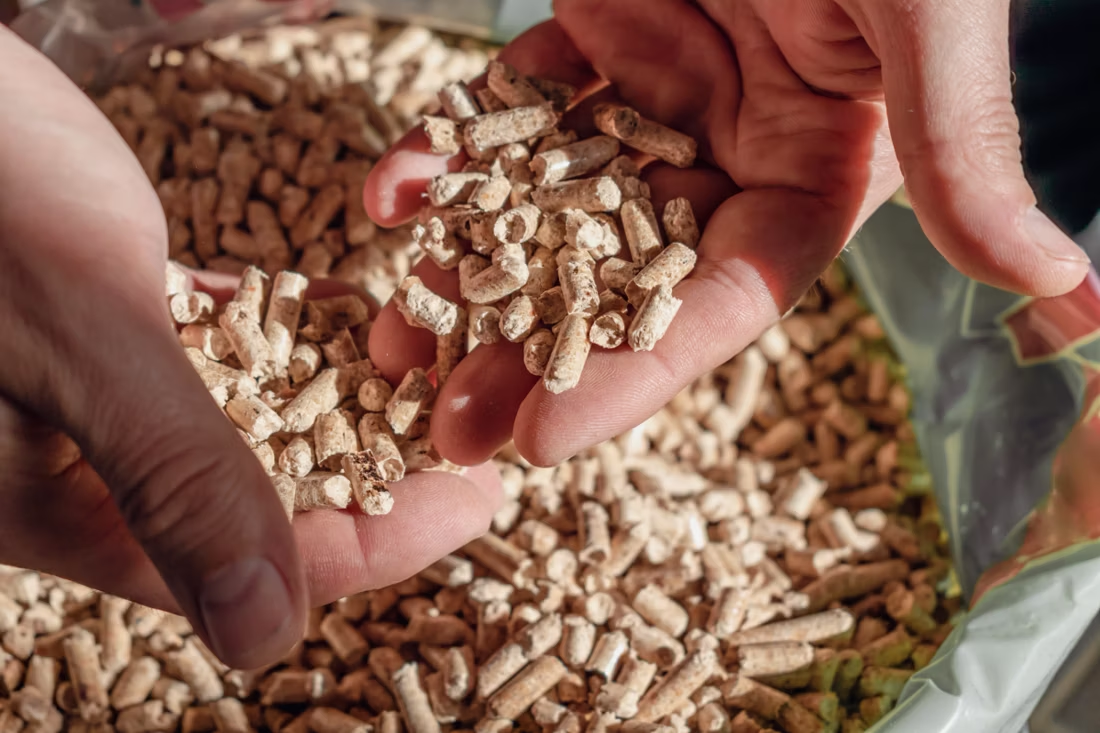
That doesn't mean pellet heat is off the table. A smaller number of Norristown homeowners install a pellet stove or insert for zone heating in a sunroom or finished basement, for supplemental warmth alongside a gas furnace, or simply for the look and lower mess of a real flame without cordwood storage. When someone here does go pellet, they're typically buying from regional bag brands like Energex, Hamer Pellet Fuel, or Greene Team Pellet Fuel—all of which distribute through the Mid-Atlantic. Electric service comes from PECO Energy at roughly $0.1474 per kWh, which matters more for pellet stoves than people expect, since the auger and blower run on household current.
Three steps. No salesperson until you're ready.
Tell us about your project
Your zip code, your situation, and the fuel you're leaning toward—or let the answers point you to one.
See what's actually available
The brands dealers within 100 miles genuinely carry—real options, never a catalog mirage.
Get your dealer & Project Guide
A trusted local dealer, plus the free Project Guide & Parts List that names every component of the job.
Frequently Asked Questions
How much does a pellet stove installation cost in Norristown?
Because pellet stoves are a smaller share of the local market, there's less standardized local pricing than for gas inserts, but a typical freestanding pellet stove install in this part of Pennsylvania runs roughly $3,000 to $6,500, depending on the unit, whether you need a new through-wall vent kit, and any hearth pad work for clearance. Fewer Montgomery County retailers stock pellet appliances year-round compared to gas or electric units, so it's worth getting quotes from two dealers rather than assuming a single price point.
Why aren't pellet stoves more common in Norristown?
The short answer is that most Norristown homes don't need them. Natural gas and electric heat are well established throughout the borough and Montgomery County generally, winters here are moderate compared to the western or northern parts of the state, and a lot of the housing stock—including older rowhomes near downtown—isn't set up for exterior pellet venting or bag storage the way a rural property with a garage or barn would be. Pellet heat tends to show up as a supplemental or specialty choice here rather than a primary heating decision.
Do pellet stoves work during a power outage?
Not without help. Pellet stoves rely on an electric auger to feed fuel and a blower to distribute heat, so a standard unit shuts down the moment PECO's grid does. Some manufacturers offer a battery backup or inverter accessory that can run the stove for several hours on a deep-cycle battery, and that's worth asking about if outage resilience is part of why you're considering pellet heat in the first place. If uninterrupted heat during storms is the priority, a battery-backed gas fireplace with a standing pilot is generally the more dependable choice in this area.
What pellet fuel brands are available near Norristown?
Regional bag brands sold through Mid-Atlantic hearth retailers include Energex, Hamer Pellet Fuel, and Greene Team Pellet Fuel, the last of which is produced in Pennsylvania. Because pellet stoves are less common in the immediate Norristown area, not every hardware store carries bags year-round—home centers and farm supply stores in outer Montgomery County tend to stock more than shops within the borough itself, so it's worth locating a supplier before committing to a stove.
Pellet vs. gas—which makes more sense for a Norristown home?
Gas is the more natural fit for most Norristown households: it's widely available, doesn't require fuel storage, starts instantly, and many homes already have a gas line for a furnace or water heater. Pellet stoves offer a real flame and lower emissions than wood, and some owners like the lower fuel cost compared to propane, but they require hopper loading, ash cleanup, and continuous electricity to run. For a primary living space in this climate, gas typically wins on convenience; pellet tends to make more sense as a secondary unit in a den, basement, or converted garage where the ambiance and supplemental warmth matter more than raw convenience.
Do I need a permit to install a pellet stove in Norristown?
Yes—a building permit is required for any new solid-fuel or pellet appliance installation, whether you're in the Municipality of Norristown or one of the surrounding Montgomery County townships. The permit process covers the through-wall or roof venting and hearth clearance requirements. Most established hearth dealers handle the permit application as part of the installation, which is one reason it's worth using a dealer experienced with pellet units specifically rather than a general contractor who mostly installs gas.
Where can I buy pellet fuel locally, and what does it cost?
Pellet fuel in this region typically runs $250 to $320 per ton, sold in 40-pound bags through home centers and farm supply stores in outer Montgomery County. Within Norristown proper, fewer retailers keep pellets in stock consistently because demand is lower, so many owners plan ahead and buy several tons at once in the fall before cold-weather demand pushes prices up and availability down.
Pellet insert vs. freestanding pellet stove—what's the difference?
A pellet insert fits into an existing masonry fireplace opening and vents through the existing chimney with a liner, which works well if you have an older Norristown home with an underused wood fireplace you want to make more efficient. A freestanding pellet stove sits on its own hearth pad and vents through an exterior wall or roof, which gives more placement flexibility in a basement, sunroom, or addition that doesn't have an existing fireplace. Given how few Norristown homes have an existing masonry fireplace to convert, freestanding units are somewhat more common locally.
Since wood isn't really an option here either, how does pellet compare?
Wood-burning appliances are uncommon in Norristown for similar reasons pellet stoves are—dense housing, limited storage for cordwood, and a market built around gas and electric heat rather than solid fuel, even though regional hardwoods like oak, hickory, maple, and cherry are easy to source elsewhere in the state. Pellet heat is generally the more practical of the two for a borough setting: no chimney sweeping, no seasoned wood to source and stack, and a cleaner, more consistent burn from bagged fuel you can order or pick up as needed. If you want a real flame without the cordwood commitment, pellet is the more realistic path in this market.
Why is my open fireplace making my house colder?
Open fireplaces suck—literally. As the fire burns, it consumes air your furnace already paid to heat and pulls it out through the chimney, so the house is actually colder after the fire goes out than before you lit it. An insert fixes this: it seals the chimney, puts fixed glass across the front, and turns that hole in your house into a real heat source.
What's the difference between an insert and a zero-clearance fireplace?
An insert is a fireplace that slides into a pre-existing wood-burning fireplace—if you don't have one, there's nothing to insert it into. A zero-clearance fireplace is built into a framed wall, which makes it the answer for remodels and new construction. Simple test: existing masonry fireplace means insert; blank or framed wall means zero-clearance.
Can I install a fireplace myself?
If you're putting a fire in your house on purpose, it's best to work with an expert. Unless you're genuinely experienced in framing, gas line, vent pipe, and the national code on clearances to combustibles, have a professional do it—and ideally the same company that sells you the fireplace, so warranty, service, and liability all live under one roof.
How much should I budget for a fireplace?
For an average home—covering the fireplace, the vent pipe, and basic installation—a budget between $3,900 and $5,500 gives you a lot of options across wood, gas, and pellet. By the time you add finish work, gas line, and electrical, the average complete installation lands between $5,000 and $12,000 all-in. In a remodel or new build, a good rule is to put about 2.5% of the total project cost toward the fireplace.
Nearby Dealers
Hearth shops serving Norristown and the surrounding area.
Pellet Brands Stocked Around Norristown
Manufacturers will point you to the nearest stocking dealer.
Find your pellet stove in Norristown.
Tell us about your home and how you'd use a pellet stove, and we'll match you with a trusted local dealer who actually carries pellet appliances—plus a free Project Guide & Parts List with the vent kit and parts your installation needs.
Find Your Fireplace →