
Reliable pellet heat for Montour County's long winters.
From Danville out to the farmland of Mahoning, Derry, and Liberty townships, Montour County sees a real winter—average lows near 19°F and a winter heating load in the same range as a milder Buffalo, NY winter. A pellet stove or insert delivers steady, thermostat-controlled heat without the wood-splitting. We'll match you with a vetted local dealer who can size and install it right.
Every Project Starts From One of These Five Situations
Consistent, low-fuss heat for a small, spread-out county.
Montour is a small county—Pennsylvania's own version of a rural crossroads, anchored by Danville and Geisinger Medical Center, with most everyone else spread across farmland and wooded ridgeline in townships like Anthony, West Hemlock, Limestone, and Valley. Winters here are colder than they get credit for: average lows around 19°F and a winter heating load somewhere in the same range as a milder winter in Buffalo, NY. That's enough cold, for long enough, that a lot of local homeowners want a heat source that runs itself.
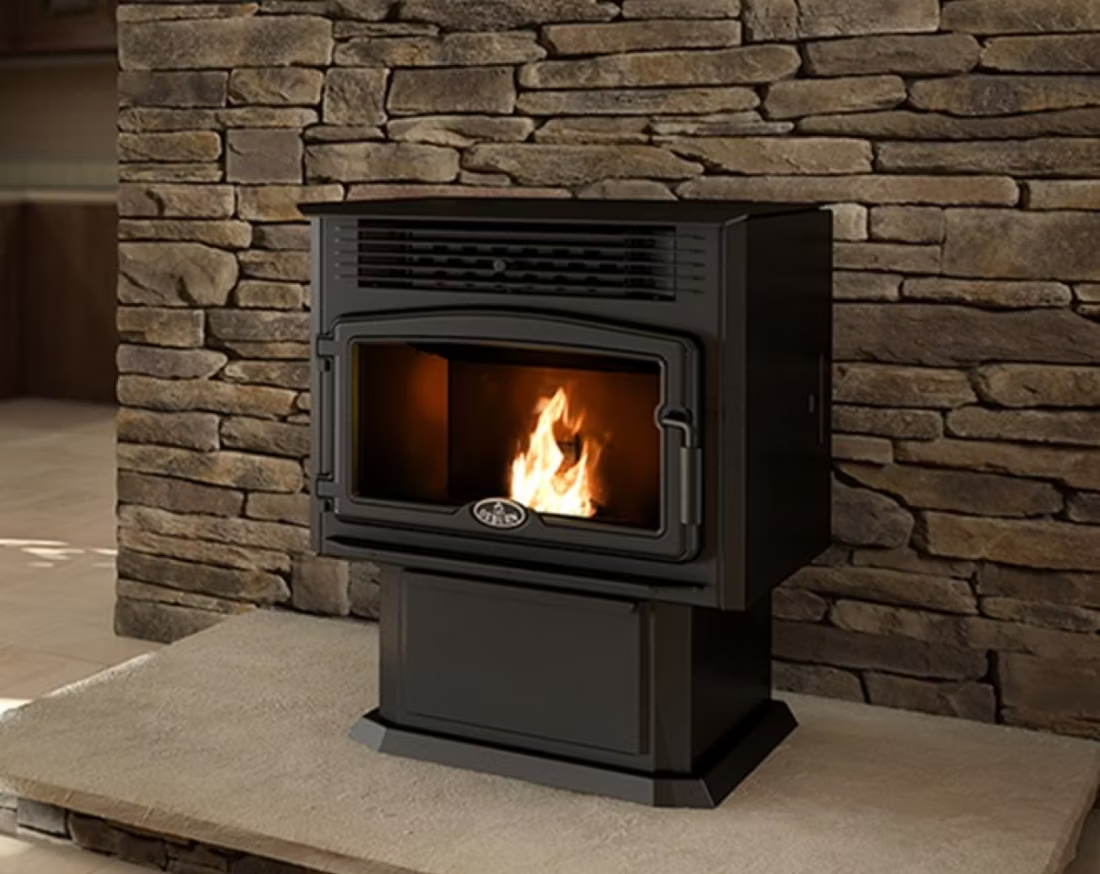
That's the case for pellet. Load the hopper, set the thermostat, and a pellet stove or insert holds a steady output for a day or more without tending—no splitting, stacking, or creosote buildup to manage. Montour County has no air quality non-attainment issues or wood-burning curtailment periods to work around, so pellet appliances here are chosen for convenience and efficiency rather than to dodge a burn ban. Regional pellet brands like Energex, Hamer Pellet Fuel, and Greene Team Pellet Fuel are all sold within reasonable driving distance, which keeps fuel costs and delivery logistics manageable for a county this size.
Three steps. No salesperson until you're ready.
Tell us about your project
Your zip code, your situation, and the fuel you're leaning toward—or let the answers point you to one.
See what's actually available
The brands dealers within 100 miles genuinely carry—real options, never a catalog mirage.
Get your dealer & Project Guide
A trusted local dealer, plus the free Project Guide & Parts List that names every component of the job.
Frequently Asked Questions
How much does a pellet stove installation cost in Montour County?
Most pellet stove installations in this part of central Pennsylvania run somewhere between $2,500 and $6,000, depending on the unit, whether you're installing into an existing masonry fireplace as an insert, and how much venting work is needed to run a 3-inch or 4-inch pellet vent pipe through an exterior wall or existing chimney. Freestanding stoves on a new hearth pad tend to land toward the lower end; inserts replacing an old wood-burning fireplace with new liner and venting run a bit higher. A trusted local dealer will give you a firm number after seeing the room and the venting path in person—that's part of what the Project Guide & Parts List we put together is built to line up in advance.
What size pellet stove do I need for my Montour County home?
Sizing comes down to square footage, ceiling height, and how drafty the house is—older farmhouses around Mahoning and Derry townships often need to size up compared to a newer, tighter-built home in Danville. As a general guide: smaller units (around 1,000–1,500 sq ft output) suit a single large room or supplemental heat; mid-size units (1,500–2,200 sq ft) cover most main living areas; and larger units can handle a whole modest home given decent insulation. With average lows near 19°F and a winter heating load on par with a milder Buffalo, NY winter, this isn't a climate where you want to undersize—a local dealer will walk your space and account for your specific layout before recommending a model.
Where can I buy pellet fuel in Montour County?
Regional brands like Energex, Hamer Pellet Fuel, and Greene Team Pellet Fuel are all produced within a few hours of Montour County and are commonly stocked by hearth retailers and farm supply stores across central Pennsylvania. Most homeowners buy by the ton (fifty 40-lb bags) ahead of the season and store them in a garage, shed, or basement—a ton typically covers a full winter of moderate use for a mid-size stove. Buying early in late summer or early fall usually gets you better pricing and avoids the scramble that hits regional suppliers once the first cold snap arrives.
What's the difference between a pellet stove and a pellet insert?
A pellet stove is a freestanding unit that sits on its own hearth pad and vents through a wall or existing chimney—it can go almost anywhere in a room with the right clearances. A pellet insert is built to slide into an existing masonry fireplace opening, converting an old wood-burning fireplace into an efficient, thermostat-controlled heat source while using the existing chimney chase for venting. For Montour County homes with an older fireplace already in place—common in Danville's historic housing stock—an insert is usually the more straightforward retrofit. Homes without an existing fireplace opening are better suited to a freestanding stove.
Do I need a permit to install a pellet stove in Montour County?
Most new pellet stove or insert installations require a building permit, issued either through Danville Borough or your local township office if you're in unincorporated Montour County. The permit process typically checks clearances, venting termination location, and hearth pad specs against current code. A local hearth dealer handling your install will generally pull the permit and coordinate the inspection as part of the job, so you're not left tracking it down yourself.
What's the best pellet stove for Montour County's climate?
With winter lows averaging around 19°F and a winter heating load in the same range as a milder Buffalo, NY winter, Montour County sits solidly in the range where a mid-to-large pellet stove earns its keep as a primary or near-primary heat source, not just a supplement. Look at models with a wide BTU range and a large hopper capacity—some hold 60 to 130 lbs of pellets, which stretches burn time on the coldest nights and cuts down on refill trips. Brands commonly sold through central Pennsylvania dealers include Harman, Englander, and Lennox, alongside the regional pellet fuel supply from Energex, Hamer, and Greene Team. A local retailer can match hopper size and BTU output to your specific square footage and insulation level.
Will my pellet stove work during a power outage?
Not without a backup power source—pellet stoves rely on electricity to run the auger that feeds pellets and the blower that circulates heat, so a standard unit will shut down the moment the power goes out. For a county with a fair number of rural properties strung along township roads, that's worth planning for. Many Montour County homeowners pair their pellet stove with a small battery backup unit or a portable generator sized to run just the stove's low-draw motor and controls. If uninterrupted heat during outages is a priority, it's worth discussing with your dealer alongside—or instead of—a wood-burning option, since wood stoves need no electricity at all.
How often does a pellet stove need cleaning and maintenance?
Plan on cleaning the burn pot and ash area every few days to weekly depending on use, a deeper cleaning of the exhaust venting and hopper mechanism a few times per season, and a full professional service once a year—typically before the season starts. Annual service checks the auger motor, gaskets, blower, and venting for wear, and most local dealers who sell pellet appliances also offer this service. Skipping the annual service is the most common reason pellet stoves underperform or throw error codes mid-winter.
Pellet stove vs. wood stove—which is right for my Montour County home?
Wood is the traditional choice around here—Montour County sits in oak, hickory, maple, and cherry country, and plenty of homeowners in the outlying townships have access to their own woodlot or a neighbor willing to sell a few cords. Wood stoves also keep working with no electricity, which matters for rural properties with longer outage recovery times. Pellet stoves trade that self-sufficiency for convenience: no splitting or stacking, a thermostat that holds a steady temperature, and far less ash and creosote to manage. If your household values low-maintenance, set-it-and-forget-it heat and doesn't mind needing power to run it, pellet is usually the better fit. If backup heat during outages or working with wood you already have access to matters more, wood is worth a close look too—a local dealer can walk you through both.
Why is my open fireplace making my house colder?
Open fireplaces suck—literally. As the fire burns, it consumes air your furnace already paid to heat and pulls it out through the chimney, so the house is actually colder after the fire goes out than before you lit it. An insert fixes this: it seals the chimney, puts fixed glass across the front, and turns that hole in your house into a real heat source.
How often does a pellet stove need cleaning?
A clean pellet stove is a happy pellet stove. Plan on cleaning the burn pot about once a week when you're burning regularly—ash and clinkers gum up the air holes just like a pellet barbecue. Most pellet stove problems trace back to skipped cleaning that nobody explained up front. Some designs make it easy with a trapdoor burn pot: pull a lever and the gunk drops into the ash pan.
Does a fireplace add value to my home?
On average, a fireplace adds back to the home about the same amount you spent installing it. Add the monthly savings from heating the rooms you actually use instead of the whole house—often hundreds of dollars a year—and the value case is strong before you even count what a fire does for how your family uses the room.
Can a fireplace actually lower my heating bill?
Yes—by creating a comfort zone. A furnace heats every square foot of the house just to warm the one room you're in; a gas fireplace on low burns roughly a sixth of the gas a typical furnace does. Set the furnace around 55–60 degrees as a baseline, then heat the rooms your family actually uses. Families who heat this way commonly save $20–$60 a month.
Pellet Brands Stocked Around Montour County
Manufacturers will point you to the nearest stocking dealer.
Find your pellet stove in Montour County.
Tell us a bit about your home and heating goals, and we'll match you with a trusted local Montour County dealer plus a free Project Guide & Parts List—the exact equipment, venting, and install plan for your pellet project.
Find Your Fireplace →