
Pellet stoves are the exception, not the rule, in Monroeville.
Most homes here already run on natural gas or Duquesne Light electric service. A pellet stove still makes sense for the right room—we'll help you figure out if yours is one of them.
Every Project Starts From One of These Five Situations
Most Monroeville homes already have gas or electric heat covered.
Monroeville sits in climate zone 5A with about 5,490 heating degree days and winter lows averaging 22°F—real cold, though nowhere near what a place like Burlington, VT or Duluth, MN sees over a season. That's cold enough to justify supplemental heat in a drafty family room or finished basement, but most homes here were built (or renovated) with gas furnaces and electric service from Duquesne Light Co. or Pennsylvania Power Co. already in place. That existing infrastructure is a big reason pellet appliances haven't caught on as a primary heat source the way they have in more rural, wood-dependent parts of the state.
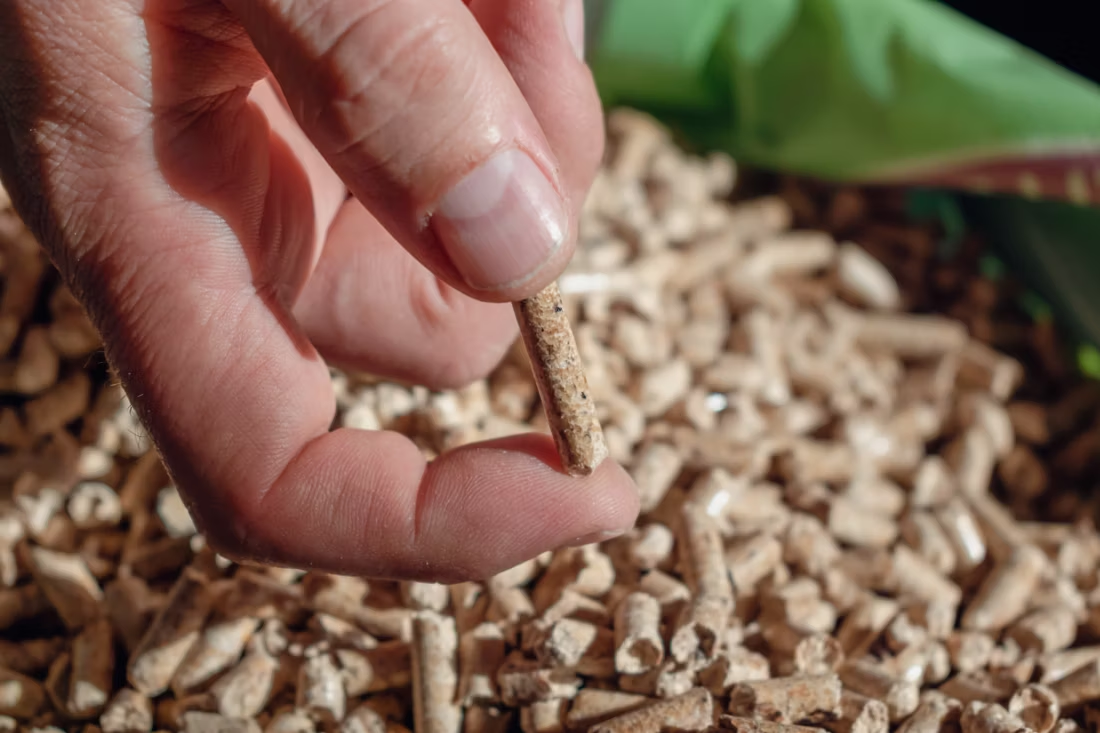
That doesn't mean pellet fuel is absent from the region—quite the opposite. Western Pennsylvania is home to hardwood pellet manufacturers like Energex, Hamer Pellet Fuel, and Greene Team Pellet Fuel, many of which use sawmill byproduct from the same oak, hickory, maple, and cherry that fill Allegheny County's forests. The fuel supply is local and steady. What's rare is the appliance itself showing up as a Monroeville homeowner's main heat source, since gas is standard here and Allegheny County's non-attainment air quality status keeps solid-fuel appliances under closer scrutiny than in less industrial parts of the state. Where pellet stoves do show up locally, it's almost always as zone heat for a sunroom, garage workshop, or finished basement rather than a whole-house system.
Three steps. No salesperson until you're ready.
Tell us about your project
Your zip code, your situation, and the fuel you're leaning toward—or let the answers point you to one.
See what's actually available
The brands dealers within 100 miles genuinely carry—real options, never a catalog mirage.
Get your dealer & Project Guide
A trusted local dealer, plus the free Project Guide & Parts List that names every component of the job.
Frequently Asked Questions
Are pellet stoves common in Monroeville?
Not really, and it's worth saying plainly. Gas heat is standard throughout most of Monroeville, and Duquesne Light Co. and Pennsylvania Power Co. cover electric service reliably enough that homeowners rarely need a backup solid-fuel appliance. The pellet stoves that do get installed locally tend to go into sunrooms, finished basements, or additions where running a new gas line is impractical. If you're considering one, you're in the minority here—but not doing anything unusual.
What does a pellet stove installation cost in Monroeville?
Nationally, a pellet stove installation typically runs $3,000 to $6,000, and that range holds reasonably well for the Pittsburgh suburbs—venting is simpler than wood (a smaller PL-vent pipe through an exterior wall rather than a full masonry chimney), which keeps labor costs down compared to a wood or gas install. Hearth pad requirements, wall penetration location, and hopper size are the main cost drivers. Because pellet installs are uncommon here, it's worth getting a firm, in-home quote from a local dealer rather than assuming a ballpark applies to your house.
Where can I buy pellet fuel near Monroeville?
Regional brands like Energex, Hamer Pellet Fuel, and Greene Team Pellet Fuel are produced in Pennsylvania from local hardwood sawmill byproduct—often the same oak, hickory, maple, and cherry that grow throughout Allegheny County—and are sold through hardware stores, farm supply outlets, and hearth dealers across the greater Pittsburgh area. Pellets are typically sold by the 40-pound bag or by the ton on a pallet. Because pellet stoves are less common locally, not every hardware store stocks them year-round, so it's worth calling ahead in fall before the first cold snap.
Do I need a permit to install a pellet stove in Monroeville?
Yes—a building permit through Monroeville's municipal building department is typically required for any new venting penetration or solid-fuel appliance install, even one as simple as pellet's small-diameter PL-vent pipe. The good news is that permitting for pellet stoves is usually more straightforward than for wood stoves or masonry fireplace conversions, since there's no chimney construction involved. Most hearth dealers who install pellet appliances handle the permit application as part of the job.
Pellet stove vs. gas insert—which makes more sense for a Monroeville home?
For most homes here, gas wins on convenience: flip a switch, get instant heat, no hopper to fill or ash pan to empty, and gas service is already standard throughout Monroeville. A pellet stove requires loading the hopper every day or two during heavy use and periodic ash and burn-pot cleaning. Where pellet still makes sense is in a room without an easy gas line run—a converted garage, a sunroom addition, or a basement far from the main gas meter—where running new gas piping would cost more than the stove itself.
Will a pellet stove keep working during a power outage?
No, not without a backup power source—and this is one of the biggest differences from a wood stove. Pellet stoves rely on an electric auger to feed fuel and a blower to circulate heat, so when Duquesne Light Co. or Pennsylvania Power Co. service drops during a winter storm, the stove stops too. A small battery backup or a modest generator (most units draw only 100–400 watts) can keep it running through an outage. If emergency heat independent of the grid is the priority, a wood-burning appliance or a gas unit with a standing pilot is the more reliable choice.
What does it cost to run a pellet stove on Monroeville's electric rates?
Duquesne Light Co. residential rates run around 19.5 cents per kWh, a bit above the national average. A pellet stove's auger and blower typically draw 100 to 400 watts while running, which works out to roughly 2 to 8 cents per hour of electricity—a modest add-on to your bill, but not nothing if the stove runs most of the winter. It's a smaller factor than the cost of the pellets themselves, but worth knowing since it's an ongoing cost a wood stove doesn't carry.
Does Allegheny County's air quality status affect pellet stove use?
Allegheny County carries a non-attainment designation tied to the region's industrial legacy, and it does mean solid-fuel appliances get more attention here than in cleaner-air parts of Pennsylvania. The upside for pellet stove owners is that EPA-certified pellet appliances burn dramatically cleaner than open wood burning or older wood stoves, since the fuel is uniform and combustion is more complete. Any unit sold today needs to meet 2020 NSPS certification regardless, so a reputable local dealer will only be showing you compliant models.
What's a good use case for a pellet stove in a Monroeville home?
The homes where pellet stoves make the most sense locally are ones with a room that's hard to heat through the existing gas system—a finished basement rec room, a three-season sunroom, or a detached garage workshop—where extending ductwork or running new gas line isn't practical. Because pellet stoves vent through a small wall penetration rather than a masonry chimney, they're easier to retrofit into additions than a wood-burning appliance would be. It's rarely the answer for whole-house primary heat in Monroeville, but as a supplemental zone-heat solution for one stubborn room, it can work well.
Why is a fireplace insert so efficient?
An insert does two things: it seals the chimney completely, so you stop losing air you already paid to heat, and it radiates warmth into the room through the firebox and glass. Most add a heat-exchange fan that pulls cool room air underneath, wraps it around the hot firebox, and pushes it back out warm. Your home is more efficient before you've even lit the first fire.
What's the difference between an insert and a zero-clearance fireplace?
An insert is a fireplace that slides into a pre-existing wood-burning fireplace—if you don't have one, there's nothing to insert it into. A zero-clearance fireplace is built into a framed wall, which makes it the answer for remodels and new construction. Simple test: existing masonry fireplace means insert; blank or framed wall means zero-clearance.
How much should I budget for a fireplace?
For an average home—covering the fireplace, the vent pipe, and basic installation—a budget between $3,900 and $5,500 gives you a lot of options across wood, gas, and pellet. By the time you add finish work, gas line, and electrical, the average complete installation lands between $5,000 and $12,000 all-in. In a remodel or new build, a good rule is to put about 2.5% of the total project cost toward the fireplace.
Can a fireplace actually lower my heating bill?
Yes—by creating a comfort zone. A furnace heats every square foot of the house just to warm the one room you're in; a gas fireplace on low burns roughly a sixth of the gas a typical furnace does. Set the furnace around 55–60 degrees as a baseline, then heat the rooms your family actually uses. Families who heat this way commonly save $20–$60 a month.
Nearby Dealers
Hearth shops serving Monroeville and the surrounding area.
Pellet Brands Stocked Around Monroeville
Manufacturers will point you to the nearest stocking dealer.
See if a pellet stove fits your Monroeville home.
Tell us about your space and we'll match you with a trusted local dealer and send you a free Project Guide & Parts List—the exact parts, vent kit, and dealer recommendation for a pellet stove project in Monroeville.
Find Your Fireplace →