
Electric heat that installs in an afternoon, anywhere in McKean County.
No chimney, no gas line, no venting—just plug in or hardwire a unit that adds real warmth to a living room, den, or finished basement across McKean County. Find the right model and connect with a trusted local dealer.
Every Project Starts From One of These Five Situations
A supplemental heat source built for convenience, not the coldest nights.
McKean County sits on the Allegheny Plateau in the corner of northwestern Pennsylvania, with a long, demanding winter heating season each year—a winter load in the same range as Burlington, Vermont. Average winter lows sit around 13°F, and homes from Bradford to Kane to the camps scattered near the Allegheny National Forest typically lean on a furnace, wood stove, or gas system to carry the house through January and February. Electric fireplaces don't try to replace that primary system—and they shouldn't, in a climate this cold. What they do well is add focused, on-demand heat and a real flame look to a specific room, without touching your existing venting or chimney.
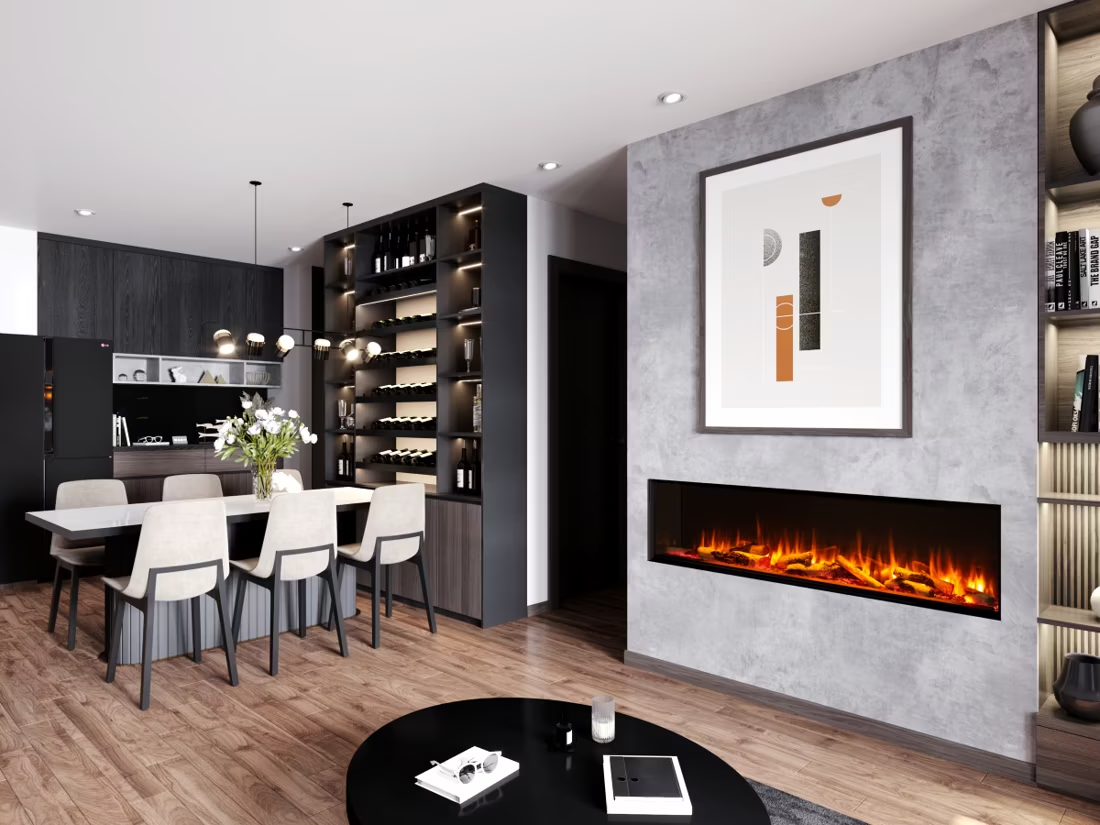
Because there's nothing to vent and no gas line to run, electric units are the easiest hearth project in the county—a wall-mounted unit or a fireplace insert can go into a finished basement, a converted porch, or a bedroom addition that the main furnace struggles to reach evenly. Power comes through Penelec (Pennsylvania Electric Company) across most of McKean County, and running one is closer to running a space heater than a furnace, which is exactly the point: zone heat for the room you're actually sitting in, on top of whatever's already keeping the rest of the house warm.
Three steps. No salesperson until you're ready.
Tell us about your project
Your zip code, your situation, and the fuel you're leaning toward—or let the answers point you to one.
See what's actually available
The brands dealers within 100 miles genuinely carry—real options, never a catalog mirage.
Get your dealer & Project Guide
A trusted local dealer, plus the free Project Guide & Parts List that names every component of the job.
Frequently Asked Questions
How much does an electric fireplace installation cost in McKean County?
Plug-in electric fireplaces and stoves that don't require new wiring typically run $300 to $900 installed, since there's no venting or gas line work involved. Built-in wall units or inserts that need a dedicated 120V or 240V circuit run higher, usually $800 to $2,000, depending on whether an electrician needs to open a wall or run new line from the panel. Units going into an existing masonry fireplace opening (as an insert) sit in the middle of that range. Local dealers can give you a firm number after seeing the room and the existing wiring.
Will an electric fireplace actually heat my home in McKean County's winters?
Not the whole house, and it's worth being direct about that. With average winter lows around 13°F and a winter season about as demanding as Burlington, Vermont's, McKean County winters are genuinely cold, and most electric units top out around 5,000–5,500 BTU of usable heat—enough to comfortably warm a single room (roughly 400 square feet), but not a substitute for a furnace, wood stove, or gas system on a sub-zero night. Think of electric as targeted heat for the room you use most, layered on top of your home's primary heat source, not a replacement for it.
What's the difference between an electric insert, a wall-mounted unit, and a freestanding electric stove?
An electric insert is built to slide into an existing masonry fireplace opening, giving an old, drafty wood-burning fireplace a flame effect and real heat without any chimney work. A wall-mounted (or built-in) unit is framed into a wall like a TV, often chosen for new construction or remodels in McKean County homes. A freestanding electric stove looks like a traditional wood stove but plugs into a standard outlet—a popular choice for camps and seasonal cabins near the Allegheny National Forest where running gas or wood isn't practical. All three plug into standard household power; larger built-in models may call for a dedicated circuit.
Do I need a permit to install an electric fireplace in McKean County?
Most plug-in electric fireplaces and stoves don't require a permit since they're treated the same as any other appliance you plug into an outlet. Built-in units that require new wiring or a dedicated circuit typically need an electrical permit through your local municipality's code office, since that work has to meet current electrical code. Local dealers who handle installation generally know which municipalities in McKean County require sign-off and take care of that step as part of the job.
Will my electric fireplace work if the power goes out?
No—and this is the biggest practical difference between electric and wood heat in a rural county like McKean. An electric fireplace needs household power to run, so during a winter storm outage it goes dark along with everything else. For homes near the Allegheny National Forest or on rural lines where outages can stretch for hours, many owners pair an electric unit for everyday convenience with a wood stove or fireplace as backup heat that works with no power at all. If backup heat during outages matters to you, that's worth discussing with a local dealer before you commit to electric as your only hearth appliance.
How much does it cost to run an electric fireplace in McKean County?
Most electric fireplaces draw around 1,500 watts on the heater setting, which at typical Penelec residential rates works out to roughly 15–20 cents an hour of heater use—considerably cheaper per hour than most people expect, though it adds up over a long McKean County winter if run constantly. Running the unit in flame-only mode (no heat) uses only a fraction of that, which is common for shoulder-season ambiance in spring and fall. It's a reasonable cost for supplemental zone heat, but not economical as a whole-home heating strategy given the county's long, demanding winter heating season.
Electric vs. wood—which is right for my McKean County home?
Wood remains a serious primary or backup heat option in McKean County—oak, hickory, maple, and cherry are all common locally, and cutting permits through the Allegheny National Forest run about $20 per cord during the May-to-October season, making self-cut firewood genuinely affordable. Wood also keeps working when the power doesn't. Electric, on the other hand, wins on convenience: no ash, no wood handling, no chimney to maintain, and installation that doesn't touch your existing structure. Many McKean County homeowners use both—wood or a furnace for real heating load, electric for a low-maintenance secondary room or a seasonal camp where running a chimney isn't practical.
Can I put an electric insert into my existing wood fireplace?
Yes, and it's one of the more common electric projects in older McKean County homes—Bradford and Smethport both have a fair number of houses with original masonry fireplaces that no longer get used for wood. An electric insert slides into that existing opening, usually with a simple surround adapter kit, and plugs into a nearby outlet or a new outlet added inside the firebox. It restores the look of a working fireplace without reopening the chimney question, and it's typically the lowest-cost hearth upgrade available for a house with an unused fireplace.
What's the best electric fireplace for a McKean County home?
For everyday living room or basement use, mid-range models from Dimplex or Napoleon offer realistic flame effects and the standard 4,600–5,200 BTU heater most households want, with thermostat control so the unit isn't running full heat constantly. For seasonal camps near the Allegheny National Forest that only need occasional ambiance and light heat, a smaller plug-in stove-style unit is usually the more practical and less expensive choice. A local dealer can walk through your room's size and how much heat, versus flame effect alone, actually matters to you before recommending a specific model.
Can I put a TV above my fireplace?
Yes—with an asterisk. Fireplaces are hot and TVs don't like heat. Either put a mantel between them to deflect rising warmth, or choose a fireplace with heat-management technology that creates a cool zone on the wall above—the wall stays around 125 degrees, barely warm, while the room still gets full heat. If you like clean lines and don't want a mantel, heat management is the answer.
Do electric fireplaces actually produce heat?
Yes—most put out around 4,800–5,000 BTUs from a standard outlet, which comfortably warms a bedroom, office, or den as a comfort-zone heater. What they won't do is carry a whole house the way wood, gas, or pellet can. Think of electric as ambiance-first with honest supplemental heat: flames on with no heat in July, flames plus warmth in January.
How much should I budget for a fireplace?
For an average home—covering the fireplace, the vent pipe, and basic installation—a budget between $3,900 and $5,500 gives you a lot of options across wood, gas, and pellet. By the time you add finish work, gas line, and electrical, the average complete installation lands between $5,000 and $12,000 all-in. In a remodel or new build, a good rule is to put about 2.5% of the total project cost toward the fireplace.
Does a fireplace add value to my home?
On average, a fireplace adds back to the home about the same amount you spent installing it. Add the monthly savings from heating the rooms you actually use instead of the whole house—often hundreds of dollars a year—and the value case is strong before you even count what a fire does for how your family uses the room.
Stove and Fireplace Dealers in McKean County
Find your electric fireplace in McKean County.
Tell us a bit about your home and we'll match you with the right electric fireplace, insert, or stove, plus a free Project Guide & Parts List—the exact unit, wiring requirements, and your recommended local McKean County dealer.
Find Your Fireplace →