
Find the Right Fireplace for McKean County's Deep-Winter Climate.
Wood, gas, pellet, and electric fireplace resources for every borough and township in McKean County—from Bradford to Smethport to Kane. Get matched with a trusted local hearth dealer who knows what actually works on the Allegheny Plateau.
Every Project Starts From One of These Five Situations
Heating through the Allegheny Plateau's long, cold winters.
McKean County sits high on the Allegheny Plateau in Pennsylvania's northern tier, much of it wrapped in the Allegheny National Forest. Elevations run 1,400 to 2,400 feet, winter lows average 13°F, and the county racks up roughly 7,459 heating degree days a season—a load closer to Burlington, Vermont than to most of Pennsylvania. Heating season here typically runs from October through April. Oak, hickory, maple, and cherry are all abundant locally, and Bradford's history as the birthplace of the American oil industry left the county with a long, practical tradition of managing its own heat rather than waiting on someone else to deliver it.
What you'll find on this hub: hearth retailers, service technicians, and fuel suppliers serving every community in the county—Bradford, the county's largest population center, Smethport as county seat, and smaller boroughs like Kane, Port Allegany, Eldred, and Mount Jewett scattered along Route 6 and the plateau's back roads. Pick a fuel below to get into specifics—local dealers, installation costs, recommended units—whether you're heating a Route 6 farmhouse, a Bradford rowhome, or a camp near the national forest.
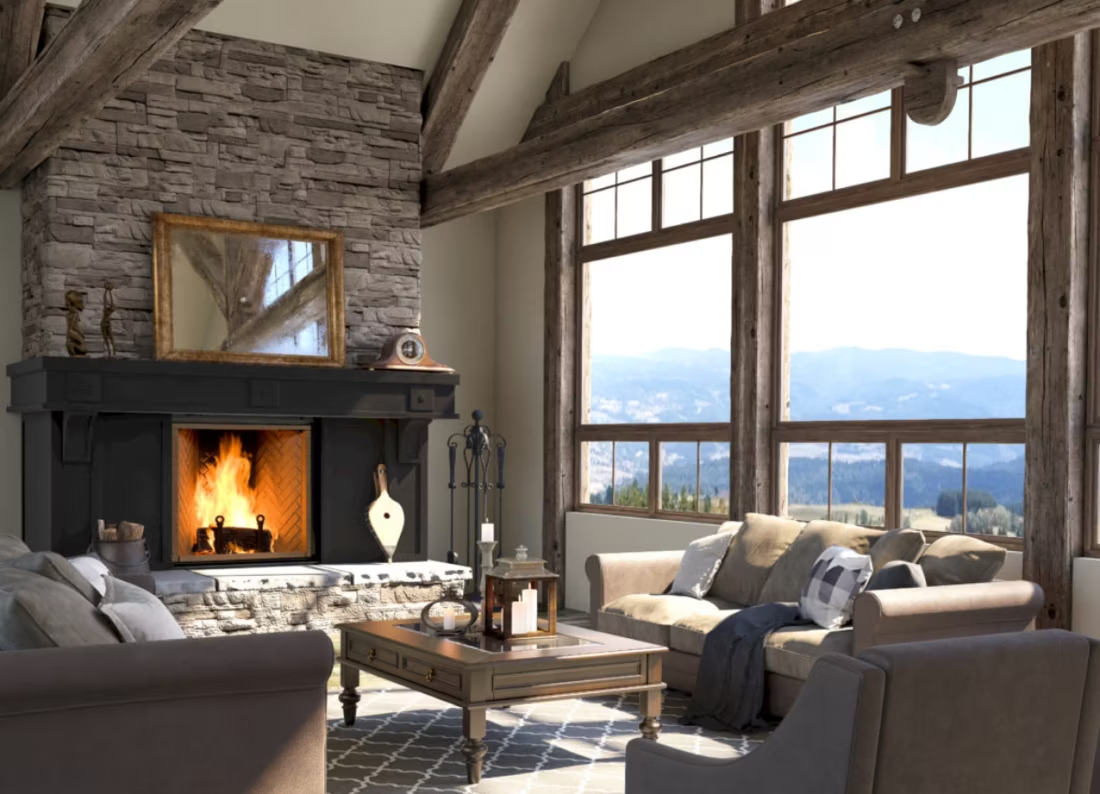
Four fuels. One honest answer for McKean County.
Three steps. No salesperson until you're ready.
Tell us about your project
Your zip code, your situation, and the fuel you're leaning toward—or let the answers point you to one.
See what's actually available
The brands dealers within 100 miles genuinely carry—real options, never a catalog mirage.
Get your dealer & Project Guide
A trusted local dealer, plus the free Project Guide & Parts List that names every component of the job.
Frequently Asked Questions
Which fuel works best in McKean County?
It depends on the home and how hands-on you want to be with your heat. Wood is a natural fit—oak, hickory, maple, and cherry are all common locally, sourced from private woodlots or under an Allegheny National Forest cutting permit, and a well-loaded catalytic stove can carry a house through a stretch of single-digit lows without any help from the grid. Gas works well in Bradford and the boroughs with piped natural gas service, a legacy of the region's oil-and-gas industry, and propane fills the gap in rural townships where there's no gas main. Pellet stoves are well supported here—Energex, Hamer Pellet Fuel, and Greene Team Pellet Fuel are all regionally produced or distributed—giving you wood-like heat without splitting and stacking. Electric fireplaces are a good supplemental option for bedrooms, additions, or rentals, but with 7,459 heating degree days a year, they're not built to be a McKean County home's only heat source. Most households here run wood or pellet as primary heat with gas or electric backing it up in secondary rooms.
Do I need a permit to install a fireplace in McKean County?
In most cases, yes, though permitting in McKean County runs through individual boroughs and townships rather than a single county office, since the county follows the Pennsylvania Uniform Construction Code with local enforcement. New wood stoves and inserts need to meet EPA 2020 NSPS emissions standards, and gas installations require both a building permit and a licensed gas-fitter for the line work. If you're planning to cut your own firewood on national forest land, note that an Allegheny National Forest firewood permit is a separate process from your local building permit—one doesn't substitute for the other. Electric fireplaces usually skip the permit process unless you're hardwiring a built-in unit into a new circuit. Most hearth retailers serving the county handle the permit paperwork as part of installation, so you're not chasing down your township office yourself.
Are there air quality restrictions on wood burning in McKean County?
No—McKean County has no nonattainment designation and no formal wood-smoke curtailment program, unlike counties in inversion-prone western basins. That said, Bradford and some of the smaller boroughs sit in narrow river valleys that can hold smoke on still, cold nights, so an EPA-certified stove burning seasoned oak, hickory, maple, or cherry (rather than green or wet wood) makes a real difference for your neighbors and your own chimney's creosote buildup. There's no regulatory reason to upgrade an older stove here, but the region's Oregon-style rebate programs don't exist locally either—replacement is purely a comfort-and-efficiency decision.
Can one local hearth retailer handle all four fuel types?
Many hearth retailers based in Bradford, the county's largest town, carry three or four fuel types under one roof, since it's the natural hub for a rural county this size. Dealers in smaller boroughs like Kane or Port Allegany more often specialize—commonly wood and pellet, since both fuels are well supplied locally, with gas and electric as secondary lines. If you're cross-shopping fuels, it's worth calling ahead to confirm a dealer stocks working displays of the specific type you're considering rather than assuming every location carries everything.
How does service work in rural areas of McKean County?
Most chimney sweeps and appliance technicians serving McKean County are based around Bradford or Smethport and travel out along Route 6 and the connecting township roads to reach Kane, Port Allegany, Eldred, and Mount Jewett. Plateau winters bring real snow load and icy back roads, so a rural service call can mean a travel fee and a wider scheduling window than you'd get in town. Booking your annual sweep or gas inspection in September or early October—before the plateau's first real cold snap—is much easier than trying to get someone out during a January outage. If you're on wood or pellet as primary heat, keeping a backup fuel source or a battery reserve for pellet-stove electronics is a smart hedge against a slow winter service response.
What's the typical cost range for fireplace installation across all fuel types in McKean County?
Ranges vary by fuel and by how much venting or gas line work is involved. Wood stove or insert installation: roughly $3,500-$8,000 for a typical job, more if a full masonry chimney liner is needed. Gas fireplace, insert, or stove: roughly $4,000-$9,500, with the lower end applying where gas service already reaches the house. Pellet stove or insert: roughly $3,800-$6,500 for most installs. Electric fireplace: $200-$2,500 for the unit itself, plus $300-$1,000 in labor for anything beyond a simple plug-in placement. The county + fuel pages above break these numbers down further against local retailer pricing.
What is an in-home preview and do I need one?
It's a visit where a hearth professional measures your space, confirms the model you picked actually works in your home, and walks the specs—framing, gas line, venting, finish work—before anything is ordered. Some details you just can't know until you see the house. Never make a down payment without one; it's the single most-skipped step that burns buyers.
Wood, gas, pellet, or electric—how do I choose?
Match the fuel to your life, not the other way around. Wood: lowest fuel cost and total power-outage independence, but you're hauling and stacking. Gas: press a button, set a thermostat, no maintenance to speak of. Pellet: wood economics with automatic feeding, in exchange for weekly cleaning and a need for electricity. Electric: plugs in anywhere with honest supplemental heat. Nobody regrets the fuel that fits how they actually live.
How much should I budget for a fireplace?
For an average home—covering the fireplace, the vent pipe, and basic installation—a budget between $3,900 and $5,500 gives you a lot of options across wood, gas, and pellet. By the time you add finish work, gas line, and electrical, the average complete installation lands between $5,000 and $12,000 all-in. In a remodel or new build, a good rule is to put about 2.5% of the total project cost toward the fireplace.
Can a fireplace actually lower my heating bill?
Yes—by creating a comfort zone. A furnace heats every square foot of the house just to warm the one room you're in; a gas fireplace on low burns roughly a sixth of the gas a typical furnace does. Set the furnace around 55–60 degrees as a baseline, then heat the rooms your family actually uses. Families who heat this way commonly save $20–$60 a month.
Stove and Fireplace Dealers in McKean County
Listings include WhyFire partner dealers, dealers we have verified as authorized for the brands we recommend, and established local businesses that carry hearth products. Every listing shows which one it is. The ones marked Preferred run on WhyFire's software, so they can show you real pricing and book your appointment right here. No manufacturer pays for placement. How we verify dealers →
Peterson Refrigeration & Ac
Sisson's Chainsaws & Stoves
CJ's Home Decor & Fireplaces
Find your fireplace in McKean County.
Pick your fuel below and we'll match you with a trusted local dealer, plus send a free Project Guide & Parts List—the exact parts, vent kit included, for your specific McKean County project.
Find Your Fireplace →