
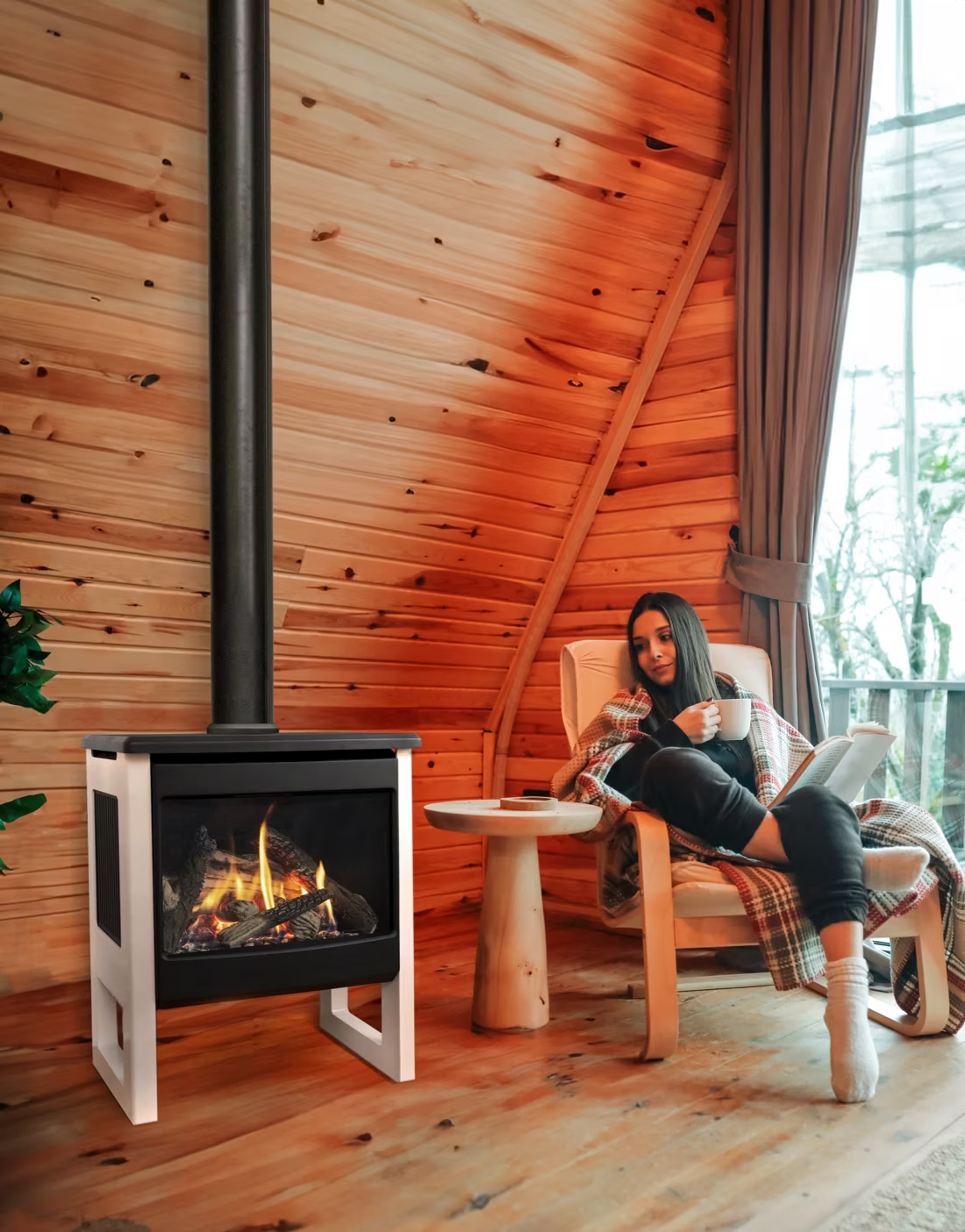
Instant heat built for Hemlock Farms's Pocono winters.
With no natural gas mains reaching this private Pike County community, most gas fireplaces here run on propane. We'll match you with a local dealer who knows how to size and vent one correctly.
Every Project Starts From One of These Five Situations
Propane-powered comfort in the Pocono woods.
Hemlock Farms sits at roughly 1,500 feet in the wooded lake country of Lehman Township, Pike County—a gated community where winter lows average 14°F and the area racks up over 7,000 heating degree days a year, putting it in the same cold-climate range as Burlington, Vermont. Long, snowy winters and the region's dense hardwood forest of oak, hickory, maple, and cherry have historically made wood the default heat source here, but a growing number of homeowners—especially in year-round primary residences and updated lake houses—are choosing gas for the convenience of heat at the flip of a switch.
There's no natural gas utility serving Hemlock Farms, so gas fireplaces in this community run on propane rather than piped natural gas—delivered and refilled by regional propane suppliers that serve Pike County. Electric service comes through either PPL Electric Utilities or Pike County Light & Power depending on where your lot falls, and the two carry noticeably different residential rates (roughly 12.3¢ and 18.7¢ per kWh), which is worth knowing if you're weighing a gas fireplace with electronic ignition against a simple electric insert. Either way, a well-vented propane fireplace delivers real radiant heat during the ice storms that regularly knock out power in this part of the Poconos.
Three steps. No salesperson until you're ready.
Tell us about your project
Your zip code, your situation, and the fuel you're leaning toward—or let the answers point you to one.
See what's actually available
The brands dealers within 100 miles genuinely carry—real options, never a catalog mirage.
Get your dealer & Project Guide
A trusted local dealer, plus the free Project Guide & Parts List that names every component of the job.
Frequently Asked Questions
How much does a gas fireplace installation cost in Hemlock Farms?
Because Hemlock Farms runs on propane rather than piped natural gas, most installations here fall between $4,000 and $9,500. A direct-vent propane insert going into an existing masonry fireplace with an already-installed tank sits on the lower end. A new built-in propane fireplace in a remodel—with fresh venting, gas line run from the tank, and possibly a new propane tank installation—sits toward the higher end. Homes without an existing propane tank should budget for tank delivery and setup from a regional propane supplier as a separate line item.
Can I convert my existing wood fireplace to gas?
Yes, and it's a common project in Hemlock Farms's older lake-house stock, where many homes were built with masonry wood fireplaces in the 1980s and '90s. A propane insert typically slides into the existing firebox and vents through the existing chimney with a stainless liner, running $4,500 to $8,500 depending on the insert and whether a propane line needs to be run from your tank. Homes already set up with a propane appliance (range, water heater, or furnace) usually see costs on the lower end since the tank and regulator infrastructure already exists.
Do I need natural gas, or is propane the standard here?
Propane is the standard in Hemlock Farms—there's no natural gas main serving this community, so essentially all gas fireplaces here are propane-fueled. That means either an above-ground or buried tank on your property, filled by a regional propane delivery service. Most gas fireplace models sold today can be configured for propane with the correct orifice and regulator, so fuel choice doesn't limit which units you can consider—it just changes the tank logistics your installer will walk you through.
Will my gas fireplace work during a power outage?
This matters more in Hemlock Farms than in most places—ice storms and downed lines in this part of Pike County can knock out power for days, and with two different electric utilities serving the community (PPL and Pike County Light & Power), outage patterns can vary block to block. Most propane fireplaces with IPI (intermittent pilot ignition) run on battery backup and light on demand even with no power. Valor units take it further, generating their own electricity from the pilot's thermocouple with no batteries required at all. If backup heat during outages is a priority, ask your local dealer specifically about the ignition system before you buy.
What's the difference between a gas fireplace, gas insert, and gas stove?
A gas fireplace is a fully built-in unit framed into a wall—typical for new construction or a major remodel. A gas insert drops into an existing masonry fireplace opening and uses your existing chimney as the vent path, which suits Hemlock Farms's older homes with existing wood fireplaces. A gas stove is a freestanding cabinet-style unit that sits on the floor, often used in rooms without an existing chimney or fireplace opening. For most homes in the community with an existing masonry fireplace, an insert is the more direct upgrade.
Do I need a permit to install a gas fireplace in Hemlock Farms?
Yes—a building permit through the Lehman Township or Pike County Codes Department is required for new gas fireplace installations, along with proper gas-fitting for the propane line by a licensed installer. Because Hemlock Farms is a private, deed-restricted community, exterior vent placement may also need sign-off from the community's architectural review committee, particularly for direct-vent terminations on visible exterior walls. A local hearth dealer familiar with the community can usually coordinate both the township permit and the HOA review as part of the install.
What's the difference between vented and vent-free gas fireplaces?
Vented (direct-vent) gas fireplaces draw combustion air from outside and exhaust it back outside through sealed venting—they're the cleanest and most universally recommended option. Vent-free units burn fuel directly into the room without external venting; Pennsylvania permits them, but they come with strict room-size and ventilation requirements and release some combustion byproducts indoors. For Hemlock Farms's cold, well-sealed lake homes, direct-vent propane units are the more common recommendation—they deliver stronger heat output for the long winters here without the indoor air quality trade-offs of a vent-free unit.
How often should my gas fireplace be serviced?
Plan on an annual inspection, ideally before the start of the heating season in late fall. A technician will check the burner, pilot assembly, venting, and the propane line and regulator, and clean the glass and firebox. This runs roughly $150 to $250 with most regional service providers. Given how much use a propane fireplace gets through a Hemlock Farms winter with 7,000-plus heating degree days, skipping a season isn't a great idea—buildup on the pilot or ignition components is the most common cause of a no-light service call.
Gas vs. wood—which is right for my home?
Wood is deeply practical in Hemlock Farms given the surrounding oak, hickory, maple, and cherry forest—it runs without electricity, which matters during the multi-day outages that hit this part of Pike County, and firewood is often available right off the property. Propane gas offers instant on-off heat, no ash or wood handling, and more consistent output, but it depends on tank fuel deliveries and, without a Valor-style self-powered pilot, sometimes on battery backup. Pellet stoves running regional brands like Energex or Greene Team Pellet Fuel are a middle option—cleaner than cordwood but still electricity-dependent for the auger. Many homes here end up with propane for daily convenience and a wood-burning unit as backup heat for real winter storms.
What's the difference between an insert and a zero-clearance fireplace?
An insert is a fireplace that slides into a pre-existing wood-burning fireplace—if you don't have one, there's nothing to insert it into. A zero-clearance fireplace is built into a framed wall, which makes it the answer for remodels and new construction. Simple test: existing masonry fireplace means insert; blank or framed wall means zero-clearance.
What's the difference between radiant and convective fireplace heat?
Most fireplaces are a thin metal box—they heat fine, but you rely on the fan to move the warmth into the room. Radiant models use a thick cast-ceramic firebox, about an inch and a quarter thick, that soaks up the fire's heat and radiates roughly 25–30% more warmth into the room with no fan running. If you watch TV in the same room or want heat in a power outage, radiant is worth asking about.
How much should I budget for a fireplace?
For an average home—covering the fireplace, the vent pipe, and basic installation—a budget between $3,900 and $5,500 gives you a lot of options across wood, gas, and pellet. By the time you add finish work, gas line, and electrical, the average complete installation lands between $5,000 and $12,000 all-in. In a remodel or new build, a good rule is to put about 2.5% of the total project cost toward the fireplace.
Can I install a fireplace myself?
If you're putting a fire in your house on purpose, it's best to work with an expert. Unless you're genuinely experienced in framing, gas line, vent pipe, and the national code on clearances to combustibles, have a professional do it—and ideally the same company that sells you the fireplace, so warranty, service, and liability all live under one roof.
Nearby Dealers
Hearth shops serving Hemlock Farms and the surrounding area. Every listing shows whether it is a WhyFire partner, a dealer we have verified as authorized for the brands we recommend, or a local business carrying hearth products. No manufacturer pays for placement. How we verify dealers →
Jim Creegan - Certified Chimney Sweep
Gardens To Grow, Llc
Highland Chimney Sweep
Spring Hill Services
Firefox Energy Concepts
Integrity Chimney Service
Find your gas fireplace in Hemlock Farms.
Tell us about your home and propane setup, and we'll match you with a trusted local dealer and send over a free Project Guide & Parts List—the exact parts, venting, and recommended installer for your Hemlock Farms project.
Find Your Fireplace →