
Find out if a pellet stove actually makes sense for your Greensburg home.
Greensburg is natural-gas country, so pellet heat is a specialty choice here—not the default. We'll help you figure out if it fits, then connect you with a local dealer who actually installs them.
Every Project Starts From One of These Five Situations
In Greensburg, pellet stoves are the exception, not the rule.
Westmoreland County sits over the Marcellus Shale, and cheap, reliable natural gas service runs through most of Greensburg's neighborhoods—from the older housing stock near downtown to newer construction on the outskirts. That's the main reason solid-fuel appliances, wood or pellet, never became the default heating choice here the way they have in colder, off-grid parts of Pennsylvania. Winters are real—average lows around 21°F, roughly 5,855 heating degree days, and a Climate Zone 5A rating similar to Bismarck, ND in severity if not duration—but most homeowners solve for that with a gas furnace and a gas fireplace, not a hopper full of pellets.
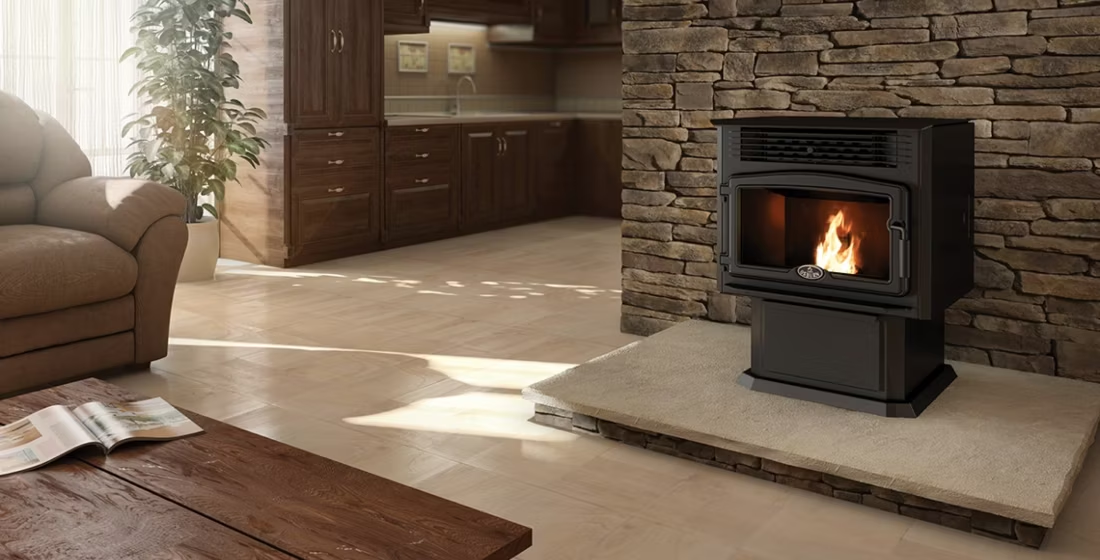
That said, pellet stoves do show up in Greensburg homes for specific reasons: a finished basement or sunroom that isn't on the main gas line, a backup heat source for West Penn Power outages, or simply the appeal of a low-maintenance, glass-front fire without cutting and stacking cordwood. Regional pellet brands like Energex, Hamer Pellet Fuel, and Greene Team Pellet Fuel are all produced within a few hours of Westmoreland County, so fuel supply isn't the obstacle—it's mostly that fewer local dealers stock and service pellet units compared to gas. If you're set on pellet heat, the key is finding one of the dealers who actually does this work regularly, not a big-box store that sells the appliance and disappears after the sale.
Three steps. No salesperson until you're ready.
Tell us about your project
Your zip code, your situation, and the fuel you're leaning toward—or let the answers point you to one.
See what's actually available
The brands dealers within 100 miles genuinely carry—real options, never a catalog mirage.
Get your dealer & Project Guide
A trusted local dealer, plus the free Project Guide & Parts List that names every component of the job.
Frequently Asked Questions
How much does a pellet stove installation cost in Greensburg?
Nationally, a pellet stove installation typically runs $3,000 to $6,000 depending on the unit, whether it vents through an existing masonry chimney or needs new PL-vent pipe run through a wall, and any hearth pad work required for clearance. In Greensburg specifically, expect pricing toward the higher end of that range simply because fewer dealers specialize in pellet installs compared to gas—there's less local competition driving prices down. A dealer match through Find My Fireplace will get you a real, in-home quote rather than a guess.
Why aren't pellet stoves more common in Greensburg?
Mostly because natural gas is so widely available here. Westmoreland County sits in a region with mature gas infrastructure, and most Greensburg homes already have a gas line for the furnace, water heater, or range—which makes a gas fireplace or insert a much easier add-on than a pellet stove that requires hopper loading, electricity to run the auger and blower, and periodic ash removal. Pellet heat still has real advantages (cleaner burn than wood, no chimney sweep required in the same way), but in a market this saturated with cheap gas, it stays a niche pick rather than the default.
Do pellet stoves work during a power outage?
No, not without a battery backup or generator—this is the biggest practical trade-off compared to wood heat. Pellet stoves rely on an electric auger to feed fuel and a blower to distribute heat, so when West Penn Power service drops during an ice storm or high-wind event, the stove stops working unless you have a UPS battery backup or standby generator wired in. If backup heat during outages is your main goal in Greensburg, a wood stove or a gas fireplace with battery-backed ignition are both more reliable choices—worth discussing with a local dealer before you commit to pellet.
Where can I buy pellet fuel near Greensburg?
Regional brands like Energex, Hamer Pellet Fuel, and Greene Team Pellet Fuel are all produced in Pennsylvania and sold through hardware stores, farm supply shops, and hearth dealers in the Westmoreland County area. Pricing in this region typically runs in the $250 to $300 per ton range, though it's worth calling ahead in fall—because pellet demand is lower here than in heavier pellet-burning states, some retailers only stock a few pallets at a time and can sell out before a cold snap.
What size pellet stove do I need for my home?
For supplemental heat in a single room, den, or finished basement—the most common Greensburg use case—a small to mid-size pellet stove rated for 1,000 to 1,500 square feet is usually plenty. Larger units capable of heating 2,000+ square feet exist, but if you're trying to replace whole-home gas heat with pellet, that's an unusual enough setup that you'll want a local dealer to walk your specific floor plan and insulation before sizing anything.
Pellet stove vs. gas fireplace—which is right for my Greensburg home?
For most Greensburg homeowners, gas wins on convenience: instant on/off, no fuel storage, and a straightforward install if you already have a gas line from West Penn Power's service area running to your street. Pellet stoves offer a real, visible fire and slightly lower fuel cost per BTU in some years, but they require loading a hopper, cleaning ash, and running on electricity. If you already have gas service to the house, a direct-vent gas insert is usually the simpler, more supportable choice locally—pellet tends to make more sense for a room that's off the gas line or for homeowners who specifically want the ritual of tending a stove.
Do I need a permit to install a pellet stove in Greensburg?
Most likely yes—new solid-fuel appliance installations typically require a building permit through your local municipal codes office (Greensburg's codes department or the applicable Westmoreland County jurisdiction, depending on where you live). Because pellet installs are less frequent here than gas, it's worth confirming permit requirements directly with the office before scheduling work, and choosing a dealer who's pulled pellet permits before rather than one who's only done gas.
How much maintenance does a pellet stove need?
Pellet stoves need more frequent hands-on attention than a gas fireplace—daily or every-few-days ash removal from the burn pot during heavy use, a weekly glass and hopper check, and an annual professional cleaning of the venting and internal components. That maintenance load is one more reason gas has become the default in Greensburg: fewer homeowners here are set up for, or interested in, the weekly upkeep that pellet heat requires compared to a gas unit that mostly just runs.
Pellet vs. wood stove—which fits a Greensburg home better?
Both are less common here than in areas without easy natural gas access, but they solve different problems. Wood stoves work with zero electricity, burn local hardwoods like oak, hickory, maple, and cherry that are widely available around Westmoreland County, and provide true backup heat during a West Penn Power outage. Pellet stoves are cleaner and easier to load but need electricity to run—meaning they fail exactly when a wood stove would keep working. If backup heat during outages matters to you, wood is the more dependable of the two; if convenience and less smoke matter more and you're not worried about outages, pellet is the easier day-to-day choice.
How often does a pellet stove need cleaning?
A clean pellet stove is a happy pellet stove. Plan on cleaning the burn pot about once a week when you're burning regularly—ash and clinkers gum up the air holes just like a pellet barbecue. Most pellet stove problems trace back to skipped cleaning that nobody explained up front. Some designs make it easy with a trapdoor burn pot: pull a lever and the gunk drops into the ash pan.
Why is my open fireplace making my house colder?
Open fireplaces suck—literally. As the fire burns, it consumes air your furnace already paid to heat and pulls it out through the chimney, so the house is actually colder after the fire goes out than before you lit it. An insert fixes this: it seals the chimney, puts fixed glass across the front, and turns that hole in your house into a real heat source.
Can a fireplace actually lower my heating bill?
Yes—by creating a comfort zone. A furnace heats every square foot of the house just to warm the one room you're in; a gas fireplace on low burns roughly a sixth of the gas a typical furnace does. Set the furnace around 55–60 degrees as a baseline, then heat the rooms your family actually uses. Families who heat this way commonly save $20–$60 a month.
What is an in-home preview and do I need one?
It's a visit where a hearth professional measures your space, confirms the model you picked actually works in your home, and walks the specs—framing, gas line, venting, finish work—before anything is ordered. Some details you just can't know until you see the house. Never make a down payment without one; it's the single most-skipped step that burns buyers.
Nearby Dealers
Hearth shops serving Greensburg and the surrounding area. Every listing shows whether it is a WhyFire partner, a dealer we have verified as authorized for the brands we recommend, or a local business carrying hearth products. No manufacturer pays for placement. How we verify dealers →
A Capital Roofing
Fireplace And Patio Place
Howell Craft Inc.
Tomayko Construction & Alternative Heating Llc.
Clear Water Pools LLC
Halls Pools & Fireplaces
All Seasons Fireplace & Home
Pellet Brands Stocked Around Greensburg
Manufacturers will point you to the nearest stocking dealer.
Find your pellet stove in Greensburg.
Tell us about your home and we'll be straight with you about whether pellet is the right fit—then match you with a local dealer and send over a free Project Guide & Parts List with the exact vent kit and parts your Greensburg installation needs.
Find Your Fireplace →