
A Clear-Eyed Look at Pellet Heat in Girard, PA.
Natural gas heats most homes here, but pellet stoves still make sense for a specific kind of Girard property. Here's an honest read on the fit, plus how to connect with a trusted local dealer.
Every Project Starts From One of These Five Situations
Natural gas dominates here—pellet fills a narrow niche.
Girard is a small borough of under 3,000 people tucked into Erie County's Lake Erie snowbelt, sitting at 766 feet in elevation with a long, cold heating season and average winter lows around 21°F—a genuinely cold climate 5A zone that would seem to invite wood and pellet heat in equal measure. But the borough's natural gas infrastructure reached most streets here decades ago, and that changed the math. Most Girard homes rely on natural gas as primary heat, with electric filling in where gas lines don't run.
That leaves pellet stoves in a genuinely narrow lane. A handful of homeowners install one in a detached garage, a camp near the lakeshore, a mobile home outside the gas footprint, or a farmhouse on the edge of town where running a gas line would cost more than the stove itself. If you're one of them, pellets from regional Pennsylvania producers—Energex, Hamer Pellet Fuel, and Greene Team—are readily available through Erie County hardware and farm supply stores, so fuel access isn't the obstacle. More often, the obstacle is that a gas insert will simply do the job with less maintenance for most Girard addresses.
Three steps. No salesperson until you're ready.
Tell us about your project
Your zip code, your situation, and the fuel you're leaning toward—or let the answers point you to one.
See what's actually available
The brands dealers within 100 miles genuinely carry—real options, never a catalog mirage.
Get your dealer & Project Guide
A trusted local dealer, plus the free Project Guide & Parts List that names every component of the job.
Frequently Asked Questions
Is a pellet stove a realistic option for a house in Girard?
It can be, but it's not the default choice here the way it might be in a rural area without gas service. Girard's natural gas network covers most of the borough, and for homes already on the line, a gas insert or freestanding gas unit almost always makes more sense—lower installed cost, no hopper to fill, no ash to empty. Pellet stoves tend to show up in Girard on properties that sit outside the gas footprint: outbuildings, camps along the lakeshore, older farmhouses on the township line, or homes where a family wants the look of a real flame with less mess than cordwood. If that describes your situation, a local dealer can tell you honestly whether pellet is worth it for your specific address.
What does a pellet stove installation cost in Girard?
Because pellet heat isn't common locally, there isn't a deep bench of installers competing on price the way there is for gas fireplace conversions. Regionally, a freestanding pellet stove with venting typically installs for $3,000 to $6,500 depending on the unit and whether you need a new dedicated electrical circuit—pellet stoves require standard household power to run the auger, hopper feed, and combustion blower. A pellet insert into an existing masonry fireplace runs slightly higher once a liner and vent kit are factored in. Get a firm quote from a trusted dealer rather than assuming a national average applies directly to your job.
Where can I buy pellet fuel near Girard?
Regional Pennsylvania producers supply most of what's sold in Erie County, including Energex, Hamer Pellet Fuel, and Greene Team Pellet Fuel. You'll typically find bagged pellets at hardware stores and farm supply outlets around Erie and Girard Borough, with pricing generally in the $250 to $300 per ton range, though it moves with demand each fall. Because pellet appliances are less common here, stock can sell down faster during a cold snap than in a market where pellet heat is the norm—buying your season's supply early is worth doing.
Do I need a permit to install a pellet stove in Girard?
Yes. Pellet stoves are treated as solid-fuel appliances under Pennsylvania building code, so you'll need a building permit through Girard Borough or Erie County code enforcement, along with an inspection confirming proper clearances and venting termination. Because so few pellet permits come through in a given year here, it's worth confirming the process directly with the borough before your installer schedules the job—smaller Erie County jurisdictions sometimes handle solid-fuel permits differently than the far more routine gas permits.
Will a pellet stove keep working if the power goes out during a Lake Erie winter storm?
Not on its own. Unlike a wood stove, a pellet stove needs electricity to run the auger that feeds fuel and the blower that pushes heat into the room—no power means no heat, even with a full hopper. Girard gets lake-effect ice and wind events that knock out power for hours or days, and homes here are served by either Pennsylvania Electric Co. (Penelec) or the Borough of Girard's own municipal electric utility depending on location. If backup heat during outages matters to you, a small battery backup or generator sized for a pellet stove's modest draw solves the problem—or you may want to weigh a pellet stove against a wood-burning option, which needs no power at all.
What's the difference between a pellet stove and a pellet insert?
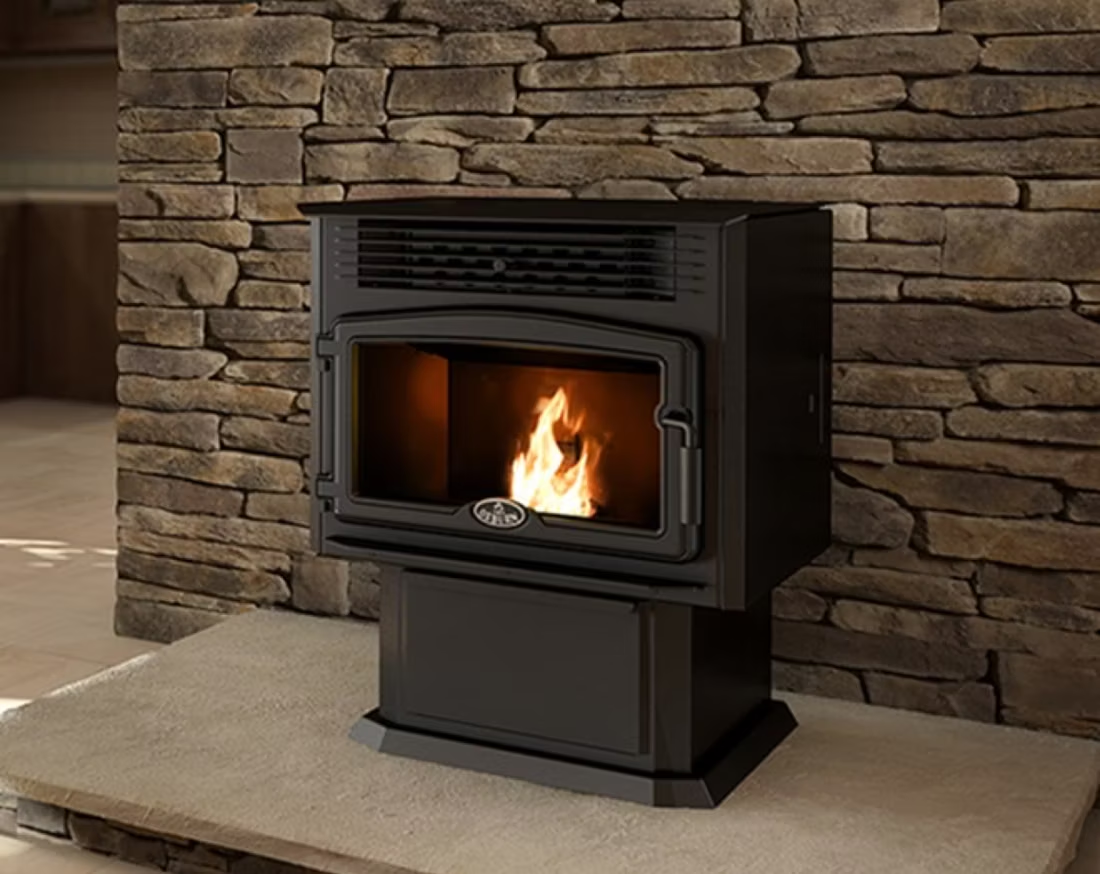
A pellet stove is a freestanding unit that sits on its own hearth pad and vents out a wall or through the roof—it can go almost anywhere with the right clearances, which is why it's the more common choice for garages, camps, and outbuildings around Girard. A pellet insert is built to slide into an existing masonry fireplace opening, using a vent kit routed through the chimney. Since standalone masonry fireplaces aren't the norm in most newer Girard homes, most local pellet installations lean toward the freestanding stove rather than the insert.
Pellet vs. gas—which makes more sense for my Girard home?
For most homes inside Girard's natural gas service area, gas wins on convenience and lower up-front cost—flip a switch, no hopper to fill, no ash to remove, no bag storage. Pellet earns its keep specifically where gas isn't an option: a detached structure, a property past the gas main, or a homeowner who wants a real flame and the character of a wood-adjacent fire without cutting and stacking cordwood. If your home already has a gas line run to it, there's rarely a strong case for choosing pellet instead.
Girard is surrounded by oak and hickory forest—why not just burn cordwood?
Plenty of people in Erie County do. Allegheny National Forest issues cutting permits, about $20 per cord, from May through October, for anyone willing to source their own oak, hickory, maple, or cherry. But inside Girard Borough itself, most homes are set up for natural gas, and full wood-burning setups are less common than in more rural parts of the county. Pellet stoves split the difference for some homeowners—a real-flame appliance without the chainsaw, splitting, and seasoning that cordwood requires, at the cost of needing electricity to run it.
How much maintenance does a pellet stove need?
Less than a wood stove, but more than a gas unit. Plan to empty the ash pan every few days during regular use, clean the burn pot weekly to keep the flame consistent, and have the exhaust venting and combustion blower professionally serviced once a year. Because pellet stoves are uncommon in Girard, finding a technician who services them regularly may mean going through the dealer who sold you the unit rather than a general chimney sweep—worth asking about before you buy.
Why is my open fireplace making my house colder?
Open fireplaces suck—literally. As the fire burns, it consumes air your furnace already paid to heat and pulls it out through the chimney, so the house is actually colder after the fire goes out than before you lit it. An insert fixes this: it seals the chimney, puts fixed glass across the front, and turns that hole in your house into a real heat source.
Why is a fireplace insert so efficient?
An insert does two things: it seals the chimney completely, so you stop losing air you already paid to heat, and it radiates warmth into the room through the firebox and glass. Most add a heat-exchange fan that pulls cool room air underneath, wraps it around the hot firebox, and pushes it back out warm. Your home is more efficient before you've even lit the first fire.
How much should I budget for a fireplace?
For an average home—covering the fireplace, the vent pipe, and basic installation—a budget between $3,900 and $5,500 gives you a lot of options across wood, gas, and pellet. By the time you add finish work, gas line, and electrical, the average complete installation lands between $5,000 and $12,000 all-in. In a remodel or new build, a good rule is to put about 2.5% of the total project cost toward the fireplace.
Can a fireplace actually lower my heating bill?
Yes—by creating a comfort zone. A furnace heats every square foot of the house just to warm the one room you're in; a gas fireplace on low burns roughly a sixth of the gas a typical furnace does. Set the furnace around 55–60 degrees as a baseline, then heat the rooms your family actually uses. Families who heat this way commonly save $20–$60 a month.
Nearby Dealers
Hearth shops serving Girard and the surrounding area. Every listing shows whether it is a WhyFire partner, a dealer we have verified as authorized for the brands we recommend, or a local business carrying hearth products. No manufacturer pays for placement. How we verify dealers →
Susi Builders Supply
Frontier Design Center
A Duchini Inc.
Weaver's Stove & Patio - Erie
Concord Plumbing & Heating, Inc.
Pellet Brands Stocked Around Girard
Manufacturers will point you to the nearest stocking dealer.
Find out if pellet heat is right for your Girard home.
Tell us about your property and we'll give you an honest read on whether pellet heat makes sense—plus match you with a trusted local dealer and a free Project Guide & Parts List covering the exact stove, vent kit, and parts for your Girard install.
Find Your Fireplace →