
Clean Gas Heat, Right Here in Folcroft.
Folcroft's rowhomes and postwar capes sit on tight Delaware County lots where a direct-vent gas fireplace makes more sense than a woodpile. Find the right unit and connect with a trusted local dealer.
Every Project Starts From One of These Five Situations
Convenient heat for a Delaware County borough.
Folcroft is a compact, roughly one-square-mile borough along the Delaware River, close to Philadelphia International Airport, built out mostly with attached rowhomes and small postwar capes on narrow lots. With a winter heating season comparable to other mid-Atlantic towns and average winter lows near 26°F, Folcroft's winters are real but nowhere near what a place like Buffalo, NY sees—this is steady, mid-Atlantic cold rather than extreme cold. Given the tight lot lines and shared walls common throughout the borough, wood-burning setups are rare here; gas is the practical, space-efficient standard for supplemental heat.
PECO Energy serves Folcroft for electric service, and PECO or a regional natural gas provider typically serves the same footprint for gas depending on your specific block—most homes here already have a gas line for the furnace or water heater, which makes adding a fireplace straightforward. For the borough's many older homes with existing masonry fireplaces, a direct-vent gas insert is often the fastest path to real heat: it reuses the chimney you already have, seals off the drafty open hearth, and delivers instant warmth without wood storage, ash, or the space a woodpile would take up on a small lot.
Three steps. No salesperson until you're ready.
Tell us about your project
Your zip code, your situation, and the fuel you're leaning toward—or let the answers point you to one.
See what's actually available
The brands dealers within 100 miles genuinely carry—real options, never a catalog mirage.
Get your dealer & Project Guide
A trusted local dealer, plus the free Project Guide & Parts List that names every component of the job.
Frequently Asked Questions
How much does a gas fireplace installation cost in Folcroft?
A typical gas fireplace or insert installation in Folcroft runs roughly $4,000 to $9,500, depending on the unit, whether you're converting an existing masonry fireplace or building out venting from scratch, and whether new gas line work is needed. Rowhome and cape-style installs are often on the lower end since a direct-vent insert can use an existing chimney or a short sidewall vent run through an exterior wall. Homes needing a new gas line extension or venting through multiple floors will run higher. A local installer can give you a firm number after seeing your fireplace and gas meter location.
Can I convert my existing wood fireplace to gas?
Yes, and it's a common project in Folcroft's older rowhome and cape housing stock. A gas insert typically slides into your existing masonry firebox, with a stainless liner run up the existing chimney or a sidewall vent kit run straight out the back if the chimney isn't usable. Costs generally run $4,000 to $8,000 depending on whether the home already has a gas line nearby. Because many Folcroft lots are narrow with shared walls, a sidewall-vented direct-vent insert is often the cleanest option—no full chimney liner needed, and installers can route the vent through the rear or side wall in a single visit.
Do I need natural gas, or can I use propane?
Most of Folcroft is served by natural gas already—check your gas bill or ask your installer to confirm your line, since PECO's territory covers electric service borough-wide but gas coverage can vary block to block this close to the county line. If your specific address isn't on a gas main, propane is a workable alternative, supplied by a small tank set outside the home. Nearly every gas fireplace and insert on the market can be configured for either fuel; your installer sets the correct orifice and regulator for whichever you have.
Will my gas fireplace work if the power goes out?
Most modern gas fireplaces will, with the right ignition system. Units with IPI (intermittent pilot ignition) run on a small battery backup that kicks in automatically when power drops, so the fireplace still lights on demand. Valor fireplaces go a step further—their pilot assembly generates its own electricity through the thermocouple, so there's no battery to remember at all. For Folcroft homes near the Delaware River corridor where storm-related outages do happen, that's worth asking your local retailer about when comparing units.
What's the difference between a gas fireplace, gas insert, and gas stove?
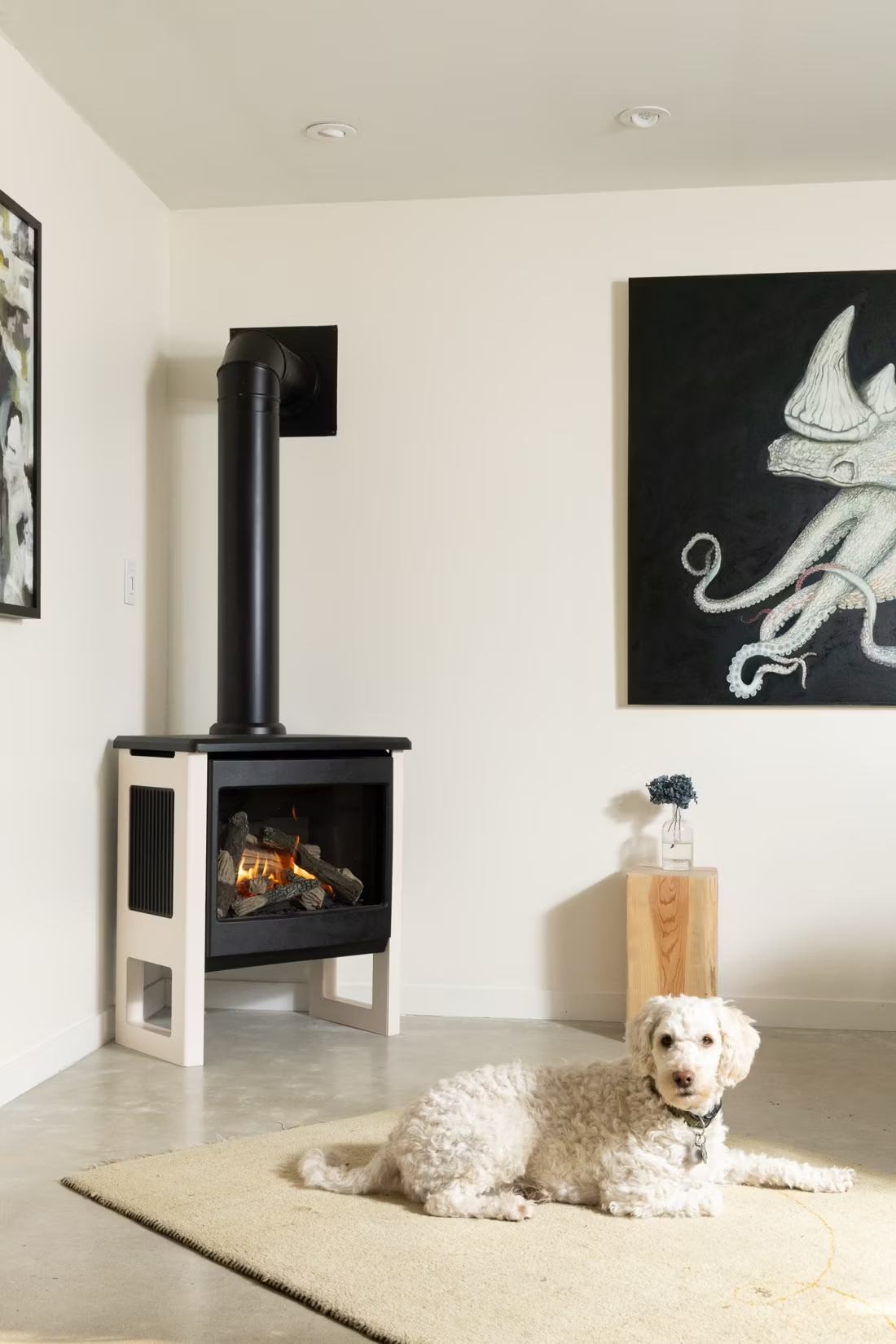
A gas fireplace is a fully built-in unit, framed into a wall—the right call for new construction or a remodel that doesn't have an existing hearth. A gas insert drops into an existing masonry fireplace opening, which describes a large share of Folcroft's older rowhomes and capes. A gas stove is freestanding, sitting on a small hearth pad rather than inside a fireplace opening—a good fit for a home with no chimney at all, or a finished basement or add-on room. For most Folcroft homeowners upgrading an existing fireplace, an insert is the straightforward answer.
Do I need a permit to install a gas fireplace in Folcroft?
Yes—installations fall under the Pennsylvania Uniform Construction Code, enforced locally through Folcroft Borough's building permit process, and any new or modified gas line requires sign-off from a licensed gas-fitter. Most hearth retailers serving Delaware County handle the permit application and inspection scheduling as part of the install, so you're not coordinating separate trades yourself. Given the age of housing stock in Folcroft, an inspector will also want to confirm clearances to combustibles on any new venting run.
What's the difference between vented and vent-free gas fireplaces?
Vented (direct-vent) units draw combustion air from outside and exhaust exhaust gases back outside through a sealed pipe—they're the cleanest, safest option and the standard choice for real heat output. Vent-free units burn directly into the room without external venting; they're legal in Pennsylvania under specific room-size and ventilation rules, but they add moisture and combustion byproducts to indoor air. In a small rowhome with modest room volumes, that matters more than it would in a larger house, which is one reason most Folcroft installers steer homeowners toward direct-vent models with a short sidewall vent run instead.
How often should my gas fireplace be serviced?
Plan on an annual inspection—a technician checks the burner, pilot assembly, venting, and gas connections, and cleans the glass and interior. This is quick compared to wood-stove chimney sweeping, typically $150 to $225, but it matters just as much for safety, especially on older Delaware County homes where original chimneys or vent runs may have settled or shifted over the decades.
Gas vs. electric fireplace—which makes more sense for a Folcroft home?
Gas delivers real heat output, works during power outages with battery-backup or Valor's self-powered ignition, and suits a primary living space where you want to actually take the chill off a room. Electric units plug into a standard outlet, need no venting or gas line at all, and install in under an hour—a good fit for a rental unit, a finished basement, or a room where running new gas line isn't practical. At PECO's residential rate of roughly 14.7 cents per kWh, electric units cost more to run for real heat than gas, so most Folcroft homeowners choose electric for supplemental warmth and ambiance, and gas when they want a fireplace to meaningfully heat the room.
Can I put a TV above my fireplace?
Yes—with an asterisk. Fireplaces are hot and TVs don't like heat. Either put a mantel between them to deflect rising warmth, or choose a fireplace with heat-management technology that creates a cool zone on the wall above—the wall stays around 125 degrees, barely warm, while the room still gets full heat. If you like clean lines and don't want a mantel, heat management is the answer.
Why is a fireplace insert so efficient?
An insert does two things: it seals the chimney completely, so you stop losing air you already paid to heat, and it radiates warmth into the room through the firebox and glass. Most add a heat-exchange fan that pulls cool room air underneath, wraps it around the hot firebox, and pushes it back out warm. Your home is more efficient before you've even lit the first fire.
What is an in-home preview and do I need one?
It's a visit where a hearth professional measures your space, confirms the model you picked actually works in your home, and walks the specs—framing, gas line, venting, finish work—before anything is ordered. Some details you just can't know until you see the house. Never make a down payment without one; it's the single most-skipped step that burns buyers.
Can a fireplace actually lower my heating bill?
Yes—by creating a comfort zone. A furnace heats every square foot of the house just to warm the one room you're in; a gas fireplace on low burns roughly a sixth of the gas a typical furnace does. Set the furnace around 55–60 degrees as a baseline, then heat the rooms your family actually uses. Families who heat this way commonly save $20–$60 a month.
Nearby Dealers
Hearth shops serving Folcroft and the surrounding area. Every listing shows whether it is a WhyFire partner, a dealer we have verified as authorized for the brands we recommend, or a local business carrying hearth products. No manufacturer pays for placement. How we verify dealers →
Rettinger Fireplace Systems Inc
Comfort Home & Hearth
McCloskey's Garden & Hearth
Norristown Chimney
Halligan's Hearth And Home
Halco Grills And Fireplaces
South Jersey Hearthside LLC Dba Modern Gas Products
Ambler Fireplace And Patio
Athenia Mason Supply Wilmington LLC
Ah Angersterin Inc
Wertz & Co,Inc
Maple Glen Mechanical
Find your gas fireplace in Folcroft.
Tell us a bit about your home and we'll put together a free Project Guide & Parts List—the exact parts, including the vent kit, and our recommended local dealer for your Folcroft gas fireplace project.
Find Your Fireplace →