
Steady, clean heat for Elk County's long, cold winters.
With 7,466 heating degree days and winter lows averaging 13°F, Elk County sits in cold-climate territory similar to Burlington, Vermont. A thermostat-controlled pellet stove or insert delivers steady, low-maintenance heat through those long stretches—and I'll match you with a local dealer who can size and install it right.
Every Project Starts From One of These Five Situations
Thermostat-simple heat in the heart of elk country.
Elk County sits on the Allegheny Plateau, bordered by the Allegheny National Forest and covered in the oak, hickory, maple, and cherry hardwood stands that make the region famous for its free-roaming elk herd—and for a strong hardwood milling economy. That same hardwood base feeds a solid regional pellet supply chain, with brands like Energex, Hamer Pellet Fuel, and Greene Team Pellet Fuel produced within trucking distance rather than shipped in from the Midwest or Canada. For a county averaging 13°F winter lows and 7,466 heating degree days a year—cold enough to rival Burlington, Vermont—that local supply matters when you're feeding a stove all winter.
Elk County carries no air quality non-attainment designation, so pellet stoves here run without the winter burn-curtailment restrictions some counties impose on wood appliances—a real advantage if you want heat available on demand rather than checking an advisory board first. For the many households in Ridgway, St. Marys, Johnsonburg, and the outlying townships that have long relied on propane or heating oil, a pellet stove or insert offers a way to shoulder the bulk of the season's heating load with a regionally milled, renewable fuel, while the existing system handles the coldest snaps and backup duty.
Three steps. No salesperson until you're ready.
Tell us about your project
Your zip code, your situation, and the fuel you're leaning toward—or let the answers point you to one.
See what's actually available
The brands dealers within 100 miles genuinely carry—real options, never a catalog mirage.
Get your dealer & Project Guide
A trusted local dealer, plus the free Project Guide & Parts List that names every component of the job.
Frequently Asked Questions
How much does a pellet stove installation cost in Elk County?
Across the region, a typical pellet stove or insert installation runs roughly $3,000 to $6,500, depending on the unit, whether you're venting through an existing masonry chimney or running new PL vent pipe through a wall, and whether a dedicated electrical outlet needs to be added—pellet stoves require power to run the auger and combustion blower, which wood stoves don't. Insert conversions into an existing fireplace, using a flex liner down the current flue, tend to land on the lower-to-middle end. New freestanding installations with fresh wall venting and electrical work run higher. A local dealer will give you a firm number after seeing your chimney, wall layout, and electrical panel.
What size pellet stove do I need for my Elk County home?
Sizing depends on square footage, insulation, and whether the stove is your primary or supplemental heat source. Given Elk County's 7,466 heating degree days and average winter lows around 13°F—a climate on par with Burlington, Vermont—homes here generally need to size up compared to milder parts of Pennsylvania. Small units (up to around 1,000 sq ft) suit a single zone or a well-insulated cabin; mid-size stoves (1,000–2,000 sq ft) cover most main living areas in the boroughs; larger units with bigger hoppers make sense for whole-home heating on the colder, more exposed parcels out toward Kane or the Allegheny National Forest boundary. Hopper capacity matters as much as BTU output here—a bigger hopper means fewer refills during the long, cold nights this county sees each winter. Any local dealer will size this for free during an in-home visit.
Where can I find certified pellet stove installers near me?
Look for NFI (National Fireplace Institute) pellet-certified technicians, and confirm the installer coordinates both the venting work and any electrical work a pellet unit needs—the dedicated circuit for the auger and blower is often the part a general handyman misses. Local hearth dealers serving Elk County typically cover Ridgway, St. Marys, Johnsonburg, and Kane, with a modest travel charge for more remote parcels near the Allegheny National Forest boundary. Because pellet stoves depend on electronics and moving parts (auger motor, combustion blower, igniter), a dealer who also stocks parts and offers service after the sale is worth more here than it is for a simple wood stove.
What's the difference between a pellet stove and a pellet insert?
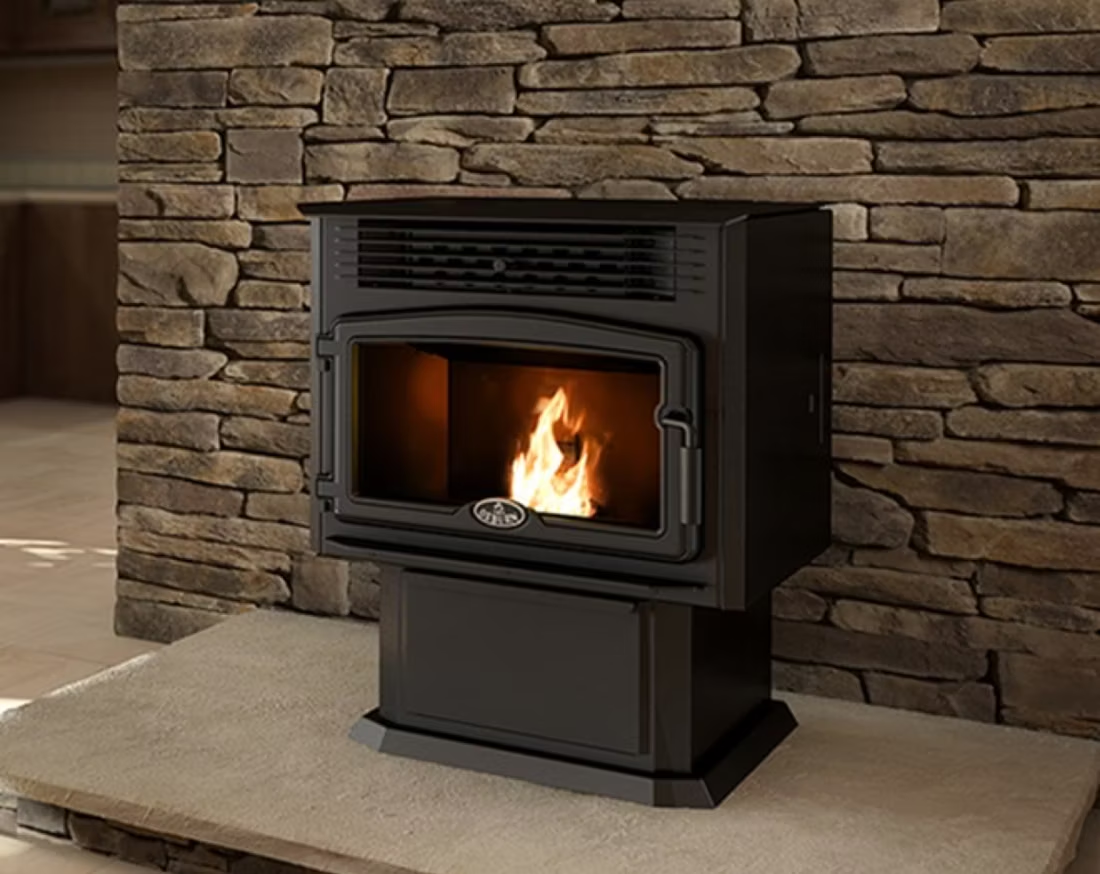
A pellet stove is a freestanding unit that sits on the floor and vents through a wall or existing chimney—it can go almost anywhere with the right clearances and a nearby outlet. A pellet insert is built to slide into an existing masonry fireplace opening, using a liner run through your current chimney and finished with a surround panel that seals off the old open hearth. For Elk County homes with an existing fireplace—common in the older housing stock around Ridgway and St. Marys—an insert is often the cleaner upgrade because it reuses the chimney you already have. Homes without an existing fireplace are usually better suited to a freestanding stove with new through-wall venting.
Do I need a permit to install a pellet stove in Elk County?
Yes—most municipalities in Elk County require a building permit for a new pellet stove or insert installation, and if new wiring is involved, an electrical permit as well. Requirements vary a bit between the boroughs (Ridgway, St. Marys, Johnsonburg) and the surrounding townships, so it's worth confirming with your local building office before work starts. Most established local dealers handle this paperwork as part of the install. Because Elk County has no air quality non-attainment designation, there are no winter burn-curtailment restrictions to plan around—once it's installed and inspected, you can run it whenever you need heat.
What's the best pellet stove for Elk County's climate?
For a county averaging 13°F winter lows and 7,466 heating degree days, look for units with larger hopper capacity and a proven cold-climate service record—Harman, manufactured just a few hours south in East Berlin, PA, is a common choice in this part of the state and has strong regional parts and service support. Because pellet stoves need electricity to operate, it's also worth asking your dealer about battery backup or small-generator compatibility; the Allegheny Plateau sees its share of winter power outages, and a pellet stove without backup power goes cold right when you need it most. For homes wanting heat that works with or without the grid, a wood stove or insert is worth considering alongside a pellet unit—many Elk County homes end up with both.
How often does a pellet stove need to be cleaned and serviced?
Ash pan emptying is a weekly task during regular winter use, and most manufacturers recommend a deeper cleaning of the burn pot, heat exchanger tubes, and auger every few weeks depending on how many bags you're running through. A full professional service—checking the blower, igniter, gaskets, and venting—is recommended annually, ideally in late summer before the heating season starts. Pellet stoves generate far less creosote than wood stoves, but the mechanical components (auger motor, blowers, circuit boards) are what tend to need attention over time, which is another reason to buy from a dealer who services what they sell.
Where can I buy pellets in Elk County?
Regional brands including Energex, Hamer Pellet Fuel, and Greene Team Pellet Fuel are all produced within reasonable trucking distance of Elk County, which tends to keep pricing more stable here than in areas dependent on pellets shipped in from the Midwest or Canada. Most hearth dealers and farm supply stores in and around Ridgway, St. Marys, and Kane stock bagged pellets seasonally, with better pricing typically available if you buy early in the fall rather than waiting for a January cold snap. Buying by the ton (fifty 40-lb bags) usually beats per-bag pricing for anyone running a pellet stove as a primary heat source through a full Elk County winter.
Pellet stove vs. wood stove—which is right for my Elk County home?
Wood stoves work without electricity—a real advantage given the winter outages that hit the Allegheny Plateau—and Elk County's oak, hickory, maple, and cherry forests, plus $20-per-cord cutting permits through the Allegheny National Forest (May through October season), make self-cut firewood a genuinely cheap fuel source for households willing to do the work. Pellet stoves trade that self-sufficiency for convenience: load the hopper, set the thermostat, and walk away, with far less ash and no chimney creosote to manage—but they go dark in a power outage unless you've got battery or generator backup. For primary heat with the least hands-on effort, pellet usually wins. For backup heat that works no matter what the grid is doing, wood is hard to beat. A number of Elk County homes run both.
Why is a fireplace insert so efficient?
An insert does two things: it seals the chimney completely, so you stop losing air you already paid to heat, and it radiates warmth into the room through the firebox and glass. Most add a heat-exchange fan that pulls cool room air underneath, wraps it around the hot firebox, and pushes it back out warm. Your home is more efficient before you've even lit the first fire.
Why is my open fireplace making my house colder?
Open fireplaces suck—literally. As the fire burns, it consumes air your furnace already paid to heat and pulls it out through the chimney, so the house is actually colder after the fire goes out than before you lit it. An insert fixes this: it seals the chimney, puts fixed glass across the front, and turns that hole in your house into a real heat source.
What is an in-home preview and do I need one?
It's a visit where a hearth professional measures your space, confirms the model you picked actually works in your home, and walks the specs—framing, gas line, venting, finish work—before anything is ordered. Some details you just can't know until you see the house. Never make a down payment without one; it's the single most-skipped step that burns buyers.
Should the dealer who sells my fireplace also install it?
Ideally, yes. A fireplace project involves vent pipe, gas line, electrical, and often tile or stone. Hire three or four separate trades and you own the liability and the game of telephone between them. One company selling and installing means one accountable party, start to finish—ask about factory training, on-time completion records, and what happens if an inspection fails.
Stove and Fireplace Dealers in Elk County
Listings include WhyFire partner dealers, dealers we have verified as authorized for the brands we recommend, and established local businesses that carry hearth products. Every listing shows which one it is. The ones marked Preferred run on WhyFire's software, so they can show you real pricing and book your appointment right here. No manufacturer pays for placement. How we verify dealers →
Peterson Refrigeration & Ac
Reeds Chimney Cleaning
Cunningham Gas Products
CJ's Home Decor & Fireplaces
Pellet Brands Stocked Around Elk County
Manufacturers will point you to the nearest stocking dealer.
Find your pellet stove in Elk County.
Tell me a bit about your home and I'll match you with a trusted local dealer and put together a free Project Guide & Parts List—the exact stove or insert, vent kit, and installation plan sized for Elk County's winters.
Find Your Fireplace →