
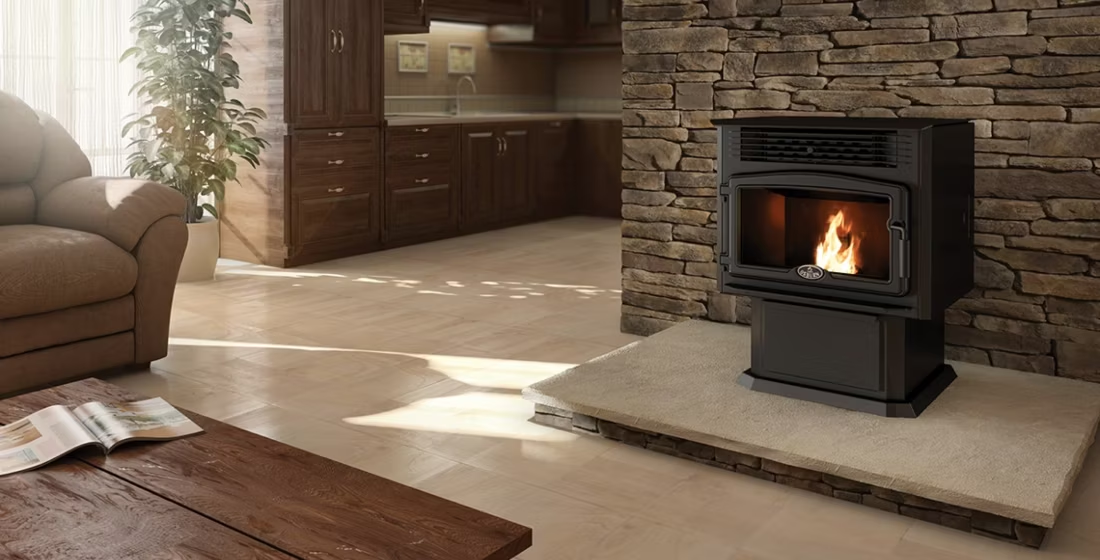
Pellet stoves are rare in Duquesne—here's why.
Most Duquesne homes heat with natural gas, and the borough's tight rowhouse lots leave little room for pellet storage or sidewall venting. If a pellet stove still makes sense for your home, we'll connect you with a local dealer who can size it honestly.
Every Project Starts From One of These Five Situations
Duquesne runs on natural gas, not pellet fuel.
Duquesne is a small Monongahela River steel town of about 5,200 people, built up in the early 1900s with narrow rowhouses and duplexes packed close along the hillside grid. That housing stock—shared walls, small yards, limited exterior clearance—is a tough fit for a pellet appliance, which needs a sidewall vent location, hopper access, and somewhere to store 40-pound pellet bags through a heating season that runs winters comparable to a colder mid-Atlantic town, with average winter lows near 22°F. It's a genuinely cold Allegheny County winter, though nowhere near the extremes of a place like Duluth or Bismarck. Natural gas service reaches nearly every block in town, and that infrastructure, not any lack of cold weather, is the real reason pellet stoves stayed niche here.
Allegheny County has also carried non-attainment status for fine particulate matter for years, a legacy of the region's steel and coke-oven era. Pellet stoves burn far cleaner than cordwood and are generally exempt from the wood-burning curtailment rules that apply elsewhere in the county, but any solid-fuel appliance in a non-attainment area draws a closer look from local building officials. Regional pellet supply isn't the obstacle—Energex, Hamer Pellet Fuel, and Greene Team Pellet Fuel are all produced within a few hours of Duquesne—it's simply that few homeowners here have a reason to choose pellets over the gas line already running to the house. That said, a handful of Duquesne homeowners still install a pellet stove or insert for a finished basement, a den without gas service, or the kind of visible, glowing-fire heat a furnace can't provide.
Three steps. No salesperson until you're ready.
Tell us about your project
Your zip code, your situation, and the fuel you're leaning toward—or let the answers point you to one.
See what's actually available
The brands dealers within 100 miles genuinely carry—real options, never a catalog mirage.
Get your dealer & Project Guide
A trusted local dealer, plus the free Project Guide & Parts List that names every component of the job.
Frequently Asked Questions
How much does a pellet stove installation cost in Duquesne?
We don't have Duquesne-specific pricing on file because so few installs happen here each year, but nationally a pellet stove or insert install typically runs $3,000 to $6,500 depending on the unit and whether new sidewall venting has to be cut through masonry or siding. Rowhouse installs in a town like Duquesne often land toward the higher end once a contractor accounts for shared-wall clearances and running a vent through a load-bearing exterior wall. A local dealer will walk your specific house before quoting a firm number rather than guessing off a national average.
Why don't more homes in Duquesne have pellet stoves?
Two things work against pellet heat here. First, natural gas service is nearly universal in Duquesne through Peoples-area distribution, so most homeowners already have a cheap, no-maintenance heat source and no reason to add a hopper-fed appliance. Second, the borough's rowhouse and duplex housing stock has small footprints and tight side yards, which makes finding a code-compliant sidewall vent location and a dry, accessible spot for pellet bag storage harder than it would be on a suburban half-acre lot.
Where can I buy pellets near Duquesne?
Regional brands like Energex, Hamer Pellet Fuel, and Greene Team Pellet Fuel are all manufactured in Pennsylvania and show up at hardware stores and farm supply retailers around the greater Pittsburgh area, though you may need to check stock before a cold snap since demand can be thin close to town. Buying a full-season supply—a ton or more—in late summer, before the first hard freeze hits the Mon Valley, is the standard way to avoid scrambling for bags in January.
Do I need a permit to install a pellet stove in Duquesne?
Yes. A building permit is required, typically through the City of Duquesne's building code office, and because Allegheny County carries non-attainment status for particulates, the Allegheny County Health Department's Air Quality Program may also want documentation that the unit is EPA-certified. Most reputable installers handle both the building permit and any air quality paperwork as part of the job, so you're not left coordinating two separate offices yourself.
Should I get a pellet stove or just stick with gas in Duquesne?
For most Duquesne homes, gas wins on convenience—it's already piped to the house, needs no fuel storage, and runs at the flip of a switch. A pellet stove makes sense in narrower situations: a room without an existing gas line, a finished basement you want to heat independently of the furnace, or simply wanting the visible fire and radiant warmth a gas insert doesn't quite replicate. If you're comparing the two seriously, it's worth having a local dealer look at both a gas insert and a pellet stove for the same room before deciding.
Is electric heat a realistic backup to pellet or gas in Duquesne?
It's an option, though not a cheap one. Duquesne Light Co. and Pennsylvania Power Co. serve the area at a residential rate near $0.195 per kWh, which is on the higher side for the region, so a whole-room electric insert costs more to run hour-for-hour than either gas or pellets. Where electric does make sense in Duquesne is as a zero-clearance, no-venting option for a condo unit or apartment where running a pellet vent or gas line simply isn't possible.
Can a pellet stove even work in a Duquesne rowhouse?
It can, but the constraints are real. Pellet stoves vent horizontally through a sidewall using a small-diameter power vent, which needs adequate clearance from windows, doors, and property lines—tight on a rowhouse with a neighbor's wall a few feet away. Bag storage is the other issue: a season's supply is roughly a ton of 40-pound bags, and most Duquesne rowhouses don't have a dry garage or shed to stack them in. Homeowners who make it work usually have a basement with an exterior wall access point and enough clearance to meet code.
Does the non-attainment air quality designation affect pellet stoves in Duquesne?
Allegheny County's non-attainment status is aimed primarily at fine particulate matter, historically driven by industrial sources rather than home heating, and EPA-certified pellet stoves burn cleaner than almost any other solid-fuel appliance on the market. That said, the designation means local building officials tend to ask more questions about any combustion appliance during permitting, so expect your installer to document the unit's EPA certification as part of the paperwork. It's a routine step, not a roadblock.
Pellet stove or wood stove—does either make sense in Duquesne?
Both are uncommon here for the same underlying reason: dense rowhouse construction and near-universal gas service. Between the two, pellet stoves are usually the more practical choice for a Duquesne lot because the vent run is smaller and the fuel doesn't require splitting, stacking, or curing—you're just managing bagged pellets instead of cordwood. Wood stoves need a taller Class A chimney and more clearance, which is a harder fit on a narrow city lot. If you have the space for either, a local dealer can tell you honestly which one your specific house can actually accommodate.
Why is a fireplace insert so efficient?
An insert does two things: it seals the chimney completely, so you stop losing air you already paid to heat, and it radiates warmth into the room through the firebox and glass. Most add a heat-exchange fan that pulls cool room air underneath, wraps it around the hot firebox, and pushes it back out warm. Your home is more efficient before you've even lit the first fire.
What's the difference between an insert and a zero-clearance fireplace?
An insert is a fireplace that slides into a pre-existing wood-burning fireplace—if you don't have one, there's nothing to insert it into. A zero-clearance fireplace is built into a framed wall, which makes it the answer for remodels and new construction. Simple test: existing masonry fireplace means insert; blank or framed wall means zero-clearance.
Can I install a fireplace myself?
If you're putting a fire in your house on purpose, it's best to work with an expert. Unless you're genuinely experienced in framing, gas line, vent pipe, and the national code on clearances to combustibles, have a professional do it—and ideally the same company that sells you the fireplace, so warranty, service, and liability all live under one roof.
Can a fireplace actually lower my heating bill?
Yes—by creating a comfort zone. A furnace heats every square foot of the house just to warm the one room you're in; a gas fireplace on low burns roughly a sixth of the gas a typical furnace does. Set the furnace around 55–60 degrees as a baseline, then heat the rooms your family actually uses. Families who heat this way commonly save $20–$60 a month.
Nearby Dealers
Hearth shops serving Duquesne and the surrounding area. Every listing shows whether it is a WhyFire partner, a dealer we have verified as authorized for the brands we recommend, or a local business carrying hearth products. No manufacturer pays for placement. How we verify dealers →
All Seasons Fireplace & Home
A Capital Roofing
Howell Craft Inc.
Fireplace And Patio Place
Fireplace & Patioplace
Tri-State Stoves
Halls Pools & Fireplaces
Clear Water Pools LLC
Tomayko Construction & Alternative Heating Llc.
Northern Woodworking
The Stove Place
Samson Glass And Mirror
Scenery Hill Hardware
Pellet Brands Stocked Around Duquesne
Manufacturers will point you to the nearest stocking dealer.
Find your pellet stove option in Duquesne.
Tell us about your home and we'll match you with a trusted local dealer who can tell you honestly whether pellet heat fits your rowhouse—plus a free Project Guide & Parts List with the exact equipment and vent kit for your space.
Find Your Fireplace →