
Keep Your Family Warm and Safe—No Matter What
With roughly 5,160 heating degree days and winter lows averaging 23°F, Chalfont homes get real use out of a wood stove or insert. Find the right unit and connect with a trusted local dealer.
Every Project Starts From One of These Five Situations
Hardwood country, close to home.
Chalfont sits at about 290 feet in southeastern Bucks County, part of the broader Philadelphia suburban belt but still surrounded by the oak, hickory, maple, and cherry woodlots that define this part of Pennsylvania. Climate zone 4A here means real winter—not the brutal cold of Duluth or International Falls, but enough steady cold (average lows near 23°F, over 5,000 heating degree days a season) that a wood stove or insert earns its keep from November through March.
Chalfont has no non-attainment air quality issues on record, so residents burning EPA-certified wood stoves don't face the curtailment periods that some Western cities deal with during winter inversions. Many of Chalfont's older borough homes—a mix of farmhouse-era construction and mid-century additions—already have a masonry fireplace that never gets used for real heat. A wood insert converts that into a genuine backup heat source, which matters here given how often ice storms and PECO Energy outages knock out power for a day or two at a time each winter.
Three steps. No salesperson until you're ready.
Tell us about your project
Your zip code, your situation, and the fuel you're leaning toward—or let the answers point you to one.
See what's actually available
The brands dealers within 100 miles genuinely carry—real options, never a catalog mirage.
Get your dealer & Project Guide
A trusted local dealer, plus the free Project Guide & Parts List that names every component of the job.
Frequently Asked Questions
How much does a wood stove installation cost in Chalfont?
Most wood stove installations in the Chalfont area run somewhere between $3,500 and $8,500, depending on the stove, whether you're venting into an existing masonry chimney or running new Class A pipe, and any hearth pad work needed for clearance. Homes with an existing, functional chimney are typically on the lower end. New construction or additions without a chimney already in place—where a full through-roof venting run is required—land at the higher end. A local hearth retailer can give you a firm number after seeing your space.
What size wood stove or insert do I need for a Chalfont home?
Chalfont's climate zone 4A winters are cold but not extreme—average lows in the low 20s, not the sub-zero nights you'd see in Bozeman or Fargo—so most homes here don't need the biggest catalytic unit on the showroom floor. A small stove (up to 1,000 sq ft) suits a single room or converted sunporch, a medium stove (1,000–2,000 sq ft) covers most main living areas in Chalfont's older colonials and farmhouses, and a large stove handles a well-insulated 2,000+ sq ft footprint. Local retailers will size your home for free during an in-home visit—oversizing leads to smoldering, low-temperature burns and creosote buildup, which is worth avoiding either way.
Where can I find certified wood stove installers near Chalfont?
Look for installers carrying NFI (National Fireplace Institute) certification or CSIA (Chimney Safety Institute of America) credentials. In the Bucks County area, most reputable hearth shops that sell stoves also install them, which keeps warranty coverage and code compliance under one roof. Given how many Chalfont homes have existing but long-dormant masonry chimneys, a certified installer will also inspect the flue itself before signing off on venting a new stove or insert into it.
What's the difference between a wood stove and a wood insert for a Chalfont home?
A wood stove is a freestanding unit on its own hearth pad, vented through new or existing chimney pipe—it can go almost anywhere in the house with the right clearances. A wood insert is built to slide into an existing masonry fireplace opening, which is common in Chalfont's older borough homes. If you've got a fireplace that currently does more decorating than heating, an insert is usually the better call—it uses the chimney you already have and turns an inefficient open hearth into a real heat source. Homes without an existing fireplace opening are better suited to a freestanding stove instead.
Do I need a permit to install a wood stove in Chalfont?
Yes. New wood stove and insert installations require a building permit reviewed under Pennsylvania's Uniform Construction Code, coordinated through Chalfont Borough's code enforcement office. The stove itself needs to meet current EPA emissions standards. Most local hearth retailers handle the permit paperwork as part of the installation, so it's rarely something homeowners have to navigate solo—but confirm with your installer before work starts.
What's the best wood stove for Chalfont's climate?
Because Chalfont's winters, while genuinely cold, don't hit the extended sub-zero stretches of somewhere like Burlington or Bismarck, a mid-size non-catalytic stove from a brand like Pacific Energy, Lopi, or Jotul is usually plenty for supplemental or zone heat in most homes here. If you're aiming to heat a larger footprint or want the longest possible overnight burn on a cold night, a catalytic model from Blaze King is worth a look—but for most Chalfont households, it's more stove than the climate strictly demands. A local retailer can match a model to your actual square footage and insulation.
How often should my chimney be inspected and cleaned in Chalfont?
Plan on an annual inspection, ideally in late summer or early fall before burning season starts, per CSIA guidelines. Oak and hickory—two of the most common local firewood species—burn hot and clean when properly seasoned, but cherry and other softer hardwoods can leave more creosote if burned before they're fully dry. If your stove or insert sees daily winter use, keep an eye on buildup and don't skip the yearly sweep; it's the single biggest factor in preventing chimney fires.
Where can I get firewood in Chalfont?
Bucks County doesn't have national forest land nearby, so there's no self-cut permit system the way there is out West—firewood here comes from local tree services, farms, and seasonal firewood dealers around Chalfont and the surrounding townships. Oak, hickory, maple, and cherry are the region's staple species, and a cord of well-seasoned hardwood typically runs somewhere in the $250–$375 range depending on the supplier and how far in advance you order. Buying a season ahead and letting wood dry through summer will make a real difference in how clean and hot it burns come January.
Wood stove vs. pellet stove—which is right for a Chalfont home?
Wood stoves burn cordwood, work with zero electricity—a real advantage during PECO outages that tend to follow ice storms in this area—and pair naturally with the abundant local hardwood supply. Pellet stoves, stocked regionally by brands like Energex, Hamer Pellet Fuel, and Greene Team, are more hands-off (load the hopper, set it, forget it) and burn cleaner, but the auger and blower both need electricity, so they go dark in an outage unless you add a battery backup. At PECO's residential rate of about 14.7 cents per kWh, running a pellet stove is inexpensive day to day, but for homeowners who want heat regardless of grid status, wood remains the more resilient choice in Chalfont.
Why is my open fireplace making my house colder?
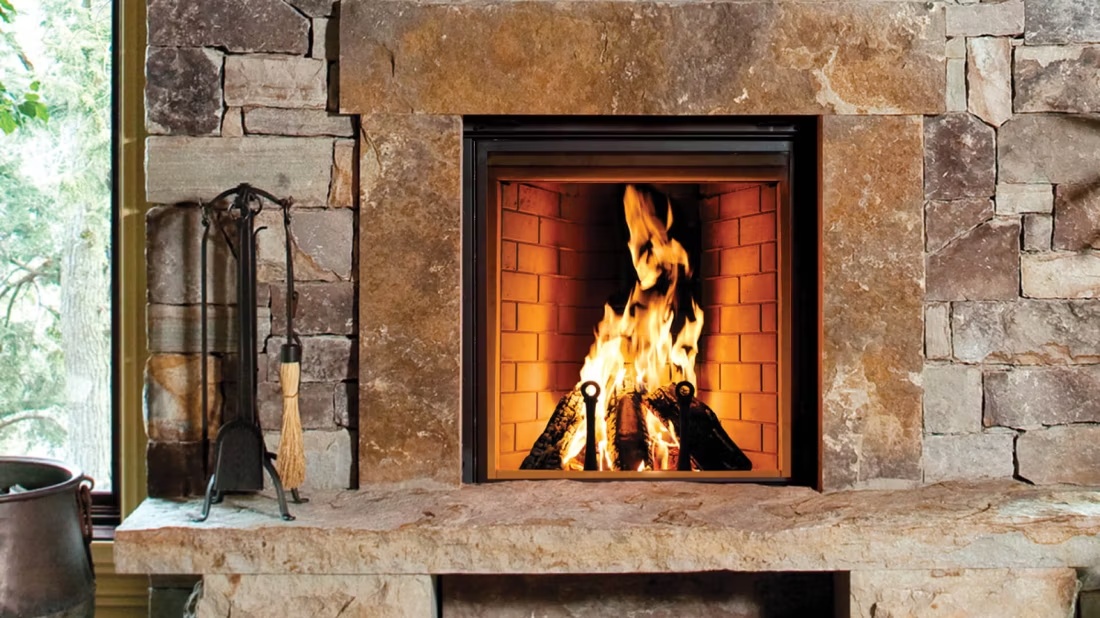
Open fireplaces suck—literally. As the fire burns, it consumes air your furnace already paid to heat and pulls it out through the chimney, so the house is actually colder after the fire goes out than before you lit it. An insert fixes this: it seals the chimney, puts fixed glass across the front, and turns that hole in your house into a real heat source.
What do I measure to size a fireplace insert?
Four numbers tell you what fits: the front width, the front height, the back width, and the overall depth of your existing fireplace opening. Grab a tape measure, jot those down, and snap a photo of the wall—those two things do more to move your project forward than anything else you can do today.
Can I install a fireplace myself?
If you're putting a fire in your house on purpose, it's best to work with an expert. Unless you're genuinely experienced in framing, gas line, vent pipe, and the national code on clearances to combustibles, have a professional do it—and ideally the same company that sells you the fireplace, so warranty, service, and liability all live under one roof.
Does a fireplace add value to my home?
On average, a fireplace adds back to the home about the same amount you spent installing it. Add the monthly savings from heating the rooms you actually use instead of the whole house—often hundreds of dollars a year—and the value case is strong before you even count what a fire does for how your family uses the room.
Nearby Dealers
Hearth shops serving Chalfont and the surrounding area. Every listing shows whether it is a WhyFire partner, a dealer we have verified as authorized for the brands we recommend, or a local business carrying hearth products. No manufacturer pays for placement. How we verify dealers →
Estates Chimney Sweep
Ambler Fireplace & Patio - Chalfont
Sequoia Supply Hatfield Showroom
Tor Chimney & Fireplace
Ambler Fireplace And Patio
Maple Glen Mechanical
Hearth & Stove LLC
Kester Fireplace
Norristown Chimney
Tri County Hearth & Awning
Atlantic Building Prodcuts Inc
Independence Propane
Estates Chimney & Fireplace
Progressive Propane
Pennsburg Ace Hardware
E & E Stoves & Fireplaces
Find your wood fireplace in Chalfont.
Tell us a bit about your Chalfont home and we'll match you with a trusted local dealer and send over a free Project Guide & Parts List—the exact stove or insert, vent kit, and install plan for your space.
Find Your Fireplace →