
Gas heat built for Carbondale's long, cold winters.
With a long, demanding heating season each year, Carbondale homes need dependable warmth. Find the right gas fireplace or insert and connect with a trusted local dealer.
Every Project Starts From One of These Five Situations
Clean heat for a coal-region climate.
Carbondale sits in the Lackawanna Valley at just over 1,000 feet, but the numbers behind its winters rival much colder-sounding places—a long, demanding heating season and an average winter low around 12°F, putting it in the same heating-load territory as Burlington, VT. This is anthracite coal country: many of Carbondale's homes date to the borough's 19th-century coal boom, with older masonry fireplaces and chimneys originally built to vent coal stoves rather than open wood fires.
That housing stock is part of why gas has become the practical choice for supplemental heat here. A gas insert can use an existing chimney flue with a stainless liner, delivering instant, thermostat-controlled warmth without the clearance requirements or fuel storage that wood heating demands in tightly-spaced rowhomes and duplexes. PPL Electric Utilities serves the borough's electrical needs—relevant mainly for the igniter and blower on a modern gas unit—while gas service itself is a mix of piped natural gas in town and propane delivery farther out into the hills of Lackawanna County.
Three steps. No salesperson until you're ready.
Tell us about your project
Your zip code, your situation, and the fuel you're leaning toward—or let the answers point you to one.
See what's actually available
The brands dealers within 100 miles genuinely carry—real options, never a catalog mirage.
Get your dealer & Project Guide
A trusted local dealer, plus the free Project Guide & Parts List that names every component of the job.
Frequently Asked Questions
How much does a gas fireplace installation cost in Carbondale?
Costs vary by home, but as a general regional guide, converting an existing masonry fireplace to a direct-vent gas insert typically runs in the $4,000 to $8,000 range, while a new built-in gas fireplace with framing and a fresh gas line run can reach $9,000 to $12,000. Older Carbondale rowhomes with existing chimneys often land on the lower end since the flue liner does most of the venting work. A local dealer will give you a firm number after an in-home look at your chimney condition and gas access.
Can I convert my old fireplace to gas in Carbondale?
Yes, and it's a common project in a town where many homes date back to the anthracite coal era. A lot of Carbondale's older masonry fireplaces were originally built to vent coal stoves, and they typically take well to a gas insert with a stainless steel liner run through the existing flue. This preserves the look of the original hearth opening while giving you push-button heat instead of hauling coal or wood. A local installer will inspect the flue's condition first—some of these chimneys are well over a century old and may need liner work regardless of fuel choice.
Do I need natural gas service, or does propane work too?
Both are used in and around Carbondale. Piped natural gas reaches many homes within the borough itself, while propane is the more common fuel out toward the surrounding hills and rural stretches of Lackawanna County, where distribution lines don't run. Most gas fireplace and insert models can be set up for either fuel—your installer selects the correct orifice and regulator for natural gas or propane. If you're on propane, you'll need an existing tank or a new one set by a local propane supplier before installation.
Will my gas fireplace still work if the power goes out?
Most modern gas fireplaces will, which matters in a Lackawanna Valley winter where nor'easters and ice storms can knock out PPL Electric service for hours or longer. Units with intermittent pilot ignition (IPI) run on AA batteries that kick in automatically when the power drops, so the fireplace lights on demand just as it would normally. Valor fireplaces take a different approach—their pilot's thermocouple generates its own electricity, so there's no battery to remember at all. Either way, the fireplace itself draws very little from your PPL Electric bill even under normal use, at the utility's residential rate of roughly 12.3 cents per kWh.
What's the difference between a gas fireplace, insert, and stove?
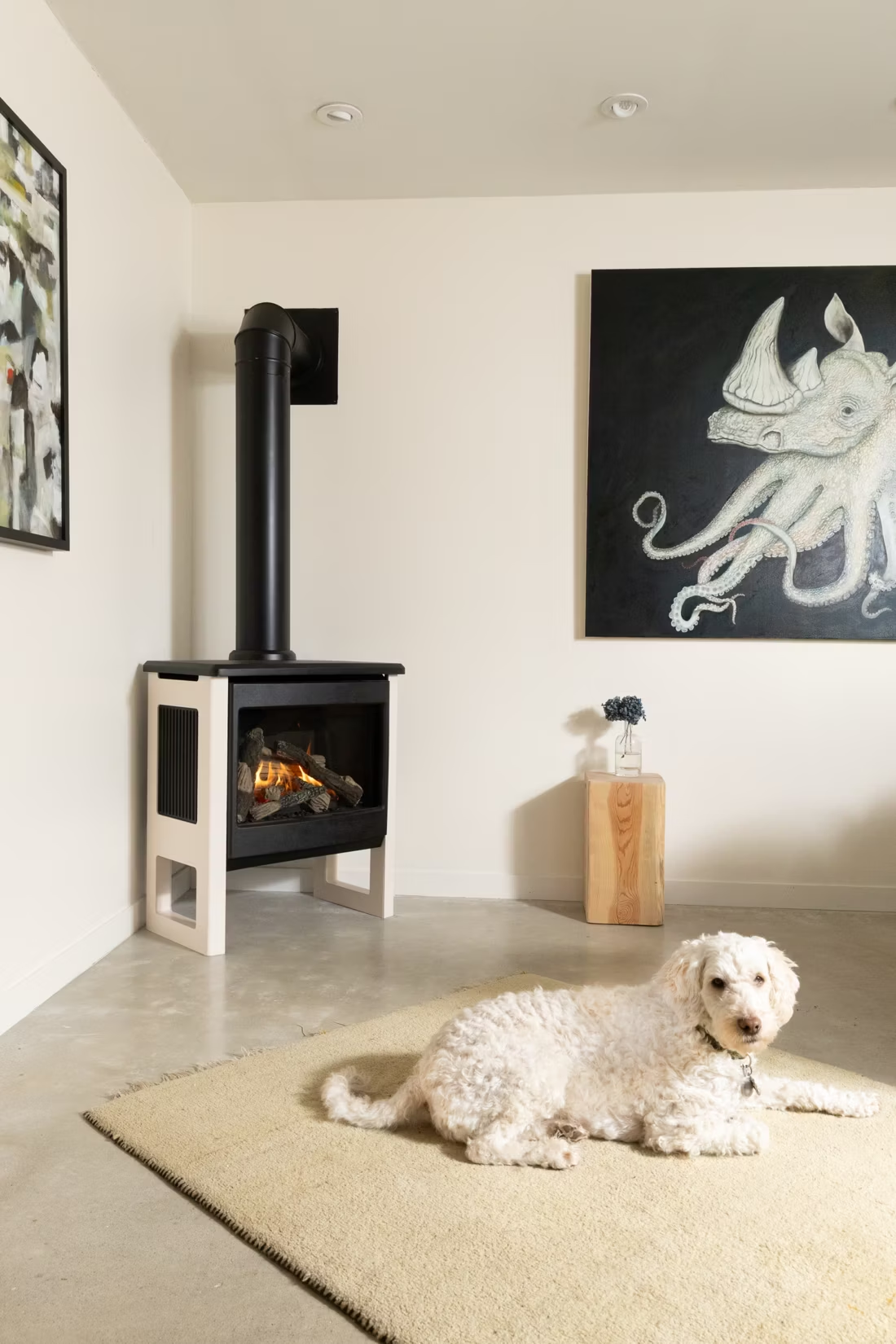
A gas fireplace is a fully built-in unit framed into a wall—the right call for new construction on the newer side of town where there's no existing masonry opening. A gas insert slides into an existing fireplace, which fits Carbondale's older housing stock well since it reuses the chimney you already have. A gas stove is a freestanding cabinet unit that sits on the floor, useful in homes without any masonry fireplace at all, like many of the borough's smaller duplexes. Which one makes sense usually comes down to whether you're starting from an existing hearth opening or from scratch.
Do I need a permit to install a gas fireplace in Carbondale?
In most cases, yes—a building permit through the City of Carbondale's codes office, plus gas line work that has to be done by a licensed gas-fitter. Reputable local hearth dealers coordinate this as part of the installation rather than leaving you to manage separate trades and inspections. If you're on Lackawanna County land outside the borough, the county's permitting process applies instead. Either way, this is one of the reasons to work with an established local installer rather than a general handyman.
What's the difference between vented and vent-free gas fireplaces?
Vented (direct-vent) units draw combustion air from outside and exhaust it back outside through sealed venting—they're the standard choice and work in virtually any Carbondale home with an exterior wall or existing chimney. Vent-free units burn gas directly into the room air without external venting; they're legal in Pennsylvania but come with strict room-sizing and ventilation rules, and they're a harder sell in the tighter floor plans of some of Carbondale's older rowhomes. For most homes here, a direct-vent unit is the more straightforward and widely recommended option—ask a local dealer to walk you through both if you're weighing the tradeoffs.
How often should a gas fireplace be serviced in Carbondale?
Plan on an annual inspection, ideally before the heating season ramps up in the fall. With Carbondale's long, demanding heating season, gas units here often see a longer, harder-working season than in milder parts of Pennsylvania, so burners, pilot assemblies, and venting deserve a yearly look from a certified technician. Expect a service visit to run somewhere in the $150 to $250 range regionally—well worth it compared to the cost of a mid-winter breakdown when you're relying on the unit for backup heat.
Why gas instead of wood in Carbondale?
The hills around Carbondale grow plenty of oak, hickory, maple, and cherry, but wood-burning appliances aren't a common choice inside the borough itself. Many of Carbondale's rowhomes and duplexes sit close together with older chimney configurations built for coal rather than modern wood-stove clearances, and firewood storage is simply less practical on a tight in-town lot than out in the surrounding countryside. Gas sidesteps all of that—no wood storage, no ash, and a chimney flue that's often already in place from the coal-stove era, just fitted with a liner for gas instead.
Is my gas fireplace wasting gas?
If it was installed more than 15 years ago, probably. Older gas fireplaces keep a standing pilot light burning all the time, and that little flame can cost a couple hundred dollars a year. Newer models use pilot-on-demand ignition—the pilot lights only when you use the fireplace and goes out when you turn it off.
Why is a fireplace insert so efficient?
An insert does two things: it seals the chimney completely, so you stop losing air you already paid to heat, and it radiates warmth into the room through the firebox and glass. Most add a heat-exchange fan that pulls cool room air underneath, wraps it around the hot firebox, and pushes it back out warm. Your home is more efficient before you've even lit the first fire.
Can I install a fireplace myself?
If you're putting a fire in your house on purpose, it's best to work with an expert. Unless you're genuinely experienced in framing, gas line, vent pipe, and the national code on clearances to combustibles, have a professional do it—and ideally the same company that sells you the fireplace, so warranty, service, and liability all live under one roof.
How much should I budget for a fireplace?
For an average home—covering the fireplace, the vent pipe, and basic installation—a budget between $3,900 and $5,500 gives you a lot of options across wood, gas, and pellet. By the time you add finish work, gas line, and electrical, the average complete installation lands between $5,000 and $12,000 all-in. In a remodel or new build, a good rule is to put about 2.5% of the total project cost toward the fireplace.
Nearby Dealers
Hearth shops serving Carbondale and the surrounding area. Every listing shows whether it is a WhyFire partner, a dealer we have verified as authorized for the brands we recommend, or a local business carrying hearth products. No manufacturer pays for placement. How we verify dealers →
TAll Pines Farm Store & Fireplaces
Integrity Chimney Service
Glowing Embers
Spring Hill Services
Find your gas fireplace in Carbondale.
Tell us about your home and heating goals, and we'll match you with a trusted local dealer and send over a free Project Guide & Parts List—the exact parts, vent kit, and installer recommendation for your Carbondale gas fireplace project.
Find Your Fireplace →