
Keep Your Family Warm and Safe—No Matter What
In a borough where gas and electric do most of the heavy lifting, a wood stove is usually a supplemental or ambiance choice—not a whole-home necessity. We'll help you figure out if it's right for your property and connect you with a local dealer.
Every Project Starts From One of These Five Situations
Wood heat is the exception here, not the rule.
Campbelltown is a small borough of about 5,700 people tucked into Lebanon County's Piedmont landscape between Harrisburg and Hershey. Winters here are moderate by national standards—average lows around 22°F, giving a heating season that's a fraction of what a place like Duluth, MN or Burlington, VT racks up. That milder climate, combined with reliable natural gas and electric service (Metropolitan Edison covers electric here), means most homes in and around Campbelltown are built and heated around gas furnaces or electric systems rather than cordwood.
That said, wood isn't absent from the picture—it's just not the default. Homeowners on larger wooded lots, older farmhouses on the borough's edges, and folks who simply want the ambiance and backup-heat security of a real fire still install wood stoves and inserts. The hardwood forests of this part of Pennsylvania produce excellent firewood—oak, hickory, maple, and cherry are all common locally and split, seasoned properly, they burn hot and clean. If wood heat makes sense for your specific property, we can help you figure that out and match you with a dealer who installs it correctly.
Three steps. No salesperson until you're ready.
Tell us about your project
Your zip code, your situation, and the fuel you're leaning toward—or let the answers point you to one.
See what's actually available
The brands dealers within 100 miles genuinely carry—real options, never a catalog mirage.
Get your dealer & Project Guide
A trusted local dealer, plus the free Project Guide & Parts List that names every component of the job.
Frequently Asked Questions
Is wood heat actually common in Campbelltown?
Not as a primary heat source, no. Campbelltown and the surrounding Lebanon County area lean heavily on natural gas and electric service—Metropolitan Edison serves electric here, and gas infrastructure covers most of the borough. Wood stoves show up more as supplemental heat on properties with wooded acreage, in older farmhouses on the edge of town, or as a deliberate choice for ambiance and power-outage backup. If you're picturing a wood stove as your only heat source in a typical Campbelltown home, it's worth talking through the tradeoffs with a local installer first—for most in-town properties, it makes more sense as a second heat source.
How much does a wood stove installation cost near Campbelltown?
Because wood isn't the dominant heating fuel here, there's a smaller pool of local installers compared to gas or electric specialists—but the ones who do this work regularly quote in the range typical for south-central Pennsylvania: roughly $3,500 to $8,000 for a freestanding stove with a new Class A chimney, or somewhat less if you're inserting into an existing masonry fireplace and reusing the flue with a liner. Get a quote from a dealer who actually stocks and installs wood-burning equipment rather than a general contractor—sizing and venting matter more with wood than with gas or electric.
What firewood species grow around Campbelltown?
Lebanon County's hardwood forests produce good burning wood—oak, hickory, maple, and cherry are all common locally. Oak and hickory are dense, high-BTU woods that need a full season (6-12 months) of drying before they burn well; maple and cherry season faster and burn a bit cooler but are easier to split. If you're sourcing firewood locally, ask whether it's been split and stacked long enough—green wood is the single biggest cause of poor stove performance and creosote buildup in this region.
Do I need a permit to install a wood stove in Campbelltown?
Yes—Pennsylvania's Uniform Construction Code requires a building permit for new wood-burning appliance installations, administered through your local municipal building office or Lebanon County, depending on jurisdiction. Any new stove also needs to meet current EPA emissions standards. The good news for Campbelltown specifically: there are no listed air quality non-attainment concerns or winter inversion issues in this area, so you won't run into the seasonal burn curtailment rules that some western cities deal with. Most installers handle the permit paperwork as part of the job.
Where can I buy firewood near Campbelltown?
Unlike areas out west with national forest land nearby, this part of Lebanon County doesn't have public-land cutting permits readily available—most homeowners buy cordwood from local firewood dealers and tree services rather than cutting their own. Look for suppliers who sell already-split, seasoned oak or hickory rather than green wood cut the same season; asking how long it's been stacked will tell you more than the price per cord.
Is a wood stove worth it as backup heat during power outages?
It can be, and it's one of the better reasons to consider one in this area. A wood stove burns without electricity, which matters if a storm knocks out Metropolitan Edison service for an extended stretch. If backup heat during outages is your main motivation rather than daily heating, a smaller stove sized for one or two rooms—enough to keep a family comfortable through an outage—is usually the more sensible install than a large whole-home unit you'll rarely run at full capacity.
Wood vs. gas—which makes more sense for a Campbelltown home?
For most homes here, gas wins on convenience: instant on-off heat, no wood handling, and gas service is already standard infrastructure in the borough. Wood wins on a few specific things gas can't do—it works without electricity, and for homeowners with access to cordwood, fuel costs can be lower over time. Given that gas fuel relevance is rated standard for this area and wood is genuinely a niche choice, most Campbelltown homeowners who want wood heat are adding it alongside an existing gas or electric system rather than replacing it.
Wood stove or wood insert—what's the right call for my house?
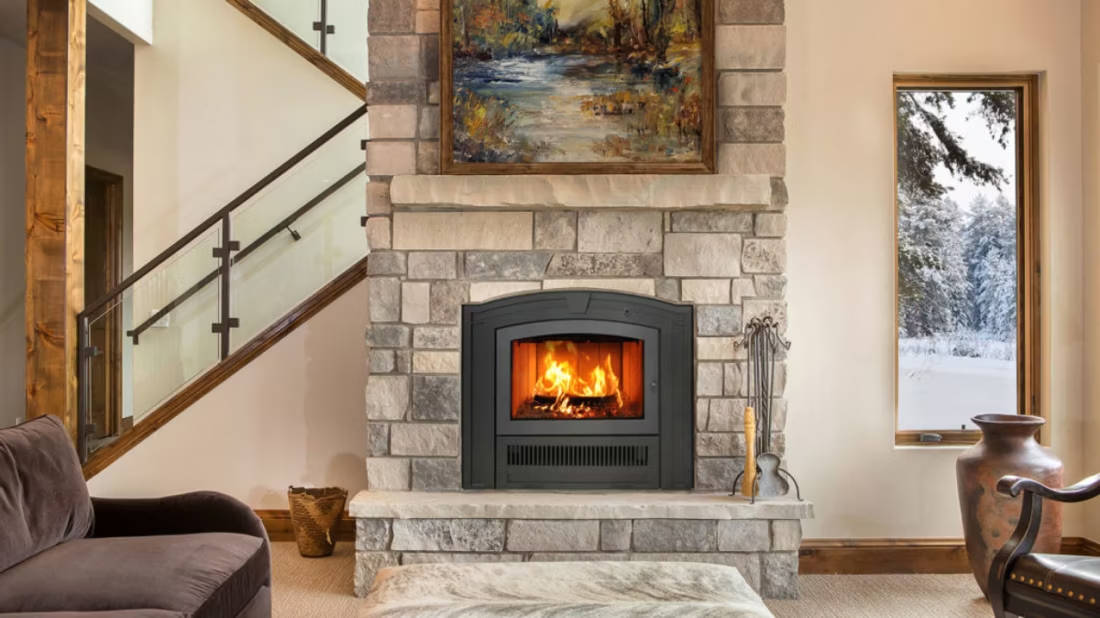
If you already have a masonry fireplace, an insert is almost always the better move—it uses your existing chimney (with a liner) and turns a drafty, inefficient opening into a real heat source. A freestanding stove makes more sense if you don't have an existing fireplace, or if you're setting up wood heat in a garage, workshop, or addition where you're building the venting from scratch. Given how few Campbelltown homes were built around wood heat originally, an insert into an old fireplace is the more common project locally.
How often does a wood stove chimney need to be inspected here?
Once a year, ideally before burning season starts in the fall—that's the CSIA standard regardless of climate. Because wood is a lighter-use, supplemental appliance for most Campbelltown households rather than a primary heat source burning around the clock all winter, annual inspection and cleaning is usually sufficient even for regular users. If you're burning several cords a winter as a primary heat source, ask your sweep whether a mid-season check makes sense given your burn volume.
Why is my open fireplace making my house colder?
Open fireplaces suck—literally. As the fire burns, it consumes air your furnace already paid to heat and pulls it out through the chimney, so the house is actually colder after the fire goes out than before you lit it. An insert fixes this: it seals the chimney, puts fixed glass across the front, and turns that hole in your house into a real heat source.
What's the difference between an insert and a zero-clearance fireplace?
An insert is a fireplace that slides into a pre-existing wood-burning fireplace—if you don't have one, there's nothing to insert it into. A zero-clearance fireplace is built into a framed wall, which makes it the answer for remodels and new construction. Simple test: existing masonry fireplace means insert; blank or framed wall means zero-clearance.
What is an in-home preview and do I need one?
It's a visit where a hearth professional measures your space, confirms the model you picked actually works in your home, and walks the specs—framing, gas line, venting, finish work—before anything is ordered. Some details you just can't know until you see the house. Never make a down payment without one; it's the single most-skipped step that burns buyers.
Can I install a fireplace myself?
If you're putting a fire in your house on purpose, it's best to work with an expert. Unless you're genuinely experienced in framing, gas line, vent pipe, and the national code on clearances to combustibles, have a professional do it—and ideally the same company that sells you the fireplace, so warranty, service, and liability all live under one roof.
Nearby Dealers
Hearth shops serving Campbelltown and the surrounding area. Every listing shows whether it is a WhyFire partner, a dealer we have verified as authorized for the brands we recommend, or a local business carrying hearth products. No manufacturer pays for placement. How we verify dealers →
North Forge Home Heating
Aes Hearthplace, Inc.
Aes Hearth & Patio - Camp Hill
Kring's Hearth & Home - Lancaster
Firestarters Custom Fireplace & Stove
Penn Stone
Todays Home And Leisure
Se Outdoor & Design
Hoffman's Outdoor Power & Repair
Find your wood stove option in Campbelltown.
Tell us about your home and how you'd actually use a wood stove—primary heat, backup, or ambiance—and we'll match you with a local dealer and a free Project Guide & Parts List built around what makes sense for your property.
Find Your Fireplace →