
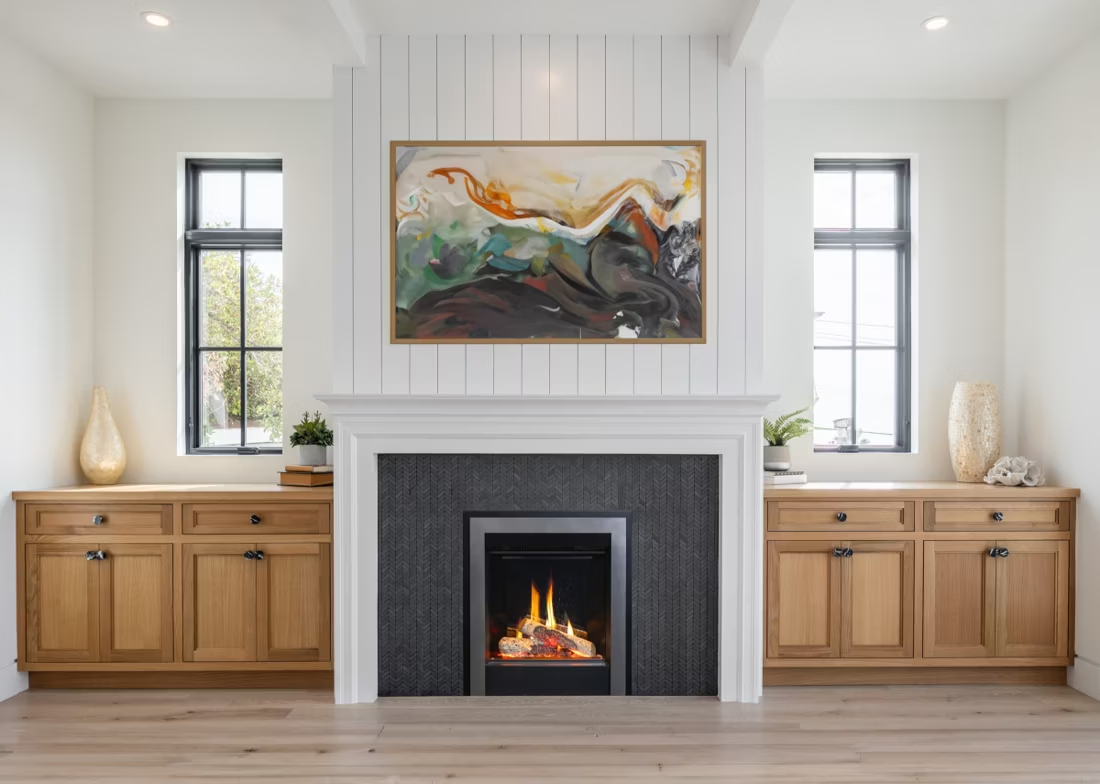
Add real warmth to a Butler room—no gas line, no chimney required.
For the additions, basements, and older Butler County homes where running gas or masonry isn't practical, electric heat plugs the gap. Find the right unit and get matched with a trusted local dealer.
Every Project Starts From One of These Five Situations
A supplemental heat source built for Pennsylvania winters.
Butler sits at just over 1,000 feet in western Pennsylvania, with winter lows averaging around 17°F and a long, cold heating season—a cold-climate profile not far off Buffalo, NY, just up the lake. That kind of winter means most Butler homes lean on a furnace for whole-house heat, but plenty of rooms still run cold: finished basements, additions built without ductwork extended in, sunrooms, and older farmhouses on the outskirts of the county where a gas line simply isn't there.
That's where electric fireplaces earn their keep. West Penn Power Company and Pennsylvania Power Co, both FirstEnergy utilities, serve homes across Butler and the surrounding townships, and any standard outlet or dedicated circuit is all an electric unit needs to run. No chimney, no venting, no gas permit, no wood to split and stack—just a heater element and, in most models, a flame effect that runs independent of the heat. For renters, condo owners in downtown Butler, and homeowners who want supplemental warmth in one specific room without touching the furnace or the gas meter, electric is usually the fastest and least invasive option on the table.
Three steps. No salesperson until you're ready.
Tell us about your project
Your zip code, your situation, and the fuel you're leaning toward—or let the answers point you to one.
See what's actually available
The brands dealers within 100 miles genuinely carry—real options, never a catalog mirage.
Get your dealer & Project Guide
A trusted local dealer, plus the free Project Guide & Parts List that names every component of the job.
Frequently Asked Questions
How much does an electric fireplace cost to install in Butler?
It depends heavily on the type. A plug-in freestanding or mantel-style unit needs no installation at all beyond finding an outlet—the unit itself typically runs $200 to $800. A built-in wall insert or linear unit set into a stud wall, with framing, trim work, and an electrician running a dedicated circuit if the model draws enough wattage to need one, generally lands between $1,500 and $4,000 installed. Because there's no venting, chimney, or gas line involved, electric is consistently the least expensive fireplace fuel type to install in Butler.
Can an electric fireplace actually heat a room in Butler's winters?
Most electric fireplaces use a 1,500-watt heater element rated for zone heating—enough to comfortably warm a bedroom, den, or finished basement, roughly 400 to 1,500 square feet depending on the model and insulation. With Butler averaging around 17°F on winter nights and facing a long, demanding heating season, an electric unit works best layered on top of your furnace rather than as your only heat source for the house. Where it shines is closing the gap in a specific cold room—an addition, a converted garage, a sunroom—without extending ductwork or running gas.
Do I need an electrician to install an electric fireplace in Butler?
It depends on the unit. Plug-in freestanding models run on a standard 120V outlet and need no electrical work at all. Built-in or wall-mounted units—especially larger linear models—often draw enough current to require a dedicated circuit, which means a licensed electrician running new wire and adding a breaker. West Penn Power Company, which serves most of the city, and Pennsylvania Power Co in some outlying areas, don't need to sign off on this kind of work, but your electrician will still pull a standard electrical permit through the City of Butler or your township before starting.
What's the difference between a plug-in electric fireplace, an insert, and a built-in wall unit?
A plug-in freestanding unit is the simplest option—it looks like a stove or mantel fireplace, sits anywhere near an outlet, and can move with you if you rent or relocate. An electric insert is sized to slide into an existing masonry fireplace opening, a common upgrade for older Butler County farmhouses with a fireplace that no longer gets used for wood. A built-in wall unit is recessed into the wall itself during a remodel or new construction, giving a flush, linear look but requiring framing and often that dedicated electrical circuit. For most homeowners retrofitting an existing fireplace, the insert is the straightforward path; for a room without one, plug-in or built-in are the two real choices.
How much does it cost to run an electric fireplace in Butler?
Your exact rate depends on your utility and rate plan—West Penn Power Company and Pennsylvania Power Co, both FirstEnergy companies, bill Butler-area homes with seasonal pricing and rider charges that shift year to year, so your latest bill is the best source for your specific per-kWh cost. As a general reference, Pennsylvania residential electric rates typically fall somewhere in the 14 to 16 cents per kWh range. At that rate, a 1,500-watt fireplace running four hours a night on medium heat costs roughly 85 cents to a dollar a day—cheaper than propane for outlying homes off the natural gas grid, though usually more than running a gas insert for equivalent heat output where gas service is already in place.
Do I need a permit to install an electric fireplace in Butler?
Most electric fireplace installations in Butler don't require a building permit, since there's no combustion, venting, or gas work involved—that's one of the appeals versus a wood or gas install. If your project includes adding a new dedicated circuit, your electrician handles the electrical permit through the City of Butler or your township as part of the job; it's not something you need to file yourself. Compare that to a gas fireplace, which requires both a building permit and a gas-fitter for the line work.
Electric vs. gas fireplace—which is right for my Butler home?
Gas is standard here—natural gas service reaches much of Butler, with propane common in outlying county areas—and a gas fireplace or insert delivers stronger heat output and a more realistic flame, generally for $4,500 to $11,000 installed once venting and gas line work are figured in. Electric costs far less upfront, needs no venting or gas line at all, and can go into almost any room in an afternoon, but its heat output tops out around 5,000-6,000 BTU equivalent—real zone heat, not whole-room-in-a-polar-vortex heat. For a primary living space where you want serious warmth on the coldest nights, gas usually wins. For a basement, bedroom, or rental unit where convenience and low install cost matter more than max BTUs, electric is the practical choice.
What should I look for when buying an electric fireplace?
Confirm UL listing, which is standard on any reputable brand and required for safe operation. Beyond that, look for an adjustable thermostat (rather than just high/low heat settings), a flame effect that can run independently of the heater so you get ambiance without heat in warmer months, and cool-touch glass or housing if the unit will be near kids or pets. Wattage matters too—most full-size units draw the standard 1,500 watts, and going lower generally means less real heat rather than better efficiency. A local dealer can walk you through which models hold up best for daily use versus occasional ambiance.
Who in Butler actually ends up choosing electric over wood or gas?
In practice, it's usually one of a few situations: renters and condo owners in downtown Butler who can't modify gas lines or venting, homeowners finishing a basement or sunroom that the furnace doesn't reach well, older Butler County farmhouses where running a new gas line to a converted room isn't cost-effective, and anyone who wants supplemental warmth in a specific room without the maintenance of a wood stove or the permitting of a gas install. It's rarely the choice for a home's main heat source in a climate with Butler's long, demanding heating season—but as a second heat source in one room, it's hard to beat for simplicity.
Can I put a TV above my fireplace?
Yes—with an asterisk. Fireplaces are hot and TVs don't like heat. Either put a mantel between them to deflect rising warmth, or choose a fireplace with heat-management technology that creates a cool zone on the wall above—the wall stays around 125 degrees, barely warm, while the room still gets full heat. If you like clean lines and don't want a mantel, heat management is the answer.
Do electric fireplaces actually produce heat?
Yes—most put out around 4,800–5,000 BTUs from a standard outlet, which comfortably warms a bedroom, office, or den as a comfort-zone heater. What they won't do is carry a whole house the way wood, gas, or pellet can. Think of electric as ambiance-first with honest supplemental heat: flames on with no heat in July, flames plus warmth in January.
Can I install a fireplace myself?
If you're putting a fire in your house on purpose, it's best to work with an expert. Unless you're genuinely experienced in framing, gas line, vent pipe, and the national code on clearances to combustibles, have a professional do it—and ideally the same company that sells you the fireplace, so warranty, service, and liability all live under one roof.
How much should I budget for a fireplace?
For an average home—covering the fireplace, the vent pipe, and basic installation—a budget between $3,900 and $5,500 gives you a lot of options across wood, gas, and pellet. By the time you add finish work, gas line, and electrical, the average complete installation lands between $5,000 and $12,000 all-in. In a remodel or new build, a good rule is to put about 2.5% of the total project cost toward the fireplace.
Nearby Dealers
Hearth shops serving Butler and the surrounding area. Every listing shows whether it is a WhyFire partner, a dealer we have verified as authorized for the brands we recommend, or a local business carrying hearth products. No manufacturer pays for placement. How we verify dealers →
Home Improvement Center
Fireplace And Patio Place
Suburban Insulation
Northern Woodworking
Halls Pools & Fireplaces
Electric Service in Butler
An electric fireplace's heater draws about 1,500 watts—pennies per hour at local rates.
West Penn Power Company
Pennsylvania Power Co
Find your electric fireplace in Butler.
Tell us about the room you're trying to heat and we'll put together a free Project Guide & Parts List—the right electric unit, what it needs electrically, and a trusted local Butler-area dealer to install it.
Find Your Fireplace →