
Warm up your Brookhaven home without the wood pile.
Brookhaven's tight rowhome and twin-house lots leave little room for cordwood storage. Gas delivers instant, clean heat instead. Find the right fireplace or insert and get matched with a trusted local dealer.
Every Project Starts From One of These Five Situations
Reliable warmth for tight urban lots.
Brookhaven sits low along the Delaware County riverfront at just 114 feet of elevation, with winter lows averaging 27 degrees and a heating season that's much shorter and milder overall than places like Duluth, MN or Burlington, VT. That's a fraction of what a place like Duluth, MN or Burlington, VT sees each winter, but it's still enough sustained cold from December through February that most homeowners here want a dependable secondary heat source, not just a decorative fire.
PECO Energy serves both electric and natural gas accounts across most of Brookhaven and greater Delaware County, which is why natural gas is the default fuel choice for the borough's older twins, rowhomes, and post-war single-family homes. Many of these houses were built with a masonry fireplace that's now sitting unused—a natural candidate for a direct-vent gas insert using the existing chimney. Wood-burning setups are uncommon here; small lot sizes and attached or closely spaced housing leave little practical space for stacking and storing cordwood, even though oak, hickory, maple, and cherry all grow readily in the surrounding Delaware County woodlands. For most Brookhaven households, gas is simply the more workable option.
Three steps. No salesperson until you're ready.
Tell us about your project
Your zip code, your situation, and the fuel you're leaning toward—or let the answers point you to one.
See what's actually available
The brands dealers within 100 miles genuinely carry—real options, never a catalog mirage.
Get your dealer & Project Guide
A trusted local dealer, plus the free Project Guide & Parts List that names every component of the job.
Frequently Asked Questions
How much does a gas fireplace installation cost in Brookhaven?
For Brookhaven's housing stock, a gas insert installed into an existing masonry fireplace with a gas line already run to that side of the house typically lands on the lower end, often $4,000 to $6,500. A new direct-vent gas fireplace built into a wall—common in additions or finished basements in the borough's post-war ranch and Cape Cod homes—usually runs $6,500 to $10,000 once framing, venting, and a new gas line are factored in. Homes on PECO's natural gas grid (most of Brookhaven) avoid the added cost of a propane tank setup, which keeps overall pricing more predictable. A local retailer can give you a firm number after seeing your chimney or wall location in person.
Can I convert my existing wood fireplace to gas?
Yes, and it's one of the more common projects in Brookhaven's older twin and rowhome neighborhoods, where many houses were built in the 1920s through 1950s with a working masonry fireplace that's since gone cold. A gas insert slides into that existing firebox, uses a new stainless liner run up your current chimney, and typically costs $4,500 to $8,500 depending on chimney condition and whether a gas line needs to be extended from the meter. Because PECO already provides natural gas to most of the borough, the gas-line portion of this project is usually straightforward compared to homes that would need a propane tank installed.
Do I need natural gas, or should I use propane?
Most of Brookhaven sits within PECO's natural gas service territory, so if your home already has a gas water heater, range, or furnace, adding a fireplace typically means tapping into gas you already have. Propane is rarely necessary in the borough itself—it tends to come up only for detached outbuildings or properties at the edge of Delaware County where gas mains don't reach. If you're unsure whether your specific block has natural gas access, a local installer can confirm it quickly, since PECO's Brookhaven coverage is dense but not universal on every street.
Will my gas fireplace work during a power outage?
Most modern gas fireplaces will, which matters in Brookhaven given how nor'easters and summer storms off the Delaware River can knock out PECO service for hours at a time. Units with IPI (intermittent pilot ignition) run on a small battery backup that kicks in the moment power drops, so the fireplace lights on demand just like normal. Valor's gas fireplaces take a different approach: their pilot assembly generates its own electricity through the thermocouple, so there's no battery to remember to replace. Either way, ask your local dealer which ignition system a given model uses before you buy.
What's the difference between a gas fireplace, gas insert, and gas stove?
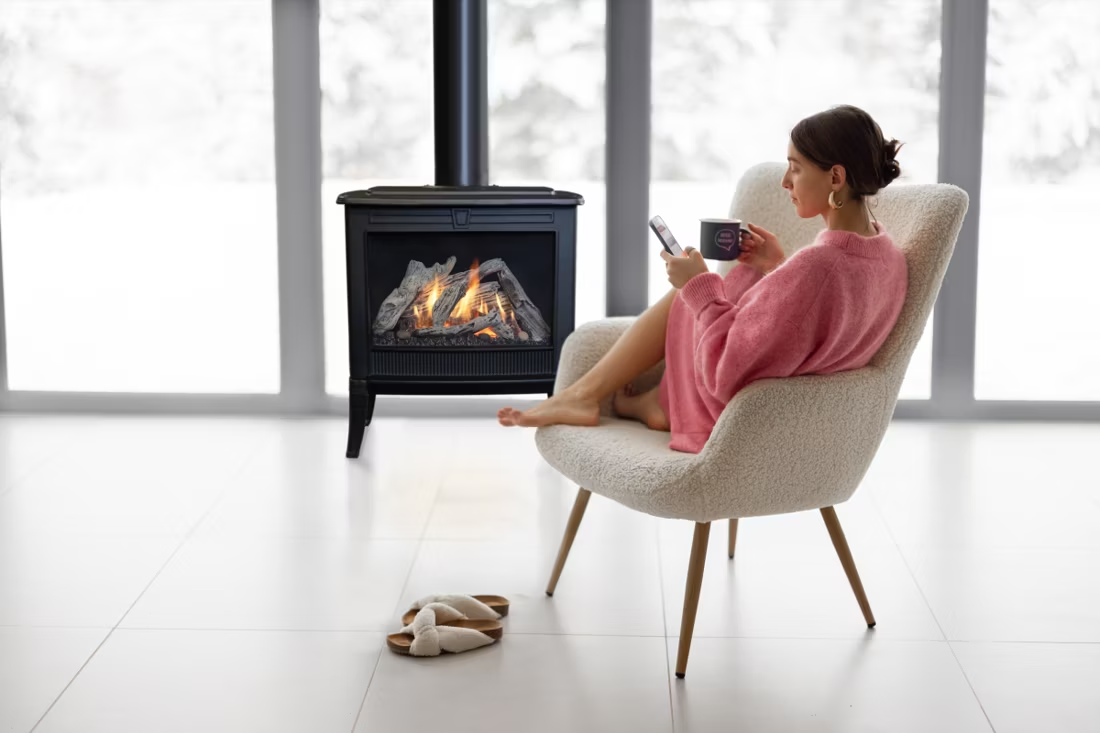
A gas fireplace is a built-in unit framed into a wall—the right call for additions, finished basements, or new construction where there's no existing chimney. A gas insert is sized to slide into an existing masonry firebox, which fits a large share of Brookhaven's older twins and single-family homes that already have a fireplace opening. A gas stove is a freestanding cast-iron or steel unit that vents through a wall or small chimney, a good option for smaller rooms or homes without a masonry fireplace at all. For most Brookhaven homeowners with an unused fireplace, the insert is the simplest upgrade.
Do I need a permit to install a gas fireplace in Brookhaven?
Yes. Brookhaven Borough's Code Enforcement office requires a building permit for gas fireplace installations, and the gas line connection itself must be run or inspected by a licensed gas fitter under Pennsylvania's Uniform Construction Code. In practice, most established hearth retailers serving Delaware County handle the permit filing and inspection scheduling as part of the installation, so you're not coordinating separate trades yourself.
What's the difference between vented and vent-free gas fireplaces?
Vented (direct-vent) gas fireplaces draw combustion air from outside and exhaust exhaust gases back outside through a sealed pipe—they're the cleanest, safest option and the standard choice for full-time use. Vent-free units burn gas directly into the room air; they're legal in Pennsylvania under specific room-size and ventilation rules, but they release some moisture and combustion byproducts indoors. Given how tight square footage runs in many of Brookhaven's rowhomes and twins, a direct-vent unit is generally the safer fit and what most local installers will recommend by default.
How often should my gas fireplace be serviced?
Plan on an annual inspection, ideally in early fall before regular winter use starts. A technician checks the burner, pilot assembly, venting, and gas connections, and cleans the glass and interior—a much lighter job than sweeping a wood chimney, but still important. Local gas appliance technicians serving Delaware County typically charge $150 to $250 for this visit, and it's the same service call whether you have a built-in fireplace, an insert, or a freestanding gas stove.
Should I consider wood instead of gas?
For most Brookhaven properties, probably not as a primary setup. The borough's lot sizes and attached or closely spaced housing make cordwood storage impractical, and full wood-burning installations are genuinely uncommon here—even though oak, hickory, maple, and cherry are all readily available from suppliers just outside the county. Gas, by contrast, needs no fuel storage, lights instantly, and works well in the compact fireplace openings typical of Brookhaven's twins and rowhomes. If you have a larger property outside the borough core with room for a woodshed, wood is still worth a look, but for the typical in-town Brookhaven home, gas is the far more practical choice.
Why is a fireplace insert so efficient?
An insert does two things: it seals the chimney completely, so you stop losing air you already paid to heat, and it radiates warmth into the room through the firebox and glass. Most add a heat-exchange fan that pulls cool room air underneath, wraps it around the hot firebox, and pushes it back out warm. Your home is more efficient before you've even lit the first fire.
Is my gas fireplace wasting gas?
If it was installed more than 15 years ago, probably. Older gas fireplaces keep a standing pilot light burning all the time, and that little flame can cost a couple hundred dollars a year. Newer models use pilot-on-demand ignition—the pilot lights only when you use the fireplace and goes out when you turn it off.
Does a fireplace add value to my home?
On average, a fireplace adds back to the home about the same amount you spent installing it. Add the monthly savings from heating the rooms you actually use instead of the whole house—often hundreds of dollars a year—and the value case is strong before you even count what a fire does for how your family uses the room.
Can I install a fireplace myself?
If you're putting a fire in your house on purpose, it's best to work with an expert. Unless you're genuinely experienced in framing, gas line, vent pipe, and the national code on clearances to combustibles, have a professional do it—and ideally the same company that sells you the fireplace, so warranty, service, and liability all live under one roof.
Nearby Dealers
Hearth shops serving Brookhaven and the surrounding area. Every listing shows whether it is a WhyFire partner, a dealer we have verified as authorized for the brands we recommend, or a local business carrying hearth products. No manufacturer pays for placement. How we verify dealers →
Comfort Home & Hearth
Halco Grills And Fireplaces
Athenia Mason Supply Wilmington LLC
Ah Angersterin Inc
Wertz & Co,Inc
Halligan's Hearth And Home
Delaware Brick
First State Hearth Services
McCloskey's Garden & Hearth
Norristown Chimney
Find your gas fireplace in Brookhaven.
Tell us a bit about your home and we'll put together a free Project Guide & Parts List—the right gas fireplace or insert, the exact venting parts, and a trusted local dealer to install it.
Find Your Fireplace →