
Real fire ambiance, zero venting, anywhere in Blair County.
From the brick rowhomes of Altoona to newer builds in Hollidaysburg, Tyrone, and Duncansville, electric fireplaces bring instant zone heat and real flame-effect ambiance to rooms where a chimney was never an option. Find the right unit and connect with a trusted local dealer.
Every Project Starts From One of These Five Situations
The easiest fireplace to add to any home in Blair County.
Blair County sits in the ridge-and-valley heart of the Alleghenies, with Altoona's rail yards and Horseshoe Curve anchoring a county that runs from the valley floor near Hollidaysburg up into the higher, colder terrain around Wopsononock Mountain and the Allegheny Front. Climate zone 5A, roughly 6,175 heating degree days, and average winter lows around 19°F mean this is genuine cold-climate territory—the kind of winter where a single electric unit isn't going to carry a whole house the way a wood stove or gas furnace can. That's not a knock on electric heat; it's just an honest starting point for sizing expectations.
Where electric fireplaces earn their keep in Blair County is everywhere a chimney, gas line, or venting run isn't realistic: the brick rowhomes and duplexes scattered through Altoona's older neighborhoods, apartments and condos in Hollidaysburg and Tyrone, finished basements, and additions where running a Class A chimney would mean tearing into finished walls. Electric units plug into existing household wiring served by Penelec, install in an afternoon with no permits beyond an electrical inspection if a dedicated circuit is needed, and deliver real supplemental warmth to the room you're actually sitting in—while the county's oak, hickory, maple, and cherry keep doing the heavy lifting in homes built around a wood stove or fireplace insert.
Three steps. No salesperson until you're ready.
Tell us about your project
Your zip code, your situation, and the fuel you're leaning toward—or let the answers point you to one.
See what's actually available
The brands dealers within 100 miles genuinely carry—real options, never a catalog mirage.
Get your dealer & Project Guide
A trusted local dealer, plus the free Project Guide & Parts List that names every component of the job.
Frequently Asked Questions
How much does an electric fireplace installation cost in Blair County?
Plug-in electric inserts and mantel packages that simply plug into an existing outlet typically run $500 to $2,000 installed, including the unit and basic setup—no electrician required. Built-in or wall-mounted electric fireplaces that need a dedicated 20-amp circuit run by a licensed electrician usually land between $1,500 and $3,500 once wiring, wall prep, and mounting are factored in. Costs run toward the higher end for custom surrounds or installations in older Altoona homes where knob-and-tube wiring sometimes needs to be addressed before a new circuit can be added.
Will an electric fireplace actually heat my Blair County home?
For the room it's in, yes—most electric fireplaces put out 4,000 to 5,000 BTU, enough to comfortably warm 400 to 1,000 square feet as supplemental zone heat. What it won't do is replace your furnace on a January night when temperatures sit in the teens across the county—Blair County averages around 6,175 heating degree days a year, which is serious cold-climate demand that a single electric unit isn't built to carry. Think of it as the heat source for the room you live in most, not a whole-house solution.
Do I need a permit to install an electric fireplace in Blair County?
A simple plug-in insert or mantel unit that uses an existing outlet generally doesn't require a permit at all—there's no gas line, no venting, and no combustion to inspect. If you're adding a dedicated circuit for a built-in or wall-mounted unit, that electrical work typically needs to be pulled and inspected through your municipality's code office (Altoona, Hollidaysburg, and most Blair County boroughs handle this locally), and it should be done by a licensed electrician regardless of whether a permit is technically required. This is one of the simplest fireplace projects to get approved in the county precisely because there's no chimney or gas line involved.
What kind of homes in Blair County are the best fit for electric fireplaces?
Electric fireplaces solve a real problem in Blair County's older housing stock—the brick rowhomes and duplexes common in Altoona's historic neighborhoods often don't have a usable chimney, and running new gas line or venting through a century-old structure gets expensive fast. Apartments and rentals in Hollidaysburg and Tyrone are another strong fit, since a plug-in unit needs zero structural modification and can move with a tenant. Finished basements and additions are the other common case—spaces where the ceiling is already closed up and a wood or gas install would mean opening walls back up.
Electric vs. wood—which is right for my home?
Wood offers real heat output that can carry a home through a Blair County winter on its own, works without electricity during storm-related outages, and taps into the oak, hickory, maple, and cherry that's abundant across the county's Appalachian hardwood forests. Electric offers instant on-off operation, zero maintenance beyond dusting, no chimney or venting to inspect, and the ability to install in spaces a wood stove simply can't reach. For a primary heat source in a county averaging 6,175 heating degree days, wood or a wood insert wins. For ambiance and zone heat in a bedroom, sunroom, or finished basement, electric is usually the more practical answer—and plenty of Blair County homes end up with both.
Electric vs. gas fireplace—how do I decide?
Gas fireplaces produce real, sustained heat output and can run during a power outage if the model has a battery-backup ignition, which matters during the ice storms that periodically hit the Allegheny Front. Electric fireplaces produce a flame-effect visual and light supplemental warmth but stop working entirely if the power goes out, and they can't match a gas unit's BTU output on the coldest nights. Where electric wins is upfront cost and installation simplicity—no gas line, no venting, no combustion inspection—which makes it the better fit for rentals, condos, and rooms where running gas service isn't practical. If you already have natural gas or propane service to the house, it's worth comparing both before deciding.
Will my electric fireplace still work if the power goes out?
No—and this is worth planning around in Blair County, where ice storms and wind events along the Allegheny Front occasionally knock out power for hours or longer. Electric fireplaces have no battery backup or independent fuel source; when Penelec service goes down, the unit goes dark along with everything else on the circuit. If backup heat during outages is a priority, pair an electric fireplace (for everyday convenience and ambiance) with a wood stove or battery-backup gas unit elsewhere in the home for actual emergency heat.
What are my options—insert, wall-mount, or mantel package?
Electric inserts slide into an existing masonry fireplace opening or a factory-built firebox, giving an old, unused fireplace real function again without touching the chimney. Wall-mount units hang like a flat-screen TV and work well in rooms with no fireplace at all—common in finished basements and additions around the county. Mantel packages pair a freestanding electric firebox with a surround and mantel shelf, giving the look of a built-in fireplace in a room where nothing existed before. All three plug into standard household current in most cases; only larger built-in units typically need the dedicated circuit.
How long do electric fireplaces last, and what maintenance do they need?
Most electric fireplaces run 15,000 to 25,000 hours on their LED flame effect and heating element before parts need replacing, which translates to years of regular winter use. There's no chimney to sweep, no ash to clean, and no annual gas line inspection—maintenance is limited to occasionally dusting the unit and replacing the heater fan or LED strip if it eventually wears out, both of which most local dealers can service. That low-maintenance profile is a big part of why electric units are popular in Blair County rentals and second homes where nobody wants to think about a heating appliance between visits.
Does an electric fireplace need a vent or chimney?
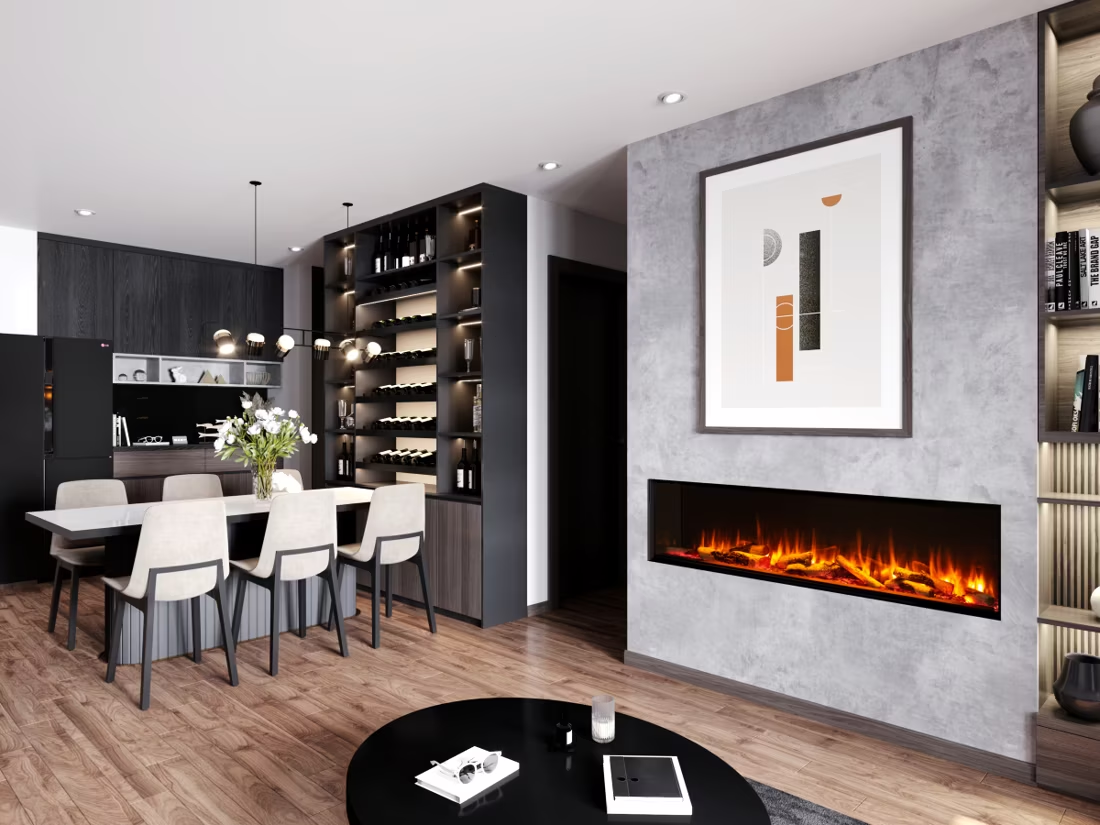
No—that's its superpower. An electric fireplace needs a wall and an outlet, period. No vent pipe, no gas line, no clearances to design around, which is why it works in bedrooms, offices, apartments, and walls where venting a gas or wood unit would be impractical or impossible. Installation is typically the simplest and least expensive of any fireplace type.
Can I put a TV above my fireplace?
Yes—with an asterisk. Fireplaces are hot and TVs don't like heat. Either put a mantel between them to deflect rising warmth, or choose a fireplace with heat-management technology that creates a cool zone on the wall above—the wall stays around 125 degrees, barely warm, while the room still gets full heat. If you like clean lines and don't want a mantel, heat management is the answer.
How much should I budget for a fireplace?
For an average home—covering the fireplace, the vent pipe, and basic installation—a budget between $3,900 and $5,500 gives you a lot of options across wood, gas, and pellet. By the time you add finish work, gas line, and electrical, the average complete installation lands between $5,000 and $12,000 all-in. In a remodel or new build, a good rule is to put about 2.5% of the total project cost toward the fireplace.
Does a fireplace add value to my home?
On average, a fireplace adds back to the home about the same amount you spent installing it. Add the monthly savings from heating the rooms you actually use instead of the whole house—often hundreds of dollars a year—and the value case is strong before you even count what a fire does for how your family uses the room.
Stove and Fireplace Dealers in Blair County
Listings include WhyFire partner dealers, dealers we have verified as authorized for the brands we recommend, and established local businesses that carry hearth products. Every listing shows which one it is. The ones marked Preferred run on WhyFire's software, so they can show you real pricing and book your appointment right here. No manufacturer pays for placement. How we verify dealers →
Fireside Shop
Fireplace Creations Inc
C.t.r. Supply
Terrascape Supply
Heating World
Find your electric fireplace in Blair County.
Tell us a bit about your home and we'll match you with the right electric fireplace, insert, or wall-mount unit—plus a free Project Guide & Parts List with the exact parts and a trusted local dealer to install them.
Find Your Fireplace →