
Electric heat that fits any Altoona home.
No chimney, no gas line, no venting—just plug-in warmth for Altoona's older rowhouses and newer builds alike. Find the right unit and connect with a trusted local dealer.
Every Project Starts From One of These Five Situations
No flue, no fuel storage, just heat.
Altoona sits at 1,162 feet along the Allegheny Front in Blair County, where winters bring an average low around 19°F and a long, cold heating season—a cold-climate load not far off from what Buffalo, NY sees most winters. That's real heating demand, and it's why so many of Altoona's classic railroad-era rowhouses and brick twins, many built long before central air or forced-air ductwork reached every room, lean on supplemental heat to handle drafty upper floors and additions.
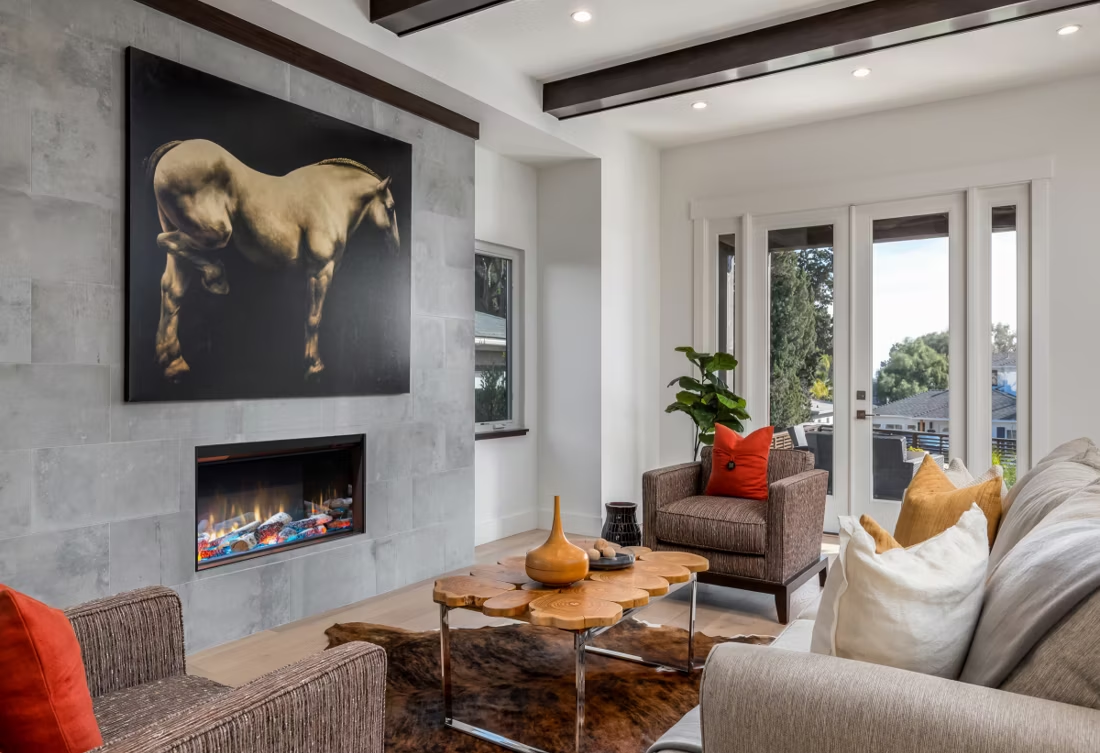
Electric fireplaces solve a specific problem in a city like this: a huge share of Altoona's housing stock has decorative fireboxes with chimneys that are cracked, capped, or simply not worth relining for gas or wood. An electric insert drops into that same opening with no venting required at all, while wall-mount and freestanding electric units go anywhere there's a standard outlet. With Pennsylvania Electric Co. serving the area at roughly 15.45 cents per kWh, an electric unit is also the cheapest fuel type to install—and one of the few upgrades a homeowner can add to a rental unit or older home without touching the chimney at all.
Three steps. No salesperson until you're ready.
Tell us about your project
Your zip code, your situation, and the fuel you're leaning toward—or let the answers point you to one.
See what's actually available
The brands dealers within 100 miles genuinely carry—real options, never a catalog mirage.
Get your dealer & Project Guide
A trusted local dealer, plus the free Project Guide & Parts List that names every component of the job.
Frequently Asked Questions
How much does an electric fireplace installation cost in Altoona?
Plug-in electric inserts and wall-mount units typically run $300 to $1,500 installed, since most just need an existing outlet and a mounting bracket or trim kit sized to your firebox opening. Built-in electric fireplaces that require a dedicated 20-amp circuit—common for larger units or when you want a hardwired, switch-controlled install—run closer to $1,200 to $3,000 once a licensed electrician is involved. Because there's no chimney work, no gas line, and no venting to plan around, electric is consistently the least expensive fireplace fuel type to install in Altoona's older homes.
How much of my home will an electric fireplace actually heat?
Most electric fireplaces top out around 1,500 watts (roughly 5,000 BTU), which is enough to noticeably warm a single room—a living room, converted porch, or bedroom in one of Altoona's classic brick twins—but not enough to replace central heat on a 19°F night. Think of it as zone heating: you run the electric unit in the room you're actually using and turn the thermostat down elsewhere. For anything larger than a single main room, you'd need multiple units rather than one oversized fireplace, since 1,500 watts is close to the practical ceiling for a standard household circuit.
Can an electric fireplace be my main heat source in Altoona winters?
Not realistically. With Blair County facing a long, cold heating season and winter lows regularly in the high teens, a 1,500-watt electric unit can't keep pace with whole-home heat loss on the coldest stretches of January and February. Most Altoona homeowners use electric fireplaces as supplemental heat—taking the edge off a cold room, cutting down on furnace runtime in the space you're actually sitting in, or providing backup ambiance and warmth in a converted attic or sunroom that the main HVAC system doesn't reach well.
Do I need a permit to install an electric fireplace in Altoona?
A simple plug-in insert or wall-mount unit that uses an existing outlet typically doesn't require a permit. If your installer needs to run a new dedicated circuit—which is common for larger built-in units—that electrical work does require a permit through the City of Altoona's code enforcement office (or Blair County's building department outside city limits), and it needs to be pulled by a licensed electrician. Most reputable installers handle this paperwork as part of the job rather than leaving it to the homeowner.
What's the difference between an electric insert, a wall-mount unit, and a freestanding electric stove?
An electric insert is built to slide into an existing masonry firebox—a common retrofit in Altoona's older homes where the original wood fireplace and chimney are no longer functional or worth repairing. A wall-mount unit hangs flush on any wall like a flat-screen TV and needs no firebox at all, which works well in newer construction or rooms without a fireplace opening. A freestanding electric stove looks like a traditional cast-iron wood stove but plugs into a standard outlet, making it a good fit for a den, basement, or converted porch where you want the look of a stove without any venting.
What does it actually cost to run an electric fireplace in Altoona?
At Pennsylvania Electric Co.'s residential rate of about 15.45 cents per kWh, a typical 1,500-watt unit costs roughly 23 cents per hour to run on high. Used for a few hours each evening—say 7.5 kWh a day—that works out to about $1.16 a day, or roughly $35 a month during heavy winter use. Most models let you run the flame effect without the heater engaged, which uses only a few watts, so you can enjoy the ambiance nearly for free even when you don't need the extra heat.
Can I put an electric insert in my old, non-working fireplace?
Yes, and it's one of the most common projects local dealers see in Altoona's older housing stock. Many of the city's rowhouses and Victorian-era homes still have a decorative firebox with a chimney that's been capped, cracked, or simply never relined for modern use. An electric insert fits into that same opening without touching the chimney at all—no liner, no venting, no inspection of flue condition required—restoring the look of a working fireplace and adding real supplemental heat in the process.
Electric vs. gas—which is right for my Altoona home?
Gas fireplaces are common in Altoona and deliver more heat output, which matters more in a home relying on a fireplace for real winter warmth rather than ambiance. But gas requires a venting path and, in many cases, new gas line work, pushing installation costs well above what an electric unit costs. Electric wins on simplicity and price—no venting, no gas permit, and it can go virtually anywhere there's an outlet. For a supplemental heat source in a single room or a fireplace-look upgrade in a home without existing gas service, electric is usually the more practical and affordable choice.
How much maintenance does an electric fireplace need?
Very little compared to gas or wood. There's no chimney to sweep, no annual gas line inspection, and no ash to clean out. Maintenance is mostly dusting the unit, occasionally cleaning the glass front, and replacing the LED light strip or heating element after years of use—most manufacturers rate those parts for 10,000+ hours. This low-maintenance profile is part of why electric units are popular in Altoona rental properties and second homes where nobody's checking on the unit regularly.
Can I put a TV above my fireplace?
Yes—with an asterisk. Fireplaces are hot and TVs don't like heat. Either put a mantel between them to deflect rising warmth, or choose a fireplace with heat-management technology that creates a cool zone on the wall above—the wall stays around 125 degrees, barely warm, while the room still gets full heat. If you like clean lines and don't want a mantel, heat management is the answer.
How much does an electric fireplace cost to run?
With the heater on, a typical unit draws about 1,500 watts—at average electric rates that's roughly 20 cents an hour. Run the flame effect alone and it costs pennies; the flames are LED-driven and use about as much power as a light bulb. There's no pilot light, no fuel delivery, and essentially no maintenance.
How much should I budget for a fireplace?
For an average home—covering the fireplace, the vent pipe, and basic installation—a budget between $3,900 and $5,500 gives you a lot of options across wood, gas, and pellet. By the time you add finish work, gas line, and electrical, the average complete installation lands between $5,000 and $12,000 all-in. In a remodel or new build, a good rule is to put about 2.5% of the total project cost toward the fireplace.
Can a fireplace actually lower my heating bill?
Yes—by creating a comfort zone. A furnace heats every square foot of the house just to warm the one room you're in; a gas fireplace on low burns roughly a sixth of the gas a typical furnace does. Set the furnace around 55–60 degrees as a baseline, then heat the rooms your family actually uses. Families who heat this way commonly save $20–$60 a month.
Nearby Dealers
Hearth shops serving Altoona and the surrounding area. Every listing shows whether it is a WhyFire partner, a dealer we have verified as authorized for the brands we recommend, or a local business carrying hearth products. No manufacturer pays for placement. How we verify dealers →
Fireside Shop
Fireplace Creations Inc
C.t.r. Supply
Terrascape Supply
Heating World
Electric Service in Altoona
An electric fireplace's heater draws about 1,500 watts—pennies per hour at local rates.
Pennsylvania Electric Co
Find your electric fireplace in Altoona.
Tell us a bit about your home and we'll match you with the right electric fireplace, insert, or stove—and connect you with a trusted local dealer who'll hand you a free Project Guide & Parts List for your Altoona installation.
Find Your Fireplace →