
Instant heat for Adams County's long orchard-country winters.
From the battlefield district in Gettysburg to the apple orchards around Biglerville, Adams County winters run cold enough to matter. Find the right gas fireplace, insert, or stove, and get matched with a trusted local dealer who can get it installed correctly.
Every Project Starts From One of These Five Situations
Clean, dependable heat for Adams County's fruit-belt winters.
Adams County sits in the rolling foothills of South Mountain in south-central Pennsylvania, with a climate zone 5A rating, a winter heating load on par with places like Harrisburg or Lancaster, and winter lows that average around 21°F. That's a real Mid-Atlantic winter—cold enough for a consistent heating season from November through March, though nowhere near the extremes of places like Burlington, Vermont or Duluth, Minnesota. Many Adams County homes are older farmhouses built around orchards and vineyards, or historic properties near the Gettysburg battlefield, where a drafty original fireplace has long since stopped doing much actual heating.
Natural gas service reaches Gettysburg Borough and a handful of surrounding communities through Columbia Gas of Pennsylvania, but most of the county's 34 townships—Straban, Cumberland, Menallen, Mount Joy, and the rest—rely on propane delivered by regional suppliers. Either fuel works fine for a modern gas fireplace or insert. What changes is the upfront plumbing: homes already on the gas main are simpler and cheaper to convert, while rural properties typically need a propane tank set and a supply line run to the hearth. A trusted local dealer will know which applies to your address before they ever quote a job.
Three steps. No salesperson until you're ready.
Tell us about your project
Your zip code, your situation, and the fuel you're leaning toward—or let the answers point you to one.
See what's actually available
The brands dealers within 100 miles genuinely carry—real options, never a catalog mirage.
Get your dealer & Project Guide
A trusted local dealer, plus the free Project Guide & Parts List that names every component of the job.
Frequently Asked Questions
How much does a gas fireplace installation cost in Adams County?
Most gas fireplace and insert installations in Adams County run between $4,000 and $10,000, depending on the unit, the venting path, and whether new gas or propane line work is required. A direct-vent insert going into an existing masonry fireplace with gas already at the hearth sits toward the lower end. A new built-in gas fireplace in a remodel or new-construction home near Gettysburg's newer subdivisions—with framing, venting, and a fresh line run—lands in the middle to upper range. Rural properties in townships like Menallen or Latimore that need a new propane tank set and buried line can run higher once the propane company's setup fee is factored in. A local retailer will give you a firm number after seeing your home.
Can I convert my existing wood fireplace to gas?
Yes, and it's one of the more common projects for Adams County's older farmhouses and battlefield-district homes. A gas insert typically drops into the existing masonry firebox, using a stainless liner run up the original chimney as the vent path. Expect $4,000 to $8,500 depending on the insert, whether you're on natural gas through Columbia Gas in Gettysburg Borough or switching to propane, and whether new gas line work is needed. The conversion keeps the look of the original mantel and hearth while eliminating ash cleanup and giving you real, on-demand heat instead of an open fireplace that mostly just lets warm air escape up the flue.
Do I need natural gas, or can I use propane?
Either works. Columbia Gas of Pennsylvania serves Gettysburg Borough and some adjacent areas, so homes there with existing gas service can usually add a fireplace without much extra plumbing. Outside that footprint—which covers most of Adams County's rural townships and smaller boroughs like Biglerville, York Springs, and Fairfield—propane is the standard choice, delivered and stored in a tank on the property. Nearly every gas fireplace or insert on the market today can be configured for either fuel; your installer sets the correct orifice and regulator for whichever you have.
Will my gas fireplace work during a power outage?
Most will, provided you choose the right ignition system. Units with IPI (intermittent pilot ignition) run on small onboard batteries and light on demand even with the power out—worth having given how many Adams County properties are on rural feeder lines that can stay dark for a while after an ice storm or a summer thunderstorm knocks down a line. Valor fireplaces take a different approach: they generate their own electricity through the pilot's thermocouple, so there's no battery to check or replace. Ask your local dealer which ignition system is on any model you're considering, especially if backup heat matters to you.
What's the difference between a gas fireplace, gas insert, and gas stove?
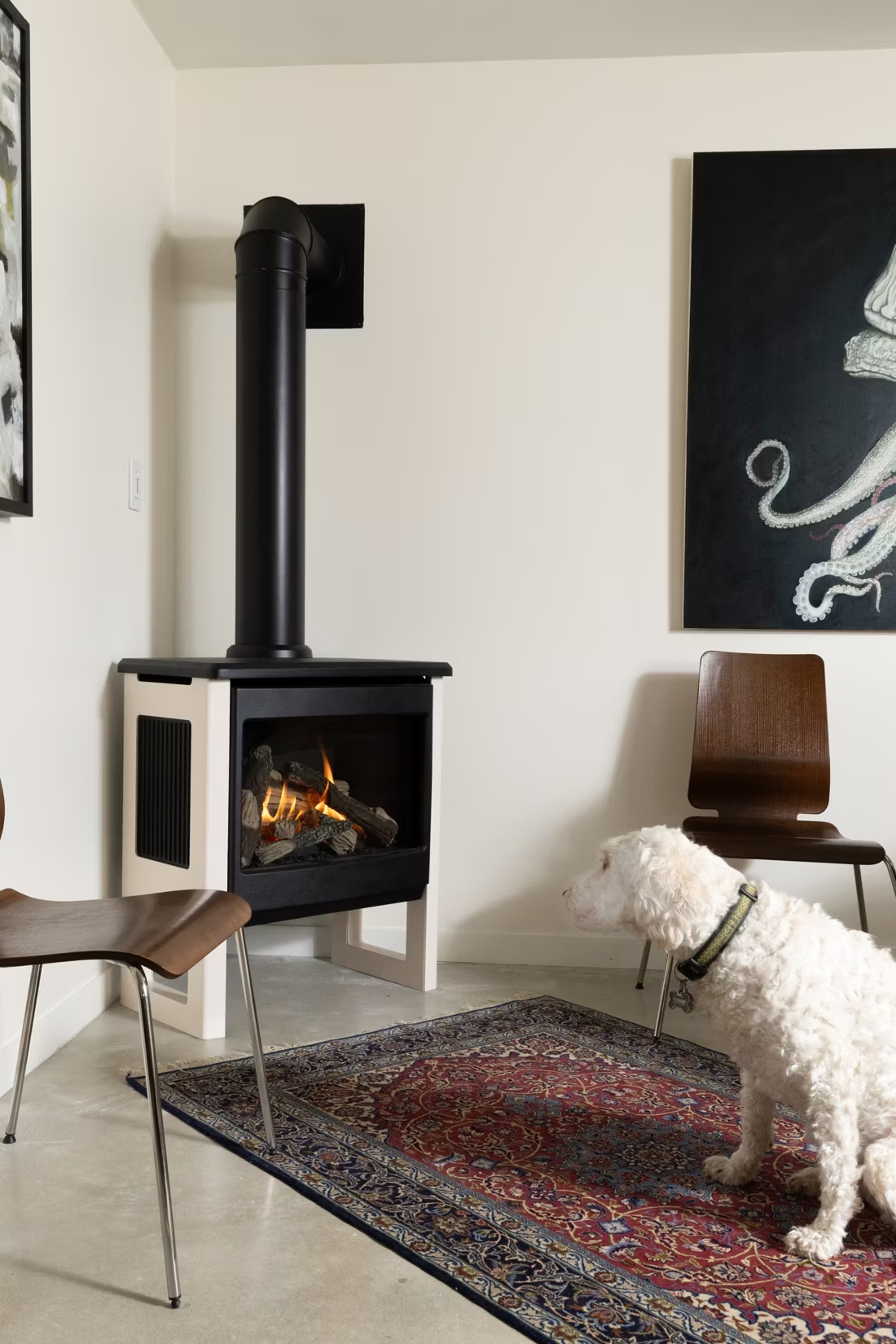
A gas fireplace is a built-in unit framed into a wall—the right call for new construction or a room without an existing fireplace. A gas insert is sized to slide into an existing masonry firebox, which fits a lot of Adams County's older farmhouses and in-town Gettysburg homes that already have a chimney. A gas stove is freestanding, sitting on its own hearth pad, and works well in a room that never had a fireplace but has floor space for one. Most homeowners converting an existing wood-burning fireplace end up with an insert; most new-build or addition projects end up with a built-in fireplace.
Do I need a permit to install a gas fireplace in Adams County?
Almost always, yes—both a building permit and a gas line permit, issued through whichever municipality you're in rather than the county itself. Gettysburg Borough, Straban Township, Cumberland Township, and Adams County's other 30-plus municipalities each handle their own permitting, and requirements can vary slightly township to township. The gas line portion has to be pulled by a licensed gas-fitter regardless of where you live. Most established hearth retailers coordinate the permit, the gas or propane line work, and the final inspection as one package, so you're not left tracking down separate trades yourself.
What's the difference between vented and vent-free gas fireplaces?
Vented (direct-vent or B-vent) fireplaces pull combustion air from outside and exhaust the byproducts back outside through a sealed pipe. Vent-free units burn without any outside venting at all, releasing some water vapor and trace combustion gases directly into the room, and they come with strict room-size and ventilation rules. Vent-free units are legal in Pennsylvania, but for Adams County's older, tighter farmhouses—and for anyone concerned about indoor air quality—a direct-vent unit is the more common and more commonly recommended choice. It's worth asking your local dealer to walk through both options before you decide.
How often should my gas fireplace be serviced?
Plan on an annual inspection, typically before the heating season ramps up in October or November. A technician checks the burner, pilot assembly, venting, and gas connections, and cleans the glass and firebox interior—a shorter, simpler visit than a wood-stove chimney sweep, but not one to skip. Local gas appliance service providers in Adams County generally charge somewhere in the $150 to $250 range for a standard annual visit.
Gas vs. wood—which is right for my Adams County home?
Wood still makes sense for a lot of Adams County properties—the county has plenty of oak, hickory, maple, and cherry available locally, and a wood stove keeps working when the power doesn't. But for daily-use rooms, especially in older farmhouses where the existing fireplace barely heats past the mantel, gas is usually the better fit: instant on-off operation, no ash, no chimney fire risk to manage, and steady output all winter. A fair number of local homeowners end up with both—gas in the main living space for convenience, a wood stove or insert elsewhere for backup heat and the occasional real fire.
Is my gas fireplace wasting gas?
If it was installed more than 15 years ago, probably. Older gas fireplaces keep a standing pilot light burning all the time, and that little flame can cost a couple hundred dollars a year. Newer models use pilot-on-demand ignition—the pilot lights only when you use the fireplace and goes out when you turn it off.
Why is my open fireplace making my house colder?
Open fireplaces suck—literally. As the fire burns, it consumes air your furnace already paid to heat and pulls it out through the chimney, so the house is actually colder after the fire goes out than before you lit it. An insert fixes this: it seals the chimney, puts fixed glass across the front, and turns that hole in your house into a real heat source.
Does a fireplace add value to my home?
On average, a fireplace adds back to the home about the same amount you spent installing it. Add the monthly savings from heating the rooms you actually use instead of the whole house—often hundreds of dollars a year—and the value case is strong before you even count what a fire does for how your family uses the room.
What is an in-home preview and do I need one?
It's a visit where a hearth professional measures your space, confirms the model you picked actually works in your home, and walks the specs—framing, gas line, venting, finish work—before anything is ordered. Some details you just can't know until you see the house. Never make a down payment without one; it's the single most-skipped step that burns buyers.
Stove and Fireplace Dealers in Adams County
Find your gas fireplace in Adams County.
Tell us a bit about your home and we'll match you with a trusted local dealer and a free Project Guide & Parts List—the exact fireplace, insert, or stove recommendation, vent kit included, sized for your Adams County home.
Find Your Fireplace →