
Add warmth to your Adams County home—without touching the chimney.
From Gettysburg's historic brick rowhomes to the orchard country around Biglerville and Arendtsville, electric fireplaces add real ambiance and zone heat with no venting, no gas line, and no masonry work. Find the right unit and connect with a trusted local dealer.
Every Project Starts From One of These Five Situations
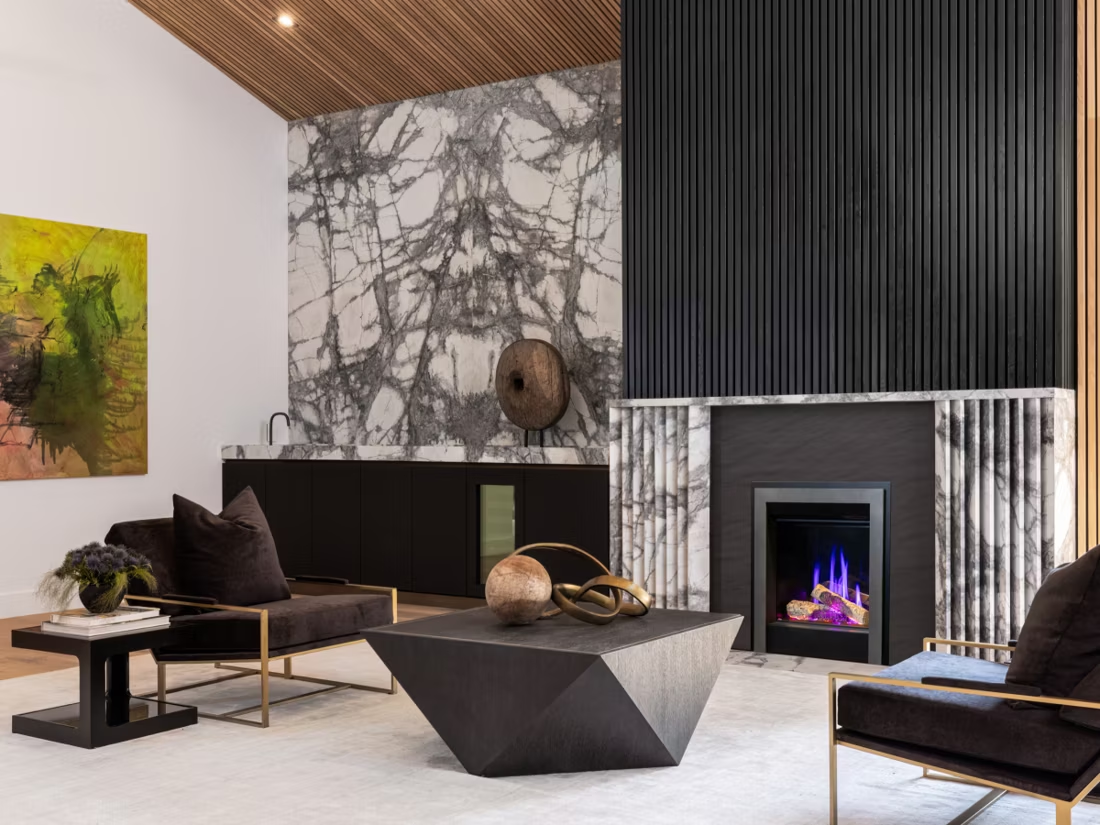
A clean, flexible fit for Adams County's historic homes.
Adams County sits in climate zone 5A with a winter heating season about as demanding as Buffalo, NY or Burlington, VT would produce, and average winter lows around 21°F—noticeably milder than Buffalo, NY or Burlington, VT, but still cold enough that most homes across the county's 38,000-person population run supplemental heat from November through March. Between the Gettysburg Battlefield historic district, the South Mountain fruit belt orchard towns like Biglerville and Arendtsville, and the newer subdivisions around New Oxford and Littlestown, the county has a wide mix of 19th-century brick homes and modern construction—and that mix drives a lot of the electric fireplace demand here.
In Gettysburg Borough specifically, historic preservation guidelines make it difficult or impossible to modify original masonry chimneys or add new venting through a period facade—which is exactly the situation where an electric insert or wall-mounted unit shines. It slides into an existing fireplace opening or mounts on a wall with no flue, no gas line, and no permit headaches in most cases. Areas served by Adams Electric Cooperative and rural township residents further out from Gettysburg also lean on electric units for zone heating in a single room—a den, a sunroom addition, a converted attic bedroom—rather than trying to extend central ductwork or run a chimney where one doesn't exist.
Three steps. No salesperson until you're ready.
Tell us about your project
Your zip code, your situation, and the fuel you're leaning toward—or let the answers point you to one.
See what's actually available
The brands dealers within 100 miles genuinely carry—real options, never a catalog mirage.
Get your dealer & Project Guide
A trusted local dealer, plus the free Project Guide & Parts List that names every component of the job.
Frequently Asked Questions
How much does an electric fireplace installation cost in Adams County?
A plug-in freestanding electric fireplace or mantel package runs $300 to $600 and requires no installation beyond finding an outlet—most homeowners set these up themselves. A built-in wall unit or electric insert that needs a dedicated 20-amp circuit typically runs $800 to $2,500 once a licensed electrician is involved, and larger linear units with custom surrounds or cabinetry in a Gettysburg-area remodel can reach $3,000 to $3,500. Inserts sized to fit an existing masonry fireplace opening—common in the older brick homes around Gettysburg's historic district—usually land in the middle of that range since no chimney work is needed, just the insert and, in some cases, a new circuit run to the fireplace location.
Can I put an electric insert into my existing wood-burning fireplace in a historic Gettysburg home?
Yes, and it's one of the more common projects for homes in and around the Gettysburg historic district. An electric insert slides into your existing masonry firebox opening without altering the chimney, the mantel, or the exterior facade—which matters in areas where historic preservation guidelines restrict changes to original brickwork and flues. Many homeowners choose this route specifically because it preserves the look of the original fireplace while eliminating the maintenance and safety concerns of an old, rarely-swept chimney. A local dealer will measure your firebox opening to confirm insert fit before you buy.
Do I need a permit to install an electric fireplace in Adams County?
In most cases, no—a plug-in unit that runs off an existing standard outlet doesn't require a permit anywhere in the county. If your installer needs to run a new dedicated circuit for a built-in wall unit or a larger insert, that electrical work typically does require a permit through your local borough or township, since electrical permitting in Pennsylvania is handled at the municipal level rather than countywide. Gettysburg Borough, Straban Township, and the other Adams County municipalities each handle this through their own code enforcement office, so it's worth asking your electrician or dealer to confirm the specific process for your address before work starts.
Will my electric fireplace still work during a power outage?
No—this is worth being direct about. Electric fireplaces run entirely on household power, so if the power goes out, the fireplace goes out with it. That matters in parts of rural Adams County served by Adams Electric Cooperative, where ice storms and downed lines can knock out power for hours at a time during the coldest stretches of winter. If backup heat during outages is a priority, most local dealers recommend pairing an electric unit—kept for everyday ambiance and easy zone heat—with a wood stove, gas insert, or portable generator setup for the rare multi-day outage.
How much heat does an electric fireplace actually provide?
Most electric fireplaces put out around 4,700 to 5,200 BTU (roughly 1,500 watts), which is enough to noticeably warm a single room—a den, bedroom, or sunroom—but not enough to serve as primary heat for a whole house in Adams County's climate, where winter lows average around 21°F and the county sees a long, demanding heating season each year. Think of it as targeted comfort heat for the room you're actually in, layered on top of your existing furnace or heat pump, rather than a replacement for your central system.
Electric fireplace vs. wood stove—which makes more sense for my Adams County home?
Wood remains a strong option here—Adams County has plenty of oak, hickory, maple, and cherry (much of it from the orchard-clearing and woodlot thinning common around the South Mountain fruit belt) available locally, and a wood stove keeps working when the power goes out. Electric wins on convenience and flexibility: no wood handling, no ash, no chimney to maintain, and it's the only realistic option for a Gettysburg historic-district home where you can't alter the existing masonry, or for a rental or condo where venting isn't allowed at all. If you want ambiance and supplemental heat with zero maintenance, electric is the easier path. If you want a real backup heat source for winter storms, wood or gas still has the edge.
What's the difference between an electric insert, an electric stove, and a wall-mounted unit?
An electric insert is built to slide into an existing fireplace opening—the most common choice for Adams County's older homes with a masonry firebox already in place. An electric stove is a freestanding cabinet-style unit that mimics a wood stove's footprint and can sit anywhere near an outlet, popular in homes without an existing fireplace. A wall-mounted or linear unit hangs on a wall like a large flat-panel screen and is typically used in newer construction or remodels where a modern, minimal look is the goal. All three plug into standard household power or a dedicated circuit for larger models—a local dealer can help match the format to your existing fireplace opening or wall layout.
Are electric fireplaces a good fit for rentals or apartments near Gettysburg College?
Yes—electric is usually the only fireplace option that makes sense for rental properties and apartments in and around the Gettysburg College area. Plug-in units require no permanent modification, no venting, and no landlord sign-off in most lease situations, and they can be removed or taken with the tenant if they move. For landlords managing older housing stock near campus, a wall-mounted or insert-style electric unit adds a real amenity without the liability of an open flame or a chimney that needs annual inspection.
How does the operating cost of an electric fireplace compare to gas in Adams County?
Electric fireplaces are cheaper to install but more expensive to run hour for hour than gas, since electricity generally costs more per BTU than natural gas or propane in this region. For occasional, supplemental use—an hour or two most evenings in a single room—the difference is modest, typically a few dollars a month depending on your Adams Electric Cooperative or utility rate. For homeowners planning to run a unit for extended hours daily as a primary supplemental heat source, it's worth having a local dealer walk through the wattage and your typical usage pattern before you decide between an electric unit and a gas insert.
Can I put a TV above my fireplace?
Yes—with an asterisk. Fireplaces are hot and TVs don't like heat. Either put a mantel between them to deflect rising warmth, or choose a fireplace with heat-management technology that creates a cool zone on the wall above—the wall stays around 125 degrees, barely warm, while the room still gets full heat. If you like clean lines and don't want a mantel, heat management is the answer.
Do electric fireplaces actually produce heat?
Yes—most put out around 4,800–5,000 BTUs from a standard outlet, which comfortably warms a bedroom, office, or den as a comfort-zone heater. What they won't do is carry a whole house the way wood, gas, or pellet can. Think of electric as ambiance-first with honest supplemental heat: flames on with no heat in July, flames plus warmth in January.
Can a fireplace actually lower my heating bill?
Yes—by creating a comfort zone. A furnace heats every square foot of the house just to warm the one room you're in; a gas fireplace on low burns roughly a sixth of the gas a typical furnace does. Set the furnace around 55–60 degrees as a baseline, then heat the rooms your family actually uses. Families who heat this way commonly save $20–$60 a month.
How much should I budget for a fireplace?
For an average home—covering the fireplace, the vent pipe, and basic installation—a budget between $3,900 and $5,500 gives you a lot of options across wood, gas, and pellet. By the time you add finish work, gas line, and electrical, the average complete installation lands between $5,000 and $12,000 all-in. In a remodel or new build, a good rule is to put about 2.5% of the total project cost toward the fireplace.
Stove and Fireplace Dealers in Adams County
Find your electric fireplace in Adams County.
Tell us a bit about your home—including whether you're working around a historic fireplace opening or starting from a bare wall—and we'll match you with the right electric unit and a trusted local dealer, plus a free Project Guide & Parts List for your install.
Find Your Fireplace →