
Keep Your Family Warm and Safe—No Matter What
White City sits low in the Rogue Valley, where winter inversions trap cold air on the valley floor even when the mountains above stay mild. Find the right wood stove or insert, and connect with a trusted local dealer.
Every Project Starts From One of These Five Situations
A milder climate, but wood heat still matters.
At 1,347 feet in Jackson County, White City runs milder than the high-desert towns east of the Cascades—average winter lows sit around 32°F and the area's annual heating load is roughly a third of what a place like Bozeman, Montana sees. But the Rogue Valley's geography works against that mild reputation in one specific way: winter temperature inversions settle cold, stagnant air over White City and the surrounding valley floor for days at a time, and that same trapped air holds onto wood smoke and wildfire smoke from the surrounding forests. It's a climate where wood heat is genuinely useful but where how you burn matters as much as whether you burn.","copy_context_p2
White City is surrounded by public timberland—the Rogue River-Siskiyou National Forest, the BLM Medford District, and within a longer drive, the Klamath National Forest—all of which issue personal-use cutting permits for douglas fir, ponderosa pine, and lodgepole pine at $5 to $20 per cord. That access has kept wood heat common here as supplemental or backup heat, especially in older homes and rural properties around White City where a PacifiCorp outage during a winter storm can mean the wood stove is the only heat in the house. A properly sized, EPA-certified stove or insert gives you that backup without adding to the inversion-season smoke problem the valley already deals with.
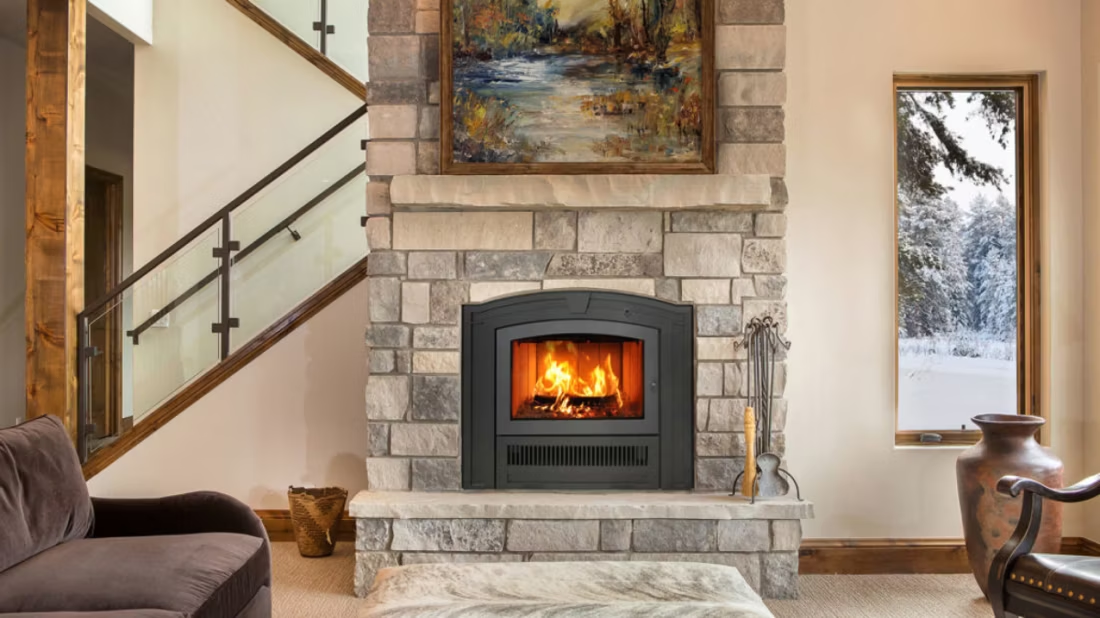
Firewood Cutting Permits Near White City
Three steps. No salesperson until you're ready.
Tell us about your project
Your zip code, your situation, and the fuel you're leaning toward—or let the answers point you to one.
See what's actually available
The brands dealers within 100 miles genuinely carry—real options, never a catalog mirage.
Get your dealer & Project Guide
A trusted local dealer, plus the free Project Guide & Parts List that names every component of the job.
Frequently Asked Questions
How much does a wood stove installation cost in White City?
Most wood stove installations in White City run between roughly $3,800 and $8,500, depending on the stove, whether you're installing into an existing masonry fireplace or starting from scratch, and how much chimney or hearth pad work is needed. Because White City is unincorporated, building permits for a new wood-burning appliance go through Jackson County Development Services Building Safety rather than a city building department—most local hearth retailers handle that paperwork as part of the install. Homes without an existing chimney, where a full Class A pipe run and roof penetration are needed, land toward the higher end of that range.
What size wood stove do I need for a White City home?
With average winter lows around 32°F and a shorter heating season than higher-elevation Oregon towns, many White City homes use wood as zone heat or storm backup rather than a whole-house primary source—which changes the sizing math. A small to medium stove (rated for 1,000–1,800 sq ft) is plenty for most living rooms or manufactured homes common in the area, while larger farmhouse-style properties on acreage may want a stove rated closer to 2,000 sq ft if it's carrying more of the heating load. A local retailer will size the room, not just the square footage, since open floor plans and vaulted ceilings change how far the heat travels.
Where can I find certified wood stove installers near White City?
Look for NFI (National Fireplace Institute) certified installers or CSIA (Chimney Safety Institute of America) credentials—both are the industry standard for wood-burning appliance work. Given the Rogue Valley's inversion-season air quality concerns, it's worth also asking whether the installer is familiar with Jackson County's clearance and permit requirements specifically, since Medford and the surrounding valley see more DEQ attention on wood smoke than most rural Oregon counties. A retailer who sells and installs the same unit typically handles both the county permit and the manufacturer warranty paperwork together.
What's the difference between a wood stove and a wood insert?
A wood stove is freestanding and sits on its own hearth pad, which makes it a fit for homes without an existing fireplace—common among the newer and manufactured homes around White City. A wood insert slides into an existing masonry firebox and uses the chimney that's already there, which is the better option if your home already has an open fireplace you want to convert into an actual heat source instead of a decorative one. For older Rogue Valley farmhouses with a functioning masonry chimney, an insert is usually the more cost-effective upgrade.
Do I need a permit to install a wood stove in White City?
Yes. Since White City is unincorporated, the permit goes through Jackson County Development Services Building Safety rather than a city office, and the stove itself has to meet current EPA 2020 NSPS emissions standards. Once installed, be aware that White City sits within the broader Medford-Ashland air basin, where Oregon DEQ runs a wood stove curtailment program during winter inversions—on advisory (yellow or red) days, uncertified older stoves may be restricted from burning while EPA/DEQ-certified stoves and pellet stoves are typically exempt. Most local installers can tell you whether a given curtailment applies to your specific unit.
What's the best wood stove for White City's climate?
Because White City's heating season is milder and shorter than higher-elevation Oregon towns, most homes here do fine with a mid-size, non-catalytic stove from brands like Pacific Energy, Lopi, or Enviro—all well-distributed through Pacific Northwest hearth retailers. These units are easier to operate on shoulder-season nights when you just need a few hours of heat rather than an all-night burn. Homes using wood as a genuine primary heat source, or those on acreage further from town, may still prefer a catalytic stove like Blaze King for longer burn times, but for most in-town White City homes it's overkill.
How often should my chimney be inspected and cleaned?
The CSIA recommends an annual inspection for any wood-burning appliance, and that holds even in a milder climate like White City's—creosote builds up based on how you burn, not just how much. Plan on a sweep and inspection each late summer before burning season, especially if your stove sat unused during a smoky wildfire summer, since inversion-trapped smoke and ash can settle in unused flues. Local chimney sweeps typically offer a Level 1 inspection along with the cleaning.
Where can I get firewood or a cutting permit near White City?
White City sits within easy reach of both the Rogue River-Siskiyou National Forest and the BLM Medford District, both of which issue personal-use firewood cutting permits for douglas fir, ponderosa pine, and lodgepole pine at $5 to $20 per cord, with cutting seasons generally running April or May through October. A few area sellers also deliver split, seasoned cordwood if you'd rather skip the permit and the cutting—expect prices to vary by species, with douglas fir generally running cheaper than pine per cord. If you're cutting your own, check current Forest Service and BLM Medford District maps first, since unit boundaries and closures (often related to summer wildfire risk) change year to year.
Wood stove vs. pellet stove—which is right for a White City home?
Wood stoves keep working during a PacifiCorp outage—no electricity required—and pair naturally with the low-cost cutting permits available through the nearby national forest and BLM land. Pellet stoves, stocked locally in brands like Bear Mountain, Lignetics, and Pacific Pellet, burn cleaner and are exempt from DEQ curtailment restrictions during inversion advisories, but they need continuous power to run the auger and blower, so they're not a fallback during a storm-related outage. If backup heat during winter storms is the priority, wood tends to win in White City; if minimizing smoke output during inversion season matters more to you, pellet is worth a serious look.
Why is my open fireplace making my house colder?
Open fireplaces suck—literally. As the fire burns, it consumes air your furnace already paid to heat and pulls it out through the chimney, so the house is actually colder after the fire goes out than before you lit it. An insert fixes this: it seals the chimney, puts fixed glass across the front, and turns that hole in your house into a real heat source.
What do I measure to size a fireplace insert?
Four numbers tell you what fits: the front width, the front height, the back width, and the overall depth of your existing fireplace opening. Grab a tape measure, jot those down, and snap a photo of the wall—those two things do more to move your project forward than anything else you can do today.
Does a fireplace add value to my home?
On average, a fireplace adds back to the home about the same amount you spent installing it. Add the monthly savings from heating the rooms you actually use instead of the whole house—often hundreds of dollars a year—and the value case is strong before you even count what a fire does for how your family uses the room.
How much should I budget for a fireplace?
For an average home—covering the fireplace, the vent pipe, and basic installation—a budget between $3,900 and $5,500 gives you a lot of options across wood, gas, and pellet. By the time you add finish work, gas line, and electrical, the average complete installation lands between $5,000 and $12,000 all-in. In a remodel or new build, a good rule is to put about 2.5% of the total project cost toward the fireplace.
Preferred Dealer in White City
Marked Preferred because they run on WhyFire's software—so they can show you real pricing and book your appointment right here. No manufacturer pays for placement. How we verify dealers →
Find your wood fireplace in White City.
Tell us a bit about your home and we'll match you with a trusted local dealer and a free Project Guide & Parts List—sized, vented, and permitted right for a White City wood stove or insert.
Find Your Fireplace →