
Find the right pellet stove for your Wasco County home.
Steady, thermostat-controlled heat for the Gorge's windy winters—from The Dalles to Tygh Valley and Maupin. Get matched with a trusted local dealer who installs it right.
Every Project Starts From One of These Five Situations
Consistent heat that doesn't demand a woodpile.
Wasco County sits at the transition point where the Columbia River Gorge's marine-influenced climate gives way to the high desert of central Oregon—The Dalles down near the river, Tygh Valley and Maupin up on the plateau. With about 4,890 heating degree days and average winter lows near 29°F, it's a real but moderate heating climate—nothing like the sub-zero stretches of Bozeman or Fargo, but cold enough that a supplemental heat source matters most nights from November through February. A lot of local homeowners want that heat without the chore of splitting and stacking cordwood, which is exactly where pellet stoves fit.
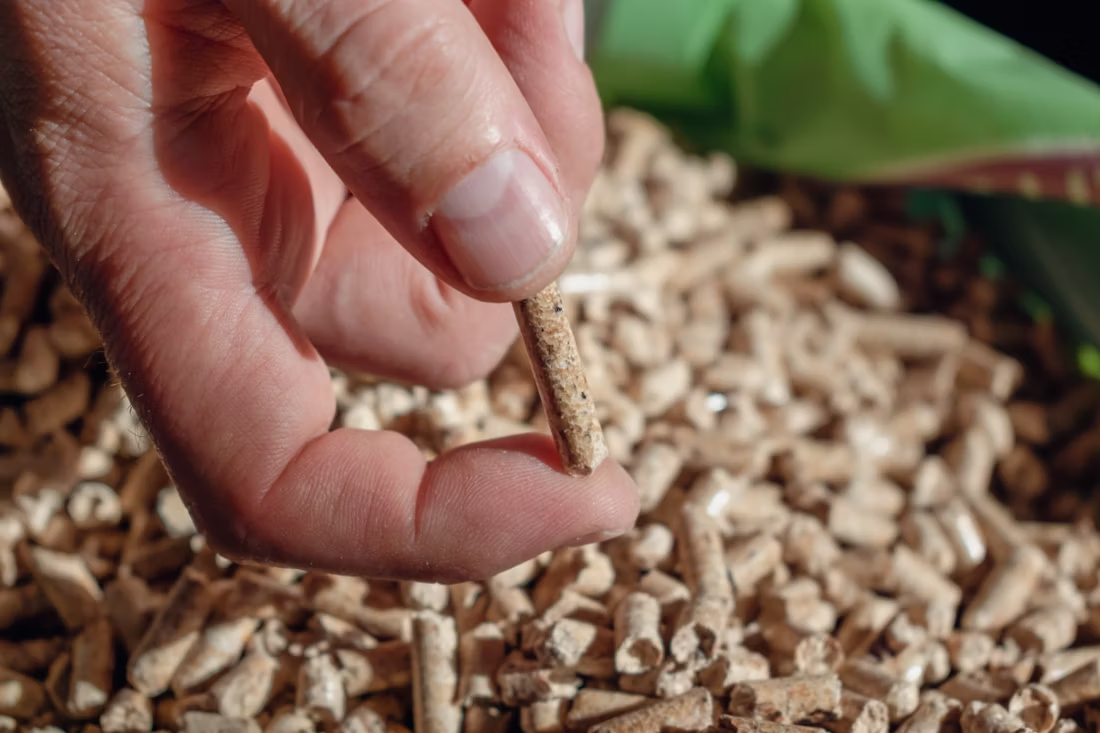
Regional pellet supply is solid here—Bear Mountain, Lignetics, and Pacific Pellet all distribute into the Gorge and central Oregon corridor, so bags are generally easy to find at farm stores and hardware retailers in The Dalles without long drives. Pellet stoves also sidestep the wildfire-smoke concerns that shape a lot of local air-quality conversation during summer and fall—they burn cleaner than cordwood and don't contribute to the same seasonal haze issues the county deals with. For homeowners near Mt. Hood or Gifford Pinchot National Forest who already have a wood-cutting habit, pellet is often the second stove in the house—the one that runs quietly on the coldest nights when nobody wants to feed a firebox at 2am.
Three steps. No salesperson until you're ready.
Tell us about your project
Your zip code, your situation, and the fuel you're leaning toward—or let the answers point you to one.
See what's actually available
The brands dealers within 100 miles genuinely carry—real options, never a catalog mirage.
Get your dealer & Project Guide
A trusted local dealer, plus the free Project Guide & Parts List that names every component of the job.
Frequently Asked Questions
How much does a pellet stove installation cost in Wasco County?
A typical pellet stove or insert installation in Wasco County runs in the $4,500-$7,500 range seen across this part of Oregon, depending on the unit, whether it's a freestanding stove or an insert into an existing masonry fireplace, and the venting path required. Freestanding pellet stoves usually need only a small-diameter vent through an exterior wall, which keeps installation simpler and less expensive than a full masonry chimney project. Homes in The Dalles with an existing fireplace opening are typically on the lower end; a new install in a home without any existing hearth or vent penetration runs higher once wall or roof penetration and electrical work for the auger and blower are factored in.
How does a pellet stove actually work, and what maintenance does it need?
A pellet stove feeds compressed wood pellets from a hopper into a burn pot using an electric auger, and a thermostat controls the feed rate to hold a set temperature automatically—no manual tending required the way a wood stove needs. That convenience comes with a tradeoff: the auger, igniter, and combustion blower all run on household electricity, so a pellet stove won't function during a power outage unless you add a battery backup. Maintenance is light but regular—emptying the ash pan every few days during heavy use, cleaning the burn pot weekly, and an annual professional cleaning of the exhaust venting and combustion blower. Local dealers can walk you through the specific maintenance schedule for whichever brand you choose.
Where can I buy pellets in Wasco County, and what do they cost?
Regional brands including Bear Mountain, Lignetics, and Pacific Pellet all supply this part of Oregon and are generally stocked at farm and hardware retailers in and around The Dalles, particularly as heating season ramps up in October and November. Buying a season's supply early—rather than waiting until a cold snap when local stock can thin out—is a habit worth building in a county where winter weather can roll in fast off the Gorge. Premium hardwood pellets burn cleaner and leave less ash than budget softwood blends, which matters if you're running the stove daily through the coldest months.
Is a pellet stove a good fit for Wasco County's climate, or is wood the better call?
Both fuels work well here, and the choice usually comes down to lifestyle rather than climate. Wasco County's winters—average lows around 29°F, roughly 4,890 heating degree days—don't demand the extreme burn times that push homeowners toward big catalytic wood stoves the way a place like International Falls or Duluth would. A mid-size pellet stove comfortably heats a main living area on a thermostat setting and needs attention only every day or two rather than every few hours. Wood remains the better backup-heat option during power outages, since it doesn't rely on electricity, and it's the natural choice for households already cutting their own firewood under a Mt. Hood or Gifford Pinchot National Forest permit. Plenty of local homes run pellet as primary heat and keep a wood stove or fireplace as the outage backup.
Do I need a permit to install a pellet stove in Wasco County?
Yes—pellet stove installations require a building permit in Wasco County, covering the appliance placement, venting, and any electrical work for the auger and blower circuit. Because pellet stoves vent through a smaller-diameter pipe than wood stoves and don't require full masonry chimney clearances, the permit and inspection process is often more straightforward than for a wood-burning appliance. Most local dealers handle the permit application and inspection scheduling as part of the installation, so you generally won't need to coordinate directly with the county building department yourself.
What size pellet stove do I need for my home?
Sizing depends on square footage, ceiling height, and insulation quality, but as a general guide for this climate: smaller units (up to roughly 1,000 sq ft) suit a single large room or a well-insulated smaller home, mid-size units (1,000-2,000 sq ft) cover most main living areas in The Dalles and Dufur, and larger units can handle an entire modest-size home if it's reasonably tight. Homes up on the plateau around Tygh Valley and Maupin, where wind exposure is higher and older farmhouses tend to be draftier, often do better sized up one notch from what square footage alone would suggest. A local dealer will size the unit properly during an in-home visit—oversizing wastes pellets and undersizing leaves you cold on the windiest nights.
Can a pellet stove heat my whole house, or just one room?
It depends on your home's layout and insulation. In an open-concept floor plan with good insulation, a properly sized pellet stove placed centrally can heat most or all of a modest single-story home in Wasco County's moderate winter climate. In homes with separated rooms, multiple stories, or older, leakier construction—common in some of the older housing stock around The Dalles—a pellet stove works best as zone heat for the main living area, with central heat or another supplemental source covering bedrooms and other spaces. A dealer walking your actual floor plan will give you a far more accurate answer than any general square-footage rule.
What's the difference between a pellet stove and a pellet insert?
A pellet stove is a freestanding unit that sits on a hearth pad and vents through a wall or existing chimney chase—it can go almost anywhere in a room with the right clearances. A pellet insert is built to slide into an existing masonry fireplace opening, converting an old open hearth into a sealed, thermostat-controlled heat source while reusing the existing chimney as the vent pathway with a proper liner. For Wasco County homes that already have a fireplace, especially older homes in The Dalles with a masonry hearth, an insert is usually the more cost-effective route since it uses infrastructure you already have. Homes without an existing fireplace opening are better suited to a freestanding stove.
Pellet stove vs. gas fireplace—which is right for my home?
Gas offers instant on-off operation at the flip of a switch, no fuel storage or loading, and—with the right ignition system—the ability to run during a power outage. Pellet stoves require electricity to run the auger and blower, so they go dark in an outage unless you add battery backup, but they deliver a real, visible flame and run on a renewable, regionally supplied fuel that's often cheaper per BTU than propane in areas of Wasco County without natural gas service. If instant convenience and outage resilience matter most, gas usually wins. If you like tending a real fire without the labor of splitting cordwood, and you're comfortable keeping a pellet supply on hand, pellet is a strong fit for this climate. A number of local homeowners choose gas for a main living space and pellet for a secondary room or shop.
Why is my open fireplace making my house colder?
Open fireplaces suck—literally. As the fire burns, it consumes air your furnace already paid to heat and pulls it out through the chimney, so the house is actually colder after the fire goes out than before you lit it. An insert fixes this: it seals the chimney, puts fixed glass across the front, and turns that hole in your house into a real heat source.
Why is a fireplace insert so efficient?
An insert does two things: it seals the chimney completely, so you stop losing air you already paid to heat, and it radiates warmth into the room through the firebox and glass. Most add a heat-exchange fan that pulls cool room air underneath, wraps it around the hot firebox, and pushes it back out warm. Your home is more efficient before you've even lit the first fire.
How much should I budget for a fireplace?
For an average home—covering the fireplace, the vent pipe, and basic installation—a budget between $3,900 and $5,500 gives you a lot of options across wood, gas, and pellet. By the time you add finish work, gas line, and electrical, the average complete installation lands between $5,000 and $12,000 all-in. In a remodel or new build, a good rule is to put about 2.5% of the total project cost toward the fireplace.
What is an in-home preview and do I need one?
It's a visit where a hearth professional measures your space, confirms the model you picked actually works in your home, and walks the specs—framing, gas line, venting, finish work—before anything is ordered. Some details you just can't know until you see the house. Never make a down payment without one; it's the single most-skipped step that burns buyers.
Stove and Fireplace Dealers in Wasco County
Pellet Brands Stocked Around Wasco County
Manufacturers will point you to the nearest stocking dealer.
Find your pellet stove in Wasco County.
Tell us a bit about your home and we'll match you with a trusted local dealer and send over a free Project Guide & Parts List—the exact stove, vent kit, and parts your Wasco County installation needs.
Find Your Fireplace →