
Clean-burning pellet heat for Umatilla County's wheat country winters.
From the Columbia River farmland near Hermiston to the pine-covered Blue Mountains above Pendleton and Pilot Rock, pellet stoves deliver low-smoke, thermostat-controlled heat without the cord-splitting. Find the right unit and connect with a trusted local dealer.
Every Project Starts From One of These Five Situations
Convenient heat that keeps the air clear.
Umatilla County stretches from the irrigated farmland along the Columbia River near Hermiston, up through the wheat country surrounding Pendleton, and into the ponderosa pine and juniper forests of the Blue Mountains near Pilot Rock and Ukiah. Elevations run from under 500 feet along the river to well over 4,000 feet in the mountains, and that spread shows up in heating needs—a county average of 4,859 heating degree days and winter lows near 29°F mean most homes need real supplemental or primary heat for five to six months a year, with the Blue Mountain communities running noticeably colder than the river towns.
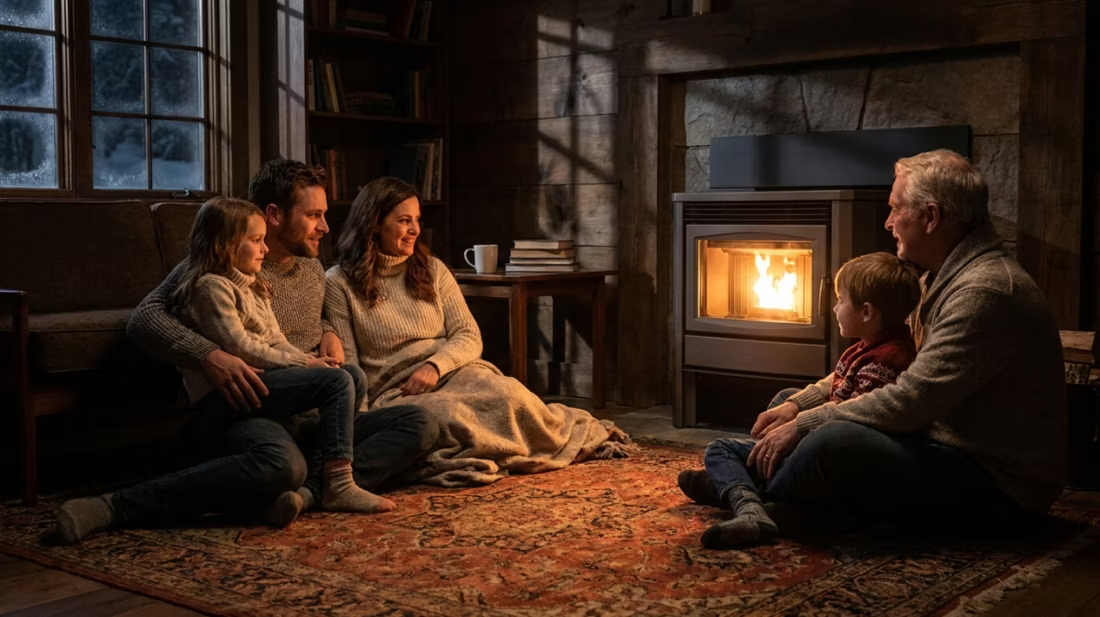
For Umatilla County homeowners, pellet stoves offer the radiant warmth of a wood-burning appliance without cutting firewood, hauling cordwood, or adding to the same particulate load as an open wood fire—a real consideration in a county that already deals with wildfire smoke most summers. Regional pellet brands like Bear Mountain, Lignetics, and Pacific Pellet are readily stocked at hearth and farm supply outlets throughout the county, and a pellet stove's thermostatic hopper feed means steady, hands-off heat through a Blue Mountain cold snap or a Columbia Basin wind event—no Umatilla National Forest cutting permit required, no cord stacking, no ash cleanup beyond a weekly hopper sweep.
Three steps. No salesperson until you're ready.
Tell us about your project
Your zip code, your situation, and the fuel you're leaning toward—or let the answers point you to one.
See what's actually available
The brands dealers within 100 miles genuinely carry—real options, never a catalog mirage.
Get your dealer & Project Guide
A trusted local dealer, plus the free Project Guide & Parts List that names every component of the job.
Frequently Asked Questions
How much does a pellet stove installation cost in Umatilla County?
A pellet stove installation in Umatilla County typically runs $3,500 to $6,500, depending on the unit size, whether it's a freestanding stove or an insert going into an existing fireplace, and how much venting work is required. Pellet stoves vent through a smaller-diameter PL (pellet vent) pipe rather than a full masonry chimney, which usually keeps labor lower than a comparable wood stove install—especially useful for homes in Hermiston and the river towns that were never built with a chimney. Homes in the Blue Mountain communities around Pilot Rock or Ukiah may see slightly higher costs if longer horizontal venting runs are needed to clear thicker walls or snow-load framing. Ask your local dealer for a firm quote after an in-home visit.
What size pellet stove do I need for my home?
Sizing depends on square footage, insulation, and elevation. Umatilla County spans from under 500 feet along the Columbia River at Hermiston to well over 4,000 feet in the Blue Mountains near Pilot Rock and Ukiah, and that difference matters—a stove that comfortably heats an 1,800-square-foot home in Hermiston may need to be sized up for a similar home at elevation, where winter lows run colder and wind exposure is higher. As a general guide: small pellet stoves (up to 1,000 sq ft) suit single rooms or additions, mid-size units (1,000–2,000 sq ft) cover most main living areas, and larger units handle 2,000+ sq ft in a reasonably well-insulated home. A local dealer will size your space based on actual square footage and elevation rather than a rule of thumb.
Pellet stove vs. wood stove—which is right for my Umatilla County home?
Wood stoves burn cordwood, work without electricity, and pair naturally with a Forest Service cutting permit through the Umatilla National Forest—useful if you're already cutting your own ponderosa pine or juniper. Pellet stoves are more hands-off (load the hopper, set the thermostat), burn cleaner with far less visible smoke, and produce more consistent heat, but they need continuous electricity to run the auger and combustion blower. That's the real trade-off in Umatilla County: wind events and winter storms across the Columbia Basin and up into the Blue Mountains can knock out power, and a pellet stove goes cold without it unless you add a battery backup. Homes that prioritize convenience and cleaner air—especially during wildfire smoke season, when air quality is already strained—often lean pellet. Homes that want guaranteed heat during an outage often keep wood as a backup.
Where can I buy pellets in Umatilla County, and what do they cost?
Bear Mountain, Lignetics, and Pacific Pellet are the three regional brands most commonly stocked by hearth dealers and farm supply stores across the county, including outlets serving Pendleton, Hermiston, and Milton-Freewater. Expect to pay somewhere in the $250 to $320 per ton range depending on brand, softwood-versus-hardwood blend, and whether you buy by the pallet (typically fifty forty-pound bags, or one ton) or by the individual bag. Buying a full season's supply—usually two to three tons for an average home—in late summer before demand picks up is the most reliable way to avoid shortages during a cold stretch.
Do I need a permit to install a pellet stove in Umatilla County?
Yes—a building permit is required for a new pellet stove installation, whether it's a freestanding unit or an insert. Inside city limits (Pendleton, Hermiston, Milton-Freewater, Pilot Rock), permits go through the city building department; in unincorporated parts of the county, they're handled through the Umatilla County Building Department. Most established hearth dealers pull the permit as part of the installation, so it's typically not something you have to manage yourself. Unlike wood stoves, pellet stoves don't face a separate emissions certification hurdle in most cases—nearly all modern pellet appliances already meet EPA standards well under the wood-stove limits.
How is a pellet stove vented, and does it need a chimney?
No—that's one of the main advantages for Umatilla County homes without an existing masonry chimney. Pellet stoves vent through a small-diameter PL (pellet vent) pipe that typically runs horizontally through an exterior wall rather than requiring a full vertical chimney. That makes pellet a practical retrofit option for ranch-style homes around Hermiston or newer construction in Pendleton that was never built with a fireplace. Homes with an existing masonry fireplace can also run a pellet insert using the existing chimney with a properly sized liner, which is common in older Pilot Rock and Milton-Freewater homes.
How much maintenance does a pellet stove need?
Less than a wood stove, but it's not maintenance-free. Plan on emptying and vacuuming the ash pan every few days to weekly depending on use, cleaning the burn pot and glass regularly, and scheduling a full professional cleaning and inspection once a year—typically before burning season starts in the fall. The exhaust fan, auger motor, and gaskets should be checked annually since these are the parts most likely to need service after a few seasons of daily Blue Mountain winter use. Most Umatilla County hearth dealers offer an annual service visit for $150 to $250.
Are pellet stoves restricted during wildfire smoke or air quality advisories?
Generally no, and that's one reason pellet stoves have grown more popular in Umatilla County. Under Oregon's DEQ wood smoke curtailment framework, pellet stoves are typically exempt from the burn curtailment periods that can affect uncertified wood stoves, since pellet appliances already burn cleaner and emit far less particulate matter. That said, wildfire smoke advisories—which affect the county most summers—are a separate issue from winter heating curtailments; a pellet stove running in January doesn't add to a July smoke event. Check current advisories with Oregon DEQ if you're unsure whether a specific rule applies to your situation.
What are the best pellet stove brands for Umatilla County's climate?
Look at established appliance brands like Harman, Lopi, and Quadra-Fire, which are widely available through regional hearth dealers and have a solid service network in eastern Oregon—important since parts availability matters once you're relying on a pellet stove through a Blue Mountain winter. Pair the stove with a regional fuel brand—Bear Mountain, Lignetics, or Pacific Pellet are all produced in the Pacific Northwest and widely stocked locally, which matters for consistent BTU output and low ash content. For colder, higher-elevation homes near Pilot Rock or Ukiah, ask your dealer about hopper capacity—a larger hopper means fewer refills during an extended cold stretch.
Why is my open fireplace making my house colder?
Open fireplaces suck—literally. As the fire burns, it consumes air your furnace already paid to heat and pulls it out through the chimney, so the house is actually colder after the fire goes out than before you lit it. An insert fixes this: it seals the chimney, puts fixed glass across the front, and turns that hole in your house into a real heat source.
Why is a fireplace insert so efficient?
An insert does two things: it seals the chimney completely, so you stop losing air you already paid to heat, and it radiates warmth into the room through the firebox and glass. Most add a heat-exchange fan that pulls cool room air underneath, wraps it around the hot firebox, and pushes it back out warm. Your home is more efficient before you've even lit the first fire.
How much should I budget for a fireplace?
For an average home—covering the fireplace, the vent pipe, and basic installation—a budget between $3,900 and $5,500 gives you a lot of options across wood, gas, and pellet. By the time you add finish work, gas line, and electrical, the average complete installation lands between $5,000 and $12,000 all-in. In a remodel or new build, a good rule is to put about 2.5% of the total project cost toward the fireplace.
Can I install a fireplace myself?
If you're putting a fire in your house on purpose, it's best to work with an expert. Unless you're genuinely experienced in framing, gas line, vent pipe, and the national code on clearances to combustibles, have a professional do it—and ideally the same company that sells you the fireplace, so warranty, service, and liability all live under one roof.
Stove and Fireplace Dealers in Umatilla County
Pellet Brands Stocked Around Umatilla County
Manufacturers will point you to the nearest stocking dealer.
Find your pellet stove in Umatilla County.
Tell us about your home and we'll match you with a trusted local dealer and send a free Project Guide & Parts List—sized for your space, with the right vent kit, ready for a Blue Mountain winter.
Find Your Fireplace →