
Consistent, clean heat for Newberg's mild, wet winters.
Thermostat-controlled warmth for Chehalem Valley homes, without the wood hauling or the smoke. Find the right pellet stove and connect with a trusted local dealer.
Every Project Starts From One of These Five Situations
Convenient heat for a valley that doesn't get brutally cold.
Newberg sits at just 216 feet in the Chehalem Valley, part of Yamhill County's wine country, where winters are wet and mild rather than harsh. Average winter lows hover around 35°F and the area logs about 4,712 heating degree days a year—a fraction of what a place like Bozeman, Montana or Fargo, North Dakota racks up. That milder climate means homeowners here don't need an oversized cold-climate furnace substitute; they need something that runs efficiently on shoulder-season days and cold snaps alike, without babysitting a fire every few hours.
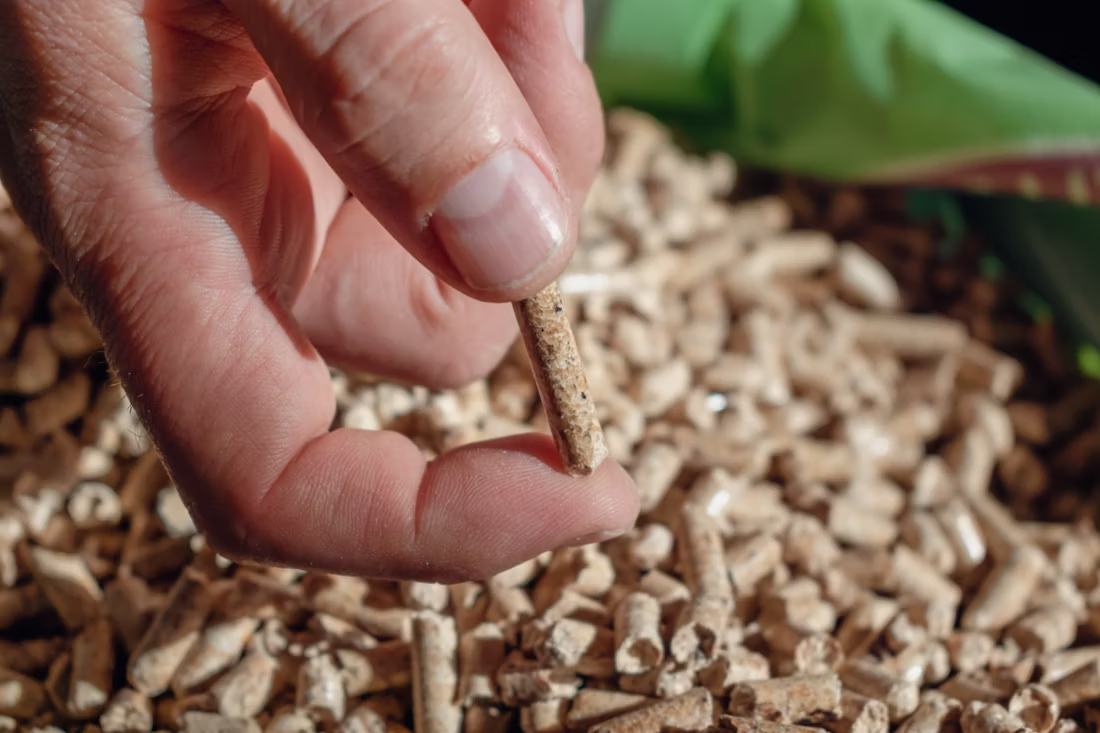
That's exactly where pellet stoves earn their keep in Newberg. The Willamette Valley's timber industry—the same one that produces Douglas fir framing lumber and ponderosa and lodgepole pine from nearby national forests—also feeds the sawdust supply chain for pellet manufacturers like Bear Mountain, Lignetics, and Pacific Pellet, all of which distribute throughout Oregon. You get a hopper you load once every day or two, a thermostat that holds a steady temperature, and a burn clean enough that it doesn't add to the valley's summer wildfire-smoke air quality concerns the way an open wood fire can.
Three steps. No salesperson until you're ready.
Tell us about your project
Your zip code, your situation, and the fuel you're leaning toward—or let the answers point you to one.
See what's actually available
The brands dealers within 100 miles genuinely carry—real options, never a catalog mirage.
Get your dealer & Project Guide
A trusted local dealer, plus the free Project Guide & Parts List that names every component of the job.
Frequently Asked Questions
How much does a pellet stove installation cost in Newberg?
Most Newberg homeowners land in the $3,500 to $6,500 range for a freestanding pellet stove installation, including the vent kit and hearth pad. Converting an existing wood-burning fireplace to a pellet insert usually runs toward the higher end of that range, since it often involves a stainless liner run and electrical work for the auger and blower—pellet units, unlike wood stoves, need a nearby outlet to operate. A local dealer will give you a firm number after seeing your fireplace or the room where the stove will go.
What size pellet stove do I need for a Newberg home?
Because Newberg's winters are mild by national standards—average lows around 35°F rather than the single digits you'd see in a place like Duluth or Burlington—most homes here do fine with a small to mid-size pellet stove rated for 1,000 to 1,800 square feet, even as primary heat in an open floor plan. Larger, high-output units built for extreme cold are usually overkill in the Chehalem Valley and will end up running on low burn most of the season. A local retailer can size the unit to your square footage and insulation level during an in-home visit.
Where do I buy pellets in Newberg?
Bear Mountain, Lignetics, and Pacific Pellet are the three brands most commonly stocked at feed stores, hardware retailers, and hearth shops throughout the Willamette Valley, and all three source much of their material from Pacific Northwest mill byproduct. Bagged pellets in this region typically run somewhere in the $230 to $300 per ton range depending on the brand and whether you buy by the bag or a full ton pallet. Buying a season's supply in fall, before demand picks up with the first cold snap, is the easiest way to avoid picked-over shelves in January.
Will my pellet stove work during a power outage?
Not without a backup power source. Pellet stoves rely on an electric auger to feed fuel and a blower to circulate heat, so a Portland General Electric outage means the stove stops working even with a full hopper. Given how Willamette Valley winter storms occasionally knock out power for hours or days, some Newberg homeowners pair their pellet stove with a small battery backup or generator specifically to keep it running. If backup heat during outages is a priority for you, a wood stove that needs no electricity is worth discussing with your local dealer alongside the pellet option.
Do I need a permit to install a pellet stove in Newberg?
Yes—a building permit is generally required for a new pellet stove or insert installation, whether you're inside city limits (handled through the City of Newberg's building division) or in unincorporated Yamhill County. Most certified hearth retailers include pulling this permit as part of the installation price, so you typically aren't coordinating it yourself. Because pellet stoves vent through a smaller-diameter pipe than wood stoves and don't require full masonry chimney work, the permitting and inspection process is usually quicker than a wood stove install.
Are pellet stoves a good fit given Newberg's wildfire smoke concerns?
Yes, and it's actually one of the stronger arguments for pellet over wood in this part of Yamhill County. Summer and early fall wildfire smoke already stresses air quality in the Willamette Valley, and pellet stoves burn compressed, low-moisture fuel far more completely than cordwood, producing a fraction of the particulate output. EPA-certified pellet units are exempt from the kind of burn curtailment restrictions that sometimes apply to wood stoves elsewhere in Oregon during poor air days, which makes them a lower-friction choice if you want reliable heat without adding to local smoke load.
Pellet vs. wood—which makes more sense for a Newberg home?
Wood is viable here—Douglas fir, ponderosa pine, and lodgepole pine are all available through Forest Service cutting permits ($5–$20 per cord) at Mt. Hood, Gifford Pinchot, or Siuslaw National Forest—but all three are roughly an hour or more from Newberg, which adds real time and fuel cost to self-cut firewood. Pellets, delivered or picked up locally in bags or bulk, skip that drive entirely and store more compactly than a woodpile. Wood still wins for off-grid backup heat during outages since it needs no electricity. For day-to-day convenience and cleaner burns in a valley with summer smoke concerns, pellet is usually the more practical daily driver.
How often does a pellet stove need to be serviced?
Plan on a full professional cleaning and inspection once a year, ideally before burning season starts in fall. Between services, most owners vacuum the burn pot and ash tray every few days during regular use and wipe the glass weekly—pellet stoves produce far less ash than wood but the burn pot needs to stay clear for consistent ignition. The auger motor, exhaust blower, and gaskets should all be checked annually, since those are the components most likely to wear out with daily use over a Newberg winter.
Pellet vs. electric—which costs less to run in Newberg?
Pellet stoves are generally the cheaper option to operate here. At Portland General Electric's residential rate of roughly $0.18 per kWh, running electric resistance heat for a Newberg winter adds up quickly, while a ton of pellets (roughly $230–$300 locally) can provide several weeks of steady heat in an average-size room, depending on use. Electric fireplaces and inserts do win on installation simplicity—often $400 to $1,200 with no venting required—and zero maintenance. For homeowners prioritizing lower fuel cost over the season, pellet tends to be the better economic fit; for a low-commitment supplemental unit, electric is hard to beat.
Why is my open fireplace making my house colder?
Open fireplaces suck—literally. As the fire burns, it consumes air your furnace already paid to heat and pulls it out through the chimney, so the house is actually colder after the fire goes out than before you lit it. An insert fixes this: it seals the chimney, puts fixed glass across the front, and turns that hole in your house into a real heat source.
Why is a fireplace insert so efficient?
An insert does two things: it seals the chimney completely, so you stop losing air you already paid to heat, and it radiates warmth into the room through the firebox and glass. Most add a heat-exchange fan that pulls cool room air underneath, wraps it around the hot firebox, and pushes it back out warm. Your home is more efficient before you've even lit the first fire.
What is an in-home preview and do I need one?
It's a visit where a hearth professional measures your space, confirms the model you picked actually works in your home, and walks the specs—framing, gas line, venting, finish work—before anything is ordered. Some details you just can't know until you see the house. Never make a down payment without one; it's the single most-skipped step that burns buyers.
Does a fireplace add value to my home?
On average, a fireplace adds back to the home about the same amount you spent installing it. Add the monthly savings from heating the rooms you actually use instead of the whole house—often hundreds of dollars a year—and the value case is strong before you even count what a fire does for how your family uses the room.
Nearby Dealers
Hearth shops serving Newberg and the surrounding area.
Pellet Brands Stocked Around Newberg
Manufacturers will point you to the nearest stocking dealer.
Find your pellet stove in Newberg.
Tell us a bit about your home and we'll put together a free Project Guide & Parts List for your pellet project—matched with a trusted local dealer who can install it right.
Find Your Fireplace →