
Reliable Heat for Marlene Village's Damp, Mild Winters.
Clean, instant gas heat for Washington County homes near Beaverton—built for six months of rain and chill rather than deep freezes. Find the right unit and connect with a trusted local dealer.
Every Project Starts From One of These Five Situations
Comfort heat for a mild, wet climate.
Marlene Village sits at just 237 feet in Washington County's marine west coast climate zone (4C), where winter lows average a mild 40°F and the overall winter heating workload is light—just a fraction of what a place like Duluth, MN or Fargo, ND deals with in a single season. That doesn't mean heat isn't needed; it means the demand looks different. Homes here need steady, comfortable warmth through long stretches of drizzle and gray skies from November through April, not survival heat against sub-zero nights.
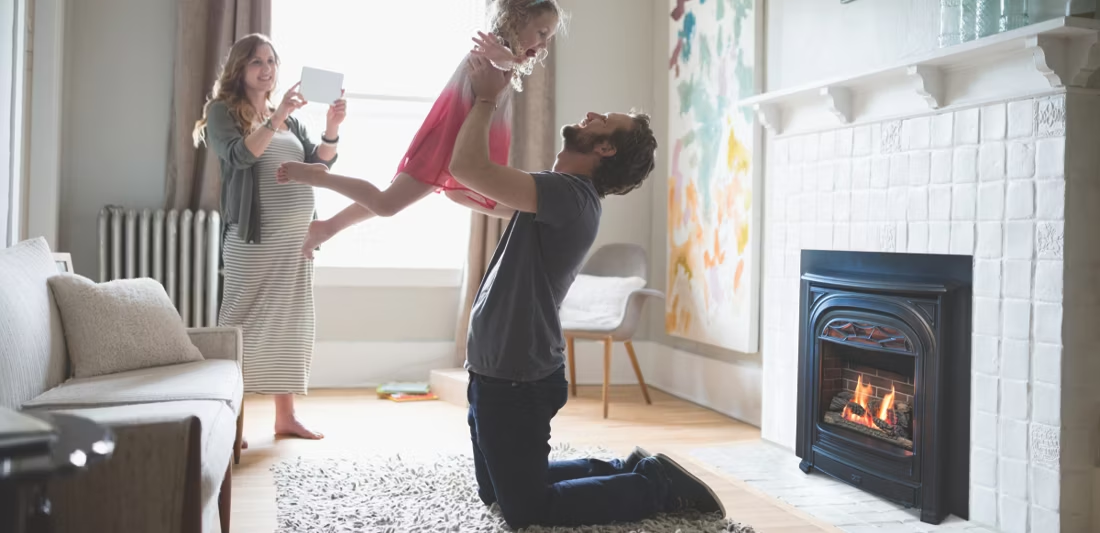
Gas fireplaces fit that pattern well. NW Natural serves most of the Beaverton and Washington County area, so a gas line hookup is often straightforward for homes already using gas for water heating or cooking. Gas also sidesteps a real regional concern: wildfire smoke. Late-summer and fall smoke events have made many Marlene Village homeowners rethink wood burning, and a clean-burning direct-vent gas fireplace delivers zone heat and ambiance on damp evenings without adding to indoor or outdoor air quality problems.
Three steps. No salesperson until you're ready.
Tell us about your project
Your zip code, your situation, and the fuel you're leaning toward—or let the answers point you to one.
See what's actually available
The brands dealers within 100 miles genuinely carry—real options, never a catalog mirage.
Get your dealer & Project Guide
A trusted local dealer, plus the free Project Guide & Parts List that names every component of the job.
Frequently Asked Questions
How much does a gas fireplace installation cost in Marlene Village?
A typical gas fireplace or insert installation in the Marlene Village area runs roughly $3,800 to $8,500, depending on the unit, the venting path, and whether a new gas line needs to be run from your meter. Homes already served by NW Natural with an existing appliance nearby (like a furnace or water heater) tend to land on the lower end. Homes needing a longer gas line run, new framing for a built-in unit, or upgraded electrical for a blower will sit higher. A local dealer will give you a firm number after seeing your space in person.
Can I convert my existing wood fireplace to gas?
Yes, and it's a common project in this part of Washington County, where many homes built from the 1960s through the 1980s still have their original wood-burning masonry fireplaces. A gas insert typically slides into that existing firebox, using a stainless liner run up the current chimney for venting. Costs usually fall between $4,000 and $7,500 depending on the insert and whether new gas line work is required. It's a popular upgrade for homeowners who want to stop dealing with Douglas fir or ponderosa pine firewood and wildfire-season smoke concerns but keep the look of a built-in hearth.
Do I need natural gas, or does propane work too?
NW Natural provides service throughout most of the Beaverton and Marlene Village area, so if your home already has a gas water heater, range, or furnace, adding a fireplace is generally simple. For homes just outside the service footprint, propane is a workable alternative—most gas fireplace models can be set up for either fuel with the correct orifice and regulator. Propane requires either an existing tank or a new tank installation through a regional propane supplier, which your installer can help arrange.
Will my gas fireplace work if the power goes out?
Most modern gas fireplaces will, which matters here—Washington County has seen multi-day outages during Portland-area ice storms, most notably in early 2021. Units with intermittent pilot ignition (IPI) run on battery backup, so the fireplace lights on demand even with no power, as long as the batteries are fresh. Valor fireplaces work a bit differently: their pilot's thermocouple generates its own electricity, so there's no battery to remember at all. Either option gives you working heat during a PGE outage, which a standard wood-mantle electric unit can't offer.
What's the difference between a gas fireplace, gas insert, and gas stove?
A gas fireplace is a fully built-in unit framed into a wall—the right call for new construction or a remodel without an existing hearth. A gas insert fits inside an existing masonry firebox and uses the current chimney as its vent path, which suits the many older homes in this part of Washington County. A gas stove is a freestanding cast-iron or steel unit that sits on the floor, often chosen for smaller rooms or additions where a built-in isn't practical. Most Marlene Village homeowners with an existing fireplace go the insert route.
Do I need a permit to install a gas fireplace in Marlene Village?
Yes. Since Marlene Village is unincorporated, permits run through Washington County Building Services, and both a building permit and a gas line permit are typically required for new installations. The gas line portion has to be done by a licensed gas fitter, which is one reason it's worth going through a hearth dealer who coordinates the gas work, venting, and inspection together rather than juggling separate contractors yourself.
What's the difference between vented and vent-free gas fireplaces?
Vented (direct-vent) gas fireplaces pull combustion air from outside and exhaust it back outside through sealed venting—they're the standard, code-friendly choice everywhere including Oregon. Vent-free units burn directly into the room without external venting; they're legal here but come with strict room-sizing rules and oxygen depletion sensors, and they release some combustion byproducts into your living space. Given how much attention wildfire smoke already gets in this area during late summer, most Marlene Village homeowners and local dealers steer toward direct-vent units for better indoor air quality year-round.
How often should my gas fireplace be serviced?
Plan on an annual inspection, ideally before the rainy season starts each fall. A certified technician checks the burner, pilot assembly, venting, and gas connections, and cleans the glass and interior—a much quicker job than wood chimney sweeping but still important, since these units run for extended stretches through Marlene Village's long, damp winters. Local gas appliance service providers typically charge $150 to $250 for a standard annual visit.
Gas vs. wood—which makes more sense in Marlene Village?
With a winter heating workload that's light overall and average winter lows around 40°F, Marlene Village doesn't demand the all-night burn times that colder Oregon towns need from a wood stove. That, combined with recurring wildfire smoke concerns each late summer and fall, is why many homeowners here choose gas for daily comfort heat. Wood still has fans—cutting permits are available through Gifford Pinchot, Mt. Hood, and Siuslaw National Forests for $5 to $20 per cord if you want the self-sufficiency of a woodpile—but for most homes in this climate, gas covers the day-to-day need with far less upkeep.
Why is my open fireplace making my house colder?
Open fireplaces suck—literally. As the fire burns, it consumes air your furnace already paid to heat and pulls it out through the chimney, so the house is actually colder after the fire goes out than before you lit it. An insert fixes this: it seals the chimney, puts fixed glass across the front, and turns that hole in your house into a real heat source.
Can I put a TV above my fireplace?
Yes—with an asterisk. Fireplaces are hot and TVs don't like heat. Either put a mantel between them to deflect rising warmth, or choose a fireplace with heat-management technology that creates a cool zone on the wall above—the wall stays around 125 degrees, barely warm, while the room still gets full heat. If you like clean lines and don't want a mantel, heat management is the answer.
Can I install a fireplace myself?
If you're putting a fire in your house on purpose, it's best to work with an expert. Unless you're genuinely experienced in framing, gas line, vent pipe, and the national code on clearances to combustibles, have a professional do it—and ideally the same company that sells you the fireplace, so warranty, service, and liability all live under one roof.
What is an in-home preview and do I need one?
It's a visit where a hearth professional measures your space, confirms the model you picked actually works in your home, and walks the specs—framing, gas line, venting, finish work—before anything is ordered. Some details you just can't know until you see the house. Never make a down payment without one; it's the single most-skipped step that burns buyers.
Nearby Dealers
Hearth shops serving Marlene Village and the surrounding area. Every listing shows whether it is a WhyFire partner, a dealer we have verified as authorized for the brands we recommend, or a local business carrying hearth products. No manufacturer pays for placement. How we verify dealers →
Fireside Home Solutions
Classic Pool And Spa
Rich's Stoves & Spa
Addco Electric Fireplaces
Emerald Outdoor Living-Portland
Two Foot/Ten Foot Fireplaces
Bridgetown Chimney & Masonry
Nw Natural Appliance Center
Western Outdoor Wholesale
Buck's Stove Palace
The Stove Shop
Performance Building Products
Chimcare Home Services
Lisac’s Spark & Splash
Haven Spa Pool & Hearth
Haven Spa Pool & Hearth
Ez Propane
HomeTown Hearth & Grill
Creative Fire
New Flame Hearth & Grill
Find your gas fireplace in Marlene Village.
Tell us a bit about your home and we'll put together a free Project Guide & Parts List—the right gas fireplace or insert, the vent kit it needs, and a trusted local dealer near Marlene Village to install it.
Find Your Fireplace →