
Reliable pellet heat for Hood River County's fruit-growing winters.
From the Columbia River valley floor up through the pear orchards toward Parkdale and Mt. Hood National Forest, pellet stoves are catching on across Hood River County. Find the right unit and connect with a trusted local dealer.
Every Project Starts From One of These Five Situations
Clean-burning heat that fits life in the Gorge.
Hood River County stretches from the banks of the Columbia River, where the town of Hood River sits at under 500 feet, up through the pear and apple orchards of the Hood River Valley to the alpine slopes of Mt. Hood, where communities like Parkdale and Cooper Spur climb past 3,000 feet. That elevation swing matters for heating: the valley floor averages a winter low around 30°F with roughly 5,412 heating degree days a year—a shoulder-season chill more like Madison, WI than a true deep-freeze climate—but homes higher up near Mt. Hood National Forest see colder nights and a longer burn season. Ponderosa pine, lodgepole pine, and juniper fill the surrounding forests, and cutting permits through Mt. Hood National Forest and Gifford Pinchot National Forest run $5 to $20 per cord during the May-to-October season for households willing to cut their own.
Increasingly, though, county residents are choosing a hopper over a woodshed. Regional pellet brands like Bear Mountain, Lignetics, and Pacific Pellet are stocked at hearth retailers throughout the Gorge, so nobody's driving to Portland for fuel. Pellet stoves also sidestep one of the county's real seasonal headaches: wildfire smoke. Late-summer smoke events already strain air quality here, and a clean-burning pellet appliance doesn't add to that load the way an older wood stove can. For orchard-country homes with detached shops, guest cabins, or additions that central HVAC doesn't reach well, a pellet stove or insert offers steady, thermostatically controlled heat without the ash and creosote upkeep of cordwood.
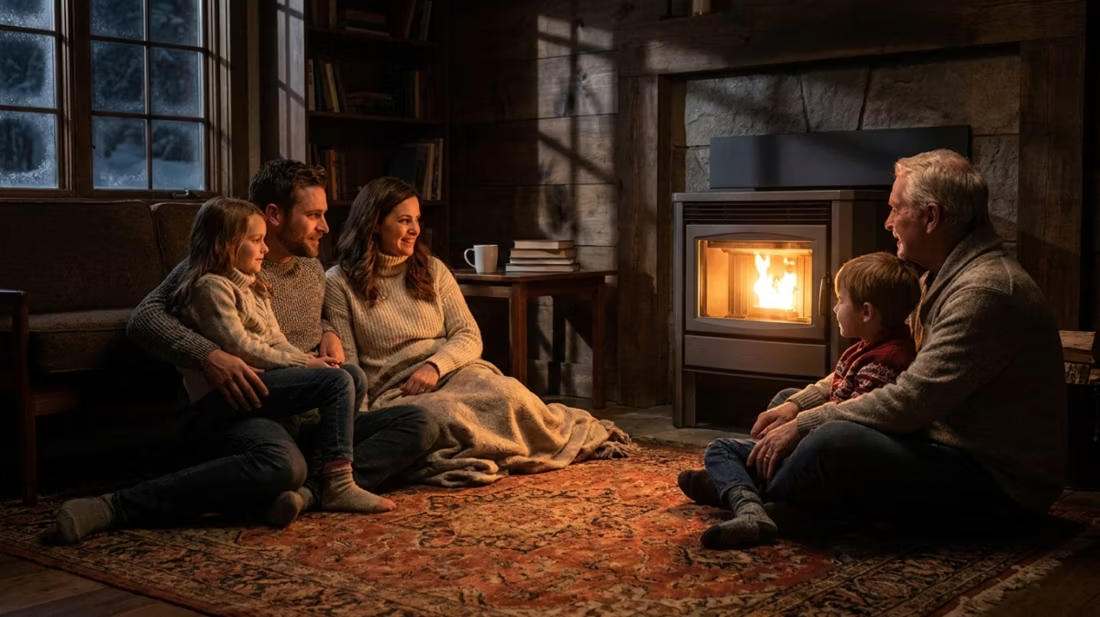
Three steps. No salesperson until you're ready.
Tell us about your project
Your zip code, your situation, and the fuel you're leaning toward—or let the answers point you to one.
See what's actually available
The brands dealers within 100 miles genuinely carry—real options, never a catalog mirage.
Get your dealer & Project Guide
A trusted local dealer, plus the free Project Guide & Parts List that names every component of the job.
Frequently Asked Questions
How much does a pellet stove installation cost in Hood River County?
Most pellet stove installations in Hood River County run in the $4,000 to $7,500 range, depending on the unit, whether you're venting through an existing chimney chase or running new PL venting through a sidewall, and whether a dedicated electrical circuit needs to be added for the auger and combustion blower. Converting an old masonry fireplace to a pellet insert tends to land on the lower end since it reuses the existing chimney; a freestanding stove in a new location—a detached shop near Odell, a guest cabin up toward Parkdale—costs more once wiring and wall penetrations are factored in. A local hearth dealer will size the job after an in-home visit.
What size pellet stove do I need for my home?
Sizing depends on square footage, insulation, and elevation. Homes on the valley floor near the town of Hood River, with a relatively mild average winter low around 30°F, often get by with a smaller unit sized for 1,000-1,800 sq ft. Homes higher in the valley toward Parkdale, Dee, or the edge of Mt. Hood National Forest—where nights run noticeably colder and the burn season stretches longer—usually need a stove rated for 1,800-2,500+ sq ft to keep up. An oversized stove cycles on and off constantly and burns through pellets faster than it needs to; an undersized one runs at full output around the clock without ever quite catching up. Local dealers will size your home for free during a consultation.
Where can I find certified pellet stove installers near me?
Look for NFI (National Fireplace Institute) certified technicians—pellet-specific certification covers the auger, hopper, and combustion-blower systems that wood stoves simply don't have. With a county population just over 13,000, dealer coverage is concentrated in and around the city of Hood River, with most installers also serving Parkdale, Odell, and the western Gorge toward Cascade Locks. Confirm your installer is running electrical for a dedicated circuit as part of the job—pellet stoves need continuous power for the auger and blower, and that's a step some general contractors miss.
What's the difference between a pellet stove and a pellet insert?
A pellet stove is a freestanding unit that sits on a hearth pad and vents through a wall or existing chimney chase—it can go almost anywhere there's power and a vent path. A pellet insert is built to slide into an existing masonry fireplace opening, turning an old wood-burning fireplace into a hopper-fed, thermostatically controlled heat source. For Hood River County homes with an existing brick fireplace—common in older homes near downtown Hood River—an insert is usually the simpler, less invasive upgrade. Homes without an existing fireplace, including many newer builds and orchard properties in the valley, are better suited to a freestanding stove.
Do I need a permit to install a pellet stove in Hood River County?
Yes—a building permit is required for new pellet stove installations, handled through Hood River County Community Development for properties outside city limits, or through the City of Hood River for in-town addresses. Most hearth dealers handle the permit paperwork as part of the installation. Pellet stoves burn far cleaner than uncertified wood stoves and aren't subject to the burn-ban restrictions that sometimes apply to wood appliances during wildfire-smoke advisories in the Gorge, which is one reason they've caught on here.
What's the best pellet stove for Hood River County's climate?
For valley-floor homes near town, a mid-size unit with a roughly 40-lb hopper and a 24-to-40-hour burn time between refills covers most winter days comfortably, given the area's relatively mild 30°F average winter low. For higher-elevation homes toward Parkdale and Mt. Hood National Forest, where the burn season runs longer and nights get colder, size up and look for a larger hopper capacity and higher max BTU output so the unit isn't running flat-out constantly. Brands like Harman, Enviro, and Lopi are commonly stocked by Pacific Northwest hearth dealers and pair well with regional pellet supply from Bear Mountain, Lignetics, or Pacific Pellet. Ask your local dealer which model fits your elevation and square footage.
How much maintenance does a pellet stove need?
Plan on emptying the ash pan every few days to weekly depending on use, cleaning the burn pot and glass every week or two during heavy winter burning, and scheduling a full professional inspection and cleaning once a year—typically late summer, ahead of the Gorge's first cold snap. Pellet stoves don't require the annual chimney sweep a wood stove does, but the auger, combustion blower, and exhaust venting should still be checked yearly for safe, efficient operation. Several local hearth shops offer seasonal service plans.
Where can I buy pellets in Hood River County?
Regional brands including Bear Mountain, Lignetics, and Pacific Pellet are widely stocked at hearth retailers and farm and hardware stores throughout the Gorge, so most residents aren't driving to Portland for fuel. Pricing tracks the broader Pacific Northwest pellet market and often runs a bit lower here than in areas farther from the mills. Buying a full winter's supply—typically 2 to 3 tons for an average valley home—in late summer or early fall, before demand picks up ahead of the first cold snap, is the most common way to lock in the better per-ton price.
Pellet stove vs. wood stove—which is right for my Hood River County home?
Wood stoves work without electricity, which matters here—the Columbia River Gorge is prone to winter ice storms that can knock out power for days, and a wood stove keeps burning through an outage while a pellet stove's auger and blower go silent. Wood also pairs with the ponderosa pine, lodgepole pine, and juniper available through Forest Service cutting permits ($5-$20 per cord through Mt. Hood National Forest or Gifford Pinchot National Forest) for households willing to cut their own. Pellet stoves win on convenience—load the hopper, set the thermostat, and walk away—and on air quality, which counts for something in a county already dealing with wildfire smoke most late summers. Many households here end up with wood for backup and ambiance, and pellet for daily, low-maintenance heat. A battery backup or small generator solves the pellet stove's outage weakness for homeowners who want both.
What's the difference between an insert and a zero-clearance fireplace?
An insert is a fireplace that slides into a pre-existing wood-burning fireplace—if you don't have one, there's nothing to insert it into. A zero-clearance fireplace is built into a framed wall, which makes it the answer for remodels and new construction. Simple test: existing masonry fireplace means insert; blank or framed wall means zero-clearance.
Why is a fireplace insert so efficient?
An insert does two things: it seals the chimney completely, so you stop losing air you already paid to heat, and it radiates warmth into the room through the firebox and glass. Most add a heat-exchange fan that pulls cool room air underneath, wraps it around the hot firebox, and pushes it back out warm. Your home is more efficient before you've even lit the first fire.
Can I install a fireplace myself?
If you're putting a fire in your house on purpose, it's best to work with an expert. Unless you're genuinely experienced in framing, gas line, vent pipe, and the national code on clearances to combustibles, have a professional do it—and ideally the same company that sells you the fireplace, so warranty, service, and liability all live under one roof.
Does a fireplace add value to my home?
On average, a fireplace adds back to the home about the same amount you spent installing it. Add the monthly savings from heating the rooms you actually use instead of the whole house—often hundreds of dollars a year—and the value case is strong before you even count what a fire does for how your family uses the room.
Stove and Fireplace Dealers in Hood River County
Pellet Brands Stocked Around Hood River County
Manufacturers will point you to the nearest stocking dealer.
Find your pellet stove in Hood River County.
Tell us about your home in the Gorge and we'll match you with a trusted local dealer, plus a free Project Guide & Parts List—the exact pellet stove or insert, vent kit, and installation plan for your address.
Find Your Fireplace →