
Steady Warmth for Hillsboro's Damp, Mild Winters.
Instant, clean heat for Washington County homes—whether you're converting an old masonry fireplace or adding heat to a new build. Find the right unit and connect with a trusted local dealer.
Every Project Starts From One of These Five Situations
Zone heat that works with a marine climate, not against it.
At 151 feet in the Tualatin Valley, Hillsboro sits squarely in climate zone 4C—mild, wet winters averaging around 34°F with a fairly light overall winter heating need. That's a fraction of what a place like Duluth, MN sees, so nobody here is heating through weeks of subzero cold. What Hillsboro homes actually deal with is persistent damp chill, gray stretches that last from November through April, and the occasional Willamette Valley ice storm that knocks out power for a day or two.
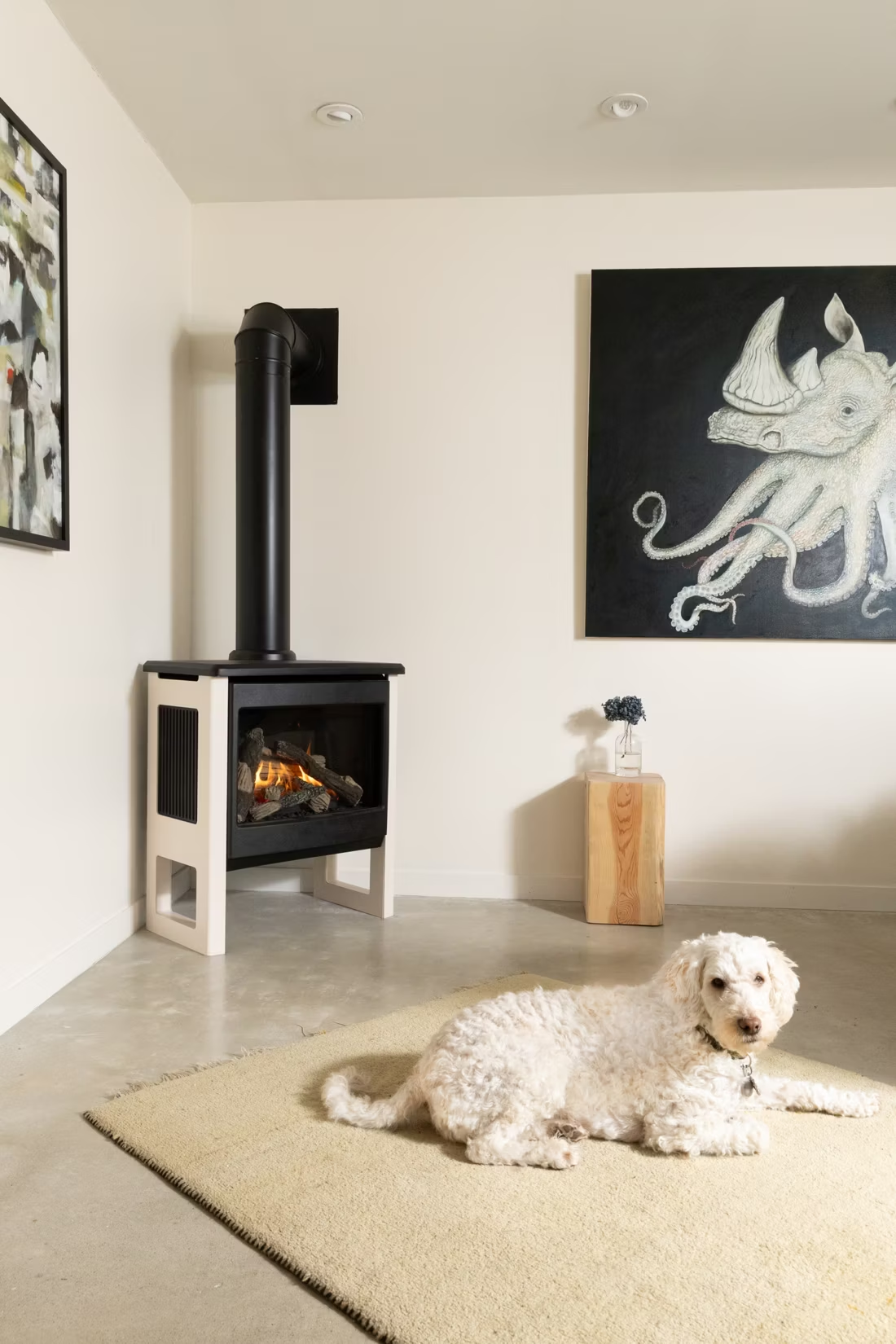
Gas fireplaces fit that pattern well. They deliver instant, even heat to a living room or great room without the upkeep of a wood-burning setup, which matters in a fast-growing county where new subdivisions around Orenco Station and Tanasbourne are built with direct-vent gas as the default rather than a retrofit. They also sidestep the wildfire smoke that periodically blankets Washington County in late summer and fall—a real air quality concern here even though it has nothing to do with winter heating season. For older Hillsboro homes with an existing masonry fireplace, converting to a gas insert is one of the most common upgrades local hearth dealers handle.
Three steps. No salesperson until you're ready.
Tell us about your project
Your zip code, your situation, and the fuel you're leaning toward—or let the answers point you to one.
See what's actually available
The brands dealers within 100 miles genuinely carry—real options, never a catalog mirage.
Get your dealer & Project Guide
A trusted local dealer, plus the free Project Guide & Parts List that names every component of the job.
Frequently Asked Questions
How much does a gas fireplace installation cost in Hillsboro?
Most Hillsboro installations run in the $4,000–$10,500 range, depending on the unit and the venting work involved. A direct-vent gas insert dropped into an existing masonry fireplace that already has gas service nearby sits toward the lower end. A new built-in direct-vent fireplace for a remodel or an addition—with framing, wall venting, and a new gas line run from the meter—lands in the middle to upper end. Homes outside the natural gas service footprint that need a propane tank set and line work will run higher. A local dealer will give you a firm number after seeing your existing chimney or wall layout in person.
Can I convert my existing wood fireplace to gas?
Yes, and it's a common project in Hillsboro's older neighborhoods around downtown and West Union, where many homes built from the 1960s through 1980s still have open masonry fireplaces. A gas insert typically slides into that existing firebox and vents through a stainless liner run up the same chimney, so you keep the look of the mantel and surround while gaining real, controllable heat output. Expect $4,500–$9,000 for a straightforward conversion where gas service already reaches the house; add more if a new gas line has to be run from the meter to the fireplace location.
Do I need natural gas, or can I run a fireplace on propane?
Either works, and most gas fireplace models can be configured for one or the other. Natural gas service reaches the large majority of homes inside Hillsboro city limits, so if you already cook or heat water with gas, adding a fireplace usually just means extending a line from an existing run. In unincorporated pockets of Washington County or newer developments still on the edge of the service area, propane is the standard fallback—either an existing tank or a new above-ground tank set by a local propane supplier. Your installer sets the orifice and regulator for whichever fuel you're on.
Will my gas fireplace still work if the power goes out?
Most modern gas fireplaces will, which matters in the Tualatin Valley where winter windstorms and the occasional freezing-rain event can knock out Portland General Electric service for a day or more. Units with IPI (intermittent pilot ignition) run on a small battery backup that kicks in automatically when grid power drops, so the fireplace lights and operates normally. Valor fireplaces take a different route: the pilot's thermocouple generates its own electricity, so there's no battery to remember or replace. Either way, ask your dealer specifically about the ignition system before you buy if outage backup matters to you.
What's the difference between a gas fireplace, gas insert, and gas stove?
A gas fireplace is a fully built-in unit framed into a wall—the standard choice for new construction or a remodel where there's no existing masonry opening. A gas insert is built to slide into an existing wood fireplace and use that chimney as its vent path, which is the more common route in Hillsboro's older housing stock. A gas stove is a freestanding cast-iron or steel unit that sits on the floor on its own hearth pad, similar to a wood stove in footprint but running on gas. For most homeowners here with an existing fireplace, an insert is the simplest upgrade; for new rooms or additions, a built-in fireplace or freestanding stove is usually the better fit.
Do I need a permit to install a gas fireplace in Hillsboro?
Yes. Gas fireplace installations require both a building permit and a gas piping permit, typically pulled through the City of Hillsboro's building division if the home is inside city limits, or Washington County if it's outside them. The gas line portion has to be run or connected by a licensed gas fitter, which is one reason most homeowners let their hearth dealer handle the whole permitting process—they coordinate the gas trade, the venting inspection, and the final sign-off together instead of you juggling separate contractors.
What's the difference between vented and vent-free gas fireplaces?
Vented (direct-vent) units draw combustion air from outside and exhaust all combustion byproducts back outside through a sealed pipe—they're the standard, code-compliant choice everywhere including Hillsboro. Vent-free units burn without any outside venting, releasing water vapor and small amounts of combustion gas directly into the room. Vent-free is legal in Oregon within room-size and ventilation limits, but given how often Hillsboro homes are already dealing with wildfire smoke infiltration in late summer, most local dealers steer customers toward sealed direct-vent units, which don't add anything to indoor air on top of that. Ask your dealer to walk through both if you're weighing the tradeoff.
How often should a gas fireplace be serviced?
Plan on an annual inspection, ideally before the wet season sets in around October. A technician checks the burner, pilot assembly, venting, and gas connections, and cleans the glass and interior—a much quicker job than a wood chimney sweep, but still important since a fouled burner or degraded gasket can affect both safety and efficiency. Local gas appliance service providers typically charge $150–$250 for this visit, and it's worth doing even on units that see light use, since Hillsboro's humidity can accelerate corrosion on components that sit idle much of the year.
Gas vs. wood—which makes more sense in Hillsboro?
Wood is still viable here—Douglas fir, ponderosa pine, and lodgepole pine are all common and cuttable through Forest Service permits at Mt. Hood, Gifford Pinchot, or Siuslaw National Forest for roughly $5 to $20 per cord during the May-through-October season. But with winter lows only averaging around 34°F and a fairly light overall heating season, Hillsboro doesn't have the sustained deep cold that makes wood a survival necessity the way it is in a place like Bozeman, MT. Add in periodic wildfire smoke advisories that make homeowners wary of adding more particulate to the air, and gas tends to win out for primary living-space heat, with wood (or pellet, using regional brands like Bear Mountain or Pacific Pellet) reserved for backup or ambiance in many local homes.
Why is a fireplace insert so efficient?
An insert does two things: it seals the chimney completely, so you stop losing air you already paid to heat, and it radiates warmth into the room through the firebox and glass. Most add a heat-exchange fan that pulls cool room air underneath, wraps it around the hot firebox, and pushes it back out warm. Your home is more efficient before you've even lit the first fire.
Can I put a TV above my fireplace?
Yes—with an asterisk. Fireplaces are hot and TVs don't like heat. Either put a mantel between them to deflect rising warmth, or choose a fireplace with heat-management technology that creates a cool zone on the wall above—the wall stays around 125 degrees, barely warm, while the room still gets full heat. If you like clean lines and don't want a mantel, heat management is the answer.
What is an in-home preview and do I need one?
It's a visit where a hearth professional measures your space, confirms the model you picked actually works in your home, and walks the specs—framing, gas line, venting, finish work—before anything is ordered. Some details you just can't know until you see the house. Never make a down payment without one; it's the single most-skipped step that burns buyers.
Can a fireplace actually lower my heating bill?
Yes—by creating a comfort zone. A furnace heats every square foot of the house just to warm the one room you're in; a gas fireplace on low burns roughly a sixth of the gas a typical furnace does. Set the furnace around 55–60 degrees as a baseline, then heat the rooms your family actually uses. Families who heat this way commonly save $20–$60 a month.
Nearby Dealers
Hearth shops serving Hillsboro and the surrounding area. Every listing shows whether it is a WhyFire partner, a dealer we have verified as authorized for the brands we recommend, or a local business carrying hearth products. No manufacturer pays for placement. How we verify dealers →
Two Foot/Ten Foot Fireplaces
Classic Pool And Spa
Fireside Home Solutions
Rich's Stoves & Spa
Addco Electric Fireplaces
Emerald Outdoor Living-Portland
Western Outdoor Wholesale
Bridgetown Chimney & Masonry
Nw Natural Appliance Center
The Stove Shop
Chimcare Home Services
Buck's Stove Palace
Performance Building Products
Haven Spa Pool & Hearth
Lisac’s Spark & Splash
Ez Propane
Haven Spa Pool & Hearth
New Flame Hearth & Grill
Tri-Tech Heating
Creative Fire
HomeTown Hearth & Grill
Find your gas fireplace in Hillsboro.
Tell us about your home and your existing setup, and we'll match you with a trusted local dealer and send over a free Project Guide & Parts List—the exact parts, vent kit, and recommended installer for your Hillsboro gas fireplace project.
Find Your Fireplace →