
Keep Your Family Warm and Safe—No Matter What
From Burns and Hines to the ranch country along Steens Mountain, wood remains the backbone of winter heat across one of Oregon's largest and least-populated counties. Find the right stove or insert, and connect with a trusted local dealer.
Every Project Starts From One of These Five Situations
Self-sufficiency isn't optional out here.
Harney County spans more than 10,000 square miles of high desert in southeastern Oregon—Oregon's largest county by area, home to just over 4,500 people. Winters run long and cold here: average winter lows near 16°F and roughly 7,214 heating degree days a season, colder than a typical winter in Bozeman, Montana. Burns and Hines sit around 4,150 feet, and the surrounding basin-and-range country toward Steens Mountain, the Malheur National Wildlife Refuge, and the open BLM rangeland gets colder still. For ranch families and townsfolk alike, wood has long been the default heat source, not a lifestyle preference.
The county is bordered by public land—the BLM Burns District to the south and west, the Malheur National Forest to the north—which keeps cutting permits cheap and accessible: $10 per cord through the BLM and $20 for four cords through the Malheur National Forest, both running spring through fall. Ponderosa pine, lodgepole pine, and juniper are the species locals split and burn. With the nearest hearth retailer typically a couple hours away in Bend or Redmond, a properly sized, EPA-certified wood stove installed by someone who understands Harney County's distances and its power reliability isn't a luxury—it's how a lot of households get through January.
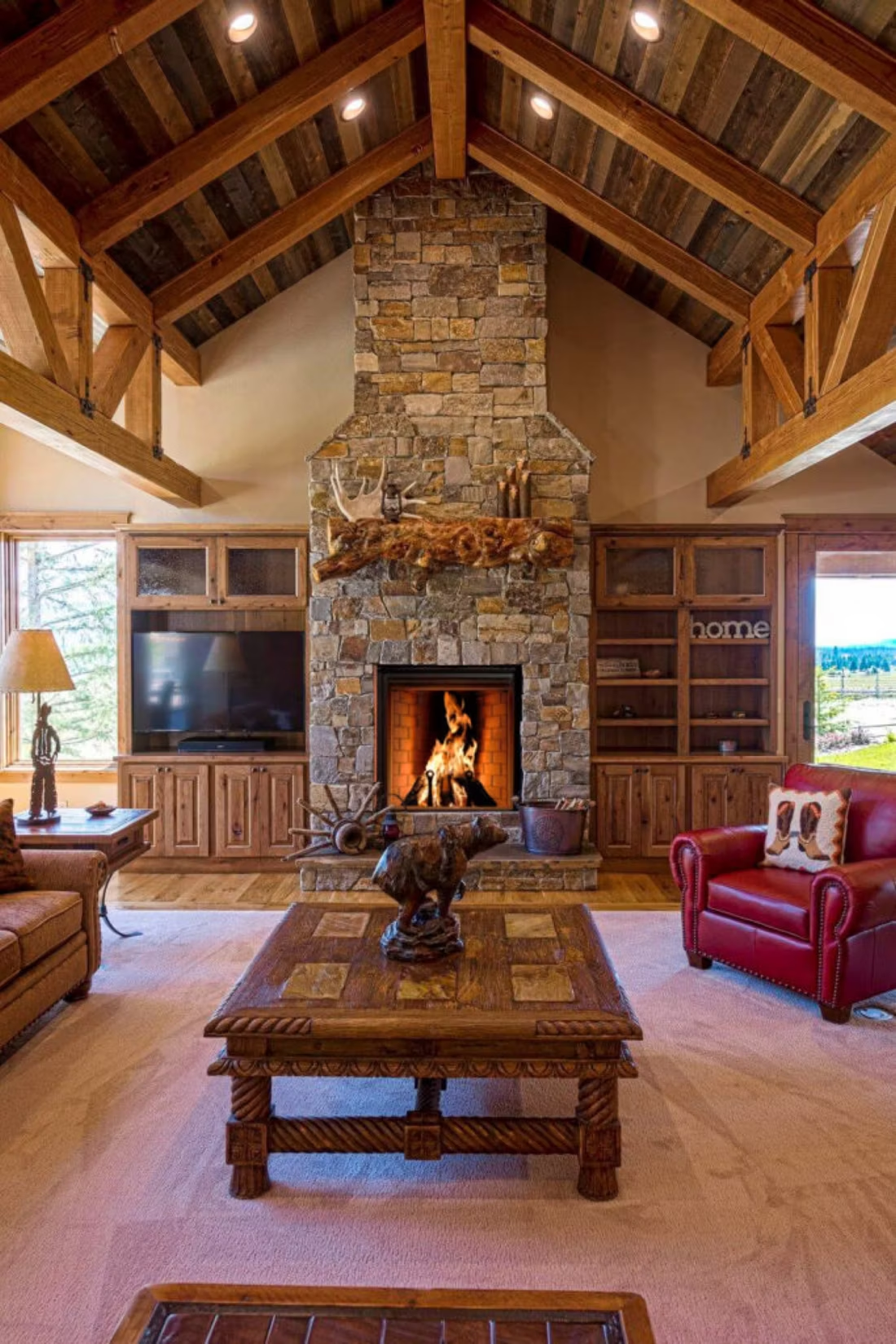
Firewood Cutting Permits Near Harney County
Three steps. No salesperson until you're ready.
Tell us about your project
Your zip code, your situation, and the fuel you're leaning toward—or let the answers point you to one.
See what's actually available
The brands dealers within 100 miles genuinely carry—real options, never a catalog mirage.
Get your dealer & Project Guide
A trusted local dealer, plus the free Project Guide & Parts List that names every component of the job.
Frequently Asked Questions
How much does a wood stove installation cost in Harney County?
A wood stove installation in Harney County typically runs $4,000 to $9,000, depending on the stove, whether new Class A chimney pipe is needed, and any hearth pad work required for code clearance. Because there's no hearth shop based in Burns or Hines, most certified installers travel from Bend, Redmond, or eastern Oregon towns like Ontario, and that travel time is often reflected in the quote—expect the higher end of that range, or beyond it, for homes well out on ranch roads. New construction without an existing chimney, common on newer rural properties, can add $2,000 to $4,000 for full venting.
What size wood stove do I need for my home?
Sizing depends on square footage, insulation, and whether the stove is your primary heat or backup. Harney County's cold nights—averaging 16°F and dropping well below zero out toward Steens Mountain and the high desert basin—call for sizing on the larger side of manufacturer charts, especially in older, less-insulated ranch houses. Small stoves (under 1,000 sq ft) suit a single room or line shack; medium stoves (1,000–2,000 sq ft) cover most Burns and Hines homes; larger stoves handle bigger or draftier farmhouses. A local dealer will size your space off your actual home rather than a generic chart, which is worth the drive if you're bringing someone in from Bend or Redmond.
Where can I find certified wood stove installers near me?
Look for NFI (National Fireplace Institute) or CSIA (Chimney Safety Institute of America) certification—both indicate real training in wood-appliance venting and clearances. Harney County doesn't have a hearth retailer of its own, so most certified installers cover the area from Bend, Redmond, or towns like Ontario, making trips out to Burns, Hines, Diamond, and the ranch roads beyond. Booking before October, ahead of burning season, helps you avoid a longer wait once cold weather sets in. Skip general contractors for wood-burning work—improper clearances and venting are the leading cause of chimney fires in rural homes.
What's the difference between a wood stove and a wood insert?
A wood stove is freestanding and vents through a chimney, so it can go almost anywhere with the right clearances—a good fit for the many older farmhouses, outbuildings, and shop spaces across Harney County's ranches. A wood insert drops into an existing masonry fireplace, turning a drafty older Burns or Hines fireplace into a real heat source using the chimney you already have. If your home already has a working fireplace, an insert is usually the more efficient upgrade; homes without one, or outbuildings, are better suited to a freestanding stove.
Do I need a permit to install a wood stove in Harney County?
Yes—new wood stove installations require a building permit through the Harney County Planning & Building Department, and the stove must meet current EPA 2020 NSPS emissions standards, which is now standard for units sold through an authorized dealer. Most installers handle the permit paperwork as part of the job. Harney County isn't an EPA non-attainment area the way some Oregon counties are, but winter inversions do settle over the Harney Basin, and wildfire smoke is a real summer and fall concern—worth factoring in if you're burning heavily during a stagnant-air stretch.
What's the best wood stove for Harney County's climate?
For Harney County's long, cold winters—about 7,214 heating degree days a year, more than many upper-Midwest cities see—a catalytic stove from a brand like Blaze King is worth a look. Catalytic models can hold a fire 20+ hours on a load, which matters when it's well below zero out past Diamond or up toward Steens Mountain and you'd rather not reload at 3 a.m. Non-catalytic stoves from Pacific Energy or Lopi burn hot and clean on the ponderosa pine, lodgepole pine, and juniper that make up most of the local woodpile, and they're a simpler option for smaller homes or supplemental heat. Ask any installer about rated burn time and BTU output relative to your actual square footage, not just the stove's sticker size.
How often should my chimney be inspected and cleaned?
The CSIA recommends an annual inspection for any wood-burning appliance, and that matters even more in Harney County, where many homes lean on wood as a primary heat source through a burning season that can start in October and run into May. Plan a full sweep and inspection in late summer, before the first cold snap, since scheduling a sweep from out of town gets harder once burning season is underway. Homes going through four or more cords a winter—common on ranch properties—may need a mid-season check if creosote builds up faster than expected.
Where can I get firewood in Harney County?
Most Harney County residents cut their own. A BLM Burns District permit runs $10 per cord for cutting April through October, and a Malheur National Forest permit runs about $20 for four cords on a similar May-to-October schedule. Ponderosa pine, lodgepole pine, and juniper are the species locals cut most—juniper burns hot and long, though it can be tough to split. If you'd rather buy delivered firewood, options thin out fast this far from town; expect a delivery premium given the distances involved, and it's worth checking with neighbors or local classifieds before assuming a supplier will run a truck out to your road.
Wood stove vs. pellet stove—which is right for me?
Wood stoves run on cordwood, work without electricity—a real advantage in Harney County, where winter storms can knock out power on rural lines for a stretch—and pair naturally with the cheap BLM and Forest Service cutting permits available across the county. Pellet stoves are more convenient (load the hopper, set the thermostat, less ash) and burn cleaner, using bagged pellets from regional brands like Bear Mountain, Lignetics, or Pacific Pellet, but they need electricity to run the auger and blower, so they go dark in an outage unless paired with a battery backup. For ranch properties or anyone concerned about grid reliability, wood is usually the safer primary or backup choice; pellet suits in-town homes that value convenience and have steady power.
Why is a fireplace insert so efficient?
An insert does two things: it seals the chimney completely, so you stop losing air you already paid to heat, and it radiates warmth into the room through the firebox and glass. Most add a heat-exchange fan that pulls cool room air underneath, wraps it around the hot firebox, and pushes it back out warm. Your home is more efficient before you've even lit the first fire.
Why is my open fireplace making my house colder?
Open fireplaces suck—literally. As the fire burns, it consumes air your furnace already paid to heat and pulls it out through the chimney, so the house is actually colder after the fire goes out than before you lit it. An insert fixes this: it seals the chimney, puts fixed glass across the front, and turns that hole in your house into a real heat source.
What is an in-home preview and do I need one?
It's a visit where a hearth professional measures your space, confirms the model you picked actually works in your home, and walks the specs—framing, gas line, venting, finish work—before anything is ordered. Some details you just can't know until you see the house. Never make a down payment without one; it's the single most-skipped step that burns buyers.
Can a fireplace actually lower my heating bill?
Yes—by creating a comfort zone. A furnace heats every square foot of the house just to warm the one room you're in; a gas fireplace on low burns roughly a sixth of the gas a typical furnace does. Set the furnace around 55–60 degrees as a baseline, then heat the rooms your family actually uses. Families who heat this way commonly save $20–$60 a month.
Find your wood stove in Harney County.
Tell us about your home and heating goals, and we'll match you with a trusted local dealer and send over a free Project Guide & Parts List—the stove, venting, and parts a Harney County installation actually needs.
Find Your Fireplace →