
Consistent heat, less wood splitting, for Grant County homes.
From John Day to Prairie City, Long Creek to Dayville, Grant County winters run cold and long—pellet stoves deliver steady, thermostat-controlled heat without a woodpile out back. Find the right unit and connect with a trusted local dealer.
Every Project Starts From One of These Five Situations
Efficient heat that doesn't require a woodshed.
Grant County spans more than 4,500 square miles of the Blue Mountains and the John Day River valley, but it's home to just 4,484 people—one of the most sparsely populated counties in Oregon. Winters here average 21°F lows and bring a long, hard heating season on par with places like Bozeman or Fargo. Wood heat has deep roots in towns like John Day, Canyon City, Prairie City, and Seneca, where ponderosa pine, lodgepole pine, and juniper are cut under permits from the Malheur National Forest, BLM Burns District, and Wallowa-Whitman National Forest. But splitting and hauling wood isn't for everyone, especially as the county's population ages and second-home owners in places like Monument and Dayville want reliable heat without the labor.
That's where pellet stoves fit in. Regional brands like Bear Mountain, Lignetics, and Pacific Pellet are milled from the same softwood species that grow across the Malheur and Wallowa-Whitman forests, so supply stays local and prices stay reasonable compared to hauling pellets in from out of state. A pellet stove also burns noticeably cleaner than an open wood stove—a real advantage in a county where wildfire smoke already fouls the air for weeks most summers. For homes across Grant County looking for set-it-and-forget-it heat that doesn't require a chainsaw or a woodshed, pellet is often the practical answer.
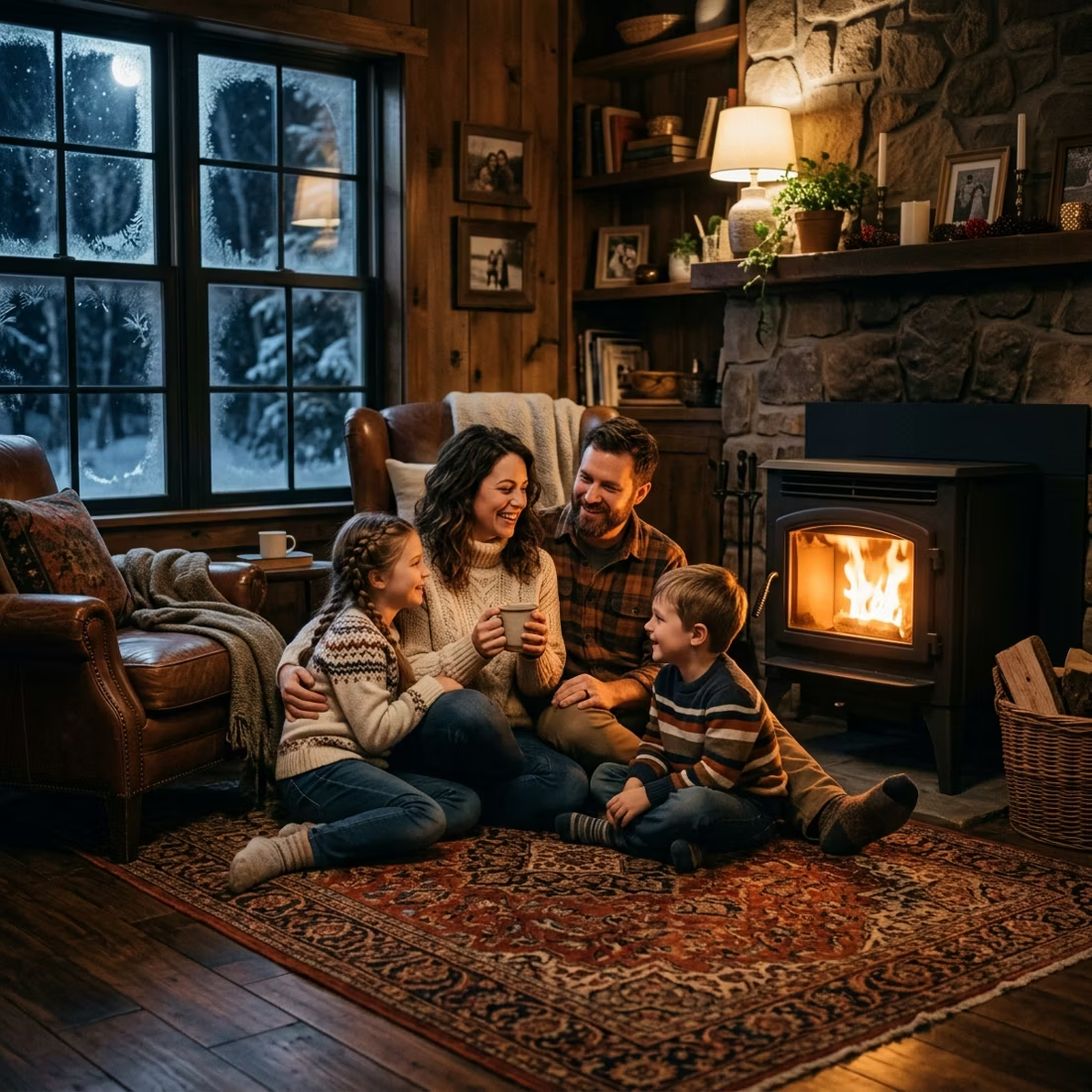
Three steps. No salesperson until you're ready.
Tell us about your project
Your zip code, your situation, and the fuel you're leaning toward—or let the answers point you to one.
See what's actually available
The brands dealers within 100 miles genuinely carry—real options, never a catalog mirage.
Get your dealer & Project Guide
A trusted local dealer, plus the free Project Guide & Parts List that names every component of the job.
Frequently Asked Questions
How much does a pellet stove installation cost in Grant County?
A typical pellet stove installation in Grant County runs roughly $3,500 to $7,000, depending on the unit, whether it vents through an existing chimney or requires new wall venting, and whether a hearth pad upgrade is needed for code clearance. Because Grant County covers such a large, low-density area, installers based in John Day or Prairie City may add a modest travel charge for jobs in outlying communities like Long Creek, Monument, or Dayville. Most local dealers bundle the permit paperwork into the install quote, so you're not chasing that separately.
Will a pellet stove work if the power goes out?
Not without help. Pellet stoves rely on an electric auger to feed fuel and a blower to move heat, so a power outage stops the stove cold unless you have backup power. That matters in Grant County—rural power lines through the Blue Mountains can go down in winter storms, and utilities sometimes de-energize lines preemptively during high fire-danger periods. Many homeowners here pair a pellet stove with a small battery backup or generator specifically for that reason, or keep a wood stove as a true off-grid backup. Ask your local dealer which pellet models draw the least power if backup capacity is a concern.
Where can I buy pellets in Grant County?
Regional brands including Bear Mountain, Lignetics, and Pacific Pellet are the most commonly stocked options at hardware and farm supply stores in John Day and Prairie City. Because Grant County is remote and retail shelf space is limited, most year-round pellet burners buy several tons at once in early fall rather than restocking bag by bag through winter—running out mid-January when the nearest supplier is 40 minutes away is a real inconvenience here. Expect pricing in the $250 to $350 per ton range, with softwood pellets from nearby Pacific Northwest mills generally cheaper than pellets shipped in from farther afield.
What size pellet stove do I need for my home?
Sizing depends on square footage, insulation, and elevation. As a rough guide for Grant County's cold, dry climate: smaller units (up to 1,000 sq ft) suit a cabin or single-zone home, while medium units (1,200-2,000 sq ft) cover most main living areas in John Day or Mount Vernon. Homes at higher elevation near Strawberry Mountain or up toward the Wallowa-Whitman boundary typically need to size up compared to valley-floor homes in Canyon City at the same square footage, since overnight lows run colder the higher you go. A local dealer will size your space during an in-home visit—oversizing wastes pellets, undersizing means the stove runs flat-out on the coldest nights and still falls short.
Do I need a permit to install a pellet stove in Grant County?
Yes—a new pellet stove installation typically requires a building permit through the Grant County Building Department, since it involves venting through an exterior wall or existing chimney. Most local installers handle that paperwork as part of the job. You don't need a permit to operate the stove itself, and unlike open wood burning, pellet stoves are generally exempt from local burn restrictions that sometimes get issued during Grant County's summer wildfire smoke events—one more reason pellet appeals to homeowners who want to keep heating without worrying about seasonal air quality advisories.
How do I find a certified pellet stove installer near me?
Look for NFI (National Fireplace Institute) or CSIA-affiliated installers—credentials that indicate proper training on venting and clearance requirements for pellet appliances. Because Grant County's population is small, the pool of local dealers is limited; some homeowners in outlying areas like Seneca or Long Creek end up working with an installer based in John Day or traveling from Baker City or Bend. Buying the stove and installation as a package from the same certified dealer simplifies warranty coverage and ensures the venting is sized correctly for your elevation and home.
How much maintenance does a pellet stove need?
Less than a wood stove, but it's not zero. Plan on emptying the ash pan every few days during regular use, cleaning the burn pot weekly, and having the venting and hopper mechanism professionally serviced once a year—typically before burning season starts in September or October. For Grant County's long heating season, running from roughly October through April, a stove used as primary heat will need more frequent ash removal than one used just for supplemental warmth in a John Day living room.
Pellet stove vs. wood stove—which is right for Grant County?
Wood stoves work without electricity, which matters when winter storms or preemptive shutoffs knock out power in rural parts of the county, and cutting your own firewood under a Malheur National Forest or BLM Burns District permit keeps fuel costs low. Pellet stoves trade that off-grid resilience for convenience—load the hopper, set the thermostat, and walk away, with a cleaner burn that doesn't contribute to wildfire smoke buildup in town. Many Grant County households end up with both: wood as backup heat for outages, pellet for daily convenience in the main living space.
Does wildfire smoke affect pellet stove use in Grant County?
Not directly—pellet stoves are sealed-combustion appliances that vent outside and don't add to indoor smoke exposure, and they're generally exempt from the burn restrictions that sometimes accompany Grant County's wildfire smoke season. The bigger connection is seasonal: summers here can bring weeks of smoke-choked air from fires in the Malheur and Wallowa-Whitman forests, which pushes some homeowners toward pellet heat specifically because it burns cleaner than an open wood stove come winter, without adding to the particulate load the county already deals with each fire season.
Why is my open fireplace making my house colder?
Open fireplaces suck—literally. As the fire burns, it consumes air your furnace already paid to heat and pulls it out through the chimney, so the house is actually colder after the fire goes out than before you lit it. An insert fixes this: it seals the chimney, puts fixed glass across the front, and turns that hole in your house into a real heat source.
What's the difference between an insert and a zero-clearance fireplace?
An insert is a fireplace that slides into a pre-existing wood-burning fireplace—if you don't have one, there's nothing to insert it into. A zero-clearance fireplace is built into a framed wall, which makes it the answer for remodels and new construction. Simple test: existing masonry fireplace means insert; blank or framed wall means zero-clearance.
Can a fireplace actually lower my heating bill?
Yes—by creating a comfort zone. A furnace heats every square foot of the house just to warm the one room you're in; a gas fireplace on low burns roughly a sixth of the gas a typical furnace does. Set the furnace around 55–60 degrees as a baseline, then heat the rooms your family actually uses. Families who heat this way commonly save $20–$60 a month.
How much should I budget for a fireplace?
For an average home—covering the fireplace, the vent pipe, and basic installation—a budget between $3,900 and $5,500 gives you a lot of options across wood, gas, and pellet. By the time you add finish work, gas line, and electrical, the average complete installation lands between $5,000 and $12,000 all-in. In a remodel or new build, a good rule is to put about 2.5% of the total project cost toward the fireplace.
Stove and Fireplace Dealers in Grant County
Pellet Brands Stocked Around Grant County
Manufacturers will point you to the nearest stocking dealer.
Find your pellet stove in Grant County.
Tell us a bit about your home and we'll match you with the right pellet stove or insert, plus a free Project Guide & Parts List with the exact vent kit and parts your local Grant County dealer will need to get it installed.
Find Your Fireplace →