
Keep Your Family Warm and Safe—No Matter What
Florence winters are mild by Oregon standards, but coastal storms knock out power for days at a time. Find the right wood stove or insert and connect with a trusted local dealer.
Every Project Starts From One of These Five Situations
Reliable heat when the coast loses power.
Florence sits at just 64 feet elevation where the Siuslaw River meets the Pacific, in a marine climate zone (4C) that rarely sees the brutal cold of inland Oregon. Winter lows average around 39°F—nothing like the single-digit nights of a place like Bozeman, Montana—but the region still adds up to a long, steady heating season because the damp, windy coastal air chills homes for months at a stretch. Wood heat here is less about surviving extreme cold and more about staying warm and independent through the string of Pacific storms that roll through every winter.
Those storms are also why wood stoves stay popular in Florence: coastal wind events regularly take out power lines, and a woodstove is one of the few heat sources that keeps working when the grid doesn't. Firewood is easy to come by—Douglas fir, ponderosa pine, and lodgepole pine are the common species, and cutting permits through the Siuslaw National Forest run just $5 to $20 per cord during the May-to-October season. The one seasonal wrinkle: summer wildfire smoke occasionally affects air quality along the coast, which is worth factoring into when you cut, split, and stack your wood for the following winter.
Firewood Cutting Permits Near Florence
Three steps. No salesperson until you're ready.
Tell us about your project
Your zip code, your situation, and the fuel you're leaning toward—or let the answers point you to one.
See what's actually available
The brands dealers within 100 miles genuinely carry—real options, never a catalog mirage.
Get your dealer & Project Guide
A trusted local dealer, plus the free Project Guide & Parts List that names every component of the job.
Frequently Asked Questions
How much does a wood stove installation cost in Florence?
Most wood stove installations in Florence run in the $3,500 to $8,500 range, depending on the stove, whether new Class A chimney pipe is needed, and any hearth pad work required for code clearances. Homes near the coast with existing masonry fireplaces often come in on the lower end if converting to an insert; new stand-alone installations in homes without an existing chimney—common in newer coastal construction—run toward the higher end once through-roof venting is factored in. Building permits are typically pulled through the City of Florence Building Department if you're inside city limits, or Lane County Building Services if you're outside them, and most local installers handle that paperwork as part of the job.
What size wood stove do I need for a Florence home?
Florence's marine climate means most homes need less raw heating capacity than you'd see in the Cascades or high desert—a stove rated for 1,000 to 1,800 square feet handles a typical single-family home here, since winter lows rarely drop below freezing. That said, coastal homes are often drafty by design (lots of windows for the view, less insulation in older beach cottages), so undersizing is a common mistake. A local dealer can walk your home and size the stove to your actual square footage, ceiling height, and insulation level rather than a generic chart.
Where can I find certified wood stove installers near Florence?
Look for NFI (National Fireplace Institute) certified installers or CSIA (Chimney Safety Institute of America) credentialed technicians. This matters more on the coast than inland: salt air accelerates corrosion on chimney caps, flashing, and stovepipe, so an installer who understands coastal-grade materials and proper flashing details will save you repair headaches down the road. Most Florence-area hearth retailers handle sales and installation together, which keeps warranty coverage and code compliance in one hand rather than split between a store and a separate contractor.
Wood stove or wood insert—which fits my Florence home?
An insert makes sense if you already have a masonry fireplace—common in older homes near Old Town Florence—since it uses your existing chimney and turns a drafty, inefficient fireplace into a real heat source. A freestanding stove is the better call for newer coastal construction without an existing fireplace, or for outbuildings and shops where you're starting from scratch. Given how many older beach houses in the area were built with an open masonry fireplace as the original heat source, inserts are a common upgrade project for local dealers.
Do I need a permit to install a wood stove in Florence?
Yes—new wood stove installations require a building permit, and the unit itself needs to meet current EPA 2020 NSPS emissions standards. Most local installers fold the permitting into the installation process. Florence doesn't see the kind of persistent winter inversion that triggers burn restrictions in inland Oregon valleys, but the region does get periodic summer wildfire smoke, so it's worth checking local air quality conditions if you're planning outdoor burning or brush clearing around cutting season.
What's the best wood stove for Florence's coastal climate?
Because Florence winters are mild rather than extreme, homeowners here generally don't need the 20-plus-hour catalytic burn times that high-desert or mountain climates demand. Mid-size non-catalytic stoves from brands like Pacific Energy, Lopi, or Jøtul are a common fit—they heat efficiently without overheating a smaller, well-sealed coastal home. If you're using the stove as backup heat for storm-related outages rather than daily primary heat, a mid-size unit that's easy to load and get going quickly is usually the more practical choice than a large all-night burner.
How often should my chimney be inspected on the coast?
Annual inspection is the standard CSIA recommendation, and it's worth taking seriously in Florence specifically because salt-laden coastal air accelerates corrosion on metal chimney components faster than it does inland. Plan on a full sweep and inspection each late summer or early fall before burning season, and ask your chimney sweep to check flashing and cap hardware for salt corrosion, not just creosote buildup. Homes closer to the beach and river mouth tend to need this attention more than those a few miles inland.
Where can I get firewood or cut my own near Florence?
The Siuslaw National Forest, which surrounds much of the Florence area, issues cutting permits for $5 to $20 per cord during the May-to-October season—Douglas fir, ponderosa pine, and lodgepole pine are the common species available. Willamette and Umpqua National Forest permits, a bit farther inland, run the same price range if you're willing to drive. One local wrinkle worth planning for: coastal humidity means green Douglas fir needs a full season—sometimes closer to a year—of covered, well-ventilated stacking before it's dry enough to burn cleanly. Buying pre-seasoned wood locally is often worth the premium if you need heat this winter rather than next.
Wood stove vs. pellet stove—which makes more sense in Florence?
Wood stoves keep working without electricity, which is the deciding factor for a lot of Florence homeowners given how often coastal storms take down power lines served by Central Lincoln People's Utility District. Pellet stoves—using regional brands like Bear Mountain, Lignetics, or Pacific Pellet—burn cleaner and are easier to operate day to day, but they need electricity to run the auger and blower, so they go dark in the same outages a wood stove rides through. With residential electric rates around 10.9 cents per kWh locally, running a pellet stove is inexpensive when the power's on, but if backup heat during storms is your main goal, wood is generally the more dependable choice for this stretch of coast.
Why is a fireplace insert so efficient?
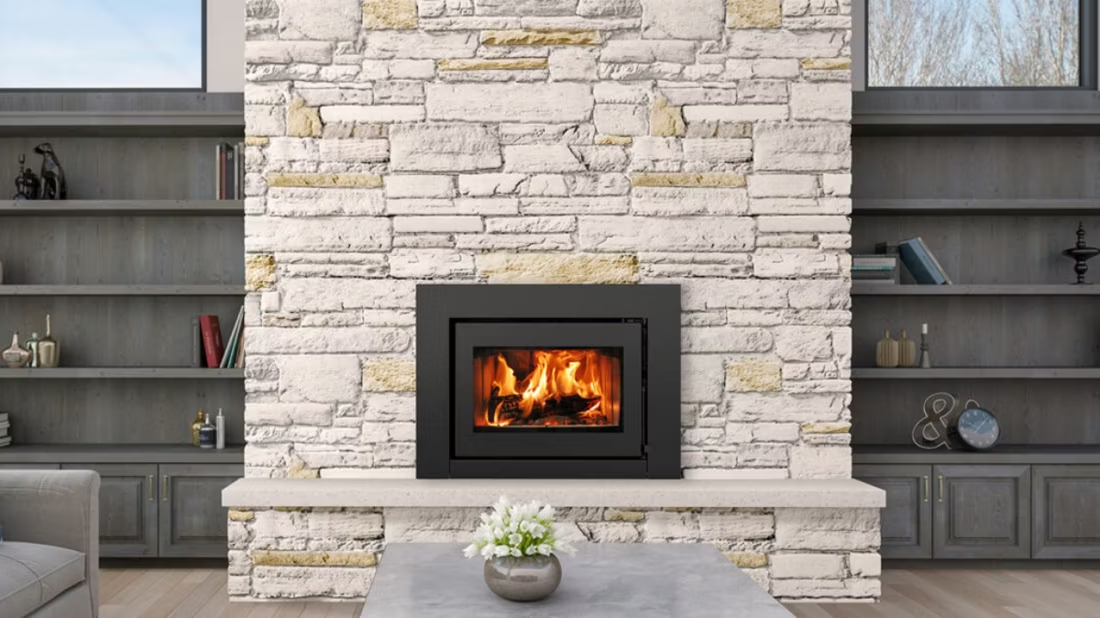
An insert does two things: it seals the chimney completely, so you stop losing air you already paid to heat, and it radiates warmth into the room through the firebox and glass. Most add a heat-exchange fan that pulls cool room air underneath, wraps it around the hot firebox, and pushes it back out warm. Your home is more efficient before you've even lit the first fire.
Why is my open fireplace making my house colder?
Open fireplaces suck—literally. As the fire burns, it consumes air your furnace already paid to heat and pulls it out through the chimney, so the house is actually colder after the fire goes out than before you lit it. An insert fixes this: it seals the chimney, puts fixed glass across the front, and turns that hole in your house into a real heat source.
How much should I budget for a fireplace?
For an average home—covering the fireplace, the vent pipe, and basic installation—a budget between $3,900 and $5,500 gives you a lot of options across wood, gas, and pellet. By the time you add finish work, gas line, and electrical, the average complete installation lands between $5,000 and $12,000 all-in. In a remodel or new build, a good rule is to put about 2.5% of the total project cost toward the fireplace.
Does a fireplace add value to my home?
On average, a fireplace adds back to the home about the same amount you spent installing it. Add the monthly savings from heating the rooms you actually use instead of the whole house—often hundreds of dollars a year—and the value case is strong before you even count what a fire does for how your family uses the room.
Nearby Dealers
Hearth shops serving Florence and the surrounding area. Every listing shows whether it is a WhyFire partner, a dealer we have verified as authorized for the brands we recommend, or a local business carrying hearth products. No manufacturer pays for placement. How we verify dealers →
Kozy Wood Heating Centers, Inc
Emerald Swimming Pools
Comfort Flow Heating
Ambassador Fireplaces
Middleton Heating Sheet Metal
Schaefers Recreation Equipment
Find your wood fireplace in Florence.
Tell us a bit about your home and we'll match you with a trusted local dealer and send over your free Project Guide & Parts List—sized, vented, and ready for your Florence project.
Find Your Fireplace →