
Reliable Heat for Eagle Crest's High Desert Winters.
Instant, low-maintenance heat for full-time residents and second-home owners in Eagle Crest's high desert cold. Find the right propane gas unit and connect with a trusted local dealer.
Every Project Starts From One of These Five Situations
Propane heat built for vacation homes and high desert cold.
Eagle Crest sits at 3,621 feet in the high desert of Deschutes County, just outside Redmond, where winter lows average 21°F and the area endures a winter heating season that's longer and colder on paper than Bozeman, Montana. As a resort community built around golf, vacation rentals, and second homes, Eagle Crest has a heating profile unlike a typical Oregon town: a large share of homes sit empty for stretches at a time, which makes instant, no-fuss heat a genuine priority rather than a luxury.
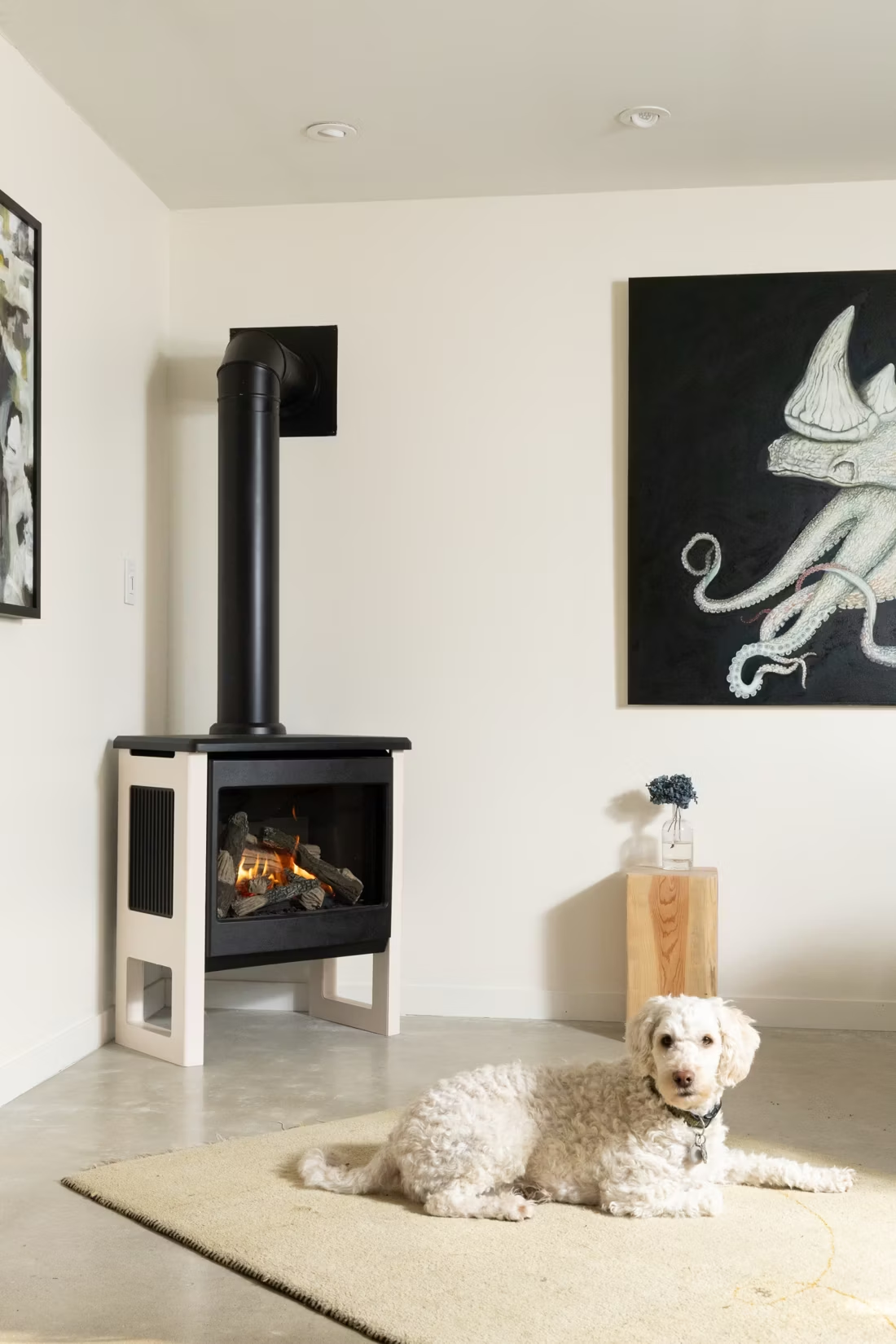
Eagle Crest is unincorporated and outside any municipal natural gas service area, so propane—not piped natural gas—is the standard fuel here, delivered and stored in a tank on the property. That's a different setup than nearby Redmond or Bend, and it matters for planning: a propane gas fireplace or insert gives owners heat they can trust to fire up on arrival, with no chimney to inspect after weeks away and no smoke to worry about during winter inversions or wildfire-smoke season, both of which affect this part of Deschutes County.
Three steps. No salesperson until you're ready.
Tell us about your project
Your zip code, your situation, and the fuel you're leaning toward—or let the answers point you to one.
See what's actually available
The brands dealers within 100 miles genuinely carry—real options, never a catalog mirage.
Get your dealer & Project Guide
A trusted local dealer, plus the free Project Guide & Parts List that names every component of the job.
Frequently Asked Questions
How much does a gas fireplace installation cost in Eagle Crest?
A typical propane gas fireplace or insert installation in Eagle Crest runs about $4,500 to $10,500, depending on the unit, venting, and whether a propane tank is already in place. Homes with an existing propane tank and gas line for a furnace or range are usually on the lower end. New construction, or homes needing a fresh tank install and buried gas line run from the tank to the hearth, land at the higher end—tank installation alone typically adds $1,500 to $3,000. A local dealer will give you a firm number after seeing your site and existing propane setup.
Can I convert my wood-burning fireplace to gas in an Eagle Crest home?
Yes, and it's a common request from owners of the older cabin-style homes in and around Eagle Crest. A propane gas insert typically slides into the existing masonry firebox using a stainless liner run up the current chimney, at a cost of roughly $4,500 to $9,500 depending on the insert and whether new gas line work is needed from the tank. It's a popular upgrade for vacation and rental properties, since it swaps out ash cleanup and firewood storage for a fireplace that lights reliably the moment owners or renters walk in the door.
Does Eagle Crest have natural gas, or is propane the only option?
Eagle Crest is not served by a natural gas main—it's an unincorporated resort community in Deschutes County, so propane is the standard fuel for gas fireplaces here, supplied from an on-site tank rather than piped underground service. This is different from Redmond and Bend, which do have natural gas infrastructure in parts of town. Nearly every gas fireplace, insert, or stove sold for an Eagle Crest home is set up and orificed for propane; if you already have a propane tank for your furnace, water heater, or range, your installer can often tap into the existing line rather than adding a second tank.
Will a gas fireplace still work if the power goes out while we're away?
Most propane fireplaces with intermittent pilot ignition (IPI) include a battery backup that keeps the unit operational during a power outage—useful in Eagle Crest, where winter storms can knock out power at a property nobody is currently occupying. The catch is that batteries need to be fresh, which is easy to overlook on a home you only visit periodically. Valor fireplaces solve this differently: their pilot assembly generates its own electricity through the thermocouple, so there's no battery to check or replace, ever. For part-time Eagle Crest owners, that self-powering design removes one more thing to manage between visits.
What's the difference between a gas fireplace, gas insert, and gas stove?
A gas fireplace is a fully built-in unit installed into a wall or framed enclosure, typically chosen for new construction or a full remodel. A gas insert fits into an existing masonry firebox and uses the chimney as its vent path, which suits the many Eagle Crest homes and cabins built with a traditional wood fireplace already in place. A gas stove is a freestanding cast-iron or steel unit that sits on a hearth pad, often chosen for smaller casitas or guest units on a property. For most Eagle Crest homeowners upgrading an existing fireplace, an insert is the simplest and most cost-effective path.
Do I need a permit to install a gas fireplace in Eagle Crest?
Yes. Because Eagle Crest is unincorporated, building and gas permits go through the Deschutes County Community Development Department rather than a city building office. Both a building permit and a gas-line permit are required for a new propane fireplace or insert installation, and the gas line work must be done by a licensed gas-fitter. Most local hearth dealers handle the permitting and inspection scheduling as part of the installation, which is worth confirming up front given the added coordination with a propane supplier for tank placement.
Should I choose a vented or vent-free gas fireplace for a high-elevation home?
Vented, direct-vent propane units are the standard and the strong recommendation at Eagle Crest's elevation of roughly 3,600 feet—they draw combustion air from outside and exhaust it back outside through sealed venting, so performance stays predictable regardless of altitude. Vent-free units are technically legal in Oregon but come with strict room-sizing and oxygen-sensor requirements, and their combustion tends to be more sensitive to altitude and tight, well-sealed vacation-home construction. For a property that may sit closed up for stretches between visits, a sealed direct-vent system is the safer, lower-maintenance choice.
How often should a gas fireplace be serviced in a part-time home?
An annual inspection is recommended for any propane fireplace, but for Eagle Crest's many part-time and rental properties, timing it right matters more than usual—schedule the service call in early fall, before the home sits closed for weeks and before the first cold snap. A technician will check the burner, pilot assembly, venting, and gas connections, confirm the propane tank and regulator are performing correctly, and clean the glass. Local gas appliance service providers typically charge $150 to $250 for this visit, and it's the cheapest insurance against a fireplace that won't light the moment guests or owners arrive.
Gas vs. wood—which makes more sense for a home in Eagle Crest?
Wood is still viable here—ponderosa pine, lodgepole pine, and juniper are all available locally, with cutting permits from the Deschutes National Forest, Ochoco National Forest, or BLM Prineville District running $5 to $20 per cord. But for Eagle Crest's resort and vacation-home market, gas usually wins: winter inversions and wildfire smoke are recurring air-quality concerns in this part of Deschutes County, and a propane fireplace lights instantly with no ash, no chimney upkeep between visits, and no wood to haul or store on a property that may sit empty for weeks. Full-time residents who value backup heat during power outages and enjoy tending a fire sometimes still prefer wood or split the difference with one of each.
Is my gas fireplace wasting gas?
If it was installed more than 15 years ago, probably. Older gas fireplaces keep a standing pilot light burning all the time, and that little flame can cost a couple hundred dollars a year. Newer models use pilot-on-demand ignition—the pilot lights only when you use the fireplace and goes out when you turn it off.
Can I put a TV above my fireplace?
Yes—with an asterisk. Fireplaces are hot and TVs don't like heat. Either put a mantel between them to deflect rising warmth, or choose a fireplace with heat-management technology that creates a cool zone on the wall above—the wall stays around 125 degrees, barely warm, while the room still gets full heat. If you like clean lines and don't want a mantel, heat management is the answer.
Can I install a fireplace myself?
If you're putting a fire in your house on purpose, it's best to work with an expert. Unless you're genuinely experienced in framing, gas line, vent pipe, and the national code on clearances to combustibles, have a professional do it—and ideally the same company that sells you the fireplace, so warranty, service, and liability all live under one roof.
Does a fireplace add value to my home?
On average, a fireplace adds back to the home about the same amount you spent installing it. Add the monthly savings from heating the rooms you actually use instead of the whole house—often hundreds of dollars a year—and the value case is strong before you even count what a fire does for how your family uses the room.
Nearby Dealers
Hearth shops serving Eagle Crest and the surrounding area. Every listing shows whether it is a WhyFire partner, a dealer we have verified as authorized for the brands we recommend, or a local business carrying hearth products. No manufacturer pays for placement. How we verify dealers →
Quality Heating
Sticks And Stones
Emerald Pool & Patio
Brilliant Environmental Products
Creative Fire
Diversified Heating And Cooling
Cascade Chimney Service
Bend Spa And Hearth
Master's Touch
Countryside Stove And Chimney
Find your gas fireplace in Eagle Crest.
Tell us about your Eagle Crest home and we'll match you with a trusted local dealer and send a free Project Guide & Parts List—the right propane gas fireplace, insert, or stove, sized correctly, with the parts and vent kit your installer needs.
Find Your Fireplace →