
Instant Warmth, Zero Venting, No Smoke Advisories.
Clean, code-simple heat for Eagle Crest's condos, vacation homes, and resort-managed properties—matched with a local dealer who knows what the HOA and the high desert winters actually require.
Every Project Starts From One of These Five Situations
Clean heat for a resort community, without a chimney.
Eagle Crest sits at 3,621 feet in the high desert west of Redmond, in a climate zone (5B) that runs colder than most people expect from Central Oregon—winter lows average 21°F and the area has a heating season on par with Bozeman, Montana, more heating demand than Bend and in the same range as Bozeman, Montana. The community itself is built around a golf resort, with a housing mix heavy on vacation homes, condominiums, and short-term rental units rather than year-round single-family stock.
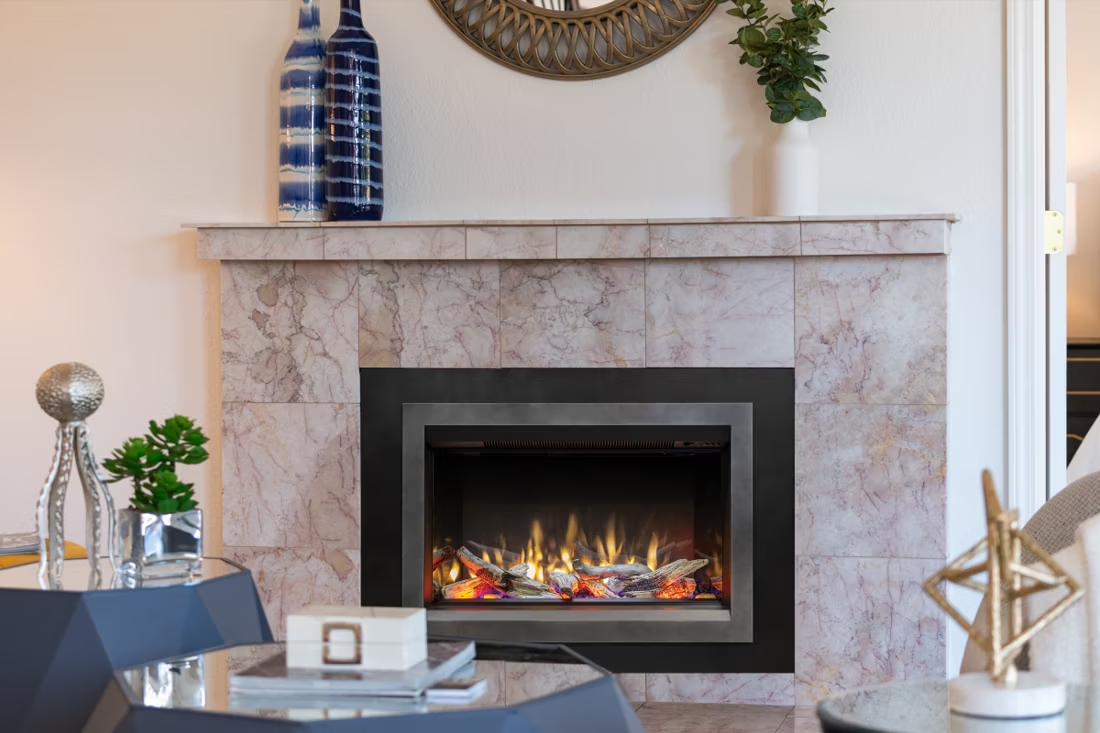
That mix matters for fuel choice. There's no natural gas utility serving Eagle Crest—homes here run on PacifiCorp electric service, with propane as the fallback for anyone who wants a gas-burning appliance. Winter inversions and wildfire smoke are also real concerns in the Deschutes County high desert, and resort HOAs often restrict solid-fuel burning during advisory periods. Electric fireplaces sidestep all of it: no flue, no gas line, no smoke, and no advisory days when the unit can't run. For a rental unit that turns over every week, that simplicity is worth more than raw BTU output.
Three steps. No salesperson until you're ready.
Tell us about your project
Your zip code, your situation, and the fuel you're leaning toward—or let the answers point you to one.
See what's actually available
The brands dealers within 100 miles genuinely carry—real options, never a catalog mirage.
Get your dealer & Project Guide
A trusted local dealer, plus the free Project Guide & Parts List that names every component of the job.
Frequently Asked Questions
How much does an electric fireplace installation cost in Eagle Crest?
Most electric fireplace projects in Eagle Crest run $400 to $2,500 installed. A plug-in electric insert or wall-mount unit on a standard 120V outlet sits at the low end—no electrician required beyond confirming the circuit. A built-in electric fireplace with a custom mantel surround, or a unit that needs a dedicated 240V circuit, lands closer to $1,500-$3,500. Because so much of Eagle Crest's housing stock is vacation homes and rental condos, plug-in and low-voltage-wired units are the most common request—they're easy for a property manager to maintain between guests.
Is electric or propane better for a vacation home in Eagle Crest?
Since there's no natural gas utility here, the real comparison for Eagle Crest homeowners is electric versus propane, not electric versus natural gas. Propane fireplaces deliver more heat output and a more traditional flame, but they require a tank, a gas line, and annual service—a real cost and coordination burden for a second home or rental you're not at every week. Electric fireplaces need only an outlet or a dedicated circuit, run on PacifiCorp power already metered to the unit, and need essentially no maintenance. For primary heat in a full-time home, propane usually wins on output. For ambiance and supplemental warmth in a resort property, electric is often the lower-hassle choice.
Why not just install a wood stove instead?
Wood is a legitimate option in Deschutes County—ponderosa pine, lodgepole pine, and juniper are all locally available, and cutting permits through the Deschutes National Forest, Ochoco National Forest, or BLM Prineville District run $5 to $20 per cord. But Eagle Crest's winter inversions trap smoke in the high desert basin, and many resort HOAs restrict or prohibit solid-fuel burning in condos and shared-wall units, sometimes with advisory-day burn bans. An electric fireplace produces zero smoke and isn't affected by inversion advisories, which makes it the more practical choice for anyone in a rental unit, condo, or HOA-governed property here.
What type of electric fireplace works best for a high desert winter?
For a climate that sees 21°F winter lows and a heating season on par with Bozeman, Montana, look for an electric insert or freestanding unit rated for real supplemental heat output—typically 4,600 to 5,200 BTU, around 1,500 watts on high. That's enough to noticeably warm a bedroom, den, or great room while your central system handles the rest of the house. Purely decorative low-wattage units are fine for ambiance in a living room that's already well-heated, but if you want the fireplace to actually offset your heating bill on cold nights, a local dealer can point you toward a full-output model sized to the room.
Do I need a permit to install an electric fireplace in Eagle Crest?
A simple plug-in electric fireplace or insert generally doesn't require a permit. If your installation needs a new dedicated circuit—common for larger built-in units—that electrical work falls under Deschutes County Building Division jurisdiction and typically requires an electrical permit pulled by a licensed electrician. Most local dealers coordinate this as part of the install. Check with your HOA as well: some Eagle Crest properties have architectural review requirements for anything affecting the exterior wall or mantel surround, even for an electric unit.
What does it cost to run an electric fireplace with PacifiCorp rates?
PacifiCorp's residential rate in the Eagle Crest area is about $0.1252 per kWh. A typical electric fireplace insert draws around 1,500 watts on its highest heat setting, so running it five hours a day costs roughly $0.94—about $28 a month if used daily through the coldest stretch of winter. Most owners run it a few hours in the evening rather than all day, which brings the monthly cost closer to $10-$15. That's a fraction of what a propane appliance costs to run at comparable output.
Will my electric fireplace work if the power goes out?
No—electric fireplaces are entirely dependent on grid power, so they'll shut down in an outage just like any other electric appliance. That's worth factoring in if you're relying on the fireplace as more than ambiance; Central Oregon winter storms occasionally knock out power in the Redmond and Eagle Crest area for hours at a stretch. Homeowners who want backup heat that survives an outage typically pair an electric fireplace for daily convenience with a wood stove, propane appliance, or generator for the rare multi-hour outage.
Are electric fireplaces allowed in Eagle Crest rental condos and HOA properties?
Generally yes, and that's a big part of why they're common here. Because electric units have no flue, no combustion byproducts, and no open flame, they typically clear HOA architectural review and rental-property fire code requirements more easily than wood or gas appliances. If you're installing in a shared-wall condo or a unit managed as a short-term rental, check with your specific HOA or property manager for any documentation requirements, but electric is rarely the sticking point that wood-burning appliances can be under resort-community bylaws.
Electric vs. pellet stove—which makes more sense in Eagle Crest?
Pellet stoves burning regional brands like Bear Mountain, Lignetics, or Pacific Pellet put out more heat and can serve as a genuine primary heat source, but they need venting, a hopper to refill, and regular ash cleanout—real maintenance for a part-time vacation home. Electric fireplaces need none of that: no venting, no fuel storage, no ash. For a full-time Eagle Crest household that wants serious heat output and doesn't mind the upkeep, pellet is worth considering. For a rental unit, condo, or second home where low maintenance matters more than max BTU output, electric is the simpler fit.
Can I put a TV above my fireplace?
Yes—with an asterisk. Fireplaces are hot and TVs don't like heat. Either put a mantel between them to deflect rising warmth, or choose a fireplace with heat-management technology that creates a cool zone on the wall above—the wall stays around 125 degrees, barely warm, while the room still gets full heat. If you like clean lines and don't want a mantel, heat management is the answer.
Does an electric fireplace need a vent or chimney?
No—that's its superpower. An electric fireplace needs a wall and an outlet, period. No vent pipe, no gas line, no clearances to design around, which is why it works in bedrooms, offices, apartments, and walls where venting a gas or wood unit would be impractical or impossible. Installation is typically the simplest and least expensive of any fireplace type.
How much should I budget for a fireplace?
For an average home—covering the fireplace, the vent pipe, and basic installation—a budget between $3,900 and $5,500 gives you a lot of options across wood, gas, and pellet. By the time you add finish work, gas line, and electrical, the average complete installation lands between $5,000 and $12,000 all-in. In a remodel or new build, a good rule is to put about 2.5% of the total project cost toward the fireplace.
Can a fireplace actually lower my heating bill?
Yes—by creating a comfort zone. A furnace heats every square foot of the house just to warm the one room you're in; a gas fireplace on low burns roughly a sixth of the gas a typical furnace does. Set the furnace around 55–60 degrees as a baseline, then heat the rooms your family actually uses. Families who heat this way commonly save $20–$60 a month.
Nearby Dealers
Hearth shops serving Eagle Crest and the surrounding area. Every listing shows whether it is a WhyFire partner, a dealer we have verified as authorized for the brands we recommend, or a local business carrying hearth products. No manufacturer pays for placement. How we verify dealers →
Quality Heating
Sticks And Stones
Emerald Pool & Patio
Brilliant Environmental Products
Creative Fire
Diversified Heating And Cooling
Cascade Chimney Service
Bend Spa And Hearth
Master's Touch
Countryside Stove And Chimney
Electric Service in Eagle Crest
An electric fireplace's heater draws about 1,500 watts—pennies per hour at local rates.
Find your electric fireplace in Eagle Crest.
Tell us about your home or rental property and we'll match you with a trusted local dealer and send over a free Project Guide & Parts List—the exact unit, mounting or circuit requirements, and parts list for your Eagle Crest electric fireplace project.
Find Your Fireplace →