
The clean-burning choice for Deschutes County's high desert winters.
From Bend to Sisters to La Pine, pellet stoves deliver steady, thermostat-controlled heat without the smoke output that triggers winter inversion advisories. Find the right unit and connect with a trusted local dealer.
Every Project Starts From One of These Five Situations
Reliable warmth without the smoke.
Deschutes County stretches from the Cascade foothills around Sisters and Black Butte Ranch down through Bend and Redmond to the high desert flats near La Pine, with elevations running roughly 2,800 to over 3,600 feet before you even reach the peaks of Bachelor and Broken Top. Winters here average 25°F lows with a heating season about as demanding as a place like Bozeman, Montana. The county's rapid growth, especially around Bend and Redmond, has brought thousands of newer homes into a region where woodsmoke from cordwood burning already contributes to winter inversion events that trap particulate low over the basin.
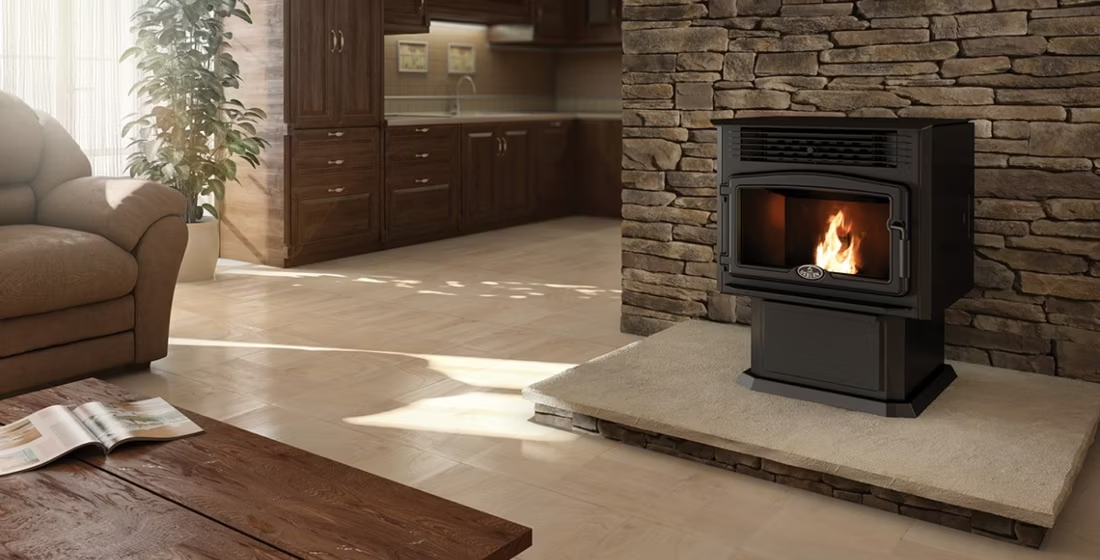
Pellet appliances burn compressed sawdust from Northwest sources—regional brands like Bear Mountain, Lignetics, and Pacific Pellet are all stocked at retailers throughout the county—and they burn far more completely and consistently than cordwood, producing a fraction of the visible smoke. That matters here: during winter inversion advisories and wildfire-smoke-heavy stretches, a certified pellet stove typically keeps operating when older, uncertified wood stoves get curtailed. For a growing county juggling air quality and a genuine cold-climate heating need, pellet has become one of the more practical options on the table.
Three steps. No salesperson until you're ready.
Tell us about your project
Your zip code, your situation, and the fuel you're leaning toward—or let the answers point you to one.
See what's actually available
The brands dealers within 100 miles genuinely carry—real options, never a catalog mirage.
Get your dealer & Project Guide
A trusted local dealer, plus the free Project Guide & Parts List that names every component of the job.
Frequently Asked Questions
How much does a pellet stove installation cost in Deschutes County?
A typical pellet stove or insert installation in Deschutes County runs roughly $3,000 to $7,000, with the spread driven by whether you're inserting into an existing masonry fireplace, need a new dedicated electrical outlet for the auger and blower, or require fresh venting through an exterior wall. Homes in newer Bend and Redmond subdivisions without an existing chimney often land toward the lower-to-middle end since venting is straightforward through-wall work. Older homes in Sisters or rural La Pine with existing masonry fireplaces may need liner work that pushes cost higher. A local dealer will give you a firm number after an in-home look at your venting path and electrical access.
What size pellet stove do I need for my Deschutes County home?
Sizing depends on square footage, insulation, and elevation. As a rough guide: small units (up to 1,000 sq ft) suit a single room or a cabin near Sunriver, medium units (1,000–2,000 sq ft) cover most main living areas in Bend or Redmond, and larger units (2,000+ sq ft) can carry a well-insulated whole home. Higher-elevation and more exposed spots—La Pine, Alfalfa, and the areas closer to the Cascade foothills around Sisters—tend to run colder overnight than the Bend core, so those homes often benefit from sizing up a notch even at similar square footage. A local retailer can size your specific home for free during a consultation.
Where can I find certified pellet stove installers near me?
Look for installers with NFI (National Fireplace Institute) certification, which covers proper venting, clearances, and electrical hookup for pellet appliances specifically. Certified hearth retailers serving Deschutes County generally cover the whole corridor from Sisters through Bend and Redmond down to La Pine, though expect a modest travel charge for installs out toward Brothers or the far southern county. Pairing your purchase and install with the same certified dealer simplifies warranty coverage if the auger motor or igniter needs service down the road.
What's the difference between a pellet stove and a pellet insert?
A pellet stove is a freestanding unit that vents through a wall or existing chimney chase and can go almost anywhere with power and a vent path—a common choice in newer Bend and Redmond homes without a fireplace already in place. A pellet insert is built to slide into an existing masonry fireplace opening, converting an old open hearth into a controlled, high-efficiency heat source while reusing your existing chimney as the vent chase. For Deschutes County homes with an older wood-burning fireplace they no longer want to feed by hand, an insert is usually the simpler retrofit.
Do I need a permit to install a pellet stove in Deschutes County?
Yes—new solid-fuel appliance installations require a building permit through the Deschutes County Community Development Department, and within Bend or Redmond city limits, permits are pulled through the respective city building office instead. The permit review typically confirms proper clearances, venting termination location relative to windows and doors, and the electrical circuit for the unit. Most certified local dealers handle the permit paperwork as part of the installation, so you generally don't have to file it yourself.
What's the best pellet stove for Deschutes County's climate?
For sustained cold-weather use, look at higher-BTU units from Harman or Quadra-Fire, both of which build in larger hoppers so overnight burns don't require a refill at 2 a.m. when temperatures drop into the teens or below, which happens regularly across the county in December and January. For smaller homes or supplemental heat in a Sunriver vacation property, a smaller-hopper unit from Lopi or Enviro is often sufficient and less expensive to run. Whichever brand you choose, confirm it's rated to burn the regional pellet brands stocked locally—Bear Mountain, Lignetics, and Pacific Pellet all produce softwood pellets well suited to standard pellet stove burn pots.
How often does a pellet stove need to be cleaned and serviced?
The burn pot and ash pan need attention every few days to weekly during heavy winter use—a quick five-minute task for most owners. Beyond that, plan on a full professional service once a year, ideally before the heating season starts in October, when a technician cleans the exhaust venting, checks the auger motor and igniter, and inspects the gasket seals. Skipping the annual service is the most common cause of poor pellet flow and igniter failure, and it's a far lighter lift than the annual chimney sweep a wood-burning household needs.
Where can I buy pellet fuel in Deschutes County?
Bear Mountain, Lignetics, and Pacific Pellet are the regional brands most commonly stocked by hardware stores and hearth retailers across Bend, Redmond, and Sisters, with pellets typically running in the $275 to $400 per ton range depending on brand and softwood content. Buying a full winter's supply early in fall—before the first cold snap drives demand up—is common practice locally, since pellet inventory at retail stores can run thin mid-winter during extended inversion stretches when wood-burning curtailments push more households toward pellet appliances.
Pellet stove vs. wood stove—which is right for my Deschutes County home?
Wood stoves burn free or low-cost self-cut firewood—ponderosa pine, lodgepole pine, and juniper are all locally available with a cutting permit from the Deschutes or Ochoco National Forest—and they keep working with zero electricity, which matters during winter storm outages in outlying areas like La Pine or Brothers. Pellet stoves require power to run the auger and blower, so they go dark in an outage unless paired with a battery backup, but they burn cleaner, need far less daily tending, and are generally exempt from the burn restrictions that apply to older wood stoves during winter inversion advisories. For homes in town where air quality rules and convenience matter more than off-grid resilience, pellet tends to be the practical choice; for rural properties where power reliability is a real concern, wood remains the more dependable backup.
Why is a fireplace insert so efficient?
An insert does two things: it seals the chimney completely, so you stop losing air you already paid to heat, and it radiates warmth into the room through the firebox and glass. Most add a heat-exchange fan that pulls cool room air underneath, wraps it around the hot firebox, and pushes it back out warm. Your home is more efficient before you've even lit the first fire.
Are pellet stoves loud?
They make some noise—there are two fans running plus an auger motor that turns as it feeds pellets. But there's a real range: premium models are engineered quiet, and the best offer a whisper-quiet mode you can comfortably watch TV next to. If noise matters in your room, ask to hear a stove running before you buy—it's a five-minute test that saves years of annoyance.
Can I install a fireplace myself?
If you're putting a fire in your house on purpose, it's best to work with an expert. Unless you're genuinely experienced in framing, gas line, vent pipe, and the national code on clearances to combustibles, have a professional do it—and ideally the same company that sells you the fireplace, so warranty, service, and liability all live under one roof.
How much should I budget for a fireplace?
For an average home—covering the fireplace, the vent pipe, and basic installation—a budget between $3,900 and $5,500 gives you a lot of options across wood, gas, and pellet. By the time you add finish work, gas line, and electrical, the average complete installation lands between $5,000 and $12,000 all-in. In a remodel or new build, a good rule is to put about 2.5% of the total project cost toward the fireplace.
Stove and Fireplace Dealers in Deschutes County
Listings include WhyFire partner dealers, dealers we have verified as authorized for the brands we recommend, and established local businesses that carry hearth products. Every listing shows which one it is. The ones marked Preferred run on WhyFire's software, so they can show you real pricing and book your appointment right here. No manufacturer pays for placement. How we verify dealers →
Master's Touch
Bend Spa And Hearth
Brilliant Environmental Products
Creative Fire
Diversified Heating And Cooling
Cascade Chimney Service
Emerald Pool & Patio
Sticks And Stones
Quality Heating
Countryside Stove And Chimney
Pellet Brands Stocked Around Deschutes County
Manufacturers will point you to the nearest stocking dealer.
Find your pellet stove in Deschutes County.
Tell us a bit about your home and we'll match you with a trusted local dealer and send over a free Project Guide & Parts List—the exact equipment, vent kit, and installation plan for your pellet project in Deschutes County.
Find Your Fireplace →