
Steady Heat for Corvallis's Long, Wet Winters.
Thermostatically controlled warmth for the Willamette Valley's rainy season, without splitting or stacking a single log. Find the right pellet stove or insert, and connect with a trusted local dealer.
Every Project Starts From One of These Five Situations
Efficient warmth without the wood-splitting labor.
Corvallis sits at just 257 feet in the Willamette Valley, and its climate reflects that—Climate Zone 4C, a winter low average of 34 degrees, and 4,670 heating degree days a year. That's a mild, wet cold, not the deep-freeze cold of a place like Duluth, Minnesota, which sees more than double the heating degree days. Winters here mean months of steady rain and gray skies more than hard frost, and homeowners want heat that comes on reliably through that stretch without babysitting a wood fire every few hours.
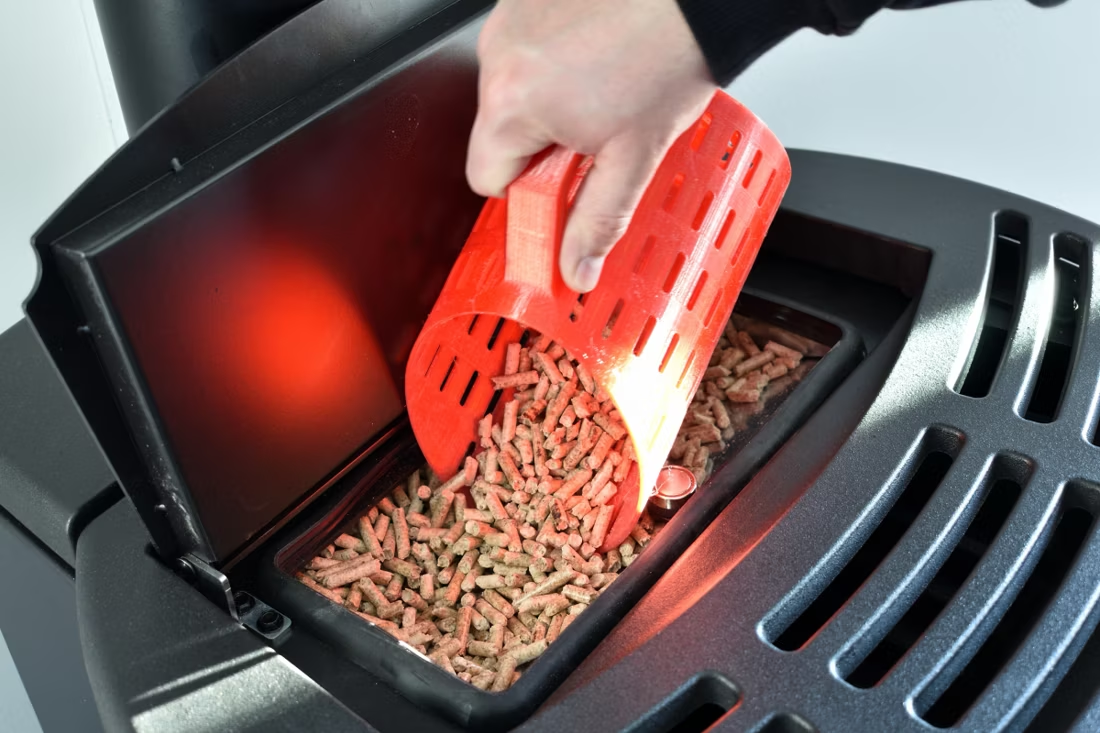
Pellet stoves fit that need well. Load the hopper, set the thermostat, and the auger feeds a consistent, EPA-certified burn for hours at a time—no splitting, stacking, or creosote buildup to manage. Regional pellet brands including Bear Mountain, Lignetics, and Pacific Pellet are all manufactured in the Pacific Northwest, so fuel supply stays local and relatively stable. Pellet stoves also burn cleaner than open wood fires, which matters in a college town like Corvallis where late-summer wildfire smoke already stresses outdoor air quality—the last thing anyone wants is a heating appliance adding to it indoors.
Three steps. No salesperson until you're ready.
Tell us about your project
Your zip code, your situation, and the fuel you're leaning toward—or let the answers point you to one.
See what's actually available
The brands dealers within 100 miles genuinely carry—real options, never a catalog mirage.
Get your dealer & Project Guide
A trusted local dealer, plus the free Project Guide & Parts List that names every component of the job.
Frequently Asked Questions
How much does a pellet stove installation cost in Corvallis?
Most pellet stove installations in Corvallis run in the $3,500 to $6,500 range, depending on the unit, whether you're venting through an existing masonry fireplace or a new side wall, and whether you need a dedicated electrical outlet nearby (pellet stoves require power to run the auger and blower). A pellet insert into an existing fireplace tends to land on the lower end of that range since it uses existing masonry; a freestanding stove requiring new wall penetration and vent pipe runs a bit higher. A local dealer can give you a firm number after seeing your home.
Do I need a permit to install a pellet stove in Corvallis?
Yes—pellet stove installations typically require a building permit through the City of Corvallis or, for homes outside city limits, the Benton County Building Department. The stove itself needs to be EPA-certified, which nearly every pellet stove on the market already is. Most local dealers handle the permit application and inspection scheduling as part of the installation, so it's rarely something homeowners have to manage themselves.
Will my pellet stove keep working if the power goes out?
Not without a backup power source. Pellet stoves rely on an electric auger to feed fuel and a blower to circulate heat, so a standard unit stops working the moment the power drops—a real consideration in a valley that sees ice storms and windstorms knock out power for PacifiCorp and Consumers Power Inc. customers most winters. Some homeowners pair their pellet stove with a small battery backup or generator specifically for this reason. If backup heat during outages is a priority, a wood stove or a vented gas unit is worth comparing against pellet before you decide.
How much does pellet fuel cost, and where do I buy it in Corvallis?
Wood pellets in the Willamette Valley typically run somewhere in the $250 to $400 range per ton, though prices shift with demand and season—buying a full winter's supply (usually 2 to 3 tons for an average home) in late summer or early fall tends to get the better price. Bear Mountain, Lignetics, and Pacific Pellet are all manufactured in the Pacific Northwest and sold through hardware stores, farm supply stores, and hearth retailers throughout Benton County, so supply is generally reliable even in a hard winter.
What size pellet stove do I need for my Corvallis home?
Because Corvallis's winters are milder than much of the country—4,670 heating degree days versus 8,000 to 10,000 in colder parts of the Midwest or Rockies—many homes here do fine with a mid-size pellet stove rated for 1,000 to 2,000 square feet, even as a primary heat source. Older, leakier farmhouses outside the valley floor may want to size up. A local dealer will factor in your square footage, ceiling height, and insulation during an in-home visit rather than relying on a generic chart.
Pellet stove vs. wood stove—which makes more sense in Corvallis?
Wood is deeply available here—Douglas fir, ponderosa pine, and lodgepole pine are all common species, and self-cut firewood permits through the Siuslaw and Willamette National Forests run $5 to $20 per cord during the May-to-October cutting season. Wood stoves also keep working without electricity, which matters during valley windstorms. Pellet stoves trade that off for convenience and cleaner combustion: no splitting or stacking, a thermostat instead of constant tending, and a burn that produces far less visible smoke—useful given how often wildfire smoke already degrades outdoor air quality here in late summer. If you want set-and-forget heat, pellet wins; if you want off-grid resilience and don't mind the labor, wood is the better call.
Pellet stove vs. gas fireplace—which is right for my home?
Gas fireplaces give you instant, flip-a-switch heat with no fuel storage and no auger or blower to maintain, but they depend on a gas line or propane tank. Pellet stoves need fuel delivery and storage (bags of pellets, not a hookup) and electricity to run, but many homeowners find the radiant, real-fire look and lower fuel cost worth the extra handling. If your Corvallis home doesn't already have gas service nearby, a pellet stove is often the more practical retrofit since it only needs a vent and an outlet rather than new gas line work.
How often does a pellet stove need to be serviced?
Plan on cleaning the burn pot and ash area every few days during regular use, a deeper cleaning of the hopper, auger, and venting monthly, and a full professional inspection and cleaning once a year—usually late summer, before the wet season starts. Skipping the annual service is the most common reason pellet stoves start jamming or losing efficiency mid-winter. Local hearth dealers who sell pellet stoves in Corvallis typically offer this service directly.
Are pellet stoves a good fit for a smoke-conscious college town like Corvallis?
Yes. Corvallis deals with wildfire smoke most late summers and early falls, and outdoor air quality is already a concern residents pay attention to. Pellet stoves burn more completely than open wood fires, producing a fraction of the visible smoke and particulate output—EPA-certified units emit well below the newer wood-heater emissions standards. For homeowners near Oregon State University or in denser in-town neighborhoods where a neighbor's chimney smoke is more noticeable, pellet is often the cleaner-burning choice without giving up the ambiance of a real flame.
How often does a pellet stove need cleaning?
A clean pellet stove is a happy pellet stove. Plan on cleaning the burn pot about once a week when you're burning regularly—ash and clinkers gum up the air holes just like a pellet barbecue. Most pellet stove problems trace back to skipped cleaning that nobody explained up front. Some designs make it easy with a trapdoor burn pot: pull a lever and the gunk drops into the ash pan.
What's the difference between an insert and a zero-clearance fireplace?
An insert is a fireplace that slides into a pre-existing wood-burning fireplace—if you don't have one, there's nothing to insert it into. A zero-clearance fireplace is built into a framed wall, which makes it the answer for remodels and new construction. Simple test: existing masonry fireplace means insert; blank or framed wall means zero-clearance.
Can a fireplace actually lower my heating bill?
Yes—by creating a comfort zone. A furnace heats every square foot of the house just to warm the one room you're in; a gas fireplace on low burns roughly a sixth of the gas a typical furnace does. Set the furnace around 55–60 degrees as a baseline, then heat the rooms your family actually uses. Families who heat this way commonly save $20–$60 a month.
How much should I budget for a fireplace?
For an average home—covering the fireplace, the vent pipe, and basic installation—a budget between $3,900 and $5,500 gives you a lot of options across wood, gas, and pellet. By the time you add finish work, gas line, and electrical, the average complete installation lands between $5,000 and $12,000 all-in. In a remodel or new build, a good rule is to put about 2.5% of the total project cost toward the fireplace.
Nearby Dealers
Hearth shops serving Corvallis and the surrounding area.
Pellet Brands Stocked Around Corvallis
Manufacturers will point you to the nearest stocking dealer.
Find your pellet stove in Corvallis.
Tell us a bit about your home and we'll match you with the right pellet stove or insert, plus a free Project Guide & Parts List—the exact parts, vent kit, and a recommended local dealer for your Corvallis project.
Find Your Fireplace →