
Keep Your Family Warm and Safe—No Matter What
At 199 metres in Zone 6A, with winter lows averaging -9.9°C, The Blue Mountains runs a real burning season across both its year-round homes and its Georgian Bay chalets. We'll help you find a local dealer who can size a stove or insert correctly and send a free Project Guide & Parts List.
Every Project Starts From One of These Five Situations
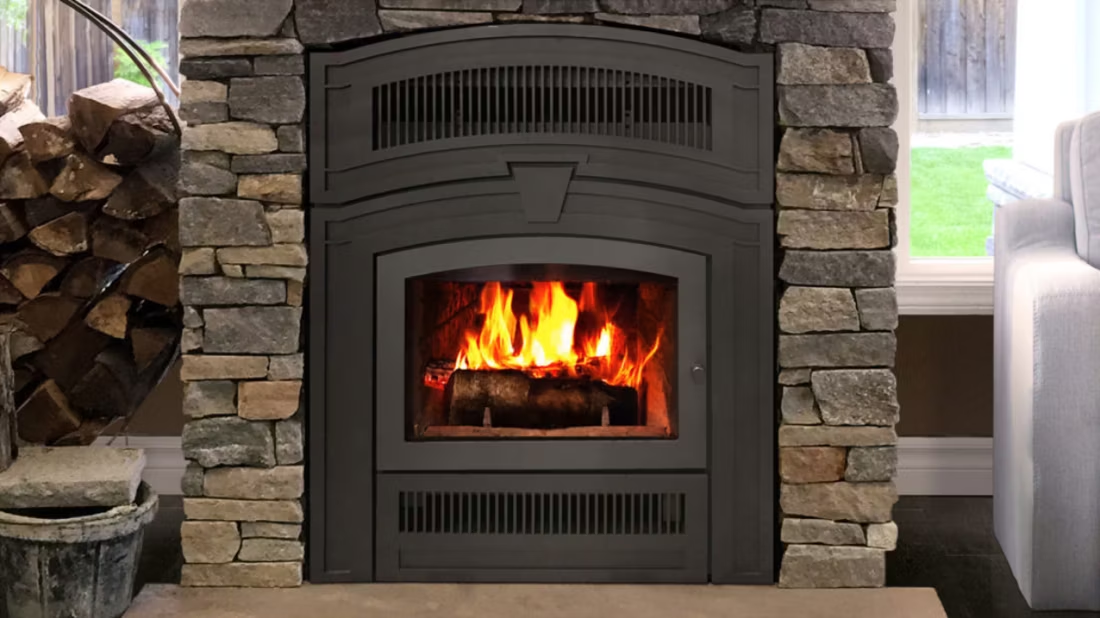
Hardwood country with a real winter to match.
The Blue Mountains sits at 199 metres on the Niagara Escarpment above Georgian Bay, in Zone 6A. Winter lows average -9.9°C-colder and longer than Toronto two hours south, though nowhere near what Sudbury or Thunder Bay see across a full winter. Add the lake-effect snow that built this town's ski reputation and you get enough sustained cold to make a wood stove genuine heating equipment rather than a mantel decoration.
Sugar maple, red oak, white ash, and yellow birch dominate the escarpment forests and woodlots across the Grey region, and they're exactly the dense, long-burning species a modern stove rewards. Wood heat here serves two different households: year-round residents who want backup heat independent of Hydro One or Alectra Utilities during a winter storm, and owners of Blue Mountain chalets who want reliable warmth without depending on the grid while the place sits empty midweek. Enbridge Gas reaches much of the built-up area too, so plenty of homes run wood alongside gas rather than instead of it. Some municipalities in the region now require certified low-emission appliances in new construction, which a local dealer will already have built into any quote.
Firewood Cutting Permits Near The Blue Mountains
Ontario Ministry Of Natural Resources
Three steps. No salesperson until you're ready.
Tell us about your project
Your postal code, your situation, and the fuel you're leaning toward—or let the answers point you to one.
See what's actually available
The brands dealers within 100 miles genuinely carry—real options, never a catalog mirage.
Get your dealer & Project Guide
A trusted local dealer, plus the free Project Guide & Parts List that names every component of the job.
Frequently Asked Questions
How much does a wood stove or insert cost to install in The Blue Mountains?
Installed wood systems here typically run $6,000-$12,000 CAD. An insert dropping into an existing masonry firebox-common in older Craigleith and Thornbury-area homes-lands toward the low end. A freestanding stove in a newer chalet with no existing chimney, needing a full Class A run through the roof, pushes toward the top. A WETT inspection at completion, which most insurers here require before they'll cover a wood appliance, is usually a separate line item on top of the install.
Do I need a permit to install a wood stove in The Blue Mountains?
Yes. You'll apply through the municipal building department, and the installation itself has to meet the CSA B365 installation code. Most hearth dealers who work in this area handle the permit application and schedule the final inspection as part of the job, and they'll also arrange the WETT inspection your home insurer will likely ask for once the appliance is running.
What wood species burn best in a Blue Mountains stove?
Sugar maple and red oak are the workhorses locally-dense, hot-burning, and capable of holding a fire well into the next morning once properly seasoned, which for these species means a full 12 months split and stacked. Yellow birch lights easily and burns a bit faster, useful for shoulder-season fires in October or April. White ash is also common on the escarpment, partly because so much of it is coming down to emerald ash borer-standing dead ash is widely available, but it needs the same seasoning discipline as any other hardwood or it'll build creosote fast.
Can I cut my own firewood near The Blue Mountains?
The Ontario Ministry of Natural Resources allows free personal-use cutting, up to 10 cubic metres (roughly 4 cords) per household per year, on Northern Boreal and Managed Forest zone land with a valid permit, and the season runs year-round. Property directly around The Blue Mountains is mostly private woodlot rather than Crown forest, so most residents here either work out an arrangement with a local landowner or buy seasoned sugar maple and oak from a firewood supplier in the Grey region instead of pulling a Crown land permit.
Are there special rules for wood stoves in new construction here?
Some municipalities in the region now require any wood-burning appliance installed in new construction to be a certified low-emission model. In practice this isn't a hurdle-virtually every EPA/CSA-certified stove or insert sold by a local dealer already meets it, and dealers who work in this market build the compliance paperwork into the quote without you having to chase it down separately.
Will a wood stove keep my chalet warm if the power goes out during a storm off Georgian Bay?
Yes, and that's a big part of why wood stoves stay popular in chalets here even where Enbridge Gas is available. Lake-effect storms off Georgian Bay regularly knock out Hydro One lines for hours at a time, and a wood stove keeps running with no electricity needed for ignition or blowers. A well-loaded firebox of sugar maple or red oak can hold coals long enough to get a chalet through an overnight outage without the pipes freezing.
Wood insert or freestanding stove-which fits my property?
If your home already has a working masonry fireplace-common in the older parts of Thornbury and Clarksburg-an insert reuses that chimney chase and is usually the less disruptive, lower-cost option. Newer chalets and homes built without a fireplace generally go with a freestanding stove venting through new Class A pipe, which gives more flexibility on where the stove sits relative to the main living area.
How often should my chimney be swept and WETT-inspected?
An annual sweep and inspection before ski season starts, ideally in September or early October, is the standard recommendation, and it's what most insurers expect to see backing up a WETT certificate. If you're burning ash taken down because of emerald ash borer, get it checked more carefully-standing dead ash can look dry on the outside while still holding moisture inside, and under-seasoned wood builds creosote faster than well-cured maple or oak.
Wood vs. pellet stove-which makes more sense for a Blue Mountains property?
Wood keeps working without electricity, which matters given how often storms off Georgian Bay interrupt Hydro One service in winter, and it pairs naturally with the sugar maple and red oak already common on escarpment woodlots. Pellet stoves using regional brands like Lacwood or Energex, running $400-$575 a ton, burn cleaner and need less daily attention, but the auger and blower both need power, so they go quiet in the same outage a wood stove would ride through. Many chalet owners here choose wood specifically for that resilience and keep pellet or gas for convenience at the main residence.
Why do fireplace quotes vary so much?
Because a fireplace is an iceberg—there's more behind the wall than in front of it. A low quote often covers only the unit; the full scope includes vent pipe, gas line or electrical, framing, and the tile or stone that has to come off and go back on. Make every bidder price the whole job. If a dealer can't speak to the full scope with confidence, that's your signal to keep looking.
Louvered or clean face—which fireplace front is better?
Louvered fronts have grill work above and below the glass for airflow, move heat a little better with a fan, and suit traditional mantels. Clean face designs drop the louvers entirely so finish work runs to the fire's edge—they fit both modern and traditional rooms. When we did our own home we chose clean face: a big viewing area beat a little extra airflow. It depends on your room, not on a rulebook.
Why is my open fireplace making my house colder?
Open fireplaces suck—literally. As the fire burns, it consumes air your furnace already paid to heat and pulls it out through the chimney, so the house is actually colder after the fire goes out than before you lit it. An insert fixes this: it seals the chimney, puts fixed glass across the front, and turns that hole in your house into a real heat source.
What's the difference between an insert and a zero-clearance fireplace?
An insert is a fireplace that slides into a pre-existing wood-burning fireplace—if you don't have one, there's nothing to insert it into. A zero-clearance fireplace is built into a framed wall, which makes it the answer for remodels and new construction. Simple test: existing masonry fireplace means insert; blank or framed wall means zero-clearance.
Nearby Dealers
Hearth shops serving The Blue Mountains and the surrounding area. Every listing shows whether it is a WhyFire partner, a dealer we have verified as authorized for the brands we recommend, or a local business carrying hearth products. No manufacturer pays for placement. How we verify dealers →
Welbeck Sawmill Ltd
Get your free Project Guide & Parts List for a Blue Mountains wood stove.
Tell us about your home or chalet and we'll help you find a local dealer who knows the CSA B365 code and WETT requirements here, plus send a free Project Guide & Parts List with the vent kit and parts your project needs.
Find Your Fireplace →