
Keep Your Family Warm and Safe—No Matter What
Grey sits in Georgian Bay's snowbelt, where winter lows average -8.9°C and lake-effect squalls stack snow for months. With sugar maple, red oak, white ash, and yellow birch growing across the region's woodlots, wood heat has deep roots here. We help homeowners find a trusted local dealer who knows the WETT inspection requirements, the CSA B365 code, and what actually holds a fire through an Owen Sound or Blue Mountains winter, then hand over a free planning packet with the details.
Every Project Starts From One of These Five Situations
A landscape of sugar maple, red oak, white ash, and yellow birch.
Grey stretches from the Beaver Valley and the Blue Mountains down through Owen Sound, Meaford, Hanover, and Markdale, a rural landscape of roughly 49,000 people shaped by the Niagara Escarpment and the lake-effect snowbelt off Georgian Bay. Winters sit in climate zone 6A, with average lows around -8.9°C and a snow season that regularly buries the region in lake-effect squalls reminiscent of Sudbury's Nickel Belt winters, though the deep cold snaps are less extreme. What the region has in abundance is hardwood: sugar maple, red oak, white ash, and yellow birch cover the escarpment bushlots and farm woodlots that have supplied local wood stoves for generations.
Two rules shape almost every wood project here. First, CSA B365 governs how a stove or insert gets installed and vented, and most insurers now require a WETT inspection before they'll write or renew a homeowner's policy on a wood-burning appliance—a trusted local dealer who is WETT-certified handles both the install and the paperwork as one job. Second, some municipalities in the region require certified low-emission appliances in new construction, an easy bar to clear with any current EPA or CSA-listed stove, but worth confirming with your municipal building department before you buy. Given the region's dense hardwood supply, a properly sized stove burning maple or oak holds a fire far longer than the same load of softwood would.
Firewood Cutting Permits Near Grey
Ontario Ministry Of Natural Resources
Three steps. No salesperson until you're ready.
Tell us about your project
Your postal code, your situation, and the fuel you're leaning toward—or let the answers point you to one.
See what's actually available
The brands dealers within 100 miles genuinely carry—real options, never a catalog mirage.
Get your dealer & Project Guide
A trusted local dealer, plus the free Project Guide & Parts List that names every component of the job.
Frequently Asked Questions
How much does a wood stove installation cost in Grey?
Wood stove and fireplace installations across the region typically run $6,000-$12,000 CAD, depending on the appliance, whether you're inserting into an existing masonry fireplace or running new Class A pipe for a freestanding stove, and hearth pad requirements. Homes in Owen Sound or Hanover with an existing chimney tend to land toward the lower end; a rural property near Flesherton or the Beaver Valley converting a bare wall into a full wood heat setup, with new venting through a cathedral ceiling or steep roofline, sits higher. Your local dealer will confirm the number after seeing the space and the existing chimney or vent path.
What size wood stove do I need for my home?
Sizing depends on square footage, insulation, and how exposed the home is to Georgian Bay's wind. A home in a sheltered Owen Sound neighbourhood might do fine with a mid-size stove rated for 1,200-1,800 sq ft, while an open, exposed property up on the escarpment near the Blue Mountains—where wind-driven snow and colder pockets are common—often needs the next size up to keep pace through a January cold snap. An undersized stove runs flat-out and still loses ground on the coldest nights; an oversized one gets damped down and smoulders, building creosote. A local dealer sizes this in person rather than off a generic chart.
Do I need a permit to install a wood stove in Grey?
Yes. New installations need a permit through your municipal building department, and the work has to follow the CSA B365 installation code for clearances, hearth protection, and venting. Most local dealers pull the permit as part of the job. Separately, plan for a WETT inspection—most home insurers in the region now require one before they'll cover a wood-burning appliance—and some municipalities in Grey also require certified low-emission stoves in new builds, which any current EPA or CSA-listed model satisfies.
Where can I cut my own firewood near Grey?
Options are limited compared to northern Ontario. The Ontario Ministry of Natural Resources issues free cutting permits for up to 10 cubic metres (about 4 cords) per household per year, but that program applies to Crown land in the Northern Boreal and Managed Forest zones, and Grey has very little Crown land of that kind—most of the region is privately owned farmland and escarpment woodlot. In practice, most households here buy seasoned sugar maple, red oak, white ash, or yellow birch from area tree services and licensed firewood processors, or arrange a cut with a landowner clearing a private bush lot.
What's the best wood stove for this region's climate and hardwood supply?
For a region that burns dense hardwood like sugar maple and red oak, a mid-size catalytic or hybrid stove is usually the better investment—catalytic combustion pulls more heat out of a hardwood load and can hold an overnight burn through a -8.9°C average low without constant reloading. Non-catalytic stoves are simpler to run and still perform well for shoulder-season heat in October and April. Either way, matching firebox size to wood species matters: dense hardwood needs less volume than softwood for the same heat output, so an oversized firebox loaded with maple can run too hot if it isn't damped properly.
What does a WETT inspection actually check, and do I need one?
A WETT (Wood Energy Technology Transfer) inspection checks that your stove or insert meets CSA B365 clearances, that the chimney is in good condition, and that the whole system was installed correctly. Most insurers in Grey ask for one before binding or renewing coverage on a home with a wood-burning appliance, and again after a chimney fire or once a system's history is unknown, such as with an older farmhouse purchase. A trusted local dealer who is WETT-certified can handle the installation and the inspection together, which avoids a gap between move-in and insurance approval.
How often should my chimney be swept?
Plan on an annual sweep and inspection, ideally in late summer or early fall before the region's snowbelt season sets in. Households burning dense hardwood like sugar maple or red oak generally produce less creosote per cord than softwood burners do, but a full-time wood heat household here can still go through 4 or more cords a winter, and steady daily use warrants a mid-season check if you notice a strong odor or a slower draft.
Is natural gas a realistic alternative to wood here?
Natural gas service reaches most of the region's built-up areas, including Owen Sound, Hanover, and Meaford, so a gas fireplace or insert is a realistic option if you want heat at the flip of a switch instead of tending a fire. Installed gas typically runs $6,000-$15,000 CAD, a bit higher than wood on average once gas line and venting work are factored in. Many households in Grey keep both: gas for daily convenience in the main living space, wood as backup heat, especially valuable when a Georgian Bay winter storm knocks out power.
Wood stove vs. pellet stove—which makes more sense in Grey?
Wood works without electricity, which matters when a Georgian Bay storm takes down power lines, and it pairs naturally with the region's steady hardwood supply. Pellet stoves from brands like Lacwood or Energex, running roughly $400-$575 CAD per tonne, burn cleaner and are easier to load and control, but the auger and blower need power to run, so they're not a fallback during an outage. Installed pellet systems typically cost $6,000-$10,000 CAD, a bit less than a comparable wood setup. If storm outages worry you, wood is the more resilient choice; if daily convenience matters more, pellet is worth a look.
Why do fireplace quotes vary so much?
Because a fireplace is an iceberg—there's more behind the wall than in front of it. A low quote often covers only the unit; the full scope includes vent pipe, gas line or electrical, framing, and the tile or stone that has to come off and go back on. Make every bidder price the whole job. If a dealer can't speak to the full scope with confidence, that's your signal to keep looking.
Louvered or clean face—which fireplace front is better?
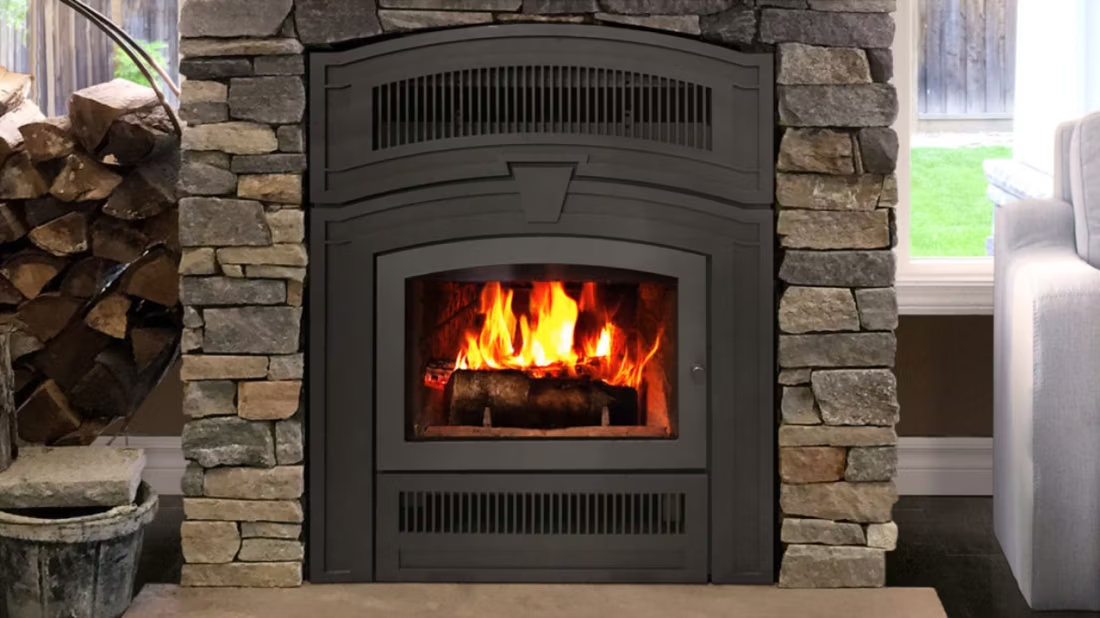
Louvered fronts have grill work above and below the glass for airflow, move heat a little better with a fan, and suit traditional mantels. Clean face designs drop the louvers entirely so finish work runs to the fire's edge—they fit both modern and traditional rooms. When we did our own home we chose clean face: a big viewing area beat a little extra airflow. It depends on your room, not on a rulebook.
What do I measure to size a fireplace insert?
Four numbers tell you what fits: the front width, the front height, the back width, and the overall depth of your existing fireplace opening. Grab a tape measure, jot those down, and snap a photo of the wall—those two things do more to move your project forward than anything else you can do today.
What does it take to replace an existing fireplace?
Fireplaces are like icebergs—bigger behind the wall than in front of it. Replacement means removing the surrounding tile or stone (the finish material laps onto the fireplace face), pulling the old unit, setting the new one in the same enclosure, and re-finishing the wall. A hearth professional can determine what's behind your wall without demolition during an in-home preview.
Stove and Fireplace Dealers in Grey
Listings include WhyFire partner dealers, dealers we have verified as authorized for the brands we recommend, and established local businesses that carry hearth products. Every listing shows which one it is. The ones marked Preferred run on WhyFire's software, so they can show you real pricing and book your appointment right here. No manufacturer pays for placement. How we verify dealers →
Welbeck Sawmill Ltd
Get your free Grey wood heat Project Guide & Parts List.
Tell us about your home, its wood species access, and how you plan to use the stove, and we'll help you find a trusted local dealer in Grey and send a free Project Guide & Parts List—the exact parts, including the vent kit, for your wood heat project.
Find Your Fireplace →