
Zero-clearance warmth for a resort town built on condos and cottages.
With winter lows averaging -9.9°C and a population spread across ski condos, Georgian Bay cottages, and full-time homes, The Blue Mountains has a lot of properties where a chimney or gas line just isn't practical. We'll help you find a trusted local dealer and a free plan for your electric fireplace project.
Every Project Starts From One of These Five Situations
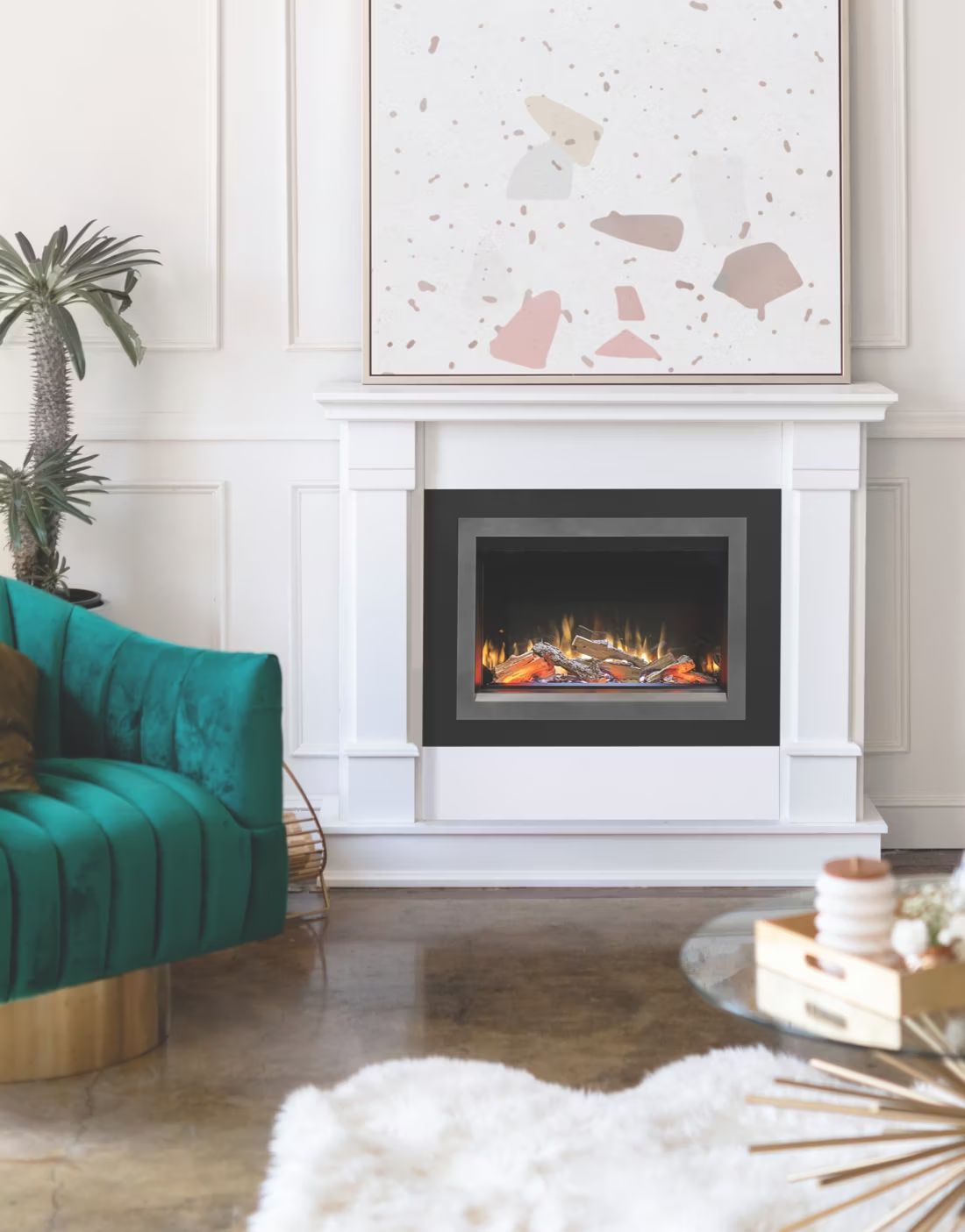
Ambiance without the chimney.
The Blue Mountains sits at 199 metres elevation in Grey region, close enough to Georgian Bay that lake-effect snowsqualls define the local winter more than raw cold does—average lows around -9.9°C are milder than places like Sudbury or Thunder Bay, but the snow and the outages that come with it are real. A lot of the housing stock here is seasonal or shared: ski chalets near the hill, condos in Blue Mountain Village, and short-term rentals that turn over every week. None of those are ideal candidates for a masonry chimney or a new gas line, which is where electric fireplaces earn their keep.
There's dense hardwood country all around Grey region—sugar maple, red oak, white ash, and yellow birch all split and burn well locally—and Enbridge Gas serves a good part of town for anyone who wants real heat output. But an electric unit sidesteps the CSA B365 installation code and WETT inspection that wood appliances need for insurance, needs no venting through a shared condo wall, and typically installs for $500 to $1,600 rather than the $6,000-plus that wood or gas installs commonly run. At the regional residential rate of about $0.128 per kWh, running one is cheap too, which suits owners who only visit a handful of weekends a month.
Three steps. No salesperson until you're ready.
Tell us about your project
Your postal code, your situation, and the fuel you're leaning toward—or let the answers point you to one.
See what's actually available
The brands dealers within 100 miles genuinely carry—real options, never a catalog mirage.
Get your dealer & Project Guide
A trusted local dealer, plus the free Project Guide & Parts List that names every component of the job.
Frequently Asked Questions
How much does an electric fireplace installation cost in The Blue Mountains?
Most electric fireplace installs here run $500 to $1,600 CAD, and the spread mostly comes down to a plug-in insert dropped into an existing mantel at a Craigleith cottage versus a hardwired linear unit built into new drywall at a Blue Mountain Village condo. Because there's no flue, no gas line, and no combustion byproducts to vent, nearly all of the cost is electrical work and trim carpentry rather than venting hardware, which is why electric lands well under the $6,000-$12,000 wood or $6,000-$15,000 gas ranges common elsewhere in Grey region.
Do I need a permit to install an electric fireplace in The Blue Mountains?
Usually not for a simple plug-in insert, but if you're having a unit hardwired into a wall or built into new construction, the municipal building department will want it on file, and a condo board may need its own sign-off before you touch a shared wall. One real advantage over wood: there's no CSA B365 installation code or WETT inspection to satisfy, since those requirements are specific to wood-burning appliances, and most insurers won't ask for either on an electric unit.
Is electric or gas the better choice for a Blue Mountains home?
Enbridge Gas serves a good part of town, so gas is a real option here, and a gas insert or built-in unit—typically $6,000-$15,000 installed—will actually heat a room the way an electric unit mostly won't. Electric fireplaces are ambiance-first, putting out modest supplemental heat at best, but they cost a fraction to install at $500-$1,600 and skip the gas line and venting requirements entirely. For a second home or a Village condo where you want the look without touching the gas meter, electric is usually the more practical call.
Why do so many condos and rentals around Blue Mountain Village choose electric?
Short-term rental chalets and condo units in the Village rarely have a chimney chase, and condo boards are often reluctant to approve anything that needs new venting through a shared wall or roof. An electric unit needs a standard outlet and, at most, a stud-wall cutout for a linear model—no exterior penetration, no gas line, no added insurance rider. That's a big part of why owners managing rental units near the ski hill or along Georgian Bay lean electric over wood or gas.
How much does it cost to run an electric fireplace here?
At the regional residential rate of roughly $0.128 per kWh, a typical 1,500-watt electric fireplace running on high costs about 19 cents an hour, or a couple of dollars for a full evening. Whether Hydro One, Alectra Utilities, or another local provider bills your property, most units let you run the flame effect with the heater off, dropping the draw to a few watts, which makes it cheap to keep the ambiance going year-round, including in summer when nobody wants the extra heat.
Should I get a wood stove instead, since firewood is so available here?
Grey region sits in some of the best hardwood country in the province—sugar maple, red oak, white ash, and yellow birch are all common local species, and the Ontario Ministry of Natural Resources allows free cutting permits up to 10 cubic metres a year in the managed forest zones. Wood is a legitimate choice for a full-time home, especially given how often Georgian Bay snowsqualls cause outages here. But it's a $6,000-$12,000 install with a WETT inspection required for insurance, plus stacking and seasoning wood, which is a real commitment for a seasonal chalet compared to plugging in an electric unit.
What size electric fireplace do I need for a great room or open-concept chalet?
Because electric units are supplemental at best, sizing is more about wall proportion than square footage. A 50 to 60 inch linear unit reads well in the open-concept great rooms common in newer Blue Mountains builds with vaulted ceilings, while a smaller 30 to 40 inch insert suits a condo living room or a bedroom. If you actually want to feel heat output in a larger space, pair the electric unit with your furnace or a gas fireplace elsewhere in the house rather than expecting it to carry the room on its own.
What electric fireplace brands does a local dealer typically carry?
Dimplex and Napoleon both show up regularly in Ontario showrooms, and Napoleon is manufactured just down the road in Barrie, which keeps parts and warranty service simple for Grey region customers. A trusted local dealer can walk you through wall-mount linear units, mantel package inserts, and freestanding stove-style electric units, and match the trim to whatever finish your builder used at Blue Mountain Village or in a Thornbury farmhouse renovation.
Will an electric fireplace still work during a power outage?
No, and that's worth planning around here, since lake-effect snowsqualls off Georgian Bay knock out power in this area more often than in most of southern Ontario. An electric fireplace goes dark the moment the grid does, unlike a wood stove burning local maple or oak. Plenty of Blue Mountains homeowners run an electric unit for everyday ambiance and its low install cost, then keep a wood or gas appliance elsewhere in the house as the actual outage backup.
How much does an electric fireplace cost to run?
With the heater on, a typical unit draws about 1,500 watts—at average electric rates that's roughly 20 cents an hour. Run the flame effect alone and it costs pennies; the flames are LED-driven and use about as much power as a light bulb. There's no pilot light, no fuel delivery, and essentially no maintenance.
What fireplace styles should I know before shopping?
Four cover most of the market: screen-front traditional (mesh front, open feel, fits craftsman homes), traditional door set (the classic look you grew up with), modern linear (wide, low, the statement piece for entertaining), and clean face contemporary (no trim—your tile or stone runs right to the fire's edge). Walk in knowing those four terms and you're ahead of most buyers.
Do electric fireplaces actually produce heat?
Yes—most put out around 4,800–5,000 BTUs from a standard outlet, which comfortably warms a bedroom, office, or den as a comfort-zone heater. What they won't do is carry a whole house the way wood, gas, or pellet can. Think of electric as ambiance-first with honest supplemental heat: flames on with no heat in July, flames plus warmth in January.
Does an electric fireplace need a vent or chimney?
No—that's its superpower. An electric fireplace needs a wall and an outlet, period. No vent pipe, no gas line, no clearances to design around, which is why it works in bedrooms, offices, apartments, and walls where venting a gas or wood unit would be impractical or impossible. Installation is typically the simplest and least expensive of any fireplace type.
Nearby Dealers
Hearth shops serving The Blue Mountains and the surrounding area. Every listing shows whether it is a WhyFire partner, a dealer we have verified as authorized for the brands we recommend, or a local business carrying hearth products. No manufacturer pays for placement. How we verify dealers →
We’ve paused dealer listings for this connection today. Enter your zip or postal code above to find dealers near you, or come back tomorrow.
Electric Service in The Blue Mountains
An electric fireplace's heater draws about 1,500 watts—pennies per hour at local rates.
Hydro One
Toronto Hydro
Alectra Utilities
Get your free Project Guide & Parts List for a Blue Mountains electric fireplace.
Tell us about your condo, chalet, or full-time home and we'll help you find a trusted local dealer and send a free Project Guide & Parts List with the exact unit, mounting, and electrical specs your project needs.
Find Your Fireplace →