
Instant ambiance for Rainy River winters, no venting required.
With winter lows averaging -20.9°C across the Rainy River District, wood and gas do the serious work of keeping a home warm. Electric fireplaces fill a different role here—supplemental heat and real ambiance in a bedroom, basement, or camp along Rainy Lake, with no chimney, gas line, or permit process involved. We'll help you find a local dealer who can size the right unit for your space.
Every Project Starts From One of These Five Situations
A boreal district where wood and gas carry the winter, and electric fills the gaps.
The Rainy River District stretches from Fort Frances on the international border with Minnesota west to the town of Rainy River, north through Emo and Atikokan into boreal forest that looks a lot like the country around Thunder Bay. Climate zone 7A and a -20.9°C average winter low mean five or more months of hard freeze, and most homes here are built around wood—sugar maple, red oak, white ash, and yellow birch cut under Ontario Ministry of Natural Resources permits—or natural gas where it's available in the larger communities. Electric fireplaces don't try to compete with that as a primary heat source. Their real value shows up in the rooms wood and gas systems don't reach: a finished basement, a bedroom addition, a seasonal camp on Rainy Lake or Lake of the Woods that only needs heat on the weekends it's occupied.
That narrower role is actually the appeal. An electric unit installed for $500 to $1,600, against $6,000 to $15,000 for a wood or gas system, needs no chimney, no gas line, no CSA B365 inspection, and no WETT certificate for insurance. For a cottage owner who closes up in October and doesn't want a flue to worry about while the place sits empty, or a Fort Frances homeowner adding a second heat source to a finished lower level, that simplicity is the whole point. A local dealer can tell you honestly whether a plug-in unit covers the room or whether you need a hardwired, higher-output model on its own circuit.
Three steps. No salesperson until you're ready.
Tell us about your project
Your postal code, your situation, and the fuel you're leaning toward—or let the answers point you to one.
See what's actually available
The brands dealers within 100 miles genuinely carry—real options, never a catalog mirage.
Get your dealer & Project Guide
A trusted local dealer, plus the free Project Guide & Parts List that names every component of the job.
Frequently Asked Questions
How much does an electric fireplace installation cost in the Rainy River District?
Most installations run $500 to $1,600 CAD. A plug-in freestanding or wall-mount unit on the low end just needs a standard outlet, which keeps costs down for a straightforward bedroom or basement install in Fort Frances, Emo, or Rainy River. A built-in electric insert or a larger unit that needs a dedicated 240V circuit run by a licensed electrician sits toward the top of that range, especially in older housing stock around Atikokan where panel capacity sometimes needs an upgrade first. Either way, it's a fraction of what wood or gas installs run in this district, since there's no chimney or gas line to account for.
Can an electric fireplace actually heat my home through a Rainy River winter?
Not as your only heat source, and we'd rather tell you that up front than have you find out in January. At -20.9°C average lows, most electric fireplace inserts top out around 5,000-10,000 BTU, which is real supplemental heat for one room but not enough to carry a whole house through a boreal winter. In the Rainy River District, that's exactly why most homes lean on a wood stove or a gas furnace for primary heat and add an electric unit where they want extra warmth and glow without running ductwork or venting—a bedroom over an unheated garage, a basement rec room, or a sunroom that gets cold at night.
Do I need a permit to install an electric fireplace here?
Usually not the kind of permit wood or gas appliances need. There's no CSA B365 combustion inspection and no WETT certificate required, since there's no chimney or fuel line involved. What you may need is an electrical permit through your municipal building department if the installer is adding a new dedicated circuit or upgrading your panel to handle a hardwired unit—your electrician typically handles that paperwork as part of the job. A simple plug-in unit on an existing outlet generally doesn't trigger any permit at all.
Is electric a good fit for a seasonal camp on Rainy Lake or Lake of the Woods?
It's one of the better fits in the district, honestly. A wood stove left unattended over a closed season means creosote buildup and a chimney check every spring, and a propane system means a tank to monitor. An electric fireplace just sits there—no flue to inspect, no fuel to run out, no risk of a critter finding its way into an open chimney over winter. Plenty of camp owners around Rainy Lake and along the Rainy River use one for evening ambiance and light supplemental warmth during shoulder-season weekends, then shut the breaker and walk away when they close up.
What's the difference between an electric insert, a built-in fireplace, and a freestanding unit?
An electric insert drops into an existing masonry firebox or wood stove opening—a common upgrade for older Fort Frances homes with a fireplace that's no longer used for wood. A built-in electric fireplace gets framed into a wall during a renovation or new build, giving you a flush, furniture-like look with no visible cabinet. A freestanding electric stove sits on the floor like a wood stove and plugs into a standard outlet, which makes it the simplest option for a basement, camp, or rental unit where you don't want to touch the wall at all. A local dealer can tell you which one actually fits your space and your wiring.
How much does an electric fireplace cost to run compared to my other heat?
It depends on the wattage and how many hours a day you run it, but most units draw 1,500 watts on the heat setting, similar to a space heater. Run against typical Hydro One residential rates, that works out to a modest daily cost for supplemental use in one room—nowhere near what it would cost to heat an entire Rainy River District home on electric resistance heat alone through a -20.9°C winter. That's the honest math behind why electric works best as a zone-heating add-on rather than a whole-house solution here.
Can I install an electric fireplace in an older Fort Frances or Emo home?
Usually, yes, but it's worth having an electrician look at your panel and wiring first. Some older housing stock in the district still has older wiring or a panel with limited spare capacity, and a hardwired electric fireplace on a dedicated circuit needs both. A local dealer will typically coordinate with a licensed electrician as part of the quote, so you know before the unit arrives whether you're looking at a simple plug-in install or a panel upgrade.
How much maintenance does an electric fireplace actually need?
Very little, which is a real selling point against wood in this district. There's no annual chimney sweep, no WETT inspection, and no creosote to manage. Maintenance is mostly wiping down the glass, occasionally cleaning dust off the heater fan, and replacing an LED module every several years if the flame effect dims. Compare that to a wood stove burning sugar maple or oak all winter, which needs a proper sweep every year to stay safe and insurable.
I have natural gas available at my house—why would I still choose electric?
Gas is the right call for primary heat in homes served by the gas network through Fort Frances and the larger communities, but it still needs a gas line and venting run to wherever the fireplace goes, which isn't always practical for a bedroom, basement corner, or upstairs addition. Electric skips that entirely—no gas line, no venting, just power to the unit—so it often ends up being the practical choice for a secondary room even in a home that already has gas heat elsewhere. Some Rainy River District homeowners run gas in the main living area and add electric units in one or two other rooms for exactly that reason.
How much does an electric fireplace cost to run?
With the heater on, a typical unit draws about 1,500 watts—at average electric rates that's roughly 20 cents an hour. Run the flame effect alone and it costs pennies; the flames are LED-driven and use about as much power as a light bulb. There's no pilot light, no fuel delivery, and essentially no maintenance.
What fireplace styles should I know before shopping?
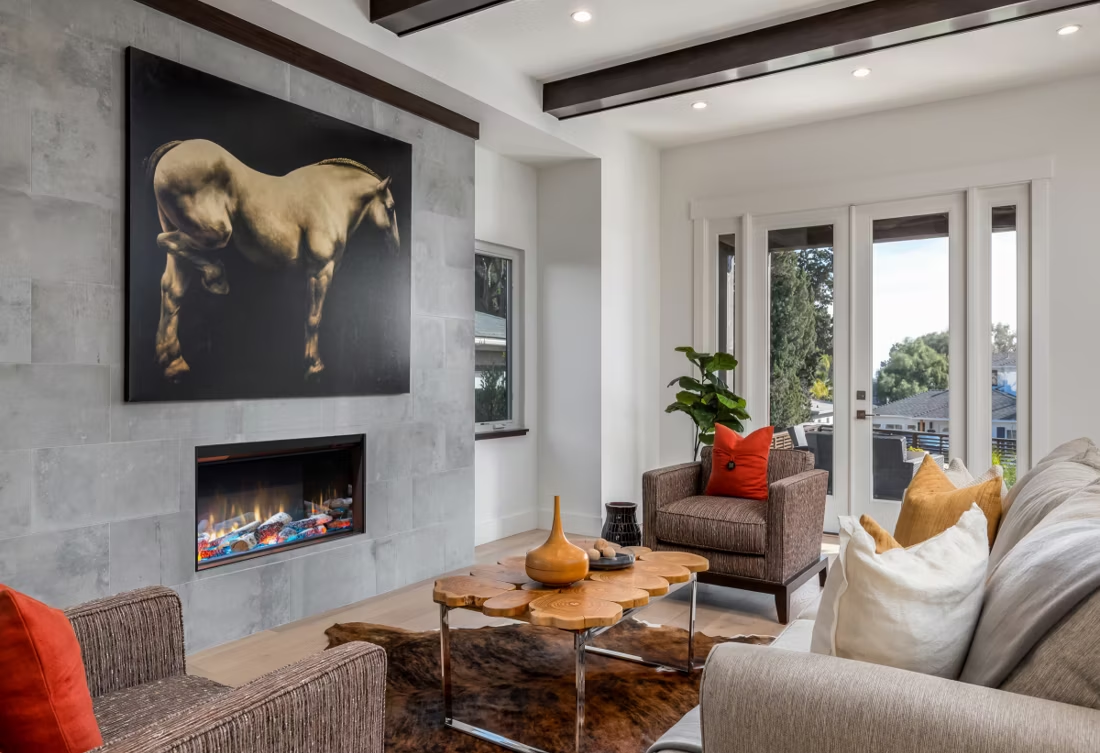
Four cover most of the market: screen-front traditional (mesh front, open feel, fits craftsman homes), traditional door set (the classic look you grew up with), modern linear (wide, low, the statement piece for entertaining), and clean face contemporary (no trim—your tile or stone runs right to the fire's edge). Walk in knowing those four terms and you're ahead of most buyers.
Does an electric fireplace need a vent or chimney?
No—that's its superpower. An electric fireplace needs a wall and an outlet, period. No vent pipe, no gas line, no clearances to design around, which is why it works in bedrooms, offices, apartments, and walls where venting a gas or wood unit would be impractical or impossible. Installation is typically the simplest and least expensive of any fireplace type.
Can I put a TV above my fireplace?
Yes—with an asterisk. Fireplaces are hot and TVs don't like heat. Either put a mantel between them to deflect rising warmth, or choose a fireplace with heat-management technology that creates a cool zone on the wall above—the wall stays around 125 degrees, barely warm, while the room still gets full heat. If you like clean lines and don't want a mantel, heat management is the answer.
Stove and Fireplace Dealers in Rainy River
Listings include WhyFire partner dealers, dealers we have verified as authorized for the brands we recommend, and established local businesses that carry hearth products. Every listing shows which one it is. The ones marked Preferred run on WhyFire's software, so they can show you real pricing and book your appointment right here. No manufacturer pays for placement. How we verify dealers →
Ryan's Rustic Railings And Furniture
Firelight Galleries
Electric Service in Rainy River
An electric fireplace's heater draws about 1,500 watts—pennies per hour at local rates.
Hydro One
Toronto Hydro
Alectra Utilities
Get your free Project Guide & Parts List for an electric fireplace in the Rainy River District.
Tell us about your room, your wiring, and how you plan to use the fireplace, and we'll help you find a trusted local dealer and send over a free Project Guide & Parts List—the right unit, the electrical requirements, and a recommended installer for your project, no big-box guesswork.
Find Your Fireplace →