
Steady pellet heat built for Rainy River's long, boreal winters.
With winter lows averaging -20.9°C and a heating season that stretches from October into April, homes across Fort Frances, Emo, and the town of Rainy River need heat that doesn't depend on you splitting cordwood every weekend. We'll help you find a trusted local dealer who knows which pellet stove actually fits your home and your budget.
Every Project Starts From One of These Five Situations
Consistent heat, without cutting and stacking cords.
The Rainy River district sits along the Ontario-Minnesota border in the province's far northwest, a sprawling, sparsely populated stretch of boreal forest and farmland with roughly 10,500 people spread across Fort Frances, Emo, Barwick, Stratton, and the town of Rainy River itself. Climate zone 7A here means winters closer in character to Winnipeg than to southern Ontario—long, dry, and genuinely cold, with January nights routinely dropping past -20.9°C. Wood heat has deep roots in the region: sugar maple, red oak, white ash, and yellow birch grow thick across the district, and the Ontario Ministry of Natural Resources lets any household cut up to 10 cubic metres, about four cords, free of charge year-round in the Northern Boreal and Managed Forest zones. But not everyone wants to spend a Rainy River winter splitting and hauling wood, which is exactly where pellet heat has picked up ground.
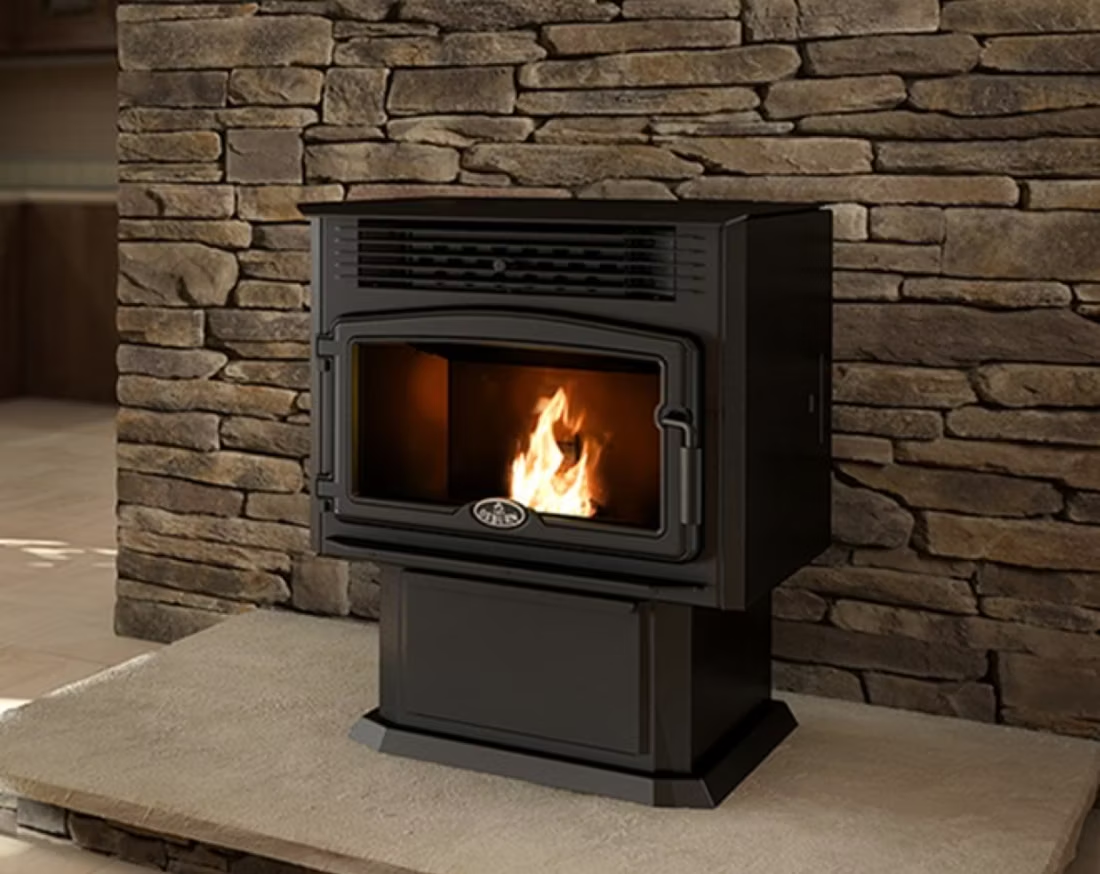
A pellet stove gives you that same steady, radiant warmth through a long northern winter, but the fuel arrives bagged, the feed is automated, and there's no chimney full of creosote to worry about. Regional brands like Lacwood and Energex supply the district at roughly $400-$575 per tonne, and a household burning through a typical Rainy River winter usually goes through three to four tonnes. Municipal building departments across the district still require a permit for the installation, and CSA B365 governs how the appliance and venting get put together—insurers commonly ask for a WETT inspection on any solid-fuel appliance before they'll write a policy, and a pellet stove is no exception. Natural gas service does reach parts of Fort Frances, so some homeowners are weighing pellet against gas rather than against wood; either way, a local dealer who already knows the district's permit process and insurance expectations saves you the guesswork.
Three steps. No salesperson until you're ready.
Tell us about your project
Your postal code, your situation, and the fuel you're leaning toward—or let the answers point you to one.
See what's actually available
The brands dealers within 100 miles genuinely carry—real options, never a catalog mirage.
Get your dealer & Project Guide
A trusted local dealer, plus the free Project Guide & Parts List that names every component of the job.
Frequently Asked Questions
How much does a pellet stove installation cost in the Rainy River region?
Most pellet stove installations across the district run $6,000 to $10,000 CAD, including the appliance, venting, and hearth pad work needed to meet clearance requirements under CSA B365. A straightforward install into a home with an existing chimney chase or an easy through-wall vent path lands toward the lower end. Older farmhouses around Emo or Barwick that need new venting run from scratch, or homes where the hearth pad has to be built out to meet code, tend to sit higher in that range. Homes further from Fort Frances may see a modest travel charge added by the installer, which is worth asking about up front.
Where do I buy pellets in the Rainy River region, and what do they cost?
Lacwood and Energex are the two brands most commonly stocked by dealers serving the district, typically running $400 to $575 CAD per tonne depending on the season and how far the fuel has to travel to reach a given community. A household using a pellet stove as a primary heat source through a full Rainy River winter usually burns three to four tonnes, so it's worth asking your dealer about buying early in the fall before demand and delivery schedules tighten up. Stocking up before the first real cold snap also protects you if a supply run gets delayed by weather on the highway corridors into town.
Do I need a permit to install a pellet stove here?
Yes. Whether you're in Fort Frances, Emo, or elsewhere in the district, a new pellet stove installation goes through your municipal building department, and the work has to follow CSA B365 for clearances and venting. Most local dealers pull the permit as part of the job rather than leaving that step to the homeowner. Separately, plan on a WETT inspection once the stove is in—insurers across Northwestern Ontario commonly require one on any solid-fuel appliance before they'll extend or renew a homeowner's policy, and it's a quick, routine step for a dealer who does these installs regularly.
Will my pellet stove still work if the power goes out?
Not on its own. A pellet stove relies on an electric auger to feed fuel and a blower to move heat into the room, so a power outage stops the stove even if the hopper is full. That's a real consideration in a district where winter storms along Highway 11 and Highway 71 can knock out power for hours at a time. Some households pair a pellet stove with a small battery backup or generator sized to run the auger and blower through a short outage; if outages are a regular concern on your line, that's worth discussing with your dealer before you settle on a model, or worth weighing against a wood stove that keeps running with no power at all.
With free cutting permits available, is pellet heat really worth it over wood?
It depends on what you're optimizing for. The Ontario Ministry of Natural Resources lets district households cut up to 10 cubic metres of sugar maple, red oak, white ash, or yellow birch free of charge each year, which makes wood the cheapest fuel option if you have the time, a truck, and a place to season it for a year or two. A pellet stove trades that low fuel cost for convenience: bagged fuel that stores in a fraction of the space a cord takes up, an automated feed that holds a steady output overnight, and no splitting, stacking, or ash from green wood. For a household with the land and equipment to process its own firewood, wood usually wins on cost. For a smaller lot in Fort Frances or a homeowner who'd rather not manage a woodpile, pellet is often the better fit.
What size pellet stove do I need for a Rainy River winter?
Sizing has to account for how cold this district actually gets. With winter lows averaging -20.9°C and stretches of sustained cold through January and February, a stove rated for the square footage of your main living space on paper can still fall short if it's undersized for a 7A climate. Most local dealers size up slightly from a standard chart for district homes, particularly older farmhouses around Emo and Stratton with less insulation than newer construction closer to Fort Frances. An in-home visit, rather than a size picked off a spec sheet, is the more reliable way to land on the right output.
How much maintenance does a pellet stove actually need?
Less than a wood stove, but it's not zero. Plan on emptying the ash pan every few days during heavy winter use, cleaning the glass weekly, and vacuuming the burn pot and heat exchanger every couple of weeks to keep efficiency up. Most manufacturers also call for an annual professional service, ideally in late summer before the first cold snap, to check the auger motor, gaskets, and venting. Given how long the burn season runs in this district, often October through April, a stove that gets that annual service tends to run more efficiently and burn through fewer bags per week than one that doesn't.
Natural gas or pellet—which makes more sense for my home in the district?
Natural gas service reaches parts of Fort Frances, so if your home is already on a gas line, a gas fireplace or insert offers instant, thermostat-controlled heat with none of the fuel handling a pellet stove requires. Outside that service area, which is most of the district, propane or pellet become the realistic options for supplemental or primary heat. Pellet tends to appeal to households that want a lower up-front cost than a full gas retrofit and don't mind managing bagged fuel deliveries a few times a season. A local dealer can tell you quickly whether gas is even on the table at your address before you spend time comparing the two.
Are certain pellet stove brands easier to get serviced in this district?
Stick with a brand your local dealer actually carries and services, rather than ordering something online that no one in the district supports. Lacwood and Energex pellets are widely available here, and dealers serving Fort Frances and the surrounding communities typically stock appliances built to run well on those fuels. Because service calls in a rural district like this often mean a technician driving out from Fort Frances, choosing a stove your dealer already knows, with parts they can get quickly, matters more here than it might in a larger city with several competing service shops.
Why do fireplace quotes vary so much?
Because a fireplace is an iceberg—there's more behind the wall than in front of it. A low quote often covers only the unit; the full scope includes vent pipe, gas line or electrical, framing, and the tile or stone that has to come off and go back on. Make every bidder price the whole job. If a dealer can't speak to the full scope with confidence, that's your signal to keep looking.
Is it worth replacing an old fireplace that still sort of works?
Ask three questions: Is it ugly? Is it drafty? Does it actually work? Most old fireplaces fail at least two. Beyond looks, an old unit leaks air around the damper year-round and—if it's gas with a standing pilot—quietly burns a couple hundred dollars a year. A modern replacement seals the wall, heats the room, and changes how the whole space gets used.
What do I measure to size a fireplace insert?
Four numbers tell you what fits: the front width, the front height, the back width, and the overall depth of your existing fireplace opening. Grab a tape measure, jot those down, and snap a photo of the wall—those two things do more to move your project forward than anything else you can do today.
Are pellet stoves loud?
They make some noise—there are two fans running plus an auger motor that turns as it feeds pellets. But there's a real range: premium models are engineered quiet, and the best offer a whisper-quiet mode you can comfortably watch TV next to. If noise matters in your room, ask to hear a stove running before you buy—it's a five-minute test that saves years of annoyance.
Stove and Fireplace Dealers in Rainy River
Listings include WhyFire partner dealers, dealers we have verified as authorized for the brands we recommend, and established local businesses that carry hearth products. Every listing shows which one it is. The ones marked Preferred run on WhyFire's software, so they can show you real pricing and book your appointment right here. No manufacturer pays for placement. How we verify dealers →
Ryan's Rustic Railings And Furniture
Firelight Galleries
Pellet Brands Stocked Around Rainy River
Typical price runs $400-$575 per ton—buy early-season for the best rates. Manufacturers will point you to the nearest stocking dealer.
Lacwood
Get your free Rainy River pellet stove Project Guide & Parts List.
Tell us about your home and how you plan to use the stove, and we'll help you find a trusted local dealer serving the Rainy River region and send over a free Project Guide & Parts List—the exact parts, including the vent kit, for your pellet heat project, no big-box guesswork.
Find Your Fireplace →