
Zone heat and ambiance for winters that average -21.2°C.
Atikokan sits in the Rainy River region on the edge of Quetico Provincial Park, where winter lows routinely fall below -20°C. We'll help you find a trusted local dealer who can tell you exactly where an electric fireplace fits into a home that likely also leans on wood or gas for the coldest months.
Every Project Starts From One of These Five Situations
A heater for the room you're in, not a replacement for the furnace.
At 390 metres elevation in climate zone 7A, Atikokan runs winters closer to Thunder Bay or Winnipeg than to southern Ontario, with an average winter low of -21.2°C and a heating season stretching from October into April. That kind of cold means most homes here are built around a primary heat source, usually a wood stove burning local sugar maple, red oak, white ash, or yellow birch, or a propane or natural gas furnace where Enbridge Gas service reaches. An electric fireplace isn't trying to replace that system, it's a targeted way to add heat and light to a bedroom, basement rec room, or addition without running new gas line or building a chimney.
Hydro One serves the distribution lines around Atikokan and Rainy River at roughly $0.128 per kWh, which makes a 1,500-watt electric insert an inexpensive add for supplemental warmth, even if it costs more per hour than the free firewood many households already cut under an Ontario Ministry of Natural Resources permit. Worth knowing: Atikokan is also home to Ontario Power Generation's Atikokan Generating Station, the province's largest biomass plant, a reminder that wood-fired energy already runs deep here, electric or not. Most plug-in units need no permit at all; a hardwired wall unit typically needs an electrician and sign-off through the Electrical Safety Authority, coordinated with the municipal building department.
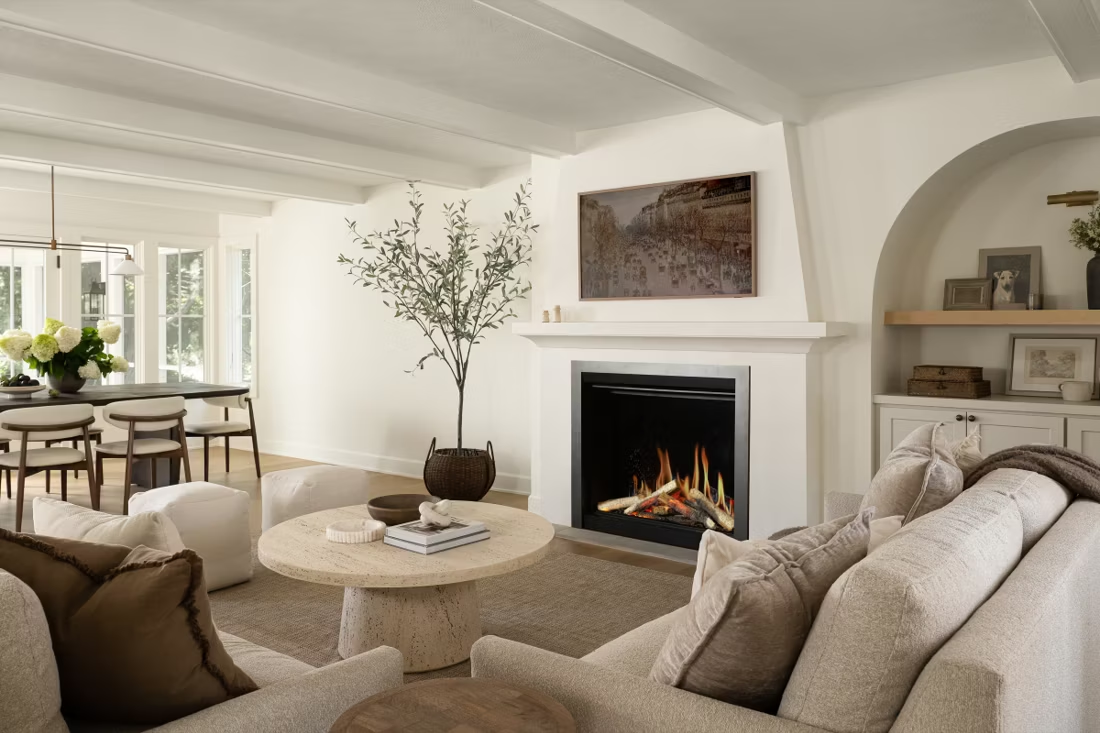
Three steps. No salesperson until you're ready.
Tell us about your project
Your postal code, your situation, and the fuel you're leaning toward—or let the answers point you to one.
See what's actually available
The brands dealers within 100 miles genuinely carry—real options, never a catalog mirage.
Get your dealer & Project Guide
A trusted local dealer, plus the free Project Guide & Parts List that names every component of the job.
Frequently Asked Questions
How much does an electric fireplace cost installed in Atikokan?
Plan on $500 to $1,600 CAD. A plug-in insert or freestanding unit that just needs an outlet sits at the low end and is often a same-day project. A hardwired wall-mount or built-in linear unit that needs a dedicated circuit run by an electrician pushes toward the top of that range, especially in older Atikokan homes where the electrical panel may need a new breaker slot before the fireplace goes in.
Will an electric fireplace heat my whole house through an Atikokan winter?
No, and any dealer who tells you otherwise is overselling the product. With winter lows averaging -21.2°C and stretches colder than that, a 1,500-watt electric unit is built to warm a single room, not carry a whole house. Most Atikokan homes pair an electric fireplace with a wood stove burning sugar maple or yellow birch, or a propane or natural gas furnace, and use the electric unit for zone heat in a bedroom or den, or for ambiance on evenings when the main system is already doing the work.
Do I need a permit for an electric fireplace in Atikokan?
Usually not. A plug-in electric fireplace or insert is treated like any other appliance and doesn't trigger a building or electrical permit. If you're installing a hardwired unit that needs its own circuit, an electrician handles the Electrical Safety Authority notification, and the municipal building department may want to see that sign-off if the install involves a new wall opening or framing. Electric appliances also skip the WETT inspection and CSA B365 requirements that apply to wood-burning systems, which is one reason homeowners here sometimes choose electric for a quick secondary heat source.
What happens to my electric fireplace during a power outage?
It stops working, which is worth planning around in a rural service area like Rainy River, where Hydro One's overhead lines can go down during ice storms or high winds. That's the main reason most Atikokan households don't rely on an electric fireplace as their only backup heat, a wood stove keeps working when the grid doesn't, and it's a common pairing here specifically because of that gap. If your electric fireplace is meant to be your emergency heat plan, it isn't; treat it as a comfort and convenience upgrade instead.
Electric fireplace vs. wood stove, which makes more sense for my Atikokan home?
Wood wins on raw heat output and on working through a power outage, sugar maple, red oak, and yellow birch are all common local species, and the Ontario Ministry of Natural Resources issues free cutting permits for up to 10 cubic metres, about 4 cords, per household per year in the Northern Boreal and Managed Forest zones. Electric wins on convenience: no chimney, no ash, no WETT inspection, and a typical install of $500-$1,600 CAD compared to $6,000-$12,000 CAD for a full wood stove system. Many Atikokan homes end up with both, wood for primary heat and outage security, electric for a low-effort secondary source in a room the wood stove doesn't reach.
What size electric fireplace do I need for a room in Atikokan?
Most electric fireplaces top out around 5,000 to 9,000 BTU, which comfortably heats a single room in the 300 to 400 square foot range, a bedroom, den, or basement rec room. That's the right way to think about sizing an electric unit here: as supplemental heat for one space, not a whole-home solution rated to square footage the way a wood stove or furnace would be. A local dealer can walk through your specific room's insulation and ceiling height before you buy.
Can I put an electric fireplace in a cabin near Quetico Provincial Park?
Yes, and it's a common request from camp owners around Atikokan and the Quetico gateway. As long as the cabin has standard electrical service, a plug-in or hardwired electric fireplace adds heat and ambiance without a chimney, flue, or gas line to maintain between visits. The tradeoff is the same as anywhere else in the region: if the cabin isn't on the grid, or if you lose power during a stay, the electric fireplace goes cold, so a lot of seasonal camps here still keep a wood stove as the real heat source.
How much does it cost to run an electric fireplace in Atikokan?
At Hydro One's residential rate of roughly $0.128 per kWh, a typical 1,500-watt electric fireplace costs about 19 cents an hour to run on high heat. Left on for four or five hours an evening through a cold stretch, that's under a dollar a day, a small add to a winter electricity bill compared to the cost of extending gas line or building out a wood-burning chimney system for the same room.
Insert vs. wall-mount vs. freestanding electric fireplace, what's the difference?
An electric insert drops into an existing masonry or metal firebox, which suits older Atikokan homes with a fireplace opening no longer used for wood. A wall-mount, sometimes called a linear electric fireplace, hangs on the wall like a piece of art and usually needs a dedicated circuit if it's a larger model. A freestanding electric stove or mantel unit is the simplest option, plug it in and set it wherever a room needs supplemental heat, then move it if your needs change. For most Atikokan homeowners adding a secondary heat source to a single room, the freestanding or insert route is the least disruptive.
How much does an electric fireplace cost to run?
With the heater on, a typical unit draws about 1,500 watts—at average electric rates that's roughly 20 cents an hour. Run the flame effect alone and it costs pennies; the flames are LED-driven and use about as much power as a light bulb. There's no pilot light, no fuel delivery, and essentially no maintenance.
What fireplace styles should I know before shopping?
Four cover most of the market: screen-front traditional (mesh front, open feel, fits craftsman homes), traditional door set (the classic look you grew up with), modern linear (wide, low, the statement piece for entertaining), and clean face contemporary (no trim—your tile or stone runs right to the fire's edge). Walk in knowing those four terms and you're ahead of most buyers.
Can I put a TV above my fireplace?
Yes—with an asterisk. Fireplaces are hot and TVs don't like heat. Either put a mantel between them to deflect rising warmth, or choose a fireplace with heat-management technology that creates a cool zone on the wall above—the wall stays around 125 degrees, barely warm, while the room still gets full heat. If you like clean lines and don't want a mantel, heat management is the answer.
Do electric fireplaces actually produce heat?
Yes—most put out around 4,800–5,000 BTUs from a standard outlet, which comfortably warms a bedroom, office, or den as a comfort-zone heater. What they won't do is carry a whole house the way wood, gas, or pellet can. Think of electric as ambiance-first with honest supplemental heat: flames on with no heat in July, flames plus warmth in January.
Nearby Dealers
Hearth shops serving Atikokan and the surrounding area. Every listing shows whether it is a WhyFire partner, a dealer we have verified as authorized for the brands we recommend, or a local business carrying hearth products. No manufacturer pays for placement. How we verify dealers →
We’ve paused dealer listings for this connection today. Enter your zip or postal code above to find dealers near you, or come back tomorrow.
Electric Service in Atikokan
An electric fireplace's heater draws about 1,500 watts—pennies per hour at local rates.
Hydro One
Toronto Hydro
Alectra Utilities
Get your free Project Guide & Parts List for an Atikokan electric fireplace.
Tell us about the room you're heating and whether you're on the Hydro One grid or out at a seasonal camp, and we'll help you find a trusted local dealer and send a free Project Guide & Parts List with the exact parts your project needs.
Find Your Fireplace →