
Steady heat for King's estate lots, without splitting a single log.
King Township spreads across rural concessions and hamlets on the Oak Ridges Moraine, where winter lows average -11.1°C and not every property sits on an Enbridge Gas line. We'll help you find a local dealer who knows what's actually installable on your road.
Every Project Starts From One of These Five Situations
Convenient heat where gas lines and cordwood both have limits.
King Township is a patchwork of horse farms, estate acreages, and hamlets like Nobleton, Schomberg, and King City, sitting at roughly 311 metres on the Oak Ridges Moraine north of Toronto. Average winter lows near -11.1°C put King in a moderate cold climate zone -- real winter, but nowhere near the depth of cold a place like Sudbury or Winnipeg sees. Enbridge Gas reaches King's built-up hamlets, but a lot of the township's larger rural lots and concession-road properties sit outside that distribution footprint and run on propane or oil, which is exactly the gap where a pellet appliance makes practical sense.
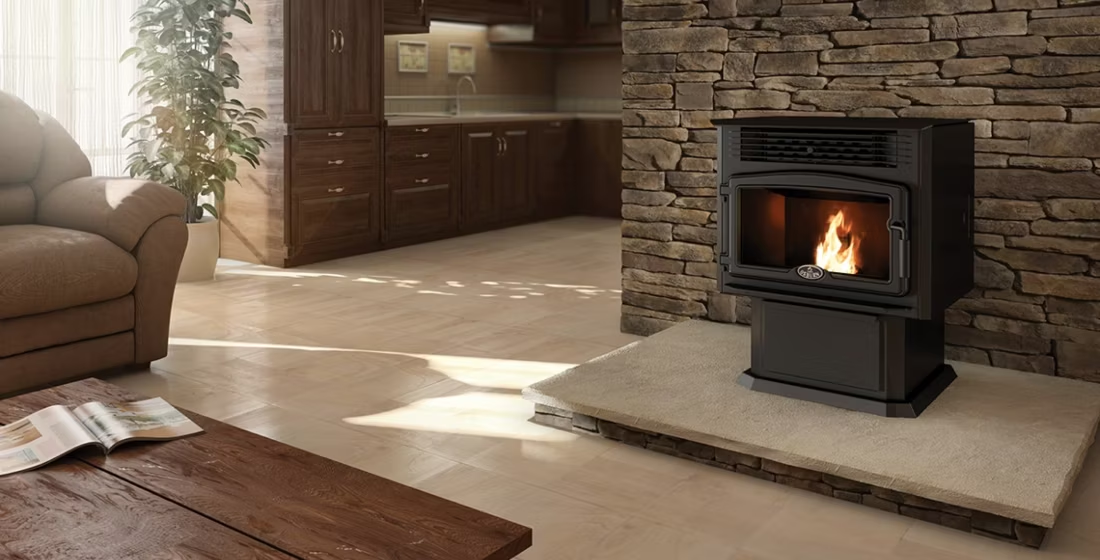
King's bush lots are thick with sugar maple, red oak, white ash, and yellow birch, and the Ontario Ministry of Natural Resources issues free cutting permits for up to 10 cubic metres per household per year on managed forest land -- so wood heat has deep local roots. But not everyone on a five-acre lot wants to buck, split, stack, and season a winter's worth of cordwood, especially for a coach house or detached shop that just needs reliable supplemental heat. Regional pellet brands like Lacwood and Energex, running $400-$575 a tonne, give King homeowners a cleaner-handling option: a hopper refill and a thermostat instead of a woodshed.
Three steps. No salesperson until you're ready.
Tell us about your project
Your postal code, your situation, and the fuel you're leaning toward—or let the answers point you to one.
See what's actually available
The brands dealers within 100 miles genuinely carry—real options, never a catalog mirage.
Get your dealer & Project Guide
A trusted local dealer, plus the free Project Guide & Parts List that names every component of the job.
Frequently Asked Questions
How much does a pellet stove or insert cost to install in King?
Most pellet installations in King run $6,000 to $10,000 CAD. An insert dropping into an existing masonry firebox in an older King farmhouse, with a short liner run, sits toward the low end. A freestanding pellet stove in a detached shop, coach house, or new addition -- common on King's larger estate lots -- needs fresh venting through an exterior wall and lands closer to the top of that range. Either way you'll need a permit through the municipal building department, and the installation has to meet CSA B365.
My property isn't on the Enbridge Gas line -- does pellet still make sense?
It's actually one of the more common reasons King homeowners look at pellet in the first place. Enbridge Gas serves the built-up parts of King City, Nobleton, and Schomberg, but a good number of concession-road properties and larger acreages sit outside the mains and currently rely on propane or oil for heat. A pellet stove or insert gives those homes a dedicated, thermostat-controlled heat source without a gas line extension, and running costs against $400-$575 a tonne pellets often compare well to propane over a full King winter.
What pellet brands can I actually get near King?
Lacwood and Energex are the regional brands most local dealers stock and can keep you supplied with through the season, typically $400 to $575 a tonne depending on the retailer and how far out your property sits. Because a lot of King addresses are on private rural roads, it's worth confirming delivery access and where you'll store bags before winter -- a dry garage bay or shed keeps pellets from absorbing moisture, which matters for burn quality and auger reliability.
Will a pellet stove still work if the power goes out?
Not on its own -- and this is worth planning around given how many King properties are on rural Hydro One or Alectra Utilities lines that can lose power during ice storms or high winds. Pellet stoves need electricity to run the auger, igniter, and blower, so a stretch without power means no heat unless the unit is on a battery backup or small generator. Some King homeowners on rural lots pair a pellet appliance for daily convenience with a wood stove or insert as an outage backup, since wood needs no electricity to burn.
Pellet or wood -- which fits a King property better?
Wood has an edge on raw fuel cost here: sugar maple, red oak, and yellow birch are common on King's own bush lots, and the Ontario Ministry of Natural Resources issues free cutting permits for up to 10 cubic metres per household per year on managed forest land, year-round in the northern boreal and managed forest zones. Pellet wins on convenience and consistency -- no splitting, no stacking, no chimney creosote buildup to the same degree -- and Lacwood or Energex bags burn evenly without much attention. A lot of King households with the bush and the storage space for cordwood still lean wood; those without either, or who want an easier install in a coach house or addition, lean pellet.
Do I need a permit or inspection for a pellet appliance in King?
Yes. New pellet installations need a permit through King's municipal building department, and the work has to meet the CSA B365 installation code. Insurers in King and across York Region commonly ask for a WETT inspection on solid-fuel appliances, including pellet stoves and inserts, before they'll bind or renew a homeowner's policy -- your installer can usually arrange this as part of the job so it's one less thing to chase down afterward.
What size pellet stove do I need for a King home?
It depends heavily on the building. A pellet stove rated for 1,000 to 1,500 square feet handles a coach house, guest suite, or smaller hamlet home comfortably, while King's larger estate houses -- common on the township's bigger acreages -- often call for a unit rated higher or a second zone of heat altogether if the pellet stove is meant to offset propane or oil use through the winter. A local dealer will size it against your actual floor plan and ceiling height rather than square footage alone, since open-concept great rooms common in newer King builds heat differently than a compartmentalized older farmhouse.
How much maintenance does a pellet stove need in King?
Plan on daily ash removal from the burn pot, a weekly hopper and auger check, and a full annual service -- glass, venting, gaskets, and the exhaust blower -- ideally done in late summer or early fall before King's first cold snap rather than mid-winter when installers are backed up. Homes running a pellet stove as a primary heat source through a full King winter, given the average low near -11.1°C, tend to need that annual service without exception; skipping it is the most common reason a unit shuts down on the coldest week of the year.
Pellet insert vs. pellet stove -- which is the better fit for a King property?
A pellet insert slides into an existing masonry firebox, which suits older farmhouses around Kettleby or Pottageville that already have a working chimney chase from decades of burning wood. A freestanding pellet stove sits on a hearth pad and vents through a wall, which is usually the simpler route for a detached shop, new addition, or coach house without existing masonry -- fairly common across King's newer estate construction. Inserts generally land toward the lower end of the $6,000-$10,000 install range since the chimney structure is already in place.
Why do fireplace quotes vary so much?
Because a fireplace is an iceberg—there's more behind the wall than in front of it. A low quote often covers only the unit; the full scope includes vent pipe, gas line or electrical, framing, and the tile or stone that has to come off and go back on. Make every bidder price the whole job. If a dealer can't speak to the full scope with confidence, that's your signal to keep looking.
Is it worth replacing an old fireplace that still sort of works?
Ask three questions: Is it ugly? Is it drafty? Does it actually work? Most old fireplaces fail at least two. Beyond looks, an old unit leaks air around the damper year-round and—if it's gas with a standing pilot—quietly burns a couple hundred dollars a year. A modern replacement seals the wall, heats the room, and changes how the whole space gets used.
What's the difference between an insert and a zero-clearance fireplace?
An insert is a fireplace that slides into a pre-existing wood-burning fireplace—if you don't have one, there's nothing to insert it into. A zero-clearance fireplace is built into a framed wall, which makes it the answer for remodels and new construction. Simple test: existing masonry fireplace means insert; blank or framed wall means zero-clearance.
How often does a pellet stove need cleaning?
A clean pellet stove is a happy pellet stove. Plan on cleaning the burn pot about once a week when you're burning regularly—ash and clinkers gum up the air holes just like a pellet barbecue. Most pellet stove problems trace back to skipped cleaning that nobody explained up front. Some designs make it easy with a trapdoor burn pot: pull a lever and the gunk drops into the ash pan.
Preferred Dealer in King
Marked Preferred because they run on WhyFire's software—so they can show you real pricing and book your appointment right here. No manufacturer pays for placement. How we verify dealers →
We’ve paused dealer listings for this connection today. Enter your zip or postal code above to find dealers near you, or come back tomorrow.
Pellet Brands Stocked Around King
Typical price runs $400-$575 per ton—buy early-season for the best rates. Manufacturers will point you to the nearest stocking dealer.
Lacwood
Get your free Project Guide & Parts List for a King pellet project.
Tell us about your property -- whether you're on the Enbridge Gas line or off it -- and we'll help you find a local dealer and send a free Project Guide & Parts List sized to your home, with the vent kit and parts your King installation actually needs.
Find Your Fireplace →