
Real warmth for King Township homes, no venting required.
Winters in King dip to an average low of -11.1°C, cold enough that a basement, sunroom, or addition in King City or Nobleton needs real supplemental heat—not just a glowing box. We'll help you find a local dealer who can size the right electric unit for your space and your circuit.
Every Project Starts From One of These Five Situations
A low-cost way to add heat and ambiance to any room.
King Township is a patchwork of horse farms, century homes, and newer construction spread across King City, Nobleton, and Schomberg, with Hydro One serving the more rural stretches and Alectra Utilities covering the built-up pockets closer to King City. At roughly 12.8 cents per kWh, electric heat here is reasonably priced for what it's actually used for in this market: zero-clearance ambiance and supplemental warmth in finished basements, additions, and condo-style units, rather than a home's primary heat source. Plenty of King properties already burn sugar maple, red oak, and white ash from the region's dense hardwood supply, or run natural gas through Enbridge Gas—electric fills the gap where a chimney or gas line isn't practical or worth the disruption.
That's the real appeal: a wall-mounted or built-in electric unit typically installs for $500 to $1,600, with most of that cost tied to whether it's a simple plug-in insert or a hardwired 240V model that needs a licensed electrician to run a dedicated circuit. There's no WETT inspection and no CSA B365 code to satisfy, since those apply to wood-burning appliances, not electric. Your municipal building department may still want a straightforward electrical permit for a hardwired install, but it's a fraction of the process a wood or gas project involves—which is exactly why so many King homeowners use electric to finish a basement rec room or add a feature wall without touching the furnace or the chimney at all.
Three steps. No salesperson until you're ready.
Tell us about your project
Your postal code, your situation, and the fuel you're leaning toward—or let the answers point you to one.
See what's actually available
The brands dealers within 100 miles genuinely carry—real options, never a catalog mirage.
Get your dealer & Project Guide
A trusted local dealer, plus the free Project Guide & Parts List that names every component of the job.
Frequently Asked Questions
How much does an electric fireplace installation cost in King?
Most projects run $500 to $1,600. A freestanding or recessed plug-in insert that just needs a standard outlet sits at the low end—common for a quick basement or bedroom upgrade in King City or Nobleton. A built-in wall unit or a linear model set into a custom media wall, which needs a licensed electrician to run a dedicated 240V circuit, lands toward the top of that range. Either way, it's a fraction of what a wood or gas install runs here, since there's no chimney, gas line, or venting involved.
Do I need a permit for an electric fireplace in King Township?
It depends on the unit. A plug-in model that draws from a standard outlet generally doesn't trigger a building permit. A hardwired 240V unit does need electrical work inspected under Electrical Safety Authority rules, and your municipal building department may want to sign off if it's part of a larger renovation like a basement finish. Either way, you're skipping the CSA B365 installation code and WETT inspection that wood-burning appliances require for insurance here—one of the practical reasons electric is popular for secondary spaces in King.
Is electric heat enough for a King winter, or just for ambiance?
With winter lows averaging -11.1°C, electric fireplaces in King are almost always installed as supplemental heat or pure ambiance, not the home's primary source—similar to how they're used in colder inland towns like Sudbury or Thunder Bay. Most King homes with electric units also have a furnace running on Enbridge Gas or a wood stove burning local sugar maple or red oak for the bulk of the heating load. Electric earns its keep in the rooms those systems don't reach well: a finished basement, a sunroom addition, or a bedroom that runs cold.
Where do electric fireplaces make the most sense in a King home?
Basements are the most common install we see across King City and Nobleton, since a plug-in or recessed unit adds real heat and light to a space without a heat source of its own. Additions and sunrooms are another frequent fit, especially on older King Township properties where extending the furnace ductwork isn't practical. Condo-style units and secondary suites—more common now near King City's core—also lean on electric because there's often no chimney chase and no gas line to tap into.
Which utility serves my electric fireplace in King, and what will it cost to run?
Hydro One serves most of the rural stretches of King Township, while Alectra Utilities covers denser pockets closer to King City. At the area's residential rate of roughly 12.8 cents per kWh, a typical 1,500-watt electric fireplace running a few hours an evening costs somewhere around 20 to 25 cents an hour to operate—inexpensive compared to running a furnace harder, which is part of why they're a popular supplemental choice rather than an everyday primary heater.
What size electric fireplace do I need for my room?
Electric units are rated in watts rather than BTUs, and most models sold by local dealers in this area top out around 1,500 watts, enough to noticeably warm a 300 to 400 square foot room like a King City basement rec room or a bedroom addition. Larger open-concept spaces usually need two zones or a unit paired with the home's main heat source rather than one oversized fireplace, since electric heat doesn't scale the way a wood stove or gas insert does. A dealer will size it against your room's insulation and layout, not just square footage.
What's the difference between an electric insert, a wall-mount, and a mantel package?
An electric insert drops into an existing masonry firebox or a built framed opening, a common choice when a King Township farmhouse has an old wood fireplace that's no longer used and the owner wants the look without the maintenance. A wall-mount is a slim linear unit hung directly on a wall, popular in newer builds and condo-style units for a modern look with minimal footprint. A mantel package bundles a unit with a surrounding cabinet or shelf, which suits a straightforward living room upgrade where there's no existing fireplace at all.
Electric vs. wood—which makes more sense for a King property?
King Township sits in a region with a genuinely strong hardwood supply—sugar maple, red oak, white ash, and yellow birch are all common locally—and plenty of older properties still heat primarily with a wood stove or insert, often required to carry a WETT inspection for insurance. Electric doesn't compete on primary heating cost or off-grid resilience during an outage, but it wins on simplicity: no chimney, no CSA B365 compliance, and a $500-$1,600 install instead of $6,000-$12,000. Many King homeowners run both—wood in the main living space, electric in a basement or addition where running a flue isn't worth it.
Electric vs. gas—why would I choose electric when Enbridge Gas is available?
Where Enbridge Gas service reaches a King property, a gas fireplace or insert usually wins for primary supplemental heat since it puts out more real warmth per hour and keeps working during a power outage with the right ignition system. Electric wins on install simplicity and cost—$500-$1,600 versus $6,000-$15,000 for gas—and on placement flexibility, since it needs neither a gas line nor venting. It's the practical pick for a condo unit, a rental, or a room where running gas line isn't worth the disruption for occasional ambiance.
How much does an electric fireplace cost to run?
With the heater on, a typical unit draws about 1,500 watts—at average electric rates that's roughly 20 cents an hour. Run the flame effect alone and it costs pennies; the flames are LED-driven and use about as much power as a light bulb. There's no pilot light, no fuel delivery, and essentially no maintenance.
What fireplace styles should I know before shopping?
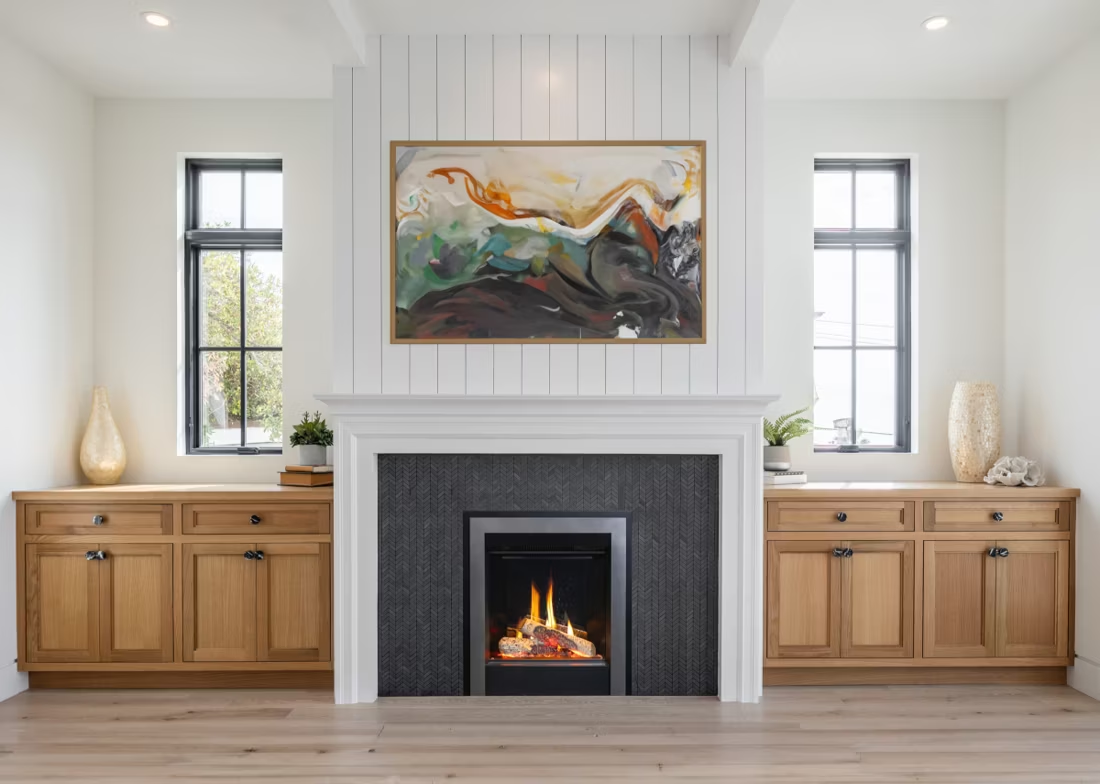
Four cover most of the market: screen-front traditional (mesh front, open feel, fits craftsman homes), traditional door set (the classic look you grew up with), modern linear (wide, low, the statement piece for entertaining), and clean face contemporary (no trim—your tile or stone runs right to the fire's edge). Walk in knowing those four terms and you're ahead of most buyers.
Can I put a TV above my fireplace?
Yes—with an asterisk. Fireplaces are hot and TVs don't like heat. Either put a mantel between them to deflect rising warmth, or choose a fireplace with heat-management technology that creates a cool zone on the wall above—the wall stays around 125 degrees, barely warm, while the room still gets full heat. If you like clean lines and don't want a mantel, heat management is the answer.
Do electric fireplaces actually produce heat?
Yes—most put out around 4,800–5,000 BTUs from a standard outlet, which comfortably warms a bedroom, office, or den as a comfort-zone heater. What they won't do is carry a whole house the way wood, gas, or pellet can. Think of electric as ambiance-first with honest supplemental heat: flames on with no heat in July, flames plus warmth in January.
Preferred Dealer in King
Marked Preferred because they run on WhyFire's software—so they can show you real pricing and book your appointment right here. No manufacturer pays for placement. How we verify dealers →
We’ve paused dealer listings for this connection today. Enter your zip or postal code above to find dealers near you, or come back tomorrow.
Electric Service in King
An electric fireplace's heater draws about 1,500 watts—pennies per hour at local rates.
Hydro One
Toronto Hydro
Alectra Utilities
Get your free Project Guide & Parts List for a King electric fireplace.
Tell us about your room and whether you're on Hydro One or Alectra Utilities, and we'll help you find a local dealer and send a free Project Guide & Parts List with the right unit, wattage, and parts specified for your King Township home.
Find Your Fireplace →