
Find your fireplace in York Region.
Wood, gas, pellet, and electric fireplace resources for every municipality in the region—from Vaughan and Markham through Richmond Hill, Newmarket, and Aurora up to Georgina on Lake Simcoe. Pick a fuel and find a local dealer who actually works in your municipality.
Every Project Starts From One of These Five Situations
A hardwood-rich region of nearly 4 million people running on natural gas, cordwood, and everything in between.
York Region sits in climate zone 5A, with average winter lows near -6.7°C—noticeably milder than the deep-freeze winters of Sudbury or Thunder Bay, but still a consistent five-to-six month heating season that runs from October through April. Sugar maple, red oak, white ash, and yellow birch are the dominant local firewood species, a legacy of the hardwood stands that still ring the region's more rural stretches in King, East Gwillimbury, and Georgina. Natural gas is broadly available across the built-up municipalities—Markham, Vaughan, Richmond Hill, Newmarket, and Aurora are almost entirely served—which is why gas fireplaces and inserts are the default choice for most new-construction homes here, while wood stoves and inserts remain common in older housing stock and larger rural lots.
Because York Region is really nine separate municipalities stitched together, permitting runs through each municipal building department rather than one regional office—Vaughan's process looks a little different from Newmarket's or Georgina's, even though every installation is governed by the same CSA B365 installation code. Wood-burning appliances typically need a WETT inspection before an insurer will cover them, a step that catches homeowners off guard more often than any other part of the process. Some municipalities also require certified low-emission appliances in new construction given the dense hardwood-burning culture across central and eastern Ontario. This hub rolls up hearth retailers, service technicians, and fuel suppliers across the whole region. Pick your fuel below for local dealers, install costs, and unit recommendations specific to your municipality.
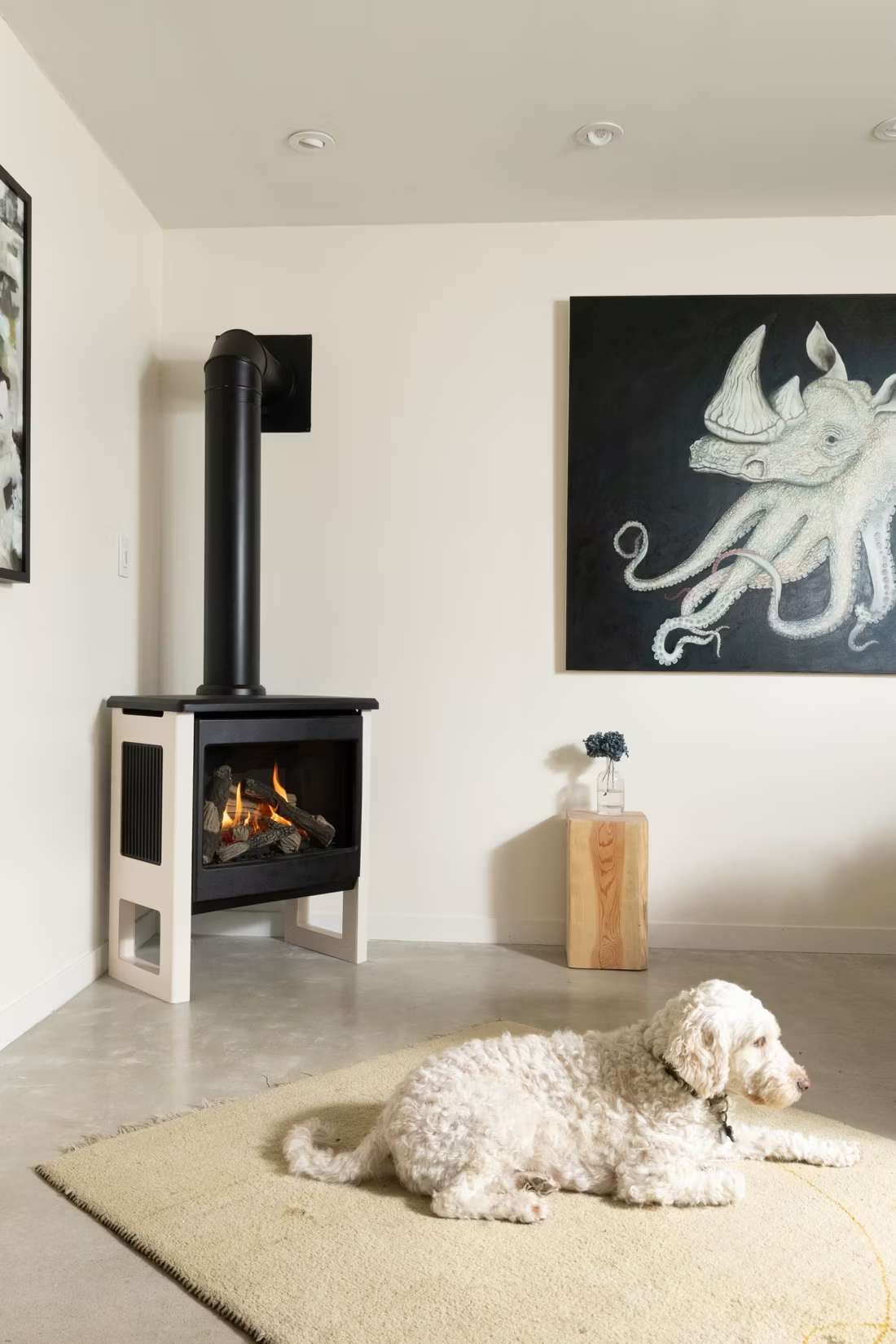
Four fuels. One honest answer for York.
Three steps. No salesperson until you're ready.
Tell us about your project
Your postal code, your situation, and the fuel you're leaning toward—or let the answers point you to one.
See what's actually available
The brands dealers within 100 miles genuinely carry—real options, never a catalog mirage.
Get your dealer & Project Guide
A trusted local dealer, plus the free Project Guide & Parts List that names every component of the job.
Frequently Asked Questions
Which fireplace fuel makes the most sense in York Region?
All four fuels have a real place here, and the right one usually comes down to where you live and what your home is already set up for. Gas is the default in newer subdivisions across Markham, Vaughan, and Richmond Hill because Enbridge Gas service reaches nearly every built-up street—a direct-vent gas fireplace or insert gives you push-button heat without any wood handling. Wood stoves and inserts remain popular in older homes and larger rural properties in King, East Gwillimbury, and Georgina, where sugar maple, red oak, and yellow birch are locally abundant and a well-loaded firebox will hold overnight through a typical -6.7°C night. Pellet stoves, stocked regionally by brands like Lacwood and Energex, appeal to homeowners who want wood-like ambiance with more consistent, automated heat output. Electric fireplaces work well as a supplemental unit in a condo, basement, or bedroom almost anywhere in the region, though with milder winters here than in northern Ontario, some homeowners do run electric as a genuine secondary heat source.
Do I need a permit to install a wood stove or gas fireplace in York Region?
Yes, and where you apply depends on your municipality. York Region is made up of nine separate municipalities—Vaughan, Markham, Richmond Hill, Newmarket, Aurora, King, East Gwillimbury, Whitchurch-Stouffville, and Georgina—and each runs its own building department rather than sharing one regional permit office. Every wood, gas, or pellet installation still has to meet the CSA B365 installation code regardless of which municipality issues the permit. Gas fireplace installs also require a licensed gas fitter to make the connection and typically a separate gas permit. Electric fireplace installs rarely need a permit unless you're hardwiring a built-in unit onto a new circuit. Most dealers we help homeowners find handle the permit paperwork directly as part of the project.
What is a WETT inspection and do I actually need one?
A WETT inspection is a standardized check of a wood-burning appliance's installation, clearances, and chimney condition, performed by a certified inspector. Most home insurers in York Region require one before they'll cover a wood stove, insert, or fireplace—and many require a fresh inspection at every home sale or policy renewal, not just at install. It's a smaller line item than people expect, but skipping it is one of the more common reasons a homeowner discovers their wood appliance isn't actually covered when they need it. Any dealer installing a wood-burning unit here should be able to arrange the WETT inspection as part of the project, or point you to a certified inspector directly.
Can I find a retailer that carries more than one fuel type?
Most hearth retailers across York Region carry two or three fuel types rather than specializing narrowly, which fits how the region actually heats—plenty of homes run a gas fireplace as the primary feature and keep a wood stove or pellet insert in a family room or finished basement. Multi-fuel dealers are useful if you're still weighing options, since you can compare working wood, gas, and pellet displays side by side and talk through what's realistic for your specific municipality and gas service situation. We'll help you find the retailer whose fuel lineup and service area actually fits your project rather than sending you to whoever has the biggest showroom.
How does installation and service scheduling work across such a large region?
Retailers and service techs are concentrated around the higher-density municipalities—Markham, Vaughan, Richmond Hill—but most regularly service Newmarket, Aurora, Whitchurch-Stouffville, and the more rural communities in King, East Gwillimbury, and Georgina. Expect a modest trip fee for the farthest service calls out toward Lake Simcoe, and expect scheduling to tighten up considerably once temperatures drop in late fall. Booking your annual chimney sweep or gas inspection in late summer, ahead of the first cold snap, is the easiest way to avoid a multi-week wait once everyone else remembers their fireplace needs servicing.
What does a fireplace installation typically cost in York Region?
Costs vary by fuel and by how much venting or gas-line work is involved. Wood stove or insert installs typically run $4,000-$9,000 CAD, with a WETT inspection and full chimney work for new construction pushing toward the higher end. Gas fireplaces, inserts, and stoves generally run $4,500-$10,000 CAD depending on whether an existing gas line reaches the install location or a new run is needed. Pellet stove or insert installs usually land around $4,000-$7,000 CAD. Electric fireplaces are the outlier—$200-$3,000 CAD for the unit itself, plus $500-$1,200 CAD in labor for anything beyond a plug-and-play placement. The region + fuel pages above break these numbers down further with local retailer pricing.
How many BTUs do I need in a fireplace?
Wrong question—and the industry's favorite way to confuse you. More BTUs isn't better if the fireplace cooks you out of the room you spent thousands to enjoy. Think in terms you can verify: how many square feet the unit heats, whether it's primary or backup heat, and whether you want it running overnight. Those three answers size a fireplace correctly every time.
Will we actually use a fireplace once we have one?
In my own home, the room with the fireplace has never been the same—it became the social hub. Game nights, holidays, date nights after the kids are down: the fire is where the house gathers. There's a reason people in this industry joke that we're really in the romance and entertainment business. You won't wonder whether you'll use it; you'll wonder how the room worked before.
Should the dealer who sells my fireplace also install it?
Ideally, yes. A fireplace project involves vent pipe, gas line, electrical, and often tile or stone. Hire three or four separate trades and you own the liability and the game of telephone between them. One company selling and installing means one accountable party, start to finish—ask about factory training, on-time completion records, and what happens if an inspection fails.
What's the best fireplace for power outages?
Wood wins outright—no electricity, no moving parts, just fuel and a match, and a radiant stove keeps heating with the grid down for weeks. Gas is a close second: battery-backup ignition runs the fireplace fine without power (the blower stops, but radiant heat keeps coming). Pellet is the one to check carefully—most models need electricity for the auger and fans, so ask about battery backup.
Stove and Fireplace Dealers in York
Listings include WhyFire partner dealers, dealers we have verified as authorized for the brands we recommend, and established local businesses that carry hearth products. Every listing shows which one it is. The ones marked Preferred run on WhyFire's software, so they can show you real pricing and book your appointment right here. No manufacturer pays for placement. How we verify dealers →
The Fireplace Stop
Flame Sensations Fireplaces
5t5 Fireplaces
Direct Air Systems Ltd
Imperial Hearth
Martino HVAC
Pro Weld
Montwest Mechanical
Air Makers Inc.
Stylish Fireplaces By Huntington Lodge
Stylish Fireplaces & Interiors
InsideOut Home & Patio
The Fireplace Specialist
Costelloe & Company
Maple Air
The Fireside Group, Inc.
Find a local York Region dealer.
Pick your fuel below and we'll put together a free Project Guide & Parts List—the right unit, the vent kit it needs, and the local dealer we recommend for your project.
Find Your Fireplace →