
Real fireplace ambiance without a chimney or gas line.
From high-rise condos on James Street to century brick homes in Dundas and newer builds out toward Waterdown and Glanbrook, electric fireplaces are the easiest hearth upgrade in Hamilton Region. No venting, no gas line, no WETT inspection to arrange. We'll help you find a local dealer who knows what actually fits your wall and your panel, then send a free planning packet.
Every Project Starts From One of These Five Situations
A region of condos, century homes, and everything in between.
Hamilton Region covers a lot of ground for one heating climate: the dense lower city and downtown Hamilton core, escarpment neighbourhoods in Ancaster and Dundas, waterfront stretches through Stoney Creek, and the more rural edges of Flamborough and Glanbrook. Zone 5A here runs milder than most of Ontario—winter lows average around minus 9.3°C, well short of the deep, prolonged cold that Ottawa or Sudbury see most winters. With natural gas service reaching most of the region, the bulk of home heating already comes from a furnace, which means an electric fireplace isn't being asked to carry the load. It's there for ambiance, zone heat in a basement rec room or primary bedroom, and instant warmth in spaces a furnace vent doesn't quite reach.
That mix of housing stock matters for what's practical. Downtown Hamilton condo towers and many century semis in the lower city don't allow chimney work or open combustion appliances, so a plug-in or built-in electric unit is often the only real hearth option available. Newer construction in Waterdown or Glanbrook can accommodate a proper wall-mount or linear built-in wired on its own circuit. Either way, there's no WETT inspection to schedule the way there is for a wood appliance, and most freestanding units go in without touching the municipal building department at all—it's the built-in, hardwired installs where an electrical permit and an Electrical Safety Authority inspection come into play.
Three steps. No salesperson until you're ready.
Tell us about your project
Your postal code, your situation, and the fuel you're leaning toward—or let the answers point you to one.
See what's actually available
The brands dealers within 100 miles genuinely carry—real options, never a catalog mirage.
Get your dealer & Project Guide
A trusted local dealer, plus the free Project Guide & Parts List that names every component of the job.
Frequently Asked Questions
How much does an electric fireplace installation cost in Hamilton Region?
Most electric fireplace projects in Hamilton Region run $500 to $1,600 CAD. A freestanding or mantel-package unit that plugs into an existing outlet sits at the low end—often closer to $500 to $800 once a stand or surround is added. A built-in wall unit or linear insert that requires a licensed electrician to run a dedicated circuit, especially in an older lower-city home with a smaller panel, lands toward the top of that range. Condo installations in downtown Hamilton towers sometimes need building or strata approval before any wiring work starts, which a local dealer can flag early rather than after the unit is on order.
Do I need a permit to install an electric fireplace in Hamilton Region?
It depends on the unit. A plug-in freestanding electric fireplace or a mantel package doesn't typically trigger a permit through the municipal building department. A built-in or wall-mounted unit that needs a new dedicated circuit does require the wiring to be done by a licensed electrician and inspected under Ontario's Electrical Safety Authority rules. Most local dealers coordinate that step as part of the installation rather than leaving you to schedule an electrician separately, which is worth asking about when you're comparing quotes.
How much heat does an electric fireplace actually put out?
Most residential electric fireplaces top out around 1,500 watts, which translates to roughly 5,000 BTU—enough to noticeably warm a small-to-medium room but not enough to replace furnace heat on a January night when the outdoor temperature is sitting near minus 9°C or colder. In Hamilton Region, where natural gas furnaces already handle whole-home heating in most houses, that's the right expectation: an electric fireplace is a supplemental heat source for a basement, a bedroom, or a sunroom, and a strong ambiance feature everywhere else in the house.
What's the difference between an electric insert, a wall-mount unit, and a mantel package?
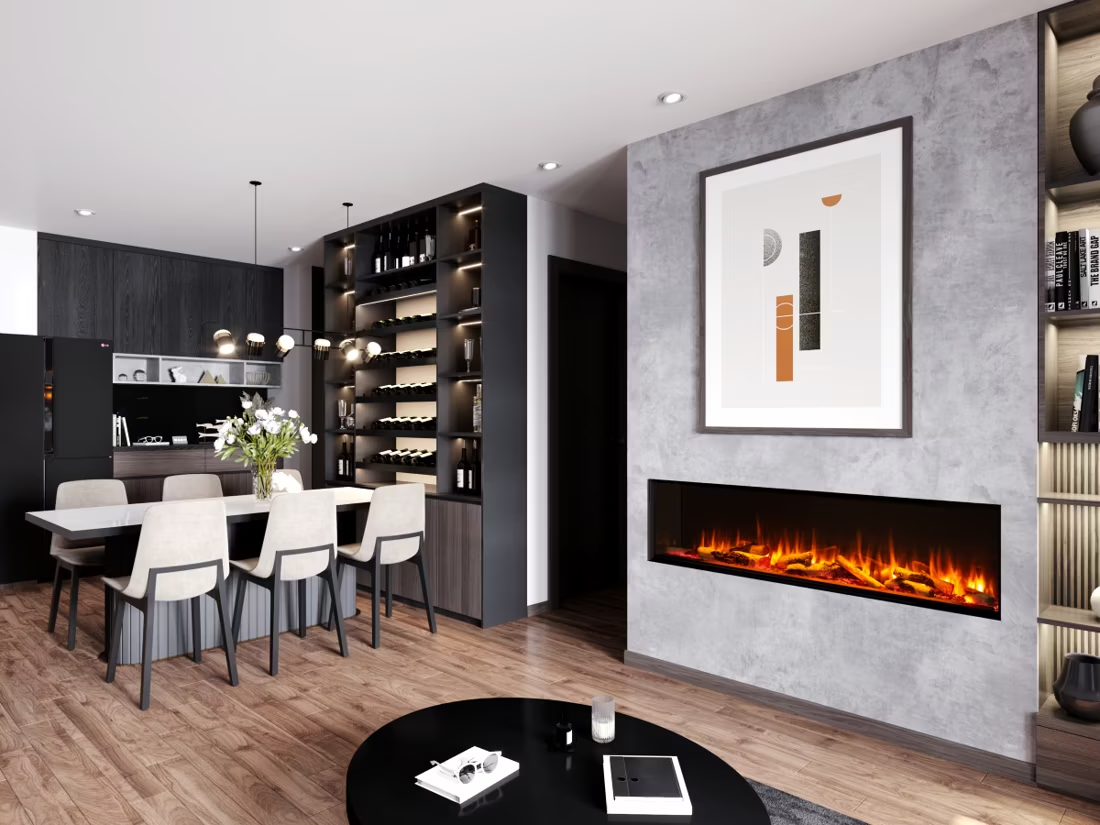
An electric insert drops into an existing masonry firebox—common in older Dundas and Ancaster homes converting an unused wood fireplace into something that works with the flip of a switch. A wall-mount or linear built-in gets recessed or surface-mounted into a wall, popular in newer Stoney Creek and Glanbrook builds where there's no existing fireplace at all. A mantel package pairs a freestanding electric firebox with a surround and shelf, which is the simplest option for a condo or rental since it needs nothing more than a standard outlet and can move with you. A local dealer can walk your space and tell you which configuration actually fits.
Is an electric fireplace a good option for a condo or rental in Hamilton Region?
It's usually the best option. Downtown Hamilton's condo towers and most purpose-built rentals don't allow venting, gas line work, or open-flame appliances, which rules out wood and often gas fireplaces entirely. A plug-in electric unit needs no chimney, no gas connection, and no structural changes, and it can go back out with you if you move. Some buildings still want sign-off before any wall-mounted or hardwired unit goes in, so it's worth checking with your property manager or condo board before your dealer schedules the install.
Electric vs. gas fireplace—which makes more sense in Hamilton Region?
With natural gas service available across most of the region, a gas fireplace or insert can genuinely contribute to heating a room, running $6,000 to $15,000 CAD installed depending on venting and gas line work. Electric costs far less to install, at $500 to $1,600 CAD, and skips the gas line and venting permits entirely, but it won't match a gas unit's heat output on a cold night. Many homeowners here choose electric for a bedroom, basement, or rental unit where lower cost and simple installation matter more than raw BTUs, and reserve gas for a main living area that needs to actually help heat the house.
Why would someone choose electric over a wood-burning fireplace here?
Hamilton Region has strong wood-burning tradition, with plenty of sugar maple, red oak, and white ash supply from central Ontario forests, and wood installs remain standard here. But wood appliances come with real ongoing requirements: CSA B365 installation rules, a WETT inspection most insurers ask for, and annual chimney maintenance. Electric skips all of that—no chimney, no fuel storage, no inspection tied to your home insurance. For a downtown condo, a secondary room, or a homeowner who wants fireplace ambiance without the upkeep, electric is the lower-commitment choice, even in a region where wood is still very much in use.
How much maintenance does an electric fireplace need?
Very little compared to wood or gas. There's no chimney to sweep and no annual WETT-style inspection required for insurance. Most upkeep is basic: wiping dust off the glass and vents, occasionally replacing an LED module or heater element if the unit is older, and checking that the outlet or circuit isn't overloaded if you're running the fireplace alongside other appliances. It's one of the reasons electric units are popular in Hamilton Region rental properties, where a landlord wants something reliable and low-maintenance between tenants.
What electrical setup does my home need for a built-in electric fireplace?
Most freestanding and mantel-package electric fireplaces run fine on a standard 120-volt household outlet, drawing around 1,500 watts. Larger built-in or linear wall units, especially wider models common in newer Waterdown and Glanbrook builds, often call for a dedicated 15- or 20-amp circuit so the fireplace isn't sharing a breaker with other high-draw appliances. In older lower-city Hamilton homes with a smaller electrical panel, this is worth confirming with an electrician before you order a specific unit, since panel capacity can be the deciding factor between a simple plug-in model and a hardwired built-in.
How much does an electric fireplace cost to run?
With the heater on, a typical unit draws about 1,500 watts—at average electric rates that's roughly 20 cents an hour. Run the flame effect alone and it costs pennies; the flames are LED-driven and use about as much power as a light bulb. There's no pilot light, no fuel delivery, and essentially no maintenance.
What fireplace styles should I know before shopping?
Four cover most of the market: screen-front traditional (mesh front, open feel, fits craftsman homes), traditional door set (the classic look you grew up with), modern linear (wide, low, the statement piece for entertaining), and clean face contemporary (no trim—your tile or stone runs right to the fire's edge). Walk in knowing those four terms and you're ahead of most buyers.
Can I put a TV above my fireplace?
Yes—with an asterisk. Fireplaces are hot and TVs don't like heat. Either put a mantel between them to deflect rising warmth, or choose a fireplace with heat-management technology that creates a cool zone on the wall above—the wall stays around 125 degrees, barely warm, while the room still gets full heat. If you like clean lines and don't want a mantel, heat management is the answer.
Do electric fireplaces actually produce heat?
Yes—most put out around 4,800–5,000 BTUs from a standard outlet, which comfortably warms a bedroom, office, or den as a comfort-zone heater. What they won't do is carry a whole house the way wood, gas, or pellet can. Think of electric as ambiance-first with honest supplemental heat: flames on with no heat in July, flames plus warmth in January.
Stove and Fireplace Dealers in Hamilton Region
Listings include WhyFire partner dealers, dealers we have verified as authorized for the brands we recommend, and established local businesses that carry hearth products. Every listing shows which one it is. The ones marked Preferred run on WhyFire's software, so they can show you real pricing and book your appointment right here. No manufacturer pays for placement. How we verify dealers →
Peter Martin Appliances
Mt. Hope Heating And Cooling Ltd
Maintemp Heating & Ac
Erindale Contracting Ltd
Redwood Distribution
Goemans Fireplaces
Cobblestone Embers
Riverside Heating & Air Conditioning
Electric Service in Hamilton Region
An electric fireplace's heater draws about 1,500 watts—pennies per hour at local rates.
Hydro One
Toronto Hydro
Alectra Utilities
Get your free Project Guide & Parts List for an electric fireplace in Hamilton Region.
Tell us about your home, your room, and your electrical panel, and we'll help you find a trusted local Hamilton Region dealer and send a free Project Guide & Parts List—the exact unit, mounting or surround parts, and any electrical work your project needs.
Find Your Fireplace →