
Zero-clearance heat for Ancaster homes without a flue.
Ancaster sits at 253 metres in climate zone 5A, with winter lows averaging -9.3°C. Enbridge Gas and Alectra Utilities both serve the area, so electric fireplaces here get chosen for flexibility, not necessity. We'll help you find a local dealer who can spec the right unit for your wall and circuit.
Every Project Starts From One of These Five Situations
The easiest fuel path when there's nowhere to vent.
Ancaster sits in climate zone 5A at 253 metres of elevation, with winter lows averaging -9.3°C—milder than what Sudbury or Thunder Bay see across the same months, but still a real Southern Ontario winter. That moderate cold means most Ancaster homes lean on a furnace for whole-house heat and treat a fireplace as zone heat, ambiance, or a fix for a room a duct doesn't reach well: a finished basement in one of the newer Meadowlands or Summit Park builds, a condo unit with no chimney chase, or a sunroom addition where running gas line or a masonry flue isn't practical.
Electric isn't the fallback fuel here the way it can be in places without gas service—Enbridge Gas serves virtually all of Ancaster, and sugar maple, red oak, white ash, and yellow birch are easy to source across the Hamilton Region for anyone who wants a wood stove instead. Homeowners choose electric because it solves a specific problem: no venting, no gas line, and an install that typically runs $500-$1,600 through a licensed electrician, versus the $6,000-$15,000 a vented gas system or the $6,000-$12,000 a wood system commonly costs. At Alectra Utilities' residential rate of about 12.8 cents per kWh, a mid-size unit run a few hours a night costs pennies next to what it saves in avoided construction.
Three steps. No salesperson until you're ready.
Tell us about your project
Your postal code, your situation, and the fuel you're leaning toward—or let the answers point you to one.
See what's actually available
The brands dealers within 100 miles genuinely carry—real options, never a catalog mirage.
Get your dealer & Project Guide
A trusted local dealer, plus the free Project Guide & Parts List that names every component of the job.
Frequently Asked Questions
How much does an electric fireplace cost to install in Ancaster?
Most electric fireplace installs in Ancaster run $500-$1,600, and where you land in that range depends on the unit, not the fuel supply. A plug-in freestanding or wall-mount unit needs nothing more than an existing outlet and can be under $1,000 including the fireplace itself. A built-in linear model set into a wall or a custom surround needs a dedicated circuit run by a licensed electrician, which is what pushes jobs toward the top of the range. Either way, it's a fraction of the $6,000-$12,000 wood or $6,000-$15,000 gas install ranges common in the same neighbourhoods, since there's no chimney, no gas line, and no combustion venting to account for.
Do I need a permit for an electric fireplace in Ancaster?
Usually not for the fireplace itself, since it isn't a combustion appliance and doesn't fall under the CSA B365 rules that apply to wood systems. If you're hardwiring a built-in unit into a new circuit, that electrical work needs to meet Electrical Safety Authority standards and should be done or inspected by a licensed electrician. If the install involves structural changes—framing a new wall niche or altering a load-bearing opening—check with Ancaster's municipal building department first, since that part of the job can require a standard building permit even though the fireplace itself doesn't.
What does it cost to run an electric fireplace at Ancaster electricity rates?
At Alectra Utilities' typical residential rate of about 12.8 cents per kWh, a standard 1,500-watt electric fireplace costs roughly 19 cents an hour to run on high heat, or about $23 a month running four hours an evening through a cold stretch. That's cheap enough that most owners run it purely for the room they're in rather than worrying about the bill, though it's worth remembering electric heat doesn't get cheaper per BTU the way burning your own cut sugar maple or red oak does—it's convenience you're paying the modest premium for, not fuel savings.
Electric or gas—which makes more sense for an Ancaster home?
With Enbridge Gas serving nearly all of Ancaster, gas is the obvious choice if you want a fireplace that can meaningfully supplement your furnace on a -9.3°C night—a gas insert throws real heat and keeps running through a power outage if it's on a standing pilot. Electric can't do that; it's a room heater, not a backup heat source. But electric wins decisively on cost and simplicity: $500-$1,600 installed with no gas line or venting, versus $6,000-$15,000 for a proper gas system. Condos, rental units, and rooms where running gas line isn't realistic are where electric makes the most sense here.
How does an electric fireplace compare to a wood stove for an Ancaster home?
Wood is the better choice if you actually want to heat a room through an outage or cut your furnace runtime—sugar maple, red oak, and yellow birch are all common, well-seasoned splits across the Hamilton Region, and a certified wood stove holds real heat overnight. But a wood install runs $6,000-$12,000 once you account for the WETT inspection insurers commonly ask for and CSA B365-compliant venting, and it needs a hearth, clearances, and somewhere to stack wood. Electric skips all of that for $500-$1,600, at the cost of being ambiance and light supplemental warmth rather than a genuine heat source.
What's the best type of electric fireplace for a condo or townhome in Ancaster's newer developments?
For the townhomes and condo units going up around Meadowlands and Summit Park, a built-in linear electric unit set into a media wall or a slim wall-mount model is the most common choice—both skip the chimney chase entirely and just need an outlet or a dedicated circuit. Freestanding electric stoves work well in a finished basement where you want the unit to be portable if you move. Whatever the form factor, a local dealer can confirm the model fits your wall cavity and electrical setup before you buy, which matters more in a condo than the fireplace's looks.
Will an electric fireplace actually heat a room during an Ancaster winter?
It'll take the chill off a single room, but it isn't sized to fight a -9.3°C night on its own the way a wood stove or gas insert is. Most electric units top out around 5,000 BTU of supplemental heat regardless of price, so they're best treated as zone heat for a den, bedroom, or basement rec room while your furnace handles the rest of the house. If you want a fireplace that can meaningfully reduce your furnace's workload through a Southern Ontario winter, gas or wood are the fuels built for that job here.
Which utility serves electric fireplaces in Ancaster?
Alectra Utilities is the local electricity distributor for Ancaster and the rest of Hamilton, so that's whose rate schedule applies to any fireplace you plug in or hardwire. Hydro One serves some of the more rural fringes of the Hamilton Region outside the urban service area, and Toronto Hydro is a different utility entirely for Toronto proper—worth knowing if you're comparing rates you've seen quoted elsewhere, since they won't match what shows up on an Ancaster bill.
How much maintenance does an electric fireplace need?
Very little, which is part of the appeal. There's no chimney to sweep, no WETT inspection to schedule, and no gas line to have checked annually. Realistic upkeep is dusting the unit, occasionally cleaning the glass front, and replacing an LED ember bed or fan motor after several years of daily use—most manufacturers rate those parts for well beyond a typical Ancaster heating season. It's a meaningful reason people choose electric for a rental unit or a second home where nobody's around to do seasonal maintenance.
How much does an electric fireplace cost to run?
With the heater on, a typical unit draws about 1,500 watts—at average electric rates that's roughly 20 cents an hour. Run the flame effect alone and it costs pennies; the flames are LED-driven and use about as much power as a light bulb. There's no pilot light, no fuel delivery, and essentially no maintenance.
What fireplace styles should I know before shopping?
Four cover most of the market: screen-front traditional (mesh front, open feel, fits craftsman homes), traditional door set (the classic look you grew up with), modern linear (wide, low, the statement piece for entertaining), and clean face contemporary (no trim—your tile or stone runs right to the fire's edge). Walk in knowing those four terms and you're ahead of most buyers.
Does an electric fireplace need a vent or chimney?
No—that's its superpower. An electric fireplace needs a wall and an outlet, period. No vent pipe, no gas line, no clearances to design around, which is why it works in bedrooms, offices, apartments, and walls where venting a gas or wood unit would be impractical or impossible. Installation is typically the simplest and least expensive of any fireplace type.
Can I put a TV above my fireplace?
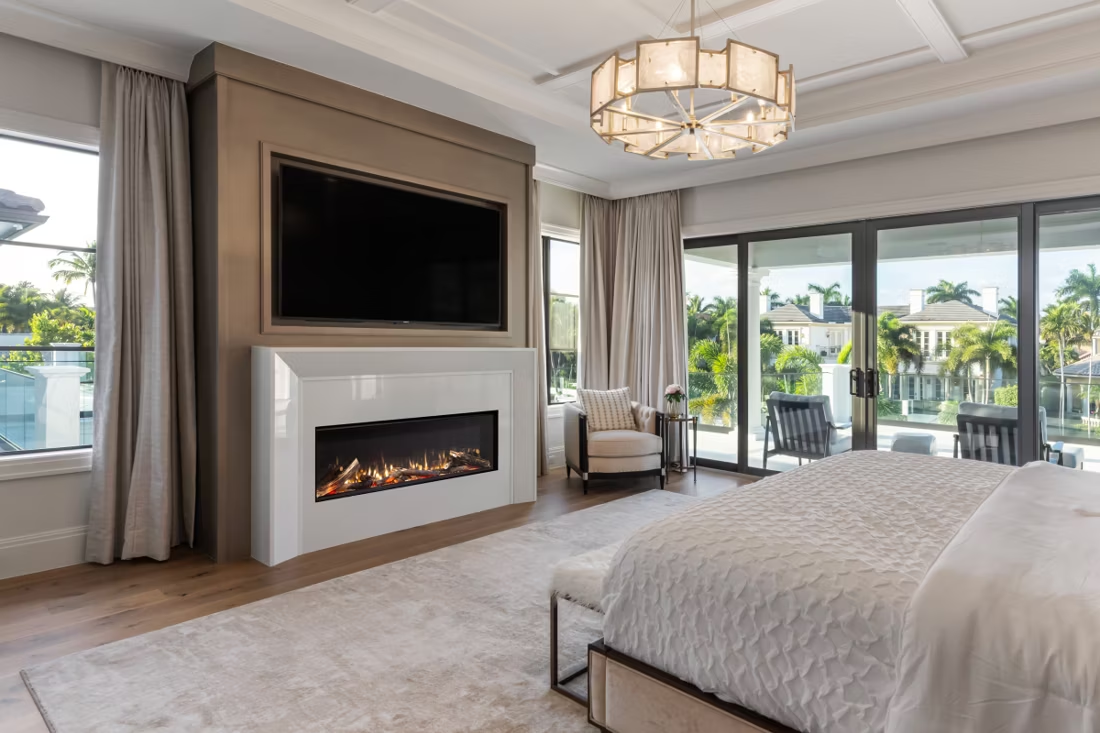
Yes—with an asterisk. Fireplaces are hot and TVs don't like heat. Either put a mantel between them to deflect rising warmth, or choose a fireplace with heat-management technology that creates a cool zone on the wall above—the wall stays around 125 degrees, barely warm, while the room still gets full heat. If you like clean lines and don't want a mantel, heat management is the answer.
Nearby Dealers
Hearth shops serving Ancaster and the surrounding area. Every listing shows whether it is a WhyFire partner, a dealer we have verified as authorized for the brands we recommend, or a local business carrying hearth products. No manufacturer pays for placement. How we verify dealers →
Mt. Hope Heating And Cooling Ltd
Peter Martin Appliances
Maintemp Heating & Ac
Erindale Contracting Ltd
Goemans Fireplaces
Redwood Distribution
Riverside Heating & Air Conditioning
Paris Stove Works
Cobblestone Embers
Electric Service in Ancaster
An electric fireplace's heater draws about 1,500 watts—pennies per hour at local rates.
Hydro One
Toronto Hydro
Alectra Utilities
Get your free Project Guide & Parts List for an Ancaster electric fireplace.
Tell us about your room and whether you need a plug-in unit or a hardwired built-in, and we'll help you find a local dealer and send a free Project Guide & Parts List with the exact unit and electrical specs your project needs.
Find Your Fireplace →